
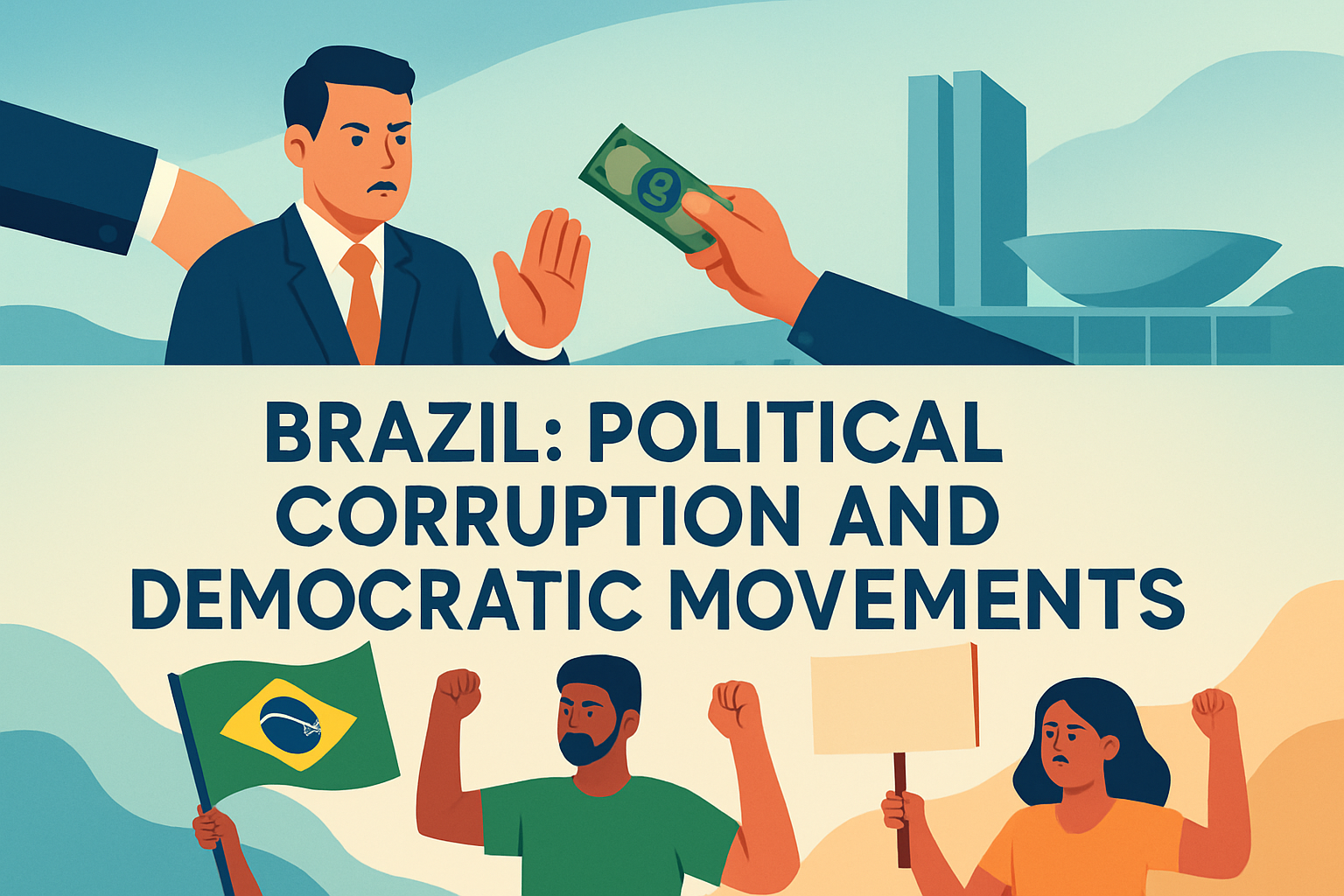
Political corruption has long been a significant barrier to democratic development and governance worldwide. In Brazil, the intricate dance between political corruption and democratic movements paints a vivid picture of challenges and reform. This topic is pivotal as it influences not only the political landscape but also the social fabric and economic health of the nation. Understanding the dynamics of corruption within Brazil and the movements striving for democracy provides insight into larger global narratives on governance, justice, and civic engagement.
The Origins and Historical Context of Corruption in Brazil
Corruption in Brazil can trace its roots back to the colonial era, where practices of clientelism and patronage were established. Portuguese colonial administrators often engaged in corrupt practices to maintain power and control. These patterns of corruption continued post-independence as political power was concentrated among elite groups.
A significant real-world example is the “mensalão” scandal of the early 2000s. This scandal involved monthly payments to legislators in exchange for their political support for the ruling party’s initiatives. It underscored how historical corruption practices persisted into modern times. The exposure of such a scandal led to widespread calls for reforms and greater transparency in Brazil.
Modern-Day Corruption: Operation Car Wash and Beyond
In recent decades, Operation Car Wash (Operação Lava Jato) has epitomized the modern face of corruption in Brazil. This operation, which began as a money laundering investigation, exposed systemic corruption within the highest echelons of government and major corporations. Politicians, executives, and business entities were implicated in manipulating public works contracts for personal and political gain.
A notable case is the involvement of the Brazilian oil company Petrobras, where billions of dollars were funneled into cash payments and political contributions. This scandal exemplifies how deeply ingrained corruption can disrupt governance and economic stability.
Moreover, Operation Car Wash extended its implications beyond Brazil, revealing corruption linkages across Latin America, demonstrating the pervasive nature of graft in governmental systems globally.
Democratic Movements and Civil Society Response
Despite these challenges, Brazil has seen an emergence of grassroots movements seeking political reform and greater accountability. The rise of these movements reflects the resilience of Brazilian civil society in demanding changes.
A pivotal moment was the widespread protests in 2013, primarily driven by dissatisfaction over public transportation costs and inadequate public services despite massive government spending for the World Cup and Olympics. These protests galvanized a broader discourse on political corruption and wasteful governance.
- Increased public demand for transparency
- The rise of digital platforms enabling civic engagement
- Legislative reforms aiming to curb corruption
The democratic movements have put significant pressure on political institutions, resulting in the implementation of laws aimed at improving transparency and reducing impunity for corrupt practices.
Judicial Reforms and Anti-Corruption Policies
In response to public outcry and significant international pressure, Brazil has initiated various judicial reforms to tackle corruption. These reforms include the strengthening of legal provisions for prosecuting corrupt officials and enhancing the independence of judiciary bodies.
One example is the increased empowerment of the Ministério Público (Public Prosecutor’s Office), which has played a crucial role in investigating and prosecuting corruption cases. The establishment of specialized anti-corruption courts has also been a significant step forward.
| Policy/Initiative | Year Implemented | Impact |
|---|---|---|
| Clean Record Law (Lei da Ficha Limpa) | 2010 | Disqualifies politicians with criminal convictions |
| Operation Car Wash | 2014 | Exposed corruption across political parties and corporations |
| Anti-Corruption Law | 2013 | Sets strict penalties for corrupt business practices |
The Role of Media and Technology in Fighting Corruption
The role of media and technology cannot be understated in Brazil’s fight against corruption. With the rise of the internet, Brazilians have gained access to more information and can engage in civic issues more effectively.
Media outlets and independent journalists have been instrumental in unveiling corruption scandals. For instance, investigative reporting was pivotal in bringing the mensalão scandal and Operation Car Wash to public attention.
Furthermore, technological advancements, such as blockchain and digital platforms, have been harnessed to create more transparent systems for government transactions and citizen engagement, allowing for more robust anti-corruption measures.
The Brazilian government and civic tech organizations have developed platforms to enable citizens to report corruption and track government spending, promoting a more involved and informed public.
Global Implications and Lessons Learned
The repercussions of Brazil’s political corruption and democratic movements resonate beyond its borders. The international community has observed Brazil’s approach to tackling corruption and promoting democratic norms, taking cues for similar challenges in their own countries.
International organizations and foreign governments have partnered with Brazil to bolster its anti-corruption framework. They offer resources and expertise for implementing successful reforms, emphasizing the significance of global cooperation in combating corruption.
Brazil’s experience underscores that while systemic corruption presents a formidable obstacle, sustained citizen engagement, judicial reforms, and the strategic use of technology can drive significant political and institutional change. Countries grappling with similar issues can learn from Brazil’s dynamic balance of challenges and reform.
Conclusion
In conclusion, Brazil’s journey through the labyrinth of political corruption and its democratic movements provides a compelling case study of the complexities of governance and the power of civil society. The persistence of corruption, despite historical and modern-day reforms, highlights the ongoing challenge of eradication in a system resistant to change. However, the growing demand for accountability and transparency led by democratic movements in Brazil illustrates a nation’s collective aspiration for a fairer, more just society.
A key takeaway is that democracy thrives when citizens actively participate in governance and hold leaders accountable. Brazil shows that change is possible when society unites toward a common goal, reinforcing the vital role of democratic engagement as both a right and a duty for its citizens.
For those wishing to support or learn from Brazil’s fight against corruption, engaging with local civil society organizations, staying informed about regional governance issues, and advocating for more transparent policies in one’s community are crucial next steps.
Together, by drawing lessons from Brazil’s experience, individuals worldwide can contribute to a more equitable and accountable political system.
Frequently Asked Questions
1. What is the historical context of political corruption in Brazil?
Political corruption in Brazil has deep historical roots that have influenced its political landscape over the decades. Historically, Brazil has been plagued with corruption since its imperial days, carrying through to the establishment of the Republic in 1889. This corruption often manifested through nepotism, bribery, embezzlement, and many forms of unethical behavior that became entrenched in political dealings. Several high-profile cases over the years have highlighted systemic issues, such as the infamous “Operation Car Wash” scandal, which exposed deep-seated corruption involving politicians, business executives, and the national oil company, Petrobras. As a result, Brazilian society has often found itself grappling with the consequences of such corruption—ranging from economic disparity to a lack of trust in governmental institutions. These issues have been perpetuated by a complex political system that includes numerous political parties and coalitions, making it challenging to align on effective and sustainable anti-corruption reforms. Understanding this context is crucial as it sheds light on the persistent challenges that Brazil faces in its pursuit of genuine democratic governance.
2. How has political corruption impacted Brazil’s democratic movements?
In Brazil, the struggle against political corruption has been intrinsically linked to its democratic movements. Political corruption has significantly undermined the democratic process, leading to widespread disillusionment among the populace. Movements towards democracy have often been driven by the public’s frustration with corrupt leaders and the desire for more transparent, accountable governance. Despite Brazil’s return to democracy in 1985 after two decades of military rule, corruption has persistently hindered progress, leading to the erosion of democratic institutions and principles. Grassroots movements and protests, such as those in 2013, have often spotlighted corruption as a central issue, demanding reforms and accountability from political leaders. These movements underscore the citizens’ demand for political integrity and reform—highlighting how corruption stifles not only economic growth but also obstructs true democratic development. By eroding the trust in public institutions, corruption emboldens undemocratic forces, posing a significant threat to the consolidation of democracy in Brazil.
3. What role have Brazil’s legal and judicial systems played in addressing political corruption?
Brazil’s legal and judicial systems have played crucial roles, albeit with varying degrees of efficacy, in combating political corruption. Initiatives such as the aforementioned Operation Car Wash have been pivotal in unveiling vast corruption networks within the government and private sector. Brasilia’s efforts through reforms and the establishment of anti-corruption laws have somewhat strengthened the country’s capacity to address corruption. However, the judicial system itself is not immune to criticism or challenges, as it’s been accused at times of being slow to act, influenced by political interests, and bogged down by bureaucracy. On the positive side, recent years have seen enhancements in the independence and aggressiveness of prosecutors and judges in pursuing high-profile cases. The judicial actions against former presidents and top executives have demonstrated a commitment to confronting impunity, though continued vigilance and structural reform within the legal system are vital to maintaining momentum and ensuring long-term change. The judiciary’s ability and willingness to hold powerful figures accountable are critical indicators of Brazil’s ongoing battle with corruption.
4. How have recent scandals, such as the Lava Jato (Car Wash) investigation, influenced political change in Brazil?
The Lava Jato (Car Wash) investigation marked seismic changes in Brazil’s political fabric, arguably transforming the nation’s approach to handling corruption. Initiated in 2014, Operation Car Wash shed light on a multi-billion dollar bribery and money-laundering scheme, unraveling connections between some of Brazil’s wealthiest business leaders and political elites. The investigation’s impact was profound—it led to significant political turnover, exposing entrenched networks of corruption that reached the highest echelons of Brazilian politics and the conglomerate involved in state-run enterprises. This investigation spurred public demand for anti-corruption measures and galvanized civil society movements advocating for greater transparency and accountability. It catalyzed legal reforms and prompted the electorate to be more discerning, encouraging new, more reform-minded political candidates to garner support. Although some argue that the scandal also fueled political polarization and distrust, the revelation of pervasive corruption and ensuing legal actions demonstrated an unprecedented commitment to confronting misconduct, influencing both policy and public perception regarding political integrity.
5. What are the future prospects for combating political corruption and enhancing democracy in Brazil?
The future prospects for tackling corruption and enhancing democracy in Brazil hinge on sustained reform efforts, engagement from civil society, and the political will of elected officials to implement systemic changes. Continued vigilance in law enforcement and judicial independence will be crucial in maintaining pressure against corrupt practices. Greater transparency in governmental operations, improved education on civic rights and responsibilities, and reforms in campaign financing are fundamental to curbing the influence of money in politics and ensuring more equitable democratic processes. Additionally, leveraging technological advances for improved oversight and public participation could serve as vital tools in the fight against corruption. Civic activism and engagement from a politically aware public are likely to keep the momentum for change alive. The engagement of younger generations and other previously marginalized groups in the political arena also holds promise for revitalizing democratic norms and pushing for accountability. While challenges remain, Brazil’s experience with political corruption serves as a powerful reminder of the enduring struggle for transparent and effective governance, and a more participatory democracy tailored to the needs of its citizens.