
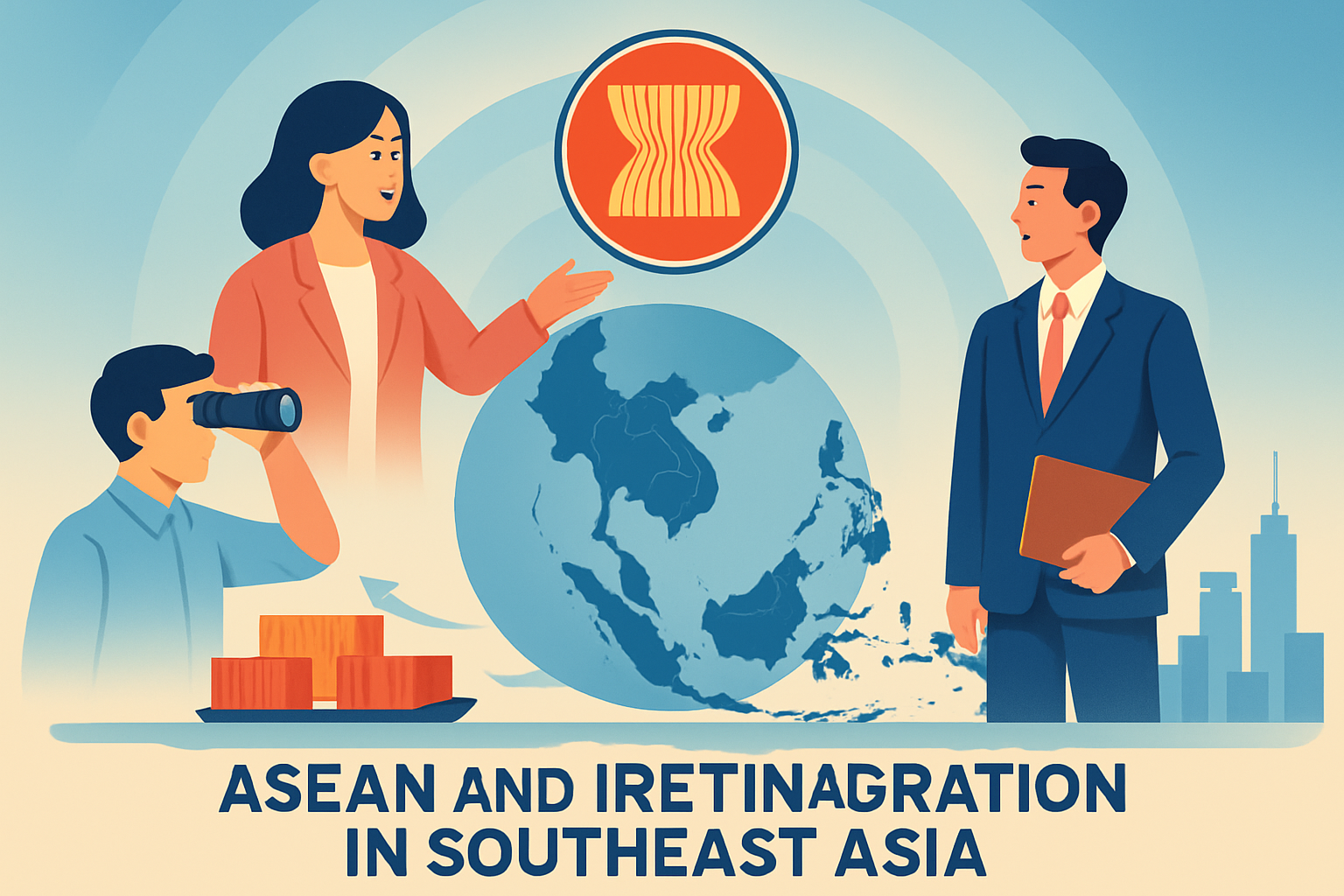
Introduction to ASEAN and Regional Integration
The Association of Southeast Asian Nations (ASEAN) is a geopolitical and economic organization that comprises ten Southeast Asian countries: Brunei, Cambodia, Indonesia, Laos, Malaysia, Myanmar, the Philippines, Singapore, Thailand, and Vietnam. Established in 1967, ASEAN aims to promote regional stability, economic growth, and cultural exchange among its member states. The concept of regional integration involves the process of countries in a particular region coming together to form a comprehensive and synergistic entity, resulting in economic, political, and social benefits.
In today’s interconnected world, regional integration is a significant goal for various regions, and ASEAN is a prime example in Southeast Asia. By integrating economically and socially, ASEAN crosses beyond national boundaries to enhance cooperation and development. This regional integration is crucial because it strengthens the region’s economic resilience, enhances political stability, and fosters cultural unity. Moreover, it positions Southeast Asia as a united force in global geopolitics, attracting investors, tourists, and international partners.
The following sections delve into specific aspects of ASEAN’s regional integration, exemplifying the challenges and successes that it currently faces. Through real-world examples and explanations, we will explore how ASEAN’s integration is shaping the landscape of Southeast Asia.
Economic Integration: Trade and Investment
Economic integration is a cornerstone of ASEAN’s efforts, with initiatives like the ASEAN Economic Community (AEC) playing a significant role in encouraging trade and investment. The AEC aims to create a single market and production base, characterized by free flow of goods, services, labor, and capital. By establishing a coherent economic strategy, ASEAN fosters a competitive economic region that is integrated into the global economy.
An example of ASEAN’s economic integration success is the “ASEAN Free Trade Area” (AFTA), which was designed to lower trade barriers among member states. Since its implementation, there has been a substantial increase in intra-ASEAN trade, which bolstered member states’ economic growth and development. For instance, the elimination of tariffs has made it easier for countries like Indonesia and Malaysia to engage in agricultural and manufacturing trade, boosting their GDP and improving employment rates.
- Lowering of tariffs and trade barriers
- Facilitating cross-border investments
- Increasing GDP and employment
The reduction in trade barriers helps ASEAN attract foreign investment, which enhances the region’s industrial capabilities and infrastructure. By providing a consolidated market, ASEAN becomes more attractive to investors looking to tap into a large, unified consumer base. Additionally, such economic cooperation mitigates the adverse impacts of global financial instability, allowing ASEAN to present itself as a stable and reliable trade partner globally.
Political Cooperation and Security
Beyond economic benefits, ASEAN focuses heavily on political cooperation and security within the region. By fostering political dialogue and enhancing cooperation on security issues, ASEAN encourages stability and peace among its members. This is achieved through various frameworks and declarations promoting transparency and trust, such as the ASEAN Regional Forum (ARF) and the Treaty of Amity and Cooperation (TAC).
These initiatives have proven instrumental in navigating territorial disputes and diplomatic tensions. For example, the South China Sea dispute involves several ASEAN members and external powers. ASEAN’s diplomatic channels and forums help mediate discussions, encouraging peaceful resolutions rather than conflict. The organization’s emphasis on non-interference and consensus-building ensures that political disagreements do not escalate into open conflict.
Furthermore, ASEAN works collaboratively to address shared security concerns, such as terrorism and piracy, through intelligence sharing and joint military exercises. This collective approach increases regional security and reassures citizens and investors alike that Southeast Asia is a stable region conducive to growth and prosperity.
Cultural Exchange and Social Integration
Cultural exchange and social integration are essential components of ASEAN’s regional integration strategy. By celebrating and promoting the rich diversity of Southeast Asia, ASEAN fosters a sense of unity and shared identity among its member states. The ASEAN Socio-Cultural Community (ASCC) plays a pivotal role in achieving social integration through education, sports, and cultural programs.
A real-world example of ASEAN’s cultural initiatives is the ASEAN Cultural Heritage Digital Archive, which preserves and promotes the region’s rich cultural heritage. By digitizing cultural assets, ASEAN ensures that future generations can access and understand their shared history and culture, thus fostering a collective identity and camaraderie among the diverse populations.
Moreover, ASEAN promotes language and educational exchange programs, allowing students and professionals to experience and learn from different Southeast Asian cultures, fostering regional understanding and cooperation. These cultural exchanges enhance people-to-people connectivity, reducing cultural barriers and enhancing social harmony within the region.
Environmental Cooperation and Sustainability
ASEAN recognizes the importance of environmental sustainability and the need for collaborative efforts to address environmental challenges that transcend national borders. The region is affected by various environmental issues, such as deforestation, pollution, and climate change impacts, which require joint action and regional cooperation.
ASEAN has initiated several environmental agreements and programs to promote sustainable development and environmental protection. One such initiative is the “ASEAN Agreement on Transboundary Haze Pollution,” which seeks to tackle the significant issue of haze caused by forest fires in the region. Member states collaborate to strengthen policies, share technology, and build capacity to prevent and control forest and land fires.
| Environmental Challenge | ASEAN Action |
|---|---|
| Deforestation | Collaborative reforestation projects |
| Pollution | Stricter regulations and enforcement |
| Climate Change | Joint mitigation and adaptation strategies |
By addressing environmental challenges collectively, ASEAN enhances the region’s resilience to climate change and environmental degradation. These efforts contribute to sustainable economic growth, improved quality of life, and the preservation of natural resources for future generations.
Summarizing ASEAN’s Key Takeaways
ASEAN’s regional integration efforts in Southeast Asia are multifaceted, covering economic, political, cultural, and environmental dimensions. This integration strengthens economic resilience, enhances political stability, fosters cultural unity, and promotes environmental sustainability. By examining ASEAN’s initiatives and successes, we see how regional collaboration can transform challenges into opportunities, benefitting member states and the broader Southeast Asian region.
For readers, understanding ASEAN’s regional integration is crucial to recognizing the strategic importance and potential of Southeast Asia as a unified entity. Whether considering investment opportunities, entering new markets, or fostering cross-cultural collaborations, ASEAN presents a dynamic and promising landscape.
As a simple call-to-action, whether you are a business leader, policymaker, or global citizen, take the time to engage with and support ASEAN’s initiatives. By doing so, you contribute to the region’s continued growth and integration, ensuring a more prosperous and united Southeast Asia. To stay informed, consider following ASEAN’s updates and participating in regional events and dialogues that foster further collaboration and integration among Southeast Asian nations.
Frequently Asked Questions
1. What is ASEAN, and why was it established?
The Association of Southeast Asian Nations, commonly known as ASEAN, is a regional organization that was established on August 8, 1967. It comprises ten member countries: Brunei, Cambodia, Indonesia, Laos, Malaysia, Myanmar, the Philippines, Singapore, Thailand, and Vietnam. The primary goals of ASEAN are to promote regional stability, encourage economic growth, and facilitate cultural exchange among the member states.
ASEAN was established in the context of a tumultuous political landscape in Southeast Asia during the 1960s. During that time, the region was witnessing the aftermath of colonization, ongoing Cold War dynamics, and various internal conflicts. ASEAN’s founding members—Indonesia, Malaysia, the Philippines, Singapore, and Thailand—saw the need to foster peace, economic collaboration, and regional security to ensure a stable environment for economic development and prosperity.
The formation of ASEAN was driven by a shared desire to create a platform for dialogue and cooperation, which could help in addressing political and security issues, promoting economic collaboration, and preserving cultural heritage. This regional cooperation was believed to be the key to achieving long-term peace and prosperity in Southeast Asia.
2. How does ASEAN promote economic growth within its member states?
ASEAN promotes economic growth among its member states through a variety of initiatives aimed at creating a more integrated and competitive regional economy. One of the cornerstone strategies for achieving this economic integration is the ASEAN Economic Community (AEC), which was officially launched at the end of 2015. The AEC aims to create a single market and production base by facilitating the free flow of goods, services, investment, and skilled labor among ASEAN countries.
Several measures have been put in place to achieve these goals, including the removal of trade barriers, harmonization of economic policies, and the improvement of infrastructure connectivity. By reducing tariffs and non-tariff barriers, ASEAN enables businesses to operate more efficiently across borders. Furthermore, member countries collaborate on common standards, regulations, and procedures to enhance trade and investment flows.
The organization also focuses on promoting small and medium-sized enterprises (SMEs), which are vital for regional economic growth. Initiatives such as the ASEAN SME Academy and various funding mechanisms provide support and resources to help SMEs grow and compete globally. Additionally, ASEAN engages with external partners and is involved in numerous free trade agreements (FTAs) that facilitate access to larger markets beyond the region, thereby boosting overall economic growth.
3. How does ASEAN contribute to regional stability and security?
ASEAN contributes to regional stability and security through its comprehensive approach that focuses on dialogue, cooperation, and consensus-building. The organization plays a significant role in fostering political stability by providing a neutral platform where member states can discuss and address issues of mutual concern without resorting to conflict.
One of the key mechanisms for maintaining regional peace and security is the ASEAN Regional Forum (ARF), which includes not only ASEAN members but also 17 other countries, including major powers like the United States, China, and Russia. The ARF promotes open dialogue on political and security cooperation to prevent conflicts and enhance peace in the region.
Additionally, ASEAN has laid down principles in the form of the Treaty of Amity and Cooperation in Southeast Asia (TAC), which emphasizes peaceful settlement of disputes, respect for sovereignty, and non-interference in internal affairs. These principles guide member states in their interactions and contribute to a stable regional environment.
Through various cooperation frameworks, ASEAN addresses non-traditional security issues such as terrorism, transnational crime, human trafficking, and maritime security. By enhancing collaboration on information sharing, capacity building, and joint exercises, ASEAN works collectively to address these challenges and reinforce regional stability.
4. What role does ASEAN play in cultural exchange among Southeast Asian countries?
ASEAN recognizes the important role of culture in fostering deeper understanding and solidarity among its member states. To promote cultural exchange, ASEAN implements various initiatives and activities that highlight the rich and diverse cultural heritage of Southeast Asia.
Programs such as the ASEAN Cultural Festival and the biennial ASEAN Film Festival serve as platforms to showcase the unique traditions, arts, and cultural expressions of each member country. These events not only increase cultural awareness but also strengthen people-to-people connectivity across the region.
ASEAN also supports educational exchanges through scholarship programs, student mobility initiatives, and collaborative academic research. By facilitating the movement of students and academics within the region, ASEAN fosters cross-cultural understanding and builds relationships that transcend national borders.
The ASEAN Socio-Cultural Community (ASCC) is tasked with promoting social justice and a sense of common identity, all while celebrating the rich diversity of the region. Through community-building activities, ASEAN aims to create a sense of belonging and unity among its people by emphasizing shared values and mutual respect.
5. What are some of the challenges faced by ASEAN in achieving regional integration?
ASEAN faces several challenges in its quest for regional integration, which can hamper progress towards its goals of economic development, cultural exchange, and political stability. One significant challenge is the diversity of its member states in terms of economic development, political systems, cultures, and languages. This diversity can complicate efforts to harmonize policies and create a cohesive regional framework that benefits all member countries equally.
The varying levels of economic development among member states lead to differences in priorities and interests, making it difficult to implement policies that benefit all members equally. For instance, wealthier countries might have specific economic agendas that differ from those of less developed member states, potentially causing friction during negotiations.
Political and social issues within individual countries, such as internal conflicts, differing governance styles, and human rights concerns, can also affect regional unity and cooperation. Addressing these issues requires delicate balancing to ensure respect for national sovereignty while promoting regional interests.
Moreover, external influences and global dynamics can pose challenges to ASEAN’s regional integration efforts. The region’s strategic importance means that major global powers have vested interests, which can impact ASEAN’s ability to maintain a unified stance on various issues.
Despite these challenges, ASEAN remains committed to its goals of regional stability, economic growth, and cultural exchange. Through continuous dialogue, cooperation, and adaptation, ASEAN strives to address and overcome these challenges to achieve a more integrated and harmonious Southeast Asia.