
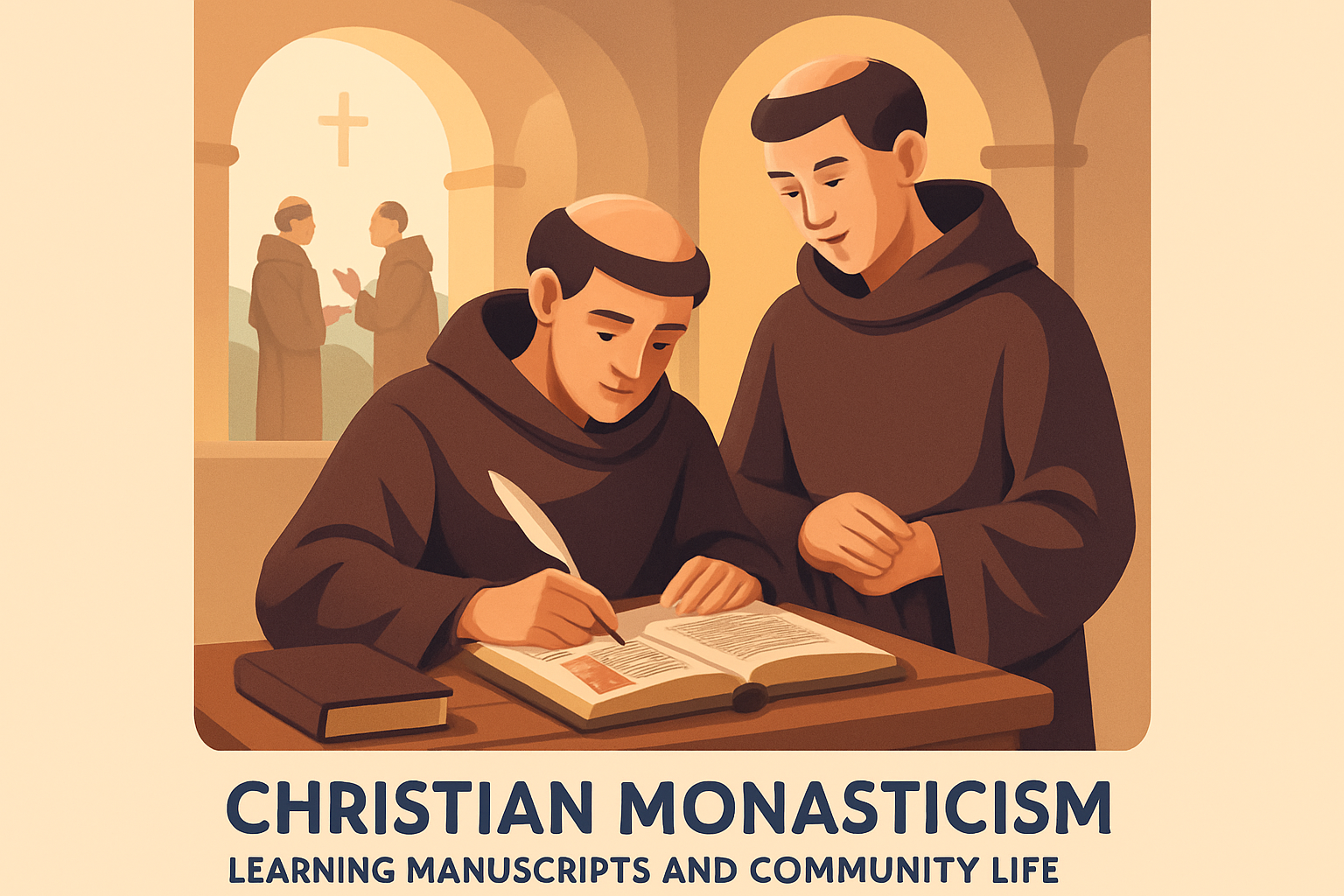
Christian monasticism shaped the intellectual and social foundations of medieval Europe by preserving manuscripts, organizing disciplined communities, and turning prayer into a structured way of life. In practical terms, monasticism refers to the Christian vocation of withdrawing from ordinary social patterns in order to pursue God through vows, shared rules, manual work, study, and worship. When readers ask what monasteries actually did, the most accurate answer is this: they were religious communities that prayed at fixed hours, trained members in obedience and learning, copied and safeguarded texts, managed land and hospitality, and modeled an alternative social order. That combination makes Christian monasticism far more than a spiritual curiosity. It is central to the history of education, libraries, agriculture, literacy, art, and communal ethics.
From my experience studying medieval religious institutions and reading monastic rules alongside surviving codices, the most revealing point is that manuscript culture and community life cannot be separated. A monastery that copied books needed disciplined schedules, trained scribes, stable leadership, storage spaces, financial support, and a theological reason for preserving knowledge. Likewise, a monastery that emphasized common life required texts: Scripture for worship, patristic commentaries for instruction, rules for governance, and liturgical books for the Divine Office. Christian monasticism therefore joined intellectual labor with communal discipline in a way that still influences modern universities, archives, and intentional communities.
The topic matters because many of the texts that define Western and Christian civilization survived through monastic transmission. Biblical manuscripts, works by Augustine, Gregory the Great, Jerome, Cassiodorus, Bede, and countless anonymous homilists endured because monastic communities copied them repeatedly over centuries. Yet focusing only on books misses the broader reality. Monasteries also fed travelers, cared for the sick, educated novices, mediated local disputes, and organized work through shared rhythms. Understanding Christian monasticism means understanding how spirituality, knowledge, labor, and governance reinforced one another. That integrated model is precisely why the movement remained resilient across late antiquity, the early Middle Ages, and beyond.
Three key terms help frame the discussion. A rule is the written framework governing monastic conduct, such as the Rule of Saint Benedict. A scriptorium is the place, formal or informal, where manuscripts were copied and sometimes illuminated. Cenobitic life refers to communal monastic life under authority, unlike eremitic life, where hermits live in greater solitude. These categories are not mere labels. They explain how monasteries functioned day to day and why some communities became centers of learning while others emphasized austerity or isolation. In practice, most successful monastic houses balanced solitude and fellowship, prayer and productivity, contemplation and administration.
Origins of Christian Monasticism and the Rise of Common Life
Christian monasticism began in the late third and fourth centuries, especially in Egypt, Syria, and Palestine, where believers sought radical discipleship after the age of persecution. Figures such as Anthony the Great became famous for desert asceticism, while Pachomius pioneered organized communal life with rules, work structures, and shared worship. This shift from solitary holiness to regulated common life was decisive. Once monks lived together under recognized authority, they could teach novices, preserve habits across generations, and build institutions durable enough to produce libraries and scriptoria.
Basil of Caesarea deepened this communal model in the East by insisting that Christian perfection was not best pursued in total isolation. His writings linked ascetic discipline with charity, scriptural study, and accountability to the community. In the West, John Cassian transmitted eastern monastic wisdom to Latin audiences, and Benedict of Nursia provided the rule that would become the benchmark for western monastic life. Benedict did not invent monasticism, but he gave it a durable grammar: stability, obedience, moderation, common prayer, and practical administration. The Rule of Saint Benedict succeeded because it was spiritually serious without being destructive. It recognized human limits while preserving high standards.
By the early medieval period, monasteries had become institutional anchors across Europe. They settled frontier areas, organized estates, and established regular liturgical routines. The phrase ora et labora, prayer and work, captures the public imagination, though it is not Benedict’s exact slogan. Still, it accurately conveys monastic integration. Work included farming, cooking, teaching, hospitality, accounting, and copying texts. Learning was not an optional extra for elite members. It was embedded in the monastery’s need to read Scripture correctly, celebrate liturgy faithfully, and transmit authorized teaching.
How Monasteries Became Centers of Learning and Manuscript Preservation
Monasteries became centers of learning because books were necessary to monastic life and because monastic stability favored long-term preservation. A monk needed psalters, gospel books, lectionaries, antiphonaries, rules, and sermon collections simply to participate in the daily cycle of worship and formation. Communities that valued lectio divina, the slow meditative reading of Scripture, required access to readable texts. Over time, this practical need expanded into broader intellectual stewardship. Monks copied biblical texts, patristic writings, canon law, saints’ lives, classical authors, and local records because these works served worship, teaching, governance, or memory.
Cassiodorus, in sixth-century Italy, explicitly argued that copying books was a sacred labor. His monastery at Vivarium linked scholarship with devotion and treated textual preservation as service to the church. That insight proved enormously influential. In scriptoria, scribes prepared parchment, ruled lines, copied text with quills, corrected errors, added glosses, and sometimes illuminated pages with pigments and gold leaf. This was painstaking work. A large Bible or commentary could require months or years of effort, expensive animal skins, and coordinated labor among scribes, rubricators, binders, and supervisors. The result was not merely a book but a durable knowledge technology.
Carolingian reform in the eighth and ninth centuries accelerated monastic learning. Under Charlemagne and advisers such as Alcuin of York, monasteries and cathedral schools were urged to improve literacy, correct biblical and liturgical texts, and standardize teaching. One of the most consequential outcomes was Carolingian minuscule, a clear script that improved readability and influenced later lowercase lettering. I often point to this as a concrete example of monastic impact beyond religion: the visual form of written culture changed because monastic and court reforms demanded accurate transmission. Without such reforms, many earlier texts would have remained difficult to read or more vulnerable to corruption.
Monastic libraries were also early information systems. Books were cataloged, chained or stored carefully, and lent under controlled conditions. Some houses became known for specialties, whether biblical exegesis, liturgical books, or classical learning. Irish and Anglo-Saxon monasteries, for example, played major roles in preserving and transmitting Latin learning, while centers such as Monte Cassino became symbols of continuity and renewal. Preservation was never perfect. Fires, wars, moisture, neglect, and reform movements caused losses. Yet the historical record is clear: without monastic copying, the survival rate of ancient and early Christian texts would be dramatically lower.
Daily Community Life Inside a Monastery
Community life gave manuscript culture its operating system. A monastery was not a quiet building filled with books; it was a tightly ordered society governed by time, rank, ritual, and shared duty. The abbot or abbess oversaw discipline, spiritual care, assignments, and material administration. Novices received training before full profession. Monks or nuns gathered repeatedly for the Divine Office, the cycle of psalms, readings, and prayers at designated hours. Depending on the community and era, the day could begin before dawn with Vigils and continue through Lauds, Prime, Terce, Sext, None, Vespers, and Compline. This schedule formed attention, memory, and obedience.
Silence was a regular discipline, but monasteries were not antisocial spaces. They depended on cooperation. Meals were often eaten together while a text was read aloud. Labor was assigned according to need and capacity. One member baked bread, another managed the infirmary, another copied books, another supervised guests. Clothing, sleeping arrangements, food portions, and correction procedures were regulated because the goal was not self-expression but ordered common life. In Benedictine practice, the monastery was meant to be a school for the Lord’s service. That phrase explains why discipline and tenderness coexisted. Correction aimed at conversion, not humiliation.
Women’s monastic communities were equally important, though often underrepresented in popular accounts. Double monasteries, convent schools, and houses led by influential abbesses produced learning, correspondence, liturgical culture, and local leadership. Hilda of Whitby, for example, presided over a community associated with intellectual and ecclesial influence in seventh-century England. Later, figures such as Hildegard of Bingen show how women’s monastic settings could foster theology, music, medicine, visionary writing, and manuscript production. Any accurate account of Christian monasticism and learning must include these communities, not treat them as peripheral.
| Monastic Element | Practical Function | Contribution to Learning and Community |
|---|---|---|
| Rule | Sets standards for prayer, work, obedience, discipline | Creates stability needed for teaching, copying, and governance |
| Divine Office | Organizes the day through fixed prayer hours | Builds literacy, memory, and shared identity through repeated texts |
| Scriptorium | Copies and repairs manuscripts | Preserves Scripture, theology, law, and classical literature |
| Library | Stores and catalogs books | Supports study, preaching, formation, and institutional memory |
| Hospitality | Receives pilgrims, travelers, and the poor | Links contemplative life with service and regional influence |
| Abbey Leadership | Assigns tasks and resolves disputes | Protects order so scholarship and worship can continue |
Manuscripts as Spiritual Tools, Cultural Memory, and Economic Assets
Medieval manuscripts were not simply containers of information. In monasteries, they were devotional tools, symbols of prestige, and assets requiring substantial investment. A gospel book used in liturgy functioned differently from a classroom text or a cartulary recording land rights. Some manuscripts were portable and frequently handled; others were ceremonial objects displayed on major feasts. Marginal notes, corrections, ownership marks, and erased passages reveal intense use. When I examine manuscript descriptions, I look for these traces because they show the community behind the book: who read it, how often it was repaired, whether it traveled, and how it fit into local priorities.
Monasteries also used writing to manage property and authority. Charters, necrologies, account records, and copies of legal privileges protected institutional continuity. If a monastery owned vineyards, mills, tenant lands, or fishing rights, written records mattered. This administrative literacy supported the spiritual mission by securing material survival. The ideal of withdrawal from the world never meant total separation from economics. Successful communities understood procurement, land management, and patronage. Wealth could support libraries, architecture, and almsgiving, but it also created tensions. Reform movements repeatedly emerged when monastic houses seemed too comfortable, too political, or insufficiently disciplined.
The manuscript tradition therefore reflects both holiness and institutional realism. Illuminated books such as the Book of Kells display extraordinary artistic devotion, but they also testify to access to resources, training, and time. Standardized liturgical books reveal ecclesiastical alignment. Heavily used patristic compilations show teaching needs. Even errors are informative. Scribal mistakes, omissions, and later corrections help historians reconstruct textual families and local practices. In modern terms, monasteries were simultaneously publishers, libraries, records offices, schools, and prayer communities. That is why Christian monasticism remains so important to historians of media, religion, and social organization.
Legacy, Reform, and What Christian Monasticism Still Teaches
Christian monasticism did not remain static. Cluniac reform emphasized liturgical splendor and institutional discipline. Cistercians sought simplicity, stricter observance, and rural self-sufficiency. Later movements such as the Carthusians combined communal structure with eremitical rigor. Each reform answered a recurring question: how can a religious community preserve its founding purpose while adapting to wealth, expansion, and changing historical pressures? That question still matters in any institution that begins with conviction and later accumulates complexity.
The lasting legacy of monasticism lies in method as much as memory. Monasteries demonstrate that serious learning depends on habits, not just intelligence. Regular reading, scheduled reflection, careful copying, peer accountability, and respect for authoritative texts create durable knowledge cultures. They also show that communities need shared rules if they want shared purpose. Modern schools, archives, retreat centers, and intentional communities still borrow monastic assumptions, often without naming them: protect quiet, structure time, train apprentices, preserve records, and align daily practice with core values.
At the same time, historical honesty requires acknowledging limits. Some monasteries accumulated excessive wealth. Some became entangled in elite politics. Access to learning was uneven, and not every house was a vibrant intellectual center. Yet the broad picture remains decisive. Christian monasticism preserved manuscripts that would otherwise have vanished, cultivated literacy across generations, and built communities where worship, work, and study reinforced one another. If you want to understand how books survived the early medieval centuries and how disciplined community can sustain learning, start with the monasteries. Their example still invites a practical question for today: what rhythms, rules, and shared commitments are strong enough to preserve what we claim to value?
Frequently Asked Questions
What is Christian monasticism, and why was it so important in medieval Europe?
Christian monasticism is a way of life centered on seeking God through prayer, discipline, community, and self-denial. Monks and nuns stepped away from ordinary social expectations such as wealth, marriage, and political ambition in order to live under spiritual vows and a shared rule. In the medieval world, this was not simply a private religious choice. Monasticism became one of the major forces shaping European civilization because monasteries combined worship, education, labor, and social organization in one place.
Its importance came from the fact that monasteries were far more than quiet retreats. They were structured religious communities that preserved learning, trained members in literacy, copied and safeguarded manuscripts, organized agricultural work, cared for the poor in many regions, and created stable centers of order during periods of political uncertainty. In an age when institutions could be fragile, monasteries often provided continuity. They passed down Christian theology, biblical interpretation, classical texts, practical skills, and models of disciplined communal life. For that reason, Christian monasticism played a foundational role not only in religious history but also in the intellectual and social development of medieval Europe.
What did monks actually do every day inside a monastery?
The daily life of monks was highly organized and intentionally repetitive, because monastic spirituality viewed routine as a path to holiness. A typical day revolved around the cycle of prayer known as the Divine Office, with set hours for worship from early morning to night. Between these services, monks engaged in manual labor, reading, study, copying texts, teaching, and the ordinary tasks needed to maintain the monastery. The exact pattern varied by order, region, and century, but the underlying goal was consistent: every part of the day was to be directed toward God.
Prayer was central, but it was not the only activity. Monks worked in gardens, fields, kitchens, workshops, libraries, and scriptoria. Some cared for guests and pilgrims, others handled administration, and others focused on education or scholarship. Meals were often simple and taken in silence or with readings. Silence itself could be an important discipline, helping create an atmosphere of reflection. In many monasteries, obedience to the rule and to the abbot shaped the rhythm of life, reinforcing humility and order. So when people ask what monasteries actually did, the best answer is that they were communities where prayer, work, study, and shared discipline were woven together into a complete form of Christian living.
How did monasteries preserve manuscripts and contribute to learning?
Monasteries were among the most important centers of manuscript preservation in medieval Europe. Before the printing press, every book had to be copied by hand, and monasteries became places where this careful and time-consuming work could be carried out consistently across generations. In rooms often called scriptoria, monks copied biblical texts, liturgical books, writings of the Church Fathers, theological commentaries, histories, legal material, and in many cases works from classical antiquity. Without this labor, a great number of texts would have disappeared entirely.
The contribution of monasteries to learning involved more than copying. Monastic libraries collected texts, organized them, and made them available for study within the community. Monks read not only for information but for spiritual formation, especially through practices such as meditative reading. Over time, monasteries helped sustain literacy, preserve intellectual traditions, and transmit knowledge into later medieval schools and universities. Their approach to learning was usually ordered toward devotion rather than academic curiosity alone, yet that very commitment produced a culture of reading and textual care that had enormous historical consequences. In that sense, monasteries served as guardians of memory, ensuring that religious and literary heritage survived periods of instability and change.
What was community life like in a monastery?
Community life in a monastery was shaped by a balance of shared purpose, clear authority, and mutual responsibility. Monks did not simply live near one another; they belonged to an ordered spiritual family governed by a rule, such as the Rule of Saint Benedict in the Western tradition. That rule structured everything from prayer and meals to work, discipline, correction, and rest. The abbot or abbess served as the head of the community, not merely as an administrator but as a spiritual guide responsible for the well-being of the members.
This communal life demanded sacrifice. Individuals gave up personal property and a large degree of personal independence, but in return they entered a stable, enduring pattern of life focused on a common goal. Community required patience, humility, obedience, and practical cooperation. Monks worshiped together, ate together, worked together, and often learned together. Disagreements and failures were expected because monasteries were made up of human beings, not idealized saints, which is why monastic rules often include detailed guidance on correction, forgiveness, and discipline. At its best, monastic community life offered a powerful model of Christian fellowship: a society ordered around prayer, service, and moral formation rather than competition or status.
Why do historians say monasteries influenced both religion and society?
Historians emphasize the broad influence of monasteries because their impact reached well beyond the walls of the cloister. Religiously, monasteries helped define Christian devotion through regular liturgy, biblical study, ascetic practice, and spiritual writing. They trained generations of clergy, preserved theological traditions, and modeled a serious commitment to prayer as the center of life. Monastic ideals also shaped the wider Church by showing that holiness could be pursued through discipline, stability, and communal obedience.
Socially, monasteries often became local anchors of economic and cultural life. They cultivated land, organized labor, administered estates, offered hospitality to travelers, and in some places provided charity, medical care, or assistance to the poor. Their libraries and schools supported literacy and learning, while their records contributed to administration and historical memory. Monasteries could also influence politics indirectly through relationships with rulers, bishops, and noble families. Although their role varied from place to place, the overall historical pattern is clear: monasteries were not isolated from society in the modern sense. Even while seeking withdrawal from ordinary life, they became institutions that helped shape medieval religion, education, economy, and community structure on a large scale.