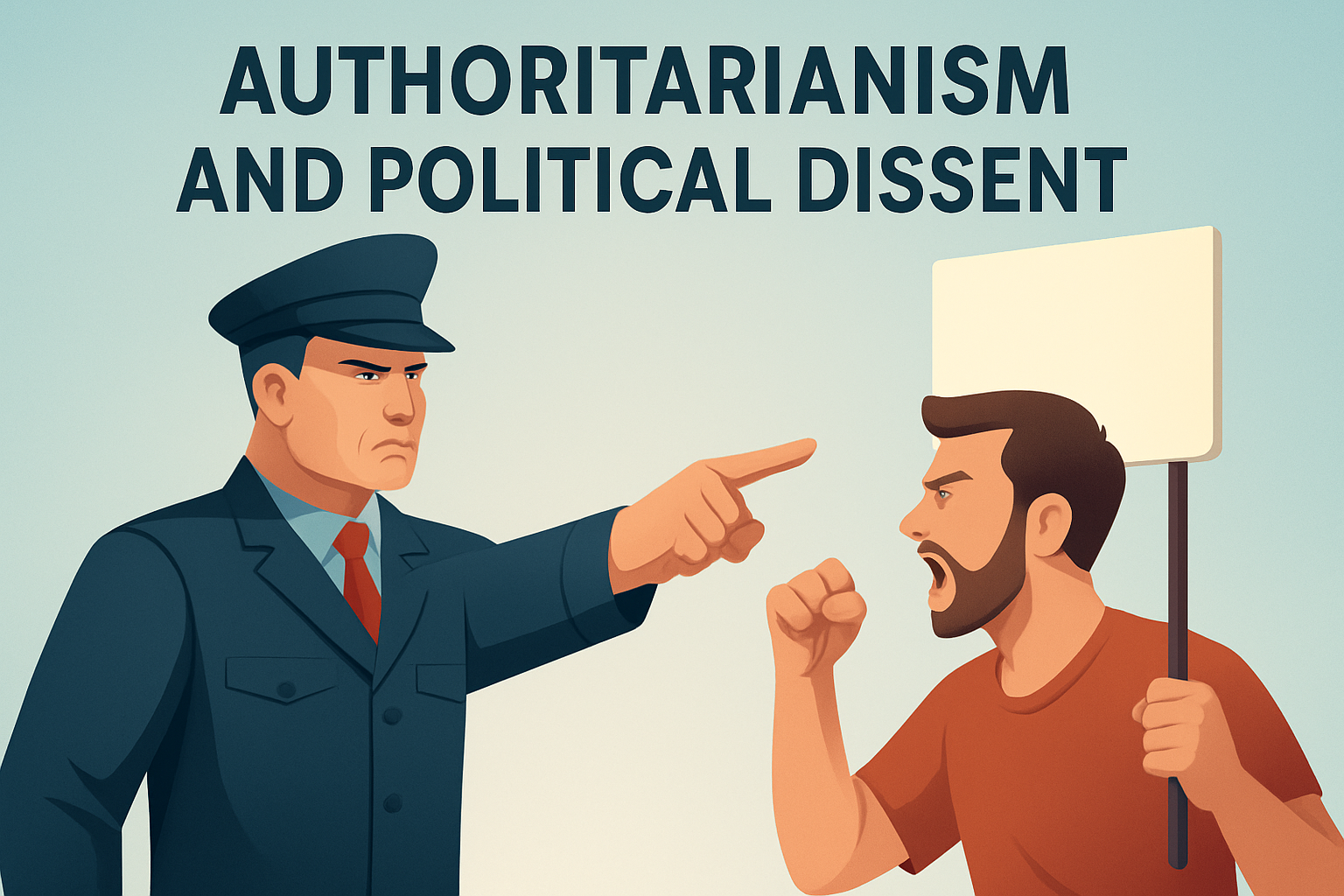
Introduction to Authoritarianism and Political Dissent
Authoritarianism is a political system characterized by a concentration of power in a single authority, often personified by an individual leader or a governing elite, with limited political freedoms. This system seeks to centralize control, restrict opposing political expression, and undermine democratic institutions and mechanisms that might challenge its power. The alternative to such regimes, primarily represented by democratic setups, encourages political dissent—an expression of disagreement or opposition to prevailing political conditions or authorities, often resulting in societal progress and reform.
The importance of understanding authoritarianism and political dissent lies in recognizing the intricate balance between maintaining societal order and allowing free political expression. Authoritarian systems often degrade civil liberties and suppress political dissent, leading to potential human rights abuses and societal stagnation. Conversely, political dissent, when permitted, can catalyze necessary political reforms, innovate governance, elevate voices of minorities, and transform societies toward more inclusive and democratic cultures.
As we delve deeper into this topic, it’s crucial to examine the manifestations of authoritarianism, the role political dissent plays in challenging such regimes, and the real-world implications for societies worldwide.
The Mechanisms of Authoritarian Rule
Authoritarian governments maintain power through various mechanisms that effectively limit political freedoms and concentrate control among a select few. These mechanisms are often implemented through censorship, surveillance, propaganda, suppression of media freedom, and the outright ban on political opposition. By doing so, authoritarian regimes ensure minimal challenge to their authority and uphold the status quo, leaving little room for political innovation or change.
One notorious example of authoritarian rule is the government of North Korea. The state maintains strict control over all facets of life, from personal freedom to media and communication. Information is tightly controlled, with state-run propaganda channels shaping public perception and suppressing dissent. North Korea’s leadership, through systematic surveillance and stringent laws, prevents any form of political opposition, ensuring that the ruling family’s power remains unchallenged.
Political Dissent under Authoritarian Regimes
Political dissent in authoritarian contexts faces significant risks and challenges. Despite these hurdles, dissenters play a vital role in illuminating the failures of authoritarian governance and advocating for democratic reforms. Political dissent can manifest through protests, underground movements, and the dissemination of uncensored information. Moreover, it highlights discrepancies in governance, corruption, and human rights violations.
For instance, the Arab Spring movement of the early 2010s showcased widespread political dissent across several authoritarian regimes in the Middle East and North Africa. In countries like Tunisia and Egypt, originally rigid regimes were challenged by mass protests and civil disobedience, demanding crucial reforms and democratic transitions. Although the outcomes varied across nations, these movements exposed the profound dissatisfaction within authoritarian systems and the relentless desire for democratization.
Challenges and Risks of Political Dissent
Dissenters in authoritarian regimes often face severe repressions, ranging from imprisonment and torture to execution. The risks associated with expressing political opposition can deter individuals from challenging the status quo and limit potential allies in reform movements. The fear of retaliation remains a significant barrier for citizens considering dissent and can often lead to self-censorship.
In Venezuela, for example, the government has systematically targeted opposition leaders and protestors. Under President Nicolás Maduro’s regime, politically motivated detentions, the use of excessive force, and intimidation have become common tactics to suppress dissent and silence critics. Despite these risks, opposition movements continue to push for political alternatives, albeit under significant pressure and threat.
The Role of Technology and Social Media
Technology and social media have become powerful tools for political dissent, facilitating the organization of protests, dissemination of information, and global awareness of authoritarian practices. These platforms can connect dissenters across the globe, amplify marginalized voices, and coordinate international responses to rights abuses.
During the 2019–2020 protests in Hong Kong, activists effectively used social media to organize large-scale demonstrations against proposed extradition laws and assert broader demands for democratic rights. Despite the Chinese government’s restrictions and the eventual imposition of a sweeping national security law, these protests gained international attention and presented a formidable challenge to authoritarian attempts to curtail freedoms in the special administrative region.
| Authoritarian Mechanisms | Impact on Political Dissent |
|---|---|
| Censorship | Limits freedom of expression and access to alternative viewpoints. |
| Surveillance | Creates a climate of fear and deters dissent. |
| Propaganda | Manipulates public opinion and marginalizes dissent. |
| Opposition Suppression | Stifles political competition and challenges to authority. |
International Community’s Role in Supporting Dissent
The international community plays a crucial role in supporting political dissent and responding to authoritarianism. Through diplomatic efforts, economic sanctions, and humanitarian interventions, international actors can exert pressure on authoritarian regimes to respect human rights, allow political freedoms, and engage in meaningful reforms.
The European Union’s sanctions on Belarus exemplify these dynamics. Following the disputed 2020 presidential election and the ensuing crackdown on protestors and opposition figures, the EU imposed targeted sanctions on key individuals and entities linked to the regime. These actions aim to express solidarity with dissenters and signal to authoritarian governments that international norms and human rights are not optional.
Conclusion and Call to Action
Authoritarianism poses significant threats to political freedoms and human rights. By understanding its mechanisms and the inherent challenges faced by political dissent, we can better appreciate the courage of dissenters and the crucial need for political reform. Political dissent under authoritarian rule highlights the human struggle for democratic rights, justice, and representation. It serves as a reminder of the importance of defending freedom of expression, allowing diverse political voices, and embracing the fundamental tenets of democracy.
In conclusion, we must continue to advocate for human rights and support the efforts of those striving for democratic reforms in authoritarian environments. This includes raising awareness, challenging misinformation, and encouraging international solidarity. As global citizens, it’s our responsibility to champion these values and work towards a more just and equitable world where political dissent is not only tolerated but welcomed as part of a thriving democratic discourse.
Let us commit to educating ourselves and those around us about the dynamics of authoritarianism and political dissent, ensuring that we remain vigilant and proactive in safeguarding democratic principles and human rights worldwide.
Frequently Asked Questions
1. What defines an authoritarian regime, and how does it differ from democratic systems?
Authoritarian regimes are political systems where power is concentrated in the hands of a single authority or a small group of elites. These regimes prioritize maintaining control over public life and quashing political dissent. Unlike democratic systems that are based on pluralism, participatory governance, and the protection of individual freedoms and rights, authoritarian governments limit political freedoms and often use coercive measures to maintain their grip on power. In democracy, power emanates from the people, with elected leaders accountable to them through mechanisms such as free and fair elections, transparent governance, and the upholding of rule of law. Authoritarian regimes, however, often lack these checks and balances, leading to unchecked power and often abuse by those in control.
2. Why do authoritarian governments restrict political dissent, and what methods do they typically use?
Authoritarian governments restrict political dissent to preserve their power and prevent any challenges that could destabilize their control. Dissenting voices are often seen as threats to the regime’s legitimacy, which is why such governments choose to suppress them rather than engage or tolerate differing viewpoints. Methods of restricting political dissent include censorship of media and internet, stringent laws against assembly and protest, surveillance of citizens, arbitrary arrests, and the use of propaganda to discredit opposition. By eliminating platforms where opposing views can be expressed, authoritarian regimes aim to stifle critical thinking and limit political mobilization that could lead to significant opposition movements.
3. How do authoritarian regimes impact the day-to-day life of citizens?
The impact of authoritarian regimes on everyday life can be profound and often stifling for citizens. With restricted freedoms, citizens might experience significant limitations on their ability to express themselves, whether through talking, writing, or participating in activism. This suppression extends to control over media and information, which can limit people’s access to diverse viewpoints and truthful news. Economically, such regimes can either bring stability or foster environments where the elites disproportionately benefit while the general populace faces limited opportunities and development. Institutions such as education, healthcare, and justice may become tools for political control or suffer from neglect. Daily life becomes an intricate balance where citizens must navigate the regime’s rules to avoid repercussions.
4. Is there room for political opposition within authoritarian regimes, and how does it typically develop or survive?
While political opposition does exist within authoritarian regimes, it often operates under very precarious and tense conditions. In authoritarian contexts, genuine political opposition is typically marginalized, with opposition figures facing intimidation, imprisonment, or exile. However, opposition movements can develop through covert networks, civil society organizations, or through leveraging international support and attention. These movements often rely on clandestine communication and organization to mobilize support and foster resilience against the regime. Over time, even authoritarian governments might allow some controlled opposition to provide a facade of pluralism or to alleviate external pressures, but these are often heavily scrutinized and have limited real power.
5. Are there any benefits to living under an authoritarian regime compared to a democratic one?
While authoritarian regimes tend to be associated with negative connotations due to their oppression of freedoms and human rights abuses, some argue that they can come with certain short-term advantages. In countries where stability has been hard to maintain due to constant political chaos or conflict, authoritarian regimes can sometimes offer a centralized control that staves off further conflict and provides a semblance of order. They can also fast-track decisions and execution of large-scale projects without the bureaucratic delays typical in democracies. However, these benefits often come at the expense of long-term prosperity and personal freedoms. The lack of accountability and transparency in decision-making can lead to corruption and inefficiencies. The debate on benefits tends to focus on context-specific scenarios where stability and rapid development are prioritized, albeit temporarily, over individual freedoms. Nonetheless, the lack of personal freedoms and potential human rights abuses often overshadow any perceived benefits in the long run.