
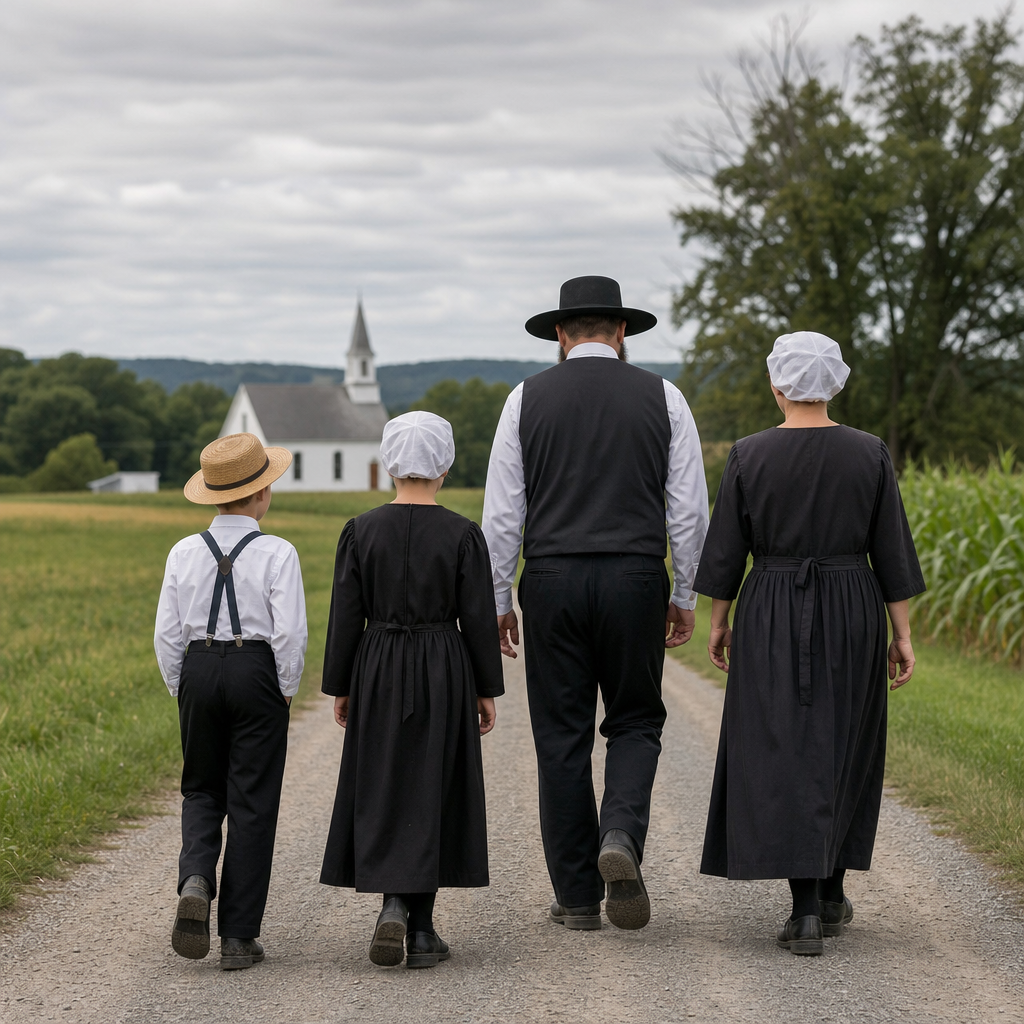
Wisconsin v. Yoder is one of the most important Supreme Court cases for understanding how religious liberty and compulsory education can collide in American constitutional law. Decided in 1972, the case asked whether a state may require Amish parents to send their children to public or private school until age sixteen when doing so violates deeply held religious beliefs. The Court held that Wisconsin could not constitutionally force those families to comply in the ordinary way, creating a major precedent on the relationship between the Free Exercise Clause and state power. For students in AP Government and Politics, this case matters because it sits at the intersection of civil liberties, federalism, parental rights, public education, and the Supreme Court’s role in balancing individual conscience against government interests.
To understand Wisconsin v. Yoder, it helps to define the core terms clearly. Religious liberty refers to the constitutional protection for belief and, in many contexts, religious practice. Compulsory education laws are state laws requiring children to attend school for a certain number of years. The Free Exercise Clause in the First Amendment limits government interference with sincere religious practice, although that protection is not absolute. When these principles clash, courts ask whether the state’s interest is strong enough to justify burdening religion. In Yoder, the Court treated the Amish objection as unusually serious, historically grounded, and tightly connected to a self-sustaining religious community.
This case remains essential because it shows that constitutional disputes are rarely simple. States have a legitimate interest in educating citizens, preparing young people for economic life, and preventing child neglect. At the same time, the Constitution protects minority faiths from being absorbed by majority institutions. I have taught this case by pairing it with later decisions such as Employment Division v. Smith, and students immediately see why Yoder still shapes debates over school choice, homeschooling, vaccine mandates, curriculum disputes, and parental control. Even when later doctrine narrowed free exercise claims in some settings, Yoder never disappeared. It still stands as a leading example of the Court granting an exemption from a general law because the burden on religion was profound and the state’s justification, in that context, was insufficient.
Background of Wisconsin v. Yoder
The dispute began with members of the Old Order Amish and the Conservative Amish Mennonite Church in Wisconsin. Under Wisconsin law, children had to attend school until age sixteen. The parents involved in the case refused to send their children to formal schooling after the eighth grade. They believed that high school attendance exposed Amish teenagers to values of competition, consumerism, and individualism that threatened their religious way of life. Instead of continuing in public school, Amish adolescents typically learned through farming, household work, apprenticeships, and community participation.
Jonas Yoder and other Amish parents were convicted in Wisconsin state court and fined for violating the compulsory attendance law. The parents argued that applying the law to them infringed the First Amendment. The case moved through the Wisconsin courts and eventually reached the U.S. Supreme Court. Chief Justice Warren Burger wrote the majority opinion. The Court ruled 7–0 in favor of the Amish parents, though there were separate opinions. Justice William O. Douglas agreed in part but emphasized that the wishes and interests of the children themselves also deserved attention.
The factual context mattered enormously. The Amish were not claiming a generalized dislike of education. They accepted elementary schooling and had a long record of productive, law-abiding community life. The Court repeatedly noted the Amish tradition of vocational training, agricultural labor, mutual aid, and separation from many aspects of modern society. In other words, this was not a claim built on convenience. It was a claim built on a demonstrated religious system that would be seriously damaged by compulsory secondary education.
The constitutional question and the Court’s reasoning
The central constitutional question was whether Wisconsin’s compulsory school attendance law, as applied to Amish families, violated the Free Exercise Clause of the First Amendment. The Court began from the premise that neutral state laws can serve important purposes, but it also recognized that religious freedom occupies a preferred position in the constitutional structure. The majority concluded that forcing Amish children to attend school beyond eighth grade substantially burdened the free exercise of religion because continued attendance would endanger the survival of the Amish faith and community.
Chief Justice Burger balanced two interests. On one side stood the state’s claimed interest in universal education. On the other stood the parents’ sincere religious duty to preserve a way of life centered on humility, self-sufficiency, and communal separation. The Court accepted that education is critical in a democracy, but it found that Wisconsin had not shown that one or two additional years of conventional schooling were necessary for Amish children, especially given the practical training they received in their communities. The opinion stressed that the Amish had been successful in preparing children to become productive citizens without high school.
The case is often taught as an example of strict judicial scrutiny, even though the Court did not use later doctrinal language as neatly as modern casebooks do. In practical terms, the Court asked whether the state had a compelling interest and whether applying the law in this specific situation was necessary. Wisconsin failed that test. The state’s interest in compulsory education was real, but not strong enough on these facts to override a sincere and historically rooted religious practice.
The reasoning can be summarized clearly in the following comparison:
| Issue | Amish Parents’ Position | Wisconsin’s Position | Supreme Court’s Conclusion |
|---|---|---|---|
| Religious burden | High school threatened Amish beliefs and community survival | Law applied equally to everyone | Burden was severe and constitutionally significant |
| State interest | Basic education through eighth grade was sufficient | Education until sixteen served citizenship and welfare | Interest was important but not compelling here |
| Alternative training | Vocational learning and community instruction prepared children for Amish life | Formal secondary school was necessary | Amish alternatives were credible and longstanding |
| Result | Exemption requested from attendance law | No exemption | Exemption granted for Amish families |
Why the Amish facts were decisive
One reason Yoder is often misunderstood is that people treat it as a broad parental rights case. It is narrower than that. The Court did not say any parent may reject education requirements simply because they dislike the curriculum or prefer a different lifestyle. The Amish prevailed because of a combination of factors that the Court viewed as exceptional: sincerity of belief, a centuries-old religious tradition, a close connection between faith and daily practice, and evidence that Amish children would still become self-supporting, responsible adults.
In my experience explaining this opinion, the key phrase is “specific factual record.” The Court relied heavily on testimony about Amish history, social organization, and educational practices. The justices were persuaded that secondary schooling would not just inconvenience Amish families; it would fundamentally interfere with religious formation at a crucial adolescent stage. That emphasis matters for exam writing. A strong AP response should show that Yoder was not a blank check for exemptions from generally applicable laws.
The Court also took care to distinguish the Amish from groups seeking isolation for nonreligious reasons. The majority described the Amish as a successful community whose members did not become public charges and whose informal education prepared youths for adult responsibilities. That point reduced the force of Wisconsin’s argument that children needed standard high school in order to function in society. Critics have noted that this reasoning risked rewarding religions that look stable and familiar to judges while offering less protection to newer or less understood faiths. That criticism is fair and remains part of the case’s legacy.
Major themes for AP Government and Politics
For AP Government and Politics, Wisconsin v. Yoder connects to several recurring course themes. First, it is a civil liberties case about the First Amendment. Second, it shows selective incorporation in action because religious liberty limits state governments through the Fourteenth Amendment. Third, it illustrates how the Supreme Court balances individual rights against public policy goals rather than treating all rights claims as automatic winners.
Yoder also helps students compare judicial philosophies. A justice focused on ordered liberty may stress the social value of education and democratic citizenship. A justice more protective of conscience may emphasize that the Constitution exists partly to shield minority beliefs from majoritarian rules. The majority in Yoder leaned heavily toward protecting minority religion. Justice Douglas’s separate opinion introduced another layer by questioning whether children’s own preferences should matter, especially as they grow older. That concern foreshadows modern debates over student autonomy, family authority, and the rights of minors.
The case also fits naturally into discussions of federalism and the police power. Education is primarily a state responsibility, and states traditionally regulate school attendance, curriculum, teacher licensing, and child welfare. Yoder reminds students that even core state functions must operate within constitutional limits. A state can pursue legitimate goals, but it cannot ignore fundamental liberties while doing so.
Relationship to other Supreme Court cases
Wisconsin v. Yoder makes the most sense when read alongside other religion cases. In Sherbert v. Verner, decided in 1963, the Court protected a Seventh-day Adventist who was denied unemployment benefits after refusing Saturday work. Sherbert used a demanding form of review for laws burdening religion. Yoder followed that protective approach. Together, those cases suggested that government often had to justify substantial burdens on sincere religious exercise with exceptional reasons.
The doctrine changed sharply in Employment Division v. Smith in 1990. There, the Court held that neutral, generally applicable laws usually do not violate the Free Exercise Clause even if they incidentally burden religion. Smith limited the broad exemption approach associated with Sherbert and Yoder. Still, Yoder survived because the Smith Court treated it as distinctive, involving parental rights plus free exercise, and an especially unusual factual setting. That is a crucial distinction for students: Yoder is still valid, but it does not control every modern free exercise dispute.
Another useful comparison is with Pierce v. Society of Sisters, a 1925 case striking down an Oregon law that effectively required children to attend public school. Pierce recognized that parents have substantial authority to direct the upbringing and education of their children. Yoder built on that tradition, combining parental authority with religious freedom. More recent cases involving public funding, religious schools, and state benefits, such as Trinity Lutheran, Espinoza, and Carson v. Makin, concern different questions, but they show the Court’s continuing willingness to protect religious actors from exclusion or unequal treatment.
Limits, criticisms, and continuing relevance
Yoder is influential, but it has limits and critics. One criticism is that the decision gave insufficient weight to the independent interests of Amish children, especially girls, whose future opportunities may be narrowed by ending formal education after eighth grade. Another is that the Court may have idealized Amish life and underestimated the importance of broader educational exposure in a modern economy. Justice Douglas worried that courts should not assume parents always speak perfectly for mature minors. That concern has only grown stronger in contemporary constitutional debates.
There is also a doctrinal limitation. Because later free exercise law became less protective in Smith, litigants cannot simply cite Yoder and expect an exemption. Courts now pay close attention to whether a law is neutral, generally applicable, or contains discretionary exceptions. In some settings, statutory protections such as the Religious Freedom Restoration Act or state-level religious freedom laws matter more than Yoder itself. Even so, Yoder remains a benchmark for understanding when the Court believes a religious burden is extraordinary and when the factual record can justify a constitutional exemption.
Today, the case still matters because disputes over education and belief have not gone away. Homeschool regulation, curricular transparency, LGBTQ issues in schools, vaccination requirements, and conflicts over charter or private religious education all raise questions about parental control and state authority. Yoder does not answer all of them, but it provides a framework: identify the burden, test the state’s rationale, examine the specific facts, and ask whether a less restrictive path exists. If you are studying AP Government and Politics, keep Yoder in your core case list and connect it to Sherbert, Smith, Pierce, and modern school and religion disputes. That approach will strengthen both multiple-choice recall and free-response analysis.
Frequently Asked Questions
What was Wisconsin v. Yoder about?
Wisconsin v. Yoder, decided by the U.S. Supreme Court in 1972, addressed a constitutional conflict between a state’s compulsory education law and the religious freedom of Amish families. Wisconsin required children to attend school until age sixteen. Several Amish parents refused to send their children to public or private high school after the eighth grade because they believed additional formal schooling would expose their children to values and practices that were inconsistent with Amish religious life. They were convicted under state law for violating the attendance requirement, and the case ultimately reached the Supreme Court.
At its core, the case asked whether the First Amendment’s protection of the free exercise of religion allowed Amish parents to withdraw their children from school before the legal age limit. The Court ruled in favor of the Amish families, holding that Wisconsin could not force them to comply with the law in the ordinary way when doing so would substantially burden their sincere religious beliefs. The decision became a landmark because it showed that, in certain narrow circumstances, religious liberty can outweigh a generally applicable state interest such as compulsory education.
Why did the Supreme Court rule in favor of the Amish parents?
The Supreme Court ruled for the Amish parents because it concluded that Wisconsin’s compulsory school attendance law imposed a serious burden on the free exercise of their religion. The Amish did not object to education in general; in fact, they supported basic schooling through the eighth grade. Their objection was specifically to additional formal secondary education, which they believed would undermine Amish values of simplicity, separation from the modern world, and preparation for life within their religious community. The Court accepted that these beliefs were longstanding, sincere, and central to Amish religious practice.
The Court then weighed that religious burden against the state’s interest in requiring more years of formal education. Wisconsin argued that two additional years of schooling were important for preparing young people to be responsible citizens and self-supporting adults. While the Court recognized that education is a vital state interest, it found that the Amish way of life already provided vocational training, moral instruction, and community-based preparation for adulthood. In the Court’s view, the state had not shown that forcing Amish teenagers into high school was necessary enough to justify overriding the families’ constitutional rights. That balancing approach is a major reason the case remains so important in discussions of religious liberty.
What constitutional principle did Wisconsin v. Yoder establish?
Wisconsin v. Yoder is best known for reinforcing the principle that the Free Exercise Clause of the First Amendment can, in some circumstances, protect religious believers from having to comply with a neutral state law when that law places a substantial burden on religious practice. The Court did not say that religious objections always defeat government regulation. Instead, it emphasized that when a law significantly interferes with sincere religious conduct, the government may need to show an especially strong justification for enforcing that law against those believers.
In practical terms, the decision is often associated with a form of constitutional balancing: the Court looked at the depth and history of the Amish religious claim, the extent of the burden imposed by the education law, and the actual strength of the state’s interest in applying the law to this particular group. The result was a narrow but powerful precedent. Yoder did not create a blanket religious exemption for everyone who disagrees with state policy. Rather, it stands for the idea that courts may sometimes recognize exemptions when a law collides with longstanding, sincere religious practice and the government cannot prove that strict enforcement is truly necessary.
Does Wisconsin v. Yoder mean parents can always remove their children from school for religious reasons?
No. Wisconsin v. Yoder does not mean that any parent may automatically claim a religious right to disregard school attendance laws. The Court’s ruling was closely tied to the specific facts of the Amish community and the evidence presented in that case. The Amish showed that their objection was rooted in a well-established religious tradition, that they accepted education through the eighth grade, and that they had a structured alternative way of preparing adolescents for adult life through vocational, agricultural, and community training. Those details mattered a great deal to the Court’s analysis.
Because of that, Yoder is usually understood as a limited decision rather than a broad license to avoid educational requirements. Courts generally look carefully at whether a claimed religious belief is sincere, whether the law truly imposes a substantial burden, and whether the state has compelling reasons for applying the rule. They may also consider the interests of children themselves, which has become an especially important issue in later legal discussions. So while Yoder remains a major religious liberty case, it does not establish an unlimited parental veto over education laws.
Why is Wisconsin v. Yoder still important today?
Wisconsin v. Yoder remains important because it sits at the center of a continuing constitutional debate: how should courts balance religious liberty against government interests in health, safety, education, and civil regulation? The case is frequently taught in constitutional law because it illustrates the tension between individual rights and state authority in a concrete, memorable setting. It also helps explain why free exercise cases can be difficult. The Court was not choosing between religion and education in the abstract; it was deciding how far the government may go when a generally applicable law conflicts with a particular community’s deeply rooted faith.
The decision also matters because it influenced later conversations about religious exemptions far beyond the school setting. Lawyers, judges, and scholars often refer to Yoder when discussing whether religious believers should receive constitutional or statutory protection from laws that burden their practices. At the same time, the case has drawn criticism and debate, especially over how much weight should be given to parental authority and communal religious life when children’s future opportunities are involved. That ongoing debate is exactly why Yoder continues to be a foundational case for understanding religious liberty, compulsory education, and the limits of government power under the Constitution.