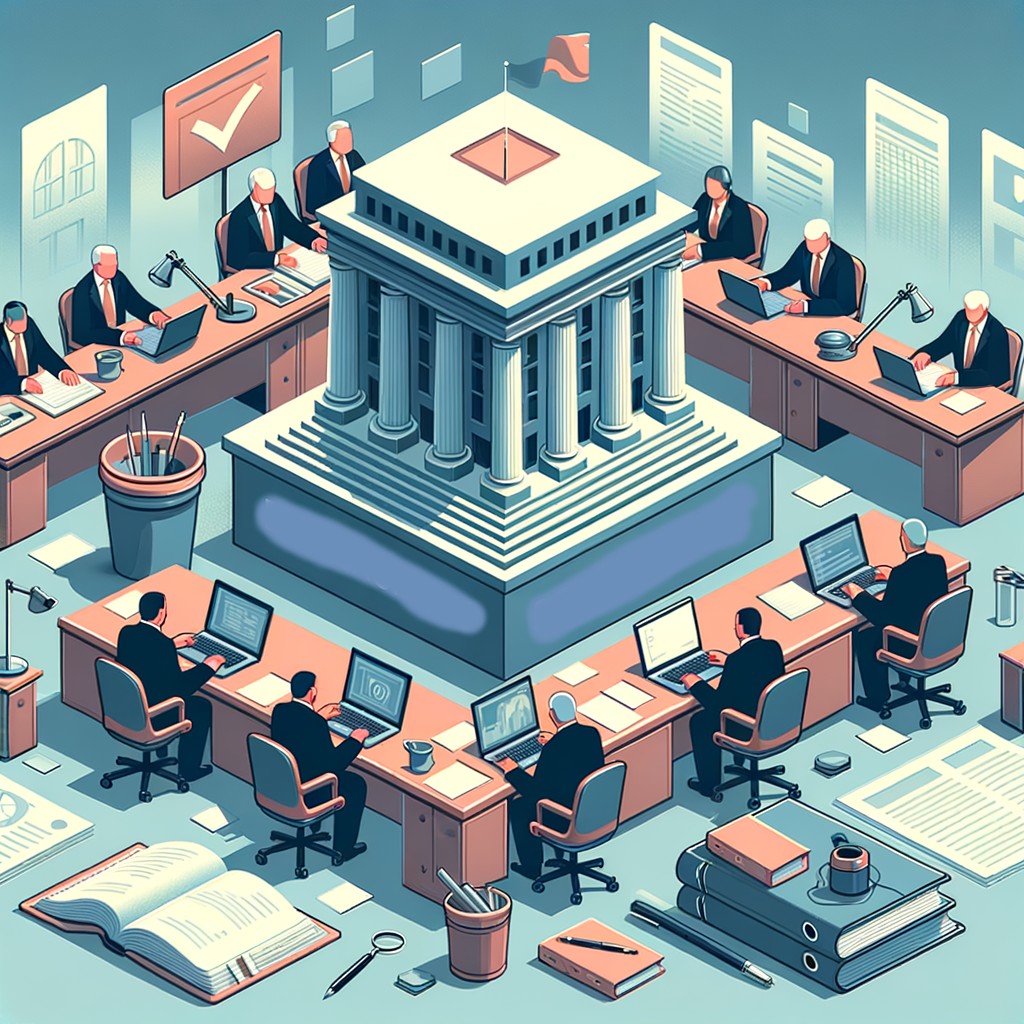
Bureaucracy is a term that evokes a myriad of opinions, often embodying both the perceived inefficiencies and the necessary order within government bodies. Understanding bureaucracy and its role in government requires us to explore both its definition and the framework it operates within to fulfill its duties. At its core, bureaucracy serves as the administrative backbone of governmental functions, designed to implement rules, regulations, and policies fairly and systematically. It is a complex system with layers of authority, procedures, and regulations that aim to ensure consistency and accountability in public administration.
The concept of bureaucracy began as a constructive approach for organizing governmental functions in a way that promotes order and efficiency. It is rooted in attributes like specialization of tasks, hierarchical structures, rules-based management, and documentation. Renowned sociologist Max Weber extensively contributed to the theoretical foundation of bureaucracy, arguing that a well-defined bureaucratic structure was crucial for maintaining law and order in modern societies. Despite its theoretical strengths, bureaucracy often gets a bad rap due to its association with red tape, sluggishness, and inflexibility.
Understanding the role of bureaucracy in government is key to discerning how laws and policies are enforced. These formalities have tangible impacts, shaping infrastructure development, healthcare systems, education policies, and more. Bureaucracy can greatly influence the efficiency, transparency, and accountability of public services. As we delve further, let us explore the detailed mechanisms through which bureaucracy functions, its inherent challenges, and the potential reforms needed to enhance its efficacy. By peeling back layers of complexity, we can better appreciate the significant yet often misunderstood role that bureaucracy plays in the governance of our societies.
Understanding Bureaucracy: Definitions and Components
To fully comprehend bureaucracy, one must first establish a clear definition. Bureaucracy is a system of administration distinguished by its formalism and complex organization. It comprises a body of non-elected government officials and an administrative policy-making group. Historically, bureaucracy’s raison d’être has been the implementation of government policy, enabling public servants to function within a framework that ensures uniformity and adherence to established guidelines.
Central to the bureaucratic system is the concept of hierarchy. Hierarchical structures form the backbone of bureaucratic organizations, with defined chains of command that provide orderliness in administrative operations. This hierarchy ensures that tasks are distributed efficiently and decisions move through appropriate levels of authority. In such a setup, each level of the hierarchy tends to specialize in public services, ensuring that personnel perform tasks in which they have expertise.
A key component of bureaucracy is the standardization of procedures. Formal rules and regulations guide how tasks should be performed within the bureaucracy, aiming to build an environment of predictability and fairness. This systematic approach helps to minimize arbitrary decision-making, ensuring that similar cases are treated consistently over time.
Division of labor is another elemental characteristic of bureaucracy. By allocating specific responsibilities to various departments or entities, a bureaucratic system promotes expertise and efficiency. Each unit or department has a specific function, which together form a cohesive machinery capable of implementing complex government policies.
The importance of documentation cannot be overstated in a bureaucracy. Documents and records form the lifeblood of bureaucratic systems, capturing transactions, decisions, and outcomes. They maintain accountability, facilitating audits, and serving as evidence of transparency, both critical for public trust.
The Role of Bureaucrats in Government
Bureaucrats, the professionals working within the system, play vital roles in government function. These individuals are essential in translating legislative intentions into practical applications. They administer everyday activities that underpin governmental operations, including processing permits, collecting taxes, or issuing passports, hence affecting citizens’ daily lives directly.
Bureaucrats also provide stability and continuity within the political landscape. Unlike elected officials whose tenure could be limited by the fluctuations of election cycles, bureaucrats are usually permanent professionals whose expertise surpasses political permutations. This permanence ensures the consistency and impartiality of public administration despite political upheavals.
Moreover, bureaucrats are vital advisors to lawmakers. By providing expert reports, assessments, and analyses, they empower decision-makers with the necessary insight to craft informed policies. Their expertise in various fields of governance, ranging from healthcare to economic policies, bestows invaluable guidance that aligns public policy with the intricate tapestry of societal needs.
Furthermore, in crisis management, bureaucrats are the logistical operators who execute responses to emergencies, whether public health concerns like pandemics or natural disasters. Their ability to mobilize resources, coordinate stakeholders, and manage the fallout marks them as indispensable to government authorities seeking to safeguard public welfare.
Challenges in Bureaucratic Systems
Despite its contributions, bureaucracy faces significant challenges, often stemming from its rigid structure. The insistence on set procedures and aversion to flexibility sometimes contribute to inefficiency and hinder innovation. Bureaucratic red tape can cause delays, create frustration, and stifle creativity, which may be detrimental to addressing complex, modern problems needing agile solutions.
Moreover, the hierarchical nature can lead to communication barriers. As information moves up and down the layers of hierarchy, it risks being distorted or delayed. Slow decision-making processes can compound this problem, especially in contexts demanding rapid responses.
In some cases, bureaucracies gain notoriety for being self-serving. The goal of self-preservation can occasionally lead to bloated bureaucracies, resulting in unnecessary expenditures of taxpayer money. Bureaucratic myopia may develop, where agencies focus more on justifying their existence rather than on outcome effectiveness. This inefficiency manifests in redundant functions, overlaps among departments, or outdated practices that no longer serve the public interest.
Reforming Bureaucracy for Better Governance
To harness bureaucracy’s strengths while addressing its weaknesses, reform is frequently advocated. Modernizing bureaucracy involves adopting principles from organizational management across sectors to introduce flexibility, efficiency, and responsiveness. Streamlining regulations to eliminate unnecessary processes could cut through red tape, speeding up service delivery without sacrificing thoroughness.
Technological advancements present significant opportunities for reform. Digitizing records, transitioning to e-governance, and using data analytics to predict trends can lead to more informed decision-making and a reduction of errors. Through digital platforms, public engagement can be amplified as open channels for feedback and communication shift a traditionally closed system to one that is more interactive and transparent.
Building a results-oriented culture can pivot focus towards outputs and outcomes rather than merely adhering to prescribed procedures. Performance metrics can incentivize teams to meet public service goals efficiently and effectively, enhancing accountability and inspiring innovation.
Decentralization offers another pathway for reform. By devolving certain responsibilities to regional or local governments, bureaucracy can decrease in size and increase in responsiveness. It allows the various layers of government to be more attuned to specific local needs, customize services, and adapt policies to better fit community contexts.
Conclusion
Bureaucracy remains an integral yet contentious component of modern governance. It provides a framework upon which operational stability and policy implementation hinge. Understanding bureaucracy goes beyond recognizing its systematic nature; it is about appreciating its influence on public administration and acknowledging the challenges inherent within the system.
While bureaucratic systems offer predictability, standardization, and continuity, their characteristic inflexibility can prove problematic in an era marked by rapid social and technological change. Reforming these systems may not only preserve their historic strengths but can also position them to more effectively address current and future societal needs.
As citizens, our interaction with bureaucracy shapes our perception of governance, fairness, and accessibility to services. Therefore, maintaining a balance between necessary bureaucratic order and adaptable, citizen-centric models of service delivery is crucial. This balance can ultimately lead to greater public trust and satisfaction in government operations.
Future reforms should focus on improving efficiency, transparency, responsiveness, and public accountability. With the continuous evolution of social structures and technological capabilities, bureaucracy, too, must evolve to stay relevant and functional. Successfully navigating this evolution will not only uphold the primary purposes of bureaucracy but might also reinvigorate its role as a cornerstone of effective government in the modern era.
Frequently Asked Questions
1. What is bureaucracy, and how does it function within the government?
Bureaucracy refers to a structured system of administration characterized by a hierarchy of offices, fixed rules, and procedures designed to manage and facilitate the execution of governmental functions. It is the backbone of government operations, ensuring that policies and services are implemented in an organized, efficient, and systematic manner. Through a network of agencies and officials, bureaucracy allocates resources, enforces laws, and provides services meant to maintain order and address the needs of society. While it often gets criticized for being slow or rigid, the systematic nature of bureaucracy is intended to allow governments to function with predictability, uniformity, and transparency, minimizing arbitrariness. When bureaucracy works well, it embodies fairness and allows for a well-run state, helping to balance intricate procedures with the necessity for oversight and accountability in managing public resources.
2. Why is bureaucracy viewed negatively by some people?
Bureaucracy is often viewed negatively due to perceptions of inefficiency, excessive red tape, and a lack of flexibility in decision-making. Critics argue that the complex structures and numerous layers of approval required within a bureaucratic system can slow down processes, creating unnecessary delays in policy implementation or service delivery. The emphasis on standardized procedures can sometimes stifle innovation and responsiveness, creating a sense of frustration among those who are subject to these processes. Furthermore, bureaucracies can sometimes appear impersonal or disconnected from individual needs, focusing more on rules than on people. However, it’s essential to understand that these characteristics are not inherent flaws but potential byproducts of the very structure designed to ensure fairness, consistency, and accountability in the public domain. Empathy and innovation can be integrated to address these concerns without sacrificing the benefits a well-functioning bureaucracy provides.
3. How does bureaucracy help in maintaining order and implementing policies?
Bureaucracy plays a crucial role in maintaining societal order and ensuring that government policies are effectively implemented. Through its established processes and systems, bureaucracy standardizes procedures that ensure consistency in handling government affairs. It institutionalizes a framework for creating, executing, and enforcing laws and regulations uniformly and regularly. This enforcement is critical in maintaining legal and social order as it outlines clear expectations for behavior and establishes consequences for non-compliance. Furthermore, bureaucratic agencies are tasked with interpreting legislative policies and translating them into action plans, making complex governmental directives operative and tangible. By doing so, bureaucracies serve as the operational arm to achieve the overarching goals set by policymakers, facilitating organized and predictable governance that can ensure social stability and adherence to democratic principles.
4. What are the essential features of a bureaucracy?
Bureaucracies are characterized by several key features that define their function and role in governance. Firstly, they consist of a hierarchical structure, where a chain of command delineates authority, allowing for organized supervision and accountability across levels. Secondly, bureaucracies follow a system of formal rules and regulations. These guidelines standardize operations, ensuring activities are conducted consistently and fairly. Thirdly, there is a clear division of labor within a bureaucracy, with specific roles and responsibilities assigned to various positions, facilitating specialization and efficiency. Fourthly, bureaucracies rely heavily on written documentation and records. This documentation maintains transparency, tracks progress, and preserves institutional memory, which is vital for continuity. Lastly, bureaucracies are impersonal in their interactions, meaning decisions are made based on objective criteria rather than personal connections, promoting fairness and equality in public administration. These features collectively frame a system that aims to operate efficiently while upholding transparency, accountability, and fairness.
5. How can bureaucracies improve their efficiency and responsiveness?
Bureaucracies can improve their efficiency and responsiveness through several strategic measures. Firstly, embracing technological advancements can streamline processes, reduce paperwork, and facilitate faster communication and decision-making. Information technology solutions such as digital records, databases, and online services can make bureaucratic operations more agile and accessible. Secondly, ongoing training and professional development for bureaucrats can improve their skills, adaptability, and understanding of evolving societal needs, leading to more informed decision-making. Thirdly, enhancing participatory governance by involving citizens in feedback and consultative processes can ensure that bureaucratic policies and actions more closely align with public needs and expectations, fostering greater trust and collaboration. Additionally, adopting performance measurement tools to assess the effectiveness and efficiency of services can help identify areas for improvement and inform policy adjustments. Streamlining regulations and procedures to remove unnecessary complexity can also significantly reduce red tape, making the system more responsive and user-friendly. By addressing these facets, bureaucracies can enhance their service delivery while maintaining their structural integrity and roles.