
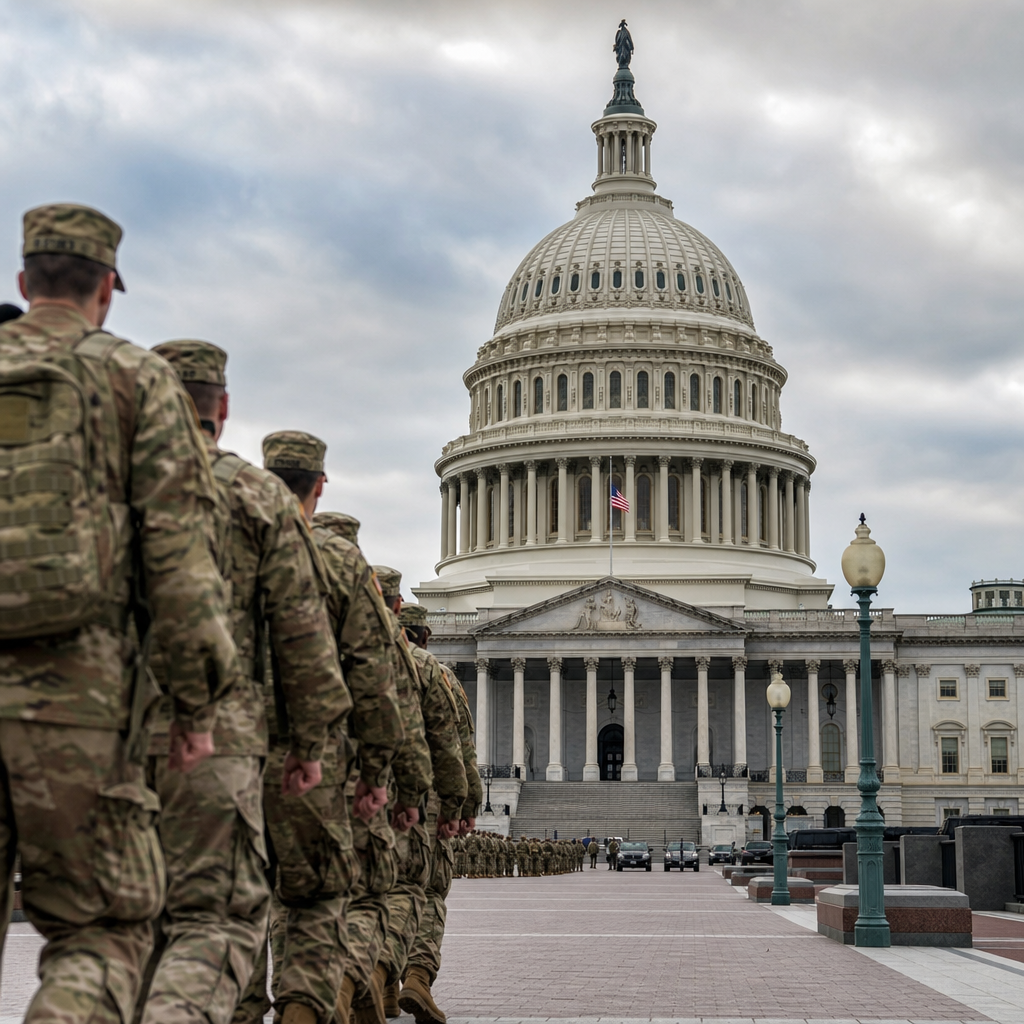
War powers in practice are the real-world rules, habits, and disputes that determine how the United States decides to use military force. In AP Government and Politics, this topic sits at the intersection of constitutional design, institutional rivalry, national security, and democratic accountability. The Constitution deliberately divides military authority between Congress and the president. Congress has the power to declare war, raise and support armies, provide and maintain a navy, regulate the armed forces, and control funding. The president serves as commander in chief of the Army and Navy and directs military operations once forces are in service. That structure was meant to prevent unilateral war making while allowing fast responses to threats.
In practice, however, shared military authority has never been neat. Presidents have often moved first, especially when speed, secrecy, or diplomacy mattered. Congress has often responded later through authorizations, appropriations, hearings, or political pressure. I have found that students understand this issue best when they stop asking who “wins” and instead ask how each branch uses its own tools. Formal declarations of war are rare in modern history, but military force is not. The Korean War, Vietnam War, Persian Gulf War, post-9/11 conflicts, Libya, Syria, and numerous counterterrorism operations all show that war powers are exercised through a mix of statutes, executive decisions, funding choices, and public support.
Why does this matter? Because decisions about war involve lives, treasure, civil liberties, and the credibility of constitutional government. If the president can commit forces without meaningful limits, checks and balances weaken. If Congress cannot act quickly or clearly, national defense may suffer. For students, this hub article defines the key concepts: declaration of war, authorization for use of military force, commander in chief, War Powers Resolution, appropriations power, oversight, and judicial reluctance. It also connects the major cases and controversies that appear across this miscellaneous area of AP Government and Politics. Understanding war powers in practice means understanding not only what the Constitution says, but how institutions behave under pressure, how precedent accumulates, and how politics shapes constitutional meaning over time.
Constitutional Foundations: What Each Branch Actually Controls
The Constitution splits military power by design. Article I gives Congress substantial authority over war and the military. It can declare war, issue letters of marque and reprisal, make rules concerning captures, raise and support armies for no more than two years at a time, provide and maintain a navy, make rules for the regulation of the land and naval forces, call forth the militia, and organize the militia. Most important in everyday practice, Congress controls appropriations. No sustained military campaign can continue without money, and no defense structure exists apart from statutes and budgets enacted by Congress.
Article II makes the president commander in chief. That title does not grant a blank check to start any conflict at will. It does, however, give the president operational control over forces once authorized and in service. Presidents direct strategy, choose targets, negotiate with allies, receive intelligence, and respond to sudden attacks. Alexander Hamilton argued in Federalist No. 69 that the president’s military authority would be far more limited than that of a British king because the American president could command forces but not independently declare war or raise armies.
The constitutional ambiguity lies in the space between repelling attacks and initiating broader hostilities. That gray area is where practice developed. When I teach this material, I stress that the text creates overlapping powers rather than airtight boundaries. Congress can authorize or constrain; the president can act rapidly and define the facts on the ground. The result is an enduring constitutional contest rather than a simple legal formula.
From Declarations of War to Authorizations for Use of Military Force
Congress has issued formal declarations of war only eleven times in five conflicts: the War of 1812, the Mexican-American War, the Spanish-American War, World War I, and World War II. Yet the United States has used military force far more often. The modern substitute is the authorization for use of military force, usually called an AUMF. An AUMF is a statute through which Congress permits the president to use force under specified conditions without a formal declaration of war.
The Gulf of Tonkin Resolution of 1964 is a classic example of broad authorization. After reported attacks involving U.S. naval vessels near Vietnam, Congress passed a resolution allowing the president to take all necessary measures to repel armed attack and prevent further aggression in Southeast Asia. Presidents Lyndon Johnson and Richard Nixon relied on that broad language to expand U.S. involvement in Vietnam. Many members later concluded that Congress had delegated too much discretion on incomplete information.
By contrast, the 1991 authorization for the Persian Gulf War and the 2002 authorization regarding Iraq reflected more explicit congressional debate before major operations. After the September 11 attacks, Congress passed the 2001 AUMF, authorizing force against those responsible and associated forces. That statute became the central legal foundation for military actions against al-Qaeda, the Taliban, and later groups linked through executive interpretation. One lesson from these examples is clear: modern war powers often turn on how broadly Congress writes an authorization and how expansively presidents interpret it.
The War Powers Resolution and Its Limits
The War Powers Resolution of 1973 was Congress’s direct response to Vietnam-era concerns about presidential overreach. Enacted over President Nixon’s veto, the law requires the president to consult with Congress “in every possible instance” before introducing U.S. armed forces into hostilities or situations where hostilities are imminent. It also requires a report within forty-eight hours after such deployment. Unless Congress declares war, authorizes the action, extends the period, or is physically unable to meet because of an attack, the use of forces must end within sixty days, with a possible thirty-day withdrawal period.
On paper, that framework seems straightforward. In practice, it has been contested from the start. Presidents of both parties have often complied with reporting requirements “consistent with” rather than “pursuant to” the resolution, signaling that they do not concede its constitutionality. Administrations frequently argue that particular operations do not rise to the level of “hostilities,” a crucial term the statute never clearly defines. That ambiguity mattered during the 2011 Libya intervention, when the Obama administration contended that U.S. involvement, centered on airpower and support roles, did not trigger the sixty-day limit in the same way as a full-scale conflict.
The resolution still matters because it creates reporting obligations, frames congressional debate, and supplies a vocabulary for evaluating presidential action. But it has not solved the basic struggle. It works best as a political forcing mechanism, not as a self-executing barrier. Congress retains stronger leverage through authorizations, repeals, and funding restrictions than through the resolution alone.
How Congress Checks the President in Real Military Disputes
Congress has several practical tools for shaping military policy, and they work best when used together. Appropriations are the most powerful. Congress can fund a war fully, limit spending to specific purposes, bar funds for troop deployments, or require certifications before money is used. Oversight is the second major tool. Hearings, classified briefings, inspector general reports, and Government Accountability Office analysis help legislators test executive claims and expose strategic failures. The Senate also influences war policy through confirmation power over defense and diplomatic appointments.
Congress can also legislate reporting requirements, sunset authorizations, repeal outdated statutes, and set rules for detention, surveillance, and military justice. The following table shows the main congressional tools and how they function in practice.
| Tool | What Congress Can Do | Practical Example |
|---|---|---|
| Declaration or AUMF | Authorize force narrowly or broadly | 2001 AUMF after 9/11 |
| Appropriations | Fund, limit, or cut operations | Vietnam-era funding battles |
| Oversight hearings | Question officials, gather records, shape opinion | Iraq War testimony on intelligence |
| Sunsets and repeals | End or narrow prior authority | Recent efforts to repeal old Iraq AUMFs |
| Rules and statutes | Set detention and military procedures | Detainee treatment legislation |
Still, congressional checks are often weakened by collective action problems. Members may prefer to criticize a war without taking the politically costly vote to cut funds. Party loyalty can also matter more than institutional pride. In my experience, that is the central pattern students miss: Congress usually has tools, but not always the will to use them decisively.
Why Presidents Often Lead: Speed, Secrecy, and the Facts on the Ground
Presidents typically hold the initiative in military affairs because the executive branch is built for unity, speed, and information control. The president receives intelligence from the National Security Council, Department of Defense, Joint Chiefs of Staff, State Department, and intelligence agencies in real time. Congress is large, decentralized, and slower by design. When crises erupt, the president can order evacuations, defensive strikes, naval movements, cyber responses, or special operations before Congress can deliberate.
Presidents also benefit from the practical reality that once troops are deployed, Congress faces pressure not to undermine them. This is the politics of faits accomplis: action creates a new baseline. Harry Truman described the Korean War as a police action under United Nations auspices rather than seeking a declaration of war. Later presidents used air campaigns, drone strikes, and limited force packages that fell below the political threshold of “war” in public language while still involving lethal military power.
Technology has reinforced presidential initiative. Drone operations, cruise missiles, special operations raids, and cyber tools allow the executive to use force in smaller, faster increments than mass mobilization required in earlier eras. Yet lower visibility does not eliminate constitutional stakes. Limited operations can expand, create retaliation risks, and establish precedents for future unilateral action. That is why careful statutory language and active oversight remain essential even when a mission appears short or geographically contained.
The Courts: Important Cases, Limited Intervention
Federal courts rarely settle war powers disputes cleanly. Judges often invoke standing, ripeness, the political question doctrine, or deference to the political branches, especially during ongoing conflicts. Even so, several cases matter for understanding the legal landscape. In Youngstown Sheet & Tube Co. v. Sawyer (1952), the Supreme Court rejected President Truman’s seizure of steel mills during the Korean War. The case was not about troop deployment, but Justice Robert Jackson’s concurrence remains the standard framework for evaluating presidential power: executive authority is strongest when the president acts with congressional authorization, uncertain in a zone of twilight, and weakest when acting against congressional will.
After 9/11, the Court heard a series of detention and military commission cases that showed the president is not unchecked in wartime. Hamdi v. Rumsfeld recognized detention authority for enemy combatants under the 2001 AUMF but required due process for a U.S. citizen detainee. Hamdan v. Rumsfeld held that the Bush administration’s military commissions lacked proper statutory basis and conflicted with the Uniform Code of Military Justice and Common Article 3 of the Geneva Conventions. Boumediene v. Bush preserved habeas corpus review for detainees at Guantanamo Bay.
The pattern is consistent: courts are more willing to review detention, procedure, and individual rights than to decide the broad legality of entering hostilities. For AP Government and Politics, that means judicial review matters, but it is not the main day-to-day check on presidential war making.
Major Lessons from Korea, Vietnam, Iraq, Libya, and the War on Terror
Each major conflict teaches a different lesson about shared military authority. Korea showed that presidents could initiate large-scale hostilities without a declaration of war when relying on commander-in-chief power, treaty politics, and international institutions. Vietnam showed the danger of vague congressional authorizations and weak oversight when executive claims go largely unchallenged. The 1991 Gulf War illustrated a more deliberate model, with explicit congressional approval before a major offensive. Iraq in 2002 demonstrated that even when Congress authorizes force, the quality of deliberation and intelligence scrutiny matters enormously.
Libya in 2011 highlighted how modern air campaigns and coalition operations can blur the line between limited intervention and war. The post-9/11 era showed the endurance of open-ended authorizations. The 2001 AUMF outlasted the original battlefield and became the legal basis for operations in multiple countries against evolving groups. That drift is the defining modern problem. Broad statutory language, changing enemy identities, and long timelines let emergency authority become normal governance.
The practical takeaway is simple. Congress and presidents do not share military authority in equal turns. They share it through different instruments, on different timelines, under different political incentives. When Congress writes precise authorizations, updates them, and uses funding and oversight seriously, constitutional balance improves. When it delegates broadly and retreats, presidents dominate by default. Students studying this miscellaneous hub should connect every future article on military force, civil liberties, executive power, foreign policy, and judicial review back to this core insight. If you want to master war powers in practice, track the text of statutes, the scope of appropriations, the language of executive reports, and the political courage behind each institutional choice.
Frequently Asked Questions
What does the Constitution say about war powers, and why are they divided between Congress and the president?
The Constitution splits military authority on purpose. Congress is given the power to declare war, raise and support armies, provide and maintain a navy, regulate the armed forces, and control military funding through appropriations. The president, by contrast, is designated commander in chief of the armed forces. That design reflects a basic constitutional principle: the framers wanted energy and speed in military leadership, but they also wanted checks against unilateral war-making. In practice, that means Congress has the authority to create, fund, structure, and legally authorize military action, while the president directs operations and responds to immediate threats.
This division was meant to prevent too much power from accumulating in one branch. The framers were wary of executive overreach, especially the kind associated with monarchs who could drag nations into war. At the same time, they understood that military decisions sometimes require fast, coordinated action that a large legislature cannot always provide. So the system was built to combine democratic accountability with operational effectiveness. Congress represents the people and the states, making it the branch best suited to deliberate on major war decisions. The president, as a single national actor, is better positioned to lead troops and manage crises once force is authorized or needed in an emergency.
In real-world politics, however, the constitutional text does not answer every question neatly. Modern conflicts often fall short of formally declared war, and presidents have frequently used military force without asking Congress for a declaration. As a result, war powers in practice depend not just on the Constitution’s text, but also on statutes, court rulings, historical precedent, political bargaining, public opinion, and Congress’s willingness to assert itself. That gap between constitutional theory and political reality is exactly why war powers remain one of the most contested areas in American government.
How have presidents used military force without a formal declaration of war from Congress?
Although the Constitution gives Congress the power to declare war, formal declarations have become rare in modern American history. Presidents have often initiated or expanded military action through other forms of legal and political authority, including congressional resolutions, statutory authorizations, treaty commitments, claims of inherent executive power, and emergency responses to perceived threats. This has created a pattern in which the United States engages in significant military operations without using the formal constitutional language of a declaration of war.
Some major examples illustrate the pattern. The Korean War was fought under President Truman without a formal declaration of war, with the administration relying in part on United Nations authority and the president’s commander-in-chief role. The Vietnam conflict escalated after the Gulf of Tonkin Resolution, which was not a declaration of war but did provide broad congressional support. After the September 11 attacks, Congress passed Authorizations for Use of Military Force, commonly called AUMFs, which presidents then used as legal foundations for military operations in multiple countries and against evolving terrorist threats. These examples show that Congress is often involved, but not always through the most constitutionally explicit mechanism.
Presidents justify such actions by arguing that the modern world requires flexibility and rapid response. Threats may emerge quickly, and waiting for a formal declaration may be politically or militarily impractical. Critics respond that this practice weakens Congress’s constitutional role and makes it easier for the executive branch to drift into long-term conflicts with limited democratic debate. So while formal declarations are uncommon, military force is often still connected to congressional action in broader ways. The central issue is whether those substitutes truly preserve the balance the Constitution intended, or whether they gradually shift war-making power toward the presidency.
What is the War Powers Resolution, and has it actually limited presidential power?
The War Powers Resolution of 1973 was Congress’s attempt to reclaim influence over military decisions after years of executive expansion, especially during the Vietnam era. Passed over President Nixon’s veto, the law seeks to regulate how presidents can introduce U.S. forces into hostilities or situations where hostilities appear imminent. It requires the president to consult with Congress “in every possible instance” before deploying forces, report to Congress within 48 hours after such deployment, and end the military action within 60 days unless Congress declares war, provides specific authorization, extends the time period, or is physically unable to meet. There is also a 30-day withdrawal period built into the law, making the practical outer limit 90 days in many cases.
On paper, the War Powers Resolution is a major statement of congressional authority. It asserts that the president’s commander-in-chief role does not erase Congress’s constitutional powers over war. It also creates reporting requirements that are meant to increase transparency and force political accountability. In theory, this framework limits unilateral presidential military action by making it temporary unless Congress affirmatively approves continued involvement.
In practice, however, its effectiveness has been mixed. Presidents of both parties have often treated the resolution as constitutionally questionable or politically inconvenient. Many administrations comply partially by submitting reports “consistent with” rather than explicitly “pursuant to” the resolution, signaling that they do not fully accept its constraints. Congress, meanwhile, has frequently been reluctant to force a showdown by cutting funding or passing binding restrictions. As a result, the resolution has succeeded more as a tool for debate, disclosure, and institutional bargaining than as a hard stop on presidential action. It matters, but it has not fully solved the struggle over who controls the use of force.
Why does Congress often seem weak in war powers disputes if the Constitution gives it major authority?
Congress can appear weak not because it lacks constitutional tools, but because those tools are often difficult to use effectively in fast-moving political and military situations. The legislature has substantial formal powers: it can declare war, authorize force, hold hearings, investigate executive actions, regulate the armed forces, and most importantly control funding. But exercising those powers requires majorities, coordination, political will, and a readiness to take responsibility for controversial national security decisions. That is often much harder than criticizing or endorsing a president after the fact.
Institutionally, the presidency has several advantages. The executive branch is unitary, can act quickly, controls intelligence flows, dominates crisis communication, and often frames the public narrative in real time. Presidents can present military action as necessary for national security, and members of Congress may hesitate to oppose such action for fear of appearing weak or unpatriotic. In addition, once troops are deployed, political pressure often shifts in favor of supporting them rather than debating whether the mission should have begun in the first place. That dynamic can make congressional resistance seem risky and delayed.
Congress also sometimes prefers ambiguity. Members may support a president informally while avoiding a tough recorded vote. Broad authorizations can preserve flexibility, but they also allow presidents to interpret their authority expansively. Even when lawmakers object, they may struggle to agree on a unified response. Courts usually do not resolve these disputes decisively, often treating them as political questions better left to the elected branches. That means the real balance of war powers depends heavily on politics: whether Congress is willing to use its budgetary, legislative, and oversight powers, and whether the public demands stronger accountability. In short, congressional weakness is often less about missing constitutional authority and more about the realities of institutional design and political incentives.
Why do war powers matter so much in AP Government and in American democracy more broadly?
War powers matter because they bring together some of the most important themes in AP Government and Politics: separation of powers, checks and balances, federal institutions, civil-military relations, and democratic accountability. Decisions about military force are among the most consequential choices a government can make. They affect lives, liberty, national security, public spending, foreign policy, and the scope of executive power. Studying war powers helps students see how constitutional design works under pressure, especially when urgency and fear can make normal political constraints harder to enforce.
This topic also shows the difference between law on paper and government in practice. The Constitution clearly divides authority, but actual policy emerges through bargaining, precedent, statutes, and political strategy. That makes war powers an ideal case study for understanding how institutions adapt over time. It reveals that constitutional meaning is not determined only by text, but also by how officials interpret their roles and how often other institutions push back. For AP students, that is a valuable lesson in how American government really functions beyond textbook definitions.
More broadly, war powers matter to democracy because they raise a fundamental question: who should decide when the nation uses force? If presidents can act too freely, democratic deliberation may shrink and the risks of executive overreach increase. If Congress is too slow or fragmented, the government may struggle to respond to genuine threats. The challenge is finding a balance between security and accountability. That is why debates over declarations of war, AUMFs, military funding, and the War Powers Resolution are not just technical legal disputes. They are central to how a constitutional democracy controls violence, protects liberty, and ensures that decisions of war and peace remain subject to public oversight.