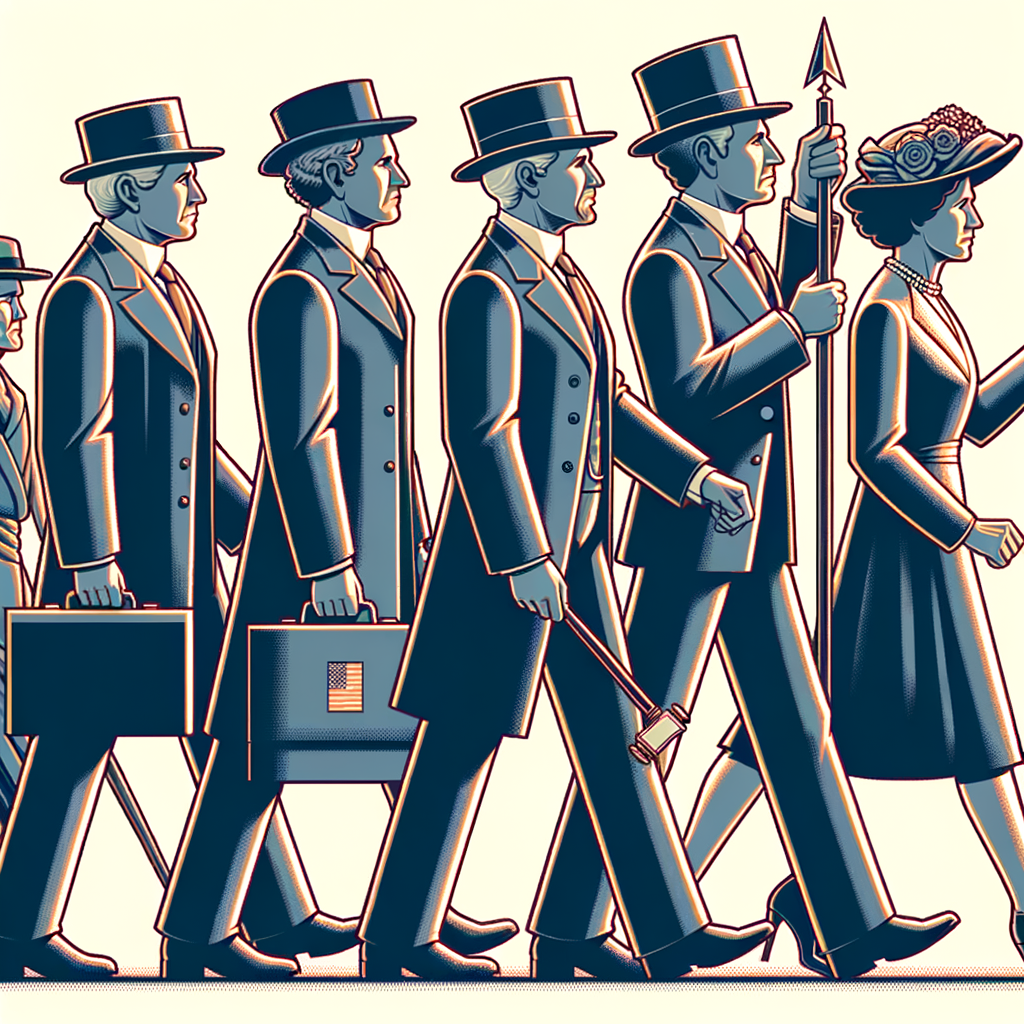
The journey of voting rights in the United States is a complex narrative intertwined with the nation’s evolving ethos of democracy and inclusivity. Understanding the evolution of suffrage in America not only illuminates the struggles and triumphs of various marginalized groups but also provides insight into the continuous effort required to maintain and expand democratic rights. Initially, the U.S. voting system was heavily restricted to white male property owners, reflecting a society that was far from equitable. Over the centuries, however, the struggle for suffrage has overcome numerous obstacles, gradually encompassing a more diverse population. This article delves into the significant milestones, legal battles, and social movements that have shaped the voting rights landscape from the country’s inception to the current date. The evolution reflects broader societal changes and highlights the persistent quest for equality and justice in a democratic framework. By exploring these developments, we can better appreciate the dynamic nature of democracy and the ongoing need for vigilance in the protection and expansion of voting rights for all citizens.
Colonial and Early American Voting Rights
In the colonial era, the right to vote was generally restricted to white men who owned property or paid taxes, reflecting the British colonial governance structure that prioritized landownership as a qualification for civic participation. This restriction was due to the belief that only landowners had a significant stake in the community and its governance, and hence, the responsibility to vote wisely. However, approaches to suffrage varied among the colonies. For instance, in some areas, religious affiliations influenced voting rights. The Puritanical influence in Massachusetts meant only church members could vote, intertwining religious and civic life strongly.
Following the Revolutionary War, the Constitution, ratified in 1788, did not explicitly include provisions for voting rights, leaving the matter to individual states. Early laws often maintained the property requirements, preventing the expansion of voting rights beyond the elite. This pattern perpetuated social hierarchies and limited democratic participation, setting a precedent that suffrage was a privilege, not a universal right. However, the post-revolutionary period sparked questions about representation, leading to slow but significant changes in the electoral landscape, where new states in the growing nation began to relax property requirements, aligning political participation more closely with the ideals of liberty that fueled the revolution.
19th Century – Expansion and Contraction of Voting Rights
The 19th century saw both progress and regression in voting rights. The Jacksonian Democracy movement in the 1820s and 1830s championed a more inclusive approach, emphasizing universal white male suffrage. This period marked a shift from elitist control to broader democratic participation, a phenomenon often referred to as the “Common Man” era. However, this extension of voting rights was racially exclusive, systematically barring African Americans, Native Americans, and other non-white groups from participating, thereby maintaining racial hierarchies within the democratic structure.
The passing of the 15th Amendment in 1870 ostensibly prohibited state and federal governments from denying a citizen the right to vote based on race, color, or previous servitude status. This was a significant constitutional change aimed at enfranchising African Americans post-Civil War. However, in practice, states employed various discriminatory practices, such as literacy tests, poll taxes, and grandfather clauses, which effectively disenfranchised many African American voters in the South. Despite legislative progress, these tactics highlighted how deeply societal prejudices were embedded, and the challenges inherent in enforcing voting rights across jurisdictions.
Women’s Suffrage Movement
The movement for women’s suffrage gained momentum in the latter half of the 19th century, culminating in the passage of the 19th Amendment in 1920, which granted women the right to vote. This movement emerged from broader social reforms and played a crucial part in redefining civic participation. Spearheaded by activists such as Susan B. Anthony, Elizabeth Cady Stanton, and many others, the women’s suffrage movement faced significant opposition yet persevered through decades of activism. The Seneca Falls Convention of 1848 marked a pivotal starting point, where attendees drafted a Declaration of Sentiments, demanding equal rights for women, including the right to vote.
Despite the passage of the 19th Amendment, challenges remained for minority women who faced additional barriers due to racial discrimination. Native American women, African American women in the South, and Asian American women encountered obstacles that prevented them from exercising their suffrage rights fully. Yet, the success of the women’s suffrage movement opened the political sphere to women, enabling further advocacy for equal rights and setting a precedent for future civil rights movements. The amendment’s passage was a testament to prolonged activism and represented a decisive change in the U.S. democratic landscape.
Civil Rights Movement and Voting Rights Act of 1965
The Civil Rights Movement was pivotal in dismantling racially discriminatory barriers, particularly in the Southern states. Key events such as the Selma to Montgomery marches embodied the struggle and resilience of Civil Rights activists advocating for voting equality. The persistent and widespread activism led by figures like Martin Luther King Jr., John Lewis, and countless others illuminated the severe disparities and injustices African Americans faced when attempting to exercise their voting rights.
The Voting Rights Act of 1965 was a landmark law enacted to eliminate discriminatory practices. The act prohibited literacy tests and provided for federal oversight of voter registration in areas where less than 50% of the non-white population had registered to vote, ensuring immediate and measurable increases in African American voter registration in the South. This transformative legislation reasserted the federal government’s role in safeguarding voting rights and marked a crucial step toward eliminating racial discrimination at the polls. However, the fight did not end there, as demonstrated by subsequent legal challenges and evolving methodologies designed to suppress minority votes subtly.
Contemporary Challenges and Legislative Changes
In recent decades, the conversation around voting rights has evolved to address issues of gerrymandering, voter ID laws, and voting access. The Supreme Court’s 2013 decision in Shelby County v. Holder weakened the 1965 Voting Rights Act by invalidating the preclearance requirement, which had mandated certain states with histories of discrimination to seek federal approval before changing voting laws. This ruling ignited a resurgence of restrictive voting laws in several states, illustrating the fragility of the progress made in previous decades and the continuous need for vigilance in protecting voting rights.
Modern-day voter suppression tactics include purging voter rolls, reducing early voting days, and limiting voting locations. These measures often disproportionately affect communities of color, the elderly, and the economically disadvantaged, reinforcing the necessity of ongoing advocacy and legislative protection to ensure equitable access to the ballot. As voting rights remain a contentious issue, new legislation like the John Lewis Voting Rights Advancement Act has been introduced to restore and expand the protections initially provided under the 1965 Voting Rights Act.
Furthermore, digital voting technologies and security have become central concerns in contemporary discussions, with debates focusing on the balance between accessibility and safeguarding electoral integrity. The role of misinformation and foreign interference in elections has also emerged as a contemporary challenge, further complicating the landscape of voting rights in the digital era.
Conclusion
The evolution of voting rights in the U.S. is an ongoing testament to the dynamic and complex nature of democracy itself. From the early restrictions that reserved voting exclusively for wealthy white men to the gradual inclusion of marginalized communities, the progression of suffrage rights highlights the nation’s broader social, legal, and political transformations. Though significant strides have been made, ensuring universal suffrage remains an active struggle, continually challenged by evolving tactics of disenfranchisement and legal setbacks.
The history of voting rights in America underscores the central role of activism and legislative advocacy in achieving democratic ideals. Each amendment, court ruling, and piece of legislation reflects the nuanced and often contested path toward equal voting rights. Understanding this history is crucial for recognizing the complexities and responsibilities inherent in maintaining a robust democracy.
As we look to the future, the continual evaluation and reform of voting laws, along with actively engaging in discussions about democratic participation, are essential in safeguarding and expanding the rights of all citizens. The narrative of voting rights is far from complete, necessitating ongoing vigilance, education, and activism to advance and protect democratic principles for every voice to be heard and counted.