
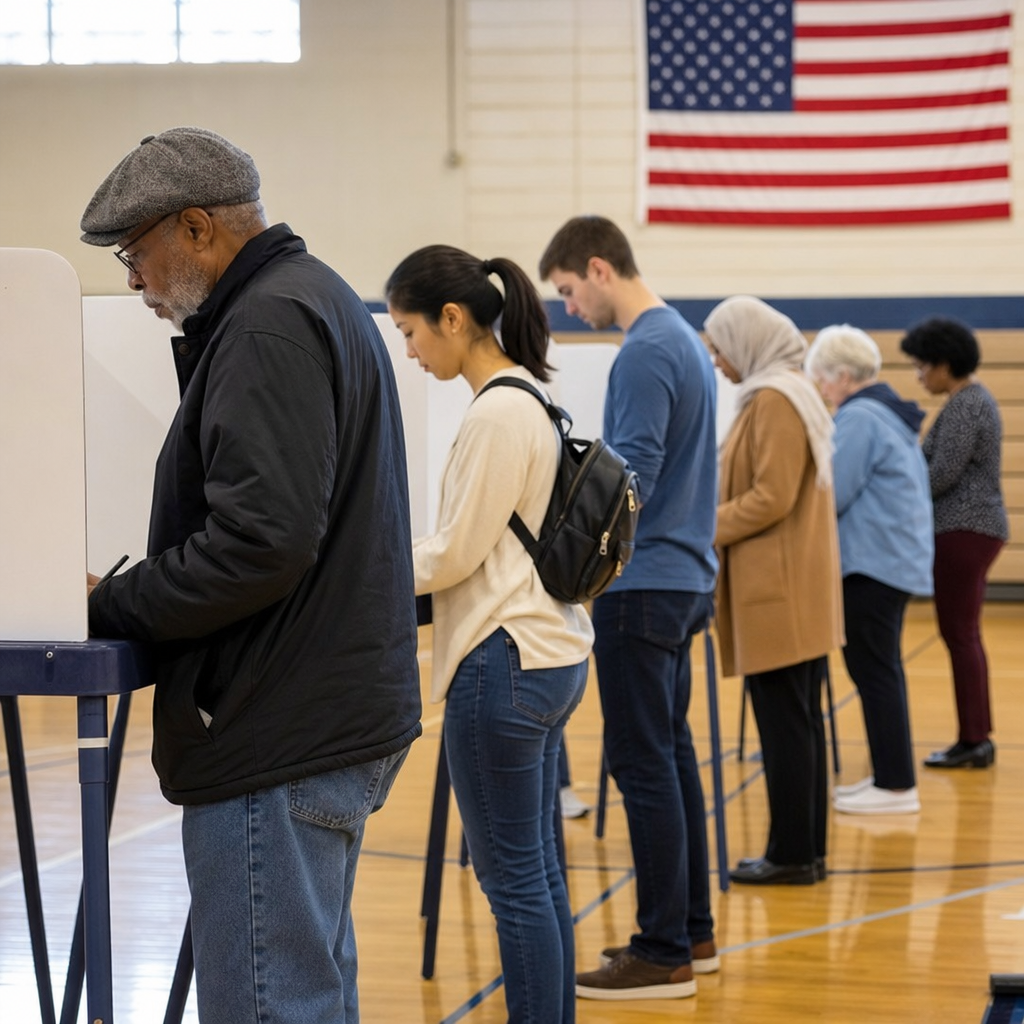
Voter turnout gaps by age race and education shape election outcomes, policy priorities, and the health of representative government in the United States. Turnout refers to the share of eligible citizens who actually cast a ballot, while a turnout gap is the measurable difference between one group’s participation rate and another’s. In AP Government and Politics, this topic sits at the center of broader questions about political participation, linkage institutions, civil rights, and democratic legitimacy. When I have taught and written about turnout data, the same pattern appears again and again: who votes is rarely identical to who lives in the country. That mismatch matters because elected officials respond most consistently to people who participate, especially in competitive elections and local contests where a small number of votes can decide control.
Age, race, and education are three of the most studied predictors of voting because they capture both resources and barriers. Older Americans usually vote at higher rates than younger adults. White and Black turnout patterns have shifted across eras, while Latino and Asian American participation rates have often trailed the national average for reasons tied to registration, age distribution, language access, mobilization, and citizenship patterns. Educational attainment strongly predicts turnout because people with more schooling tend to have more political knowledge, stronger civic habits, and greater confidence navigating registration rules, ballot formats, and campaign information. None of these factors works in isolation. They overlap with income, geography, party competition, voter ID rules, felony disenfranchisement laws, and whether an election occurs in a presidential or midterm year.
Understanding these turnout gaps is essential for AP Government and Politics students because the concept connects constitutional structure to real political behavior. The Constitution leaves election administration largely to the states, so the rules of participation vary. Congress and the courts have intervened through measures such as the Voting Rights Act, the National Voter Registration Act, and the Twenty-Sixth Amendment, but unequal participation persists. This hub article explains the core patterns, the causes behind them, and the debates over reforms. It also serves as a foundation for related topics in this sub-pillar, including voting rights, campaign mobilization, demographic change, and public policy responsiveness.
How age shapes voter turnout
Age is one of the strongest predictors of turnout in American elections. In nearly every recent federal election, citizens ages sixty-five and older have voted at much higher rates than citizens ages eighteen to twenty-four. Census Bureau voting and registration reports and data from the United States Elections Project consistently show this gap. The reasons are practical as much as ideological. Older voters are more likely to own homes, remain at the same address for years, know their polling place, and receive campaign contact from parties that consider them reliable. They also tend to have established routines and a stronger sense that voting is a civic duty. Younger adults move more often, face registration challenges when they relocate for school or work, and are less likely to be contacted repeatedly by campaigns outside presidential cycles.
The age gap widens in low-salience elections. A presidential election with intense media coverage can draw many first-time voters, but municipal, off-year, and primary elections usually skew older. That pattern has major consequences. School board, mayoral, and state legislative decisions can be made by electorates that are significantly older than the communities they govern. I have seen local election analyses where turnout in neighborhoods with many retirees doubled turnout in student-heavy precincts, even when both groups were directly affected by the same tax or public safety proposal. For AP Government and Politics, this is a clear example of how political efficacy and mobilization affect behavior: people who believe the system hears them and who are asked to participate usually show up more often.
Younger turnout is not uniformly low, however. It rises when campaigns invest in peer-to-peer organizing, early voting access, and digital outreach tied to issues that feel immediate, such as student debt, abortion, gun violence, or climate policy. The 2008 and 2020 elections illustrated that young voters can participate at elevated levels when the national stakes are perceived as high and when registration and absentee rules are easier to navigate. The key lesson is that age gaps are persistent but not fixed.
Race and ethnicity turnout patterns
Race and ethnicity interact with law, history, and campaign strategy. For much of American history, Black voter participation was deliberately suppressed through literacy tests, poll taxes, white primaries, violence, and discriminatory administration. The Voting Rights Act of 1965 transformed participation by outlawing key barriers and empowering federal enforcement. After that change, Black turnout rose dramatically over time, and in some high-salience elections it has equaled or exceeded white turnout. The 2008 and 2012 elections were especially important examples because Black voter mobilization increased substantially nationwide. Those elections showed that turnout is not simply a matter of demographic destiny; it responds to organization, candidate appeal, policy context, and legal access.
Latino turnout has often lagged behind white and Black turnout, but broad averages can mislead. The Latino eligible electorate is younger on average, and age strongly affects turnout. Citizenship status also matters because not all Latino residents are eligible voters. Campaign outreach varies sharply by state, and language access under the Voting Rights Act is unevenly implemented. Asian American turnout follows a similarly complex pattern. In some communities, language assistance, community organization networks, and targeted outreach narrow the gap. In others, low contact from campaigns and limited translated materials reduce participation. Native American voters face additional obstacles including long travel distances to polling places, inconsistent mail service, and disputes over residential address requirements.
Race-based turnout gaps also reflect structural conditions beyond formal voting rules. Residential segregation, income inequality, and differing rates of trust in institutions can shape whether citizens feel voting is worthwhile. Strict voter ID laws, polling place closures, and aggressive voter roll maintenance do not burden every group equally. Political scientists debate the precise size of these effects, but the direction is clear: administrative friction falls hardest on groups with fewer resources and less flexibility in work schedules or transportation.
Why education predicts participation so strongly
Education is one of the most consistent predictors of turnout because it builds civic skills. People with more schooling are more likely to read political information, understand how government works, and feel confident completing registration forms or researching candidates and ballot measures. They are also more likely to be recruited into participation through workplaces, professional networks, and civic associations. In survey data, college graduates regularly report voting at much higher rates than adults with only a high school diploma or less. This gap appears in presidential elections and becomes even larger in primaries and local contests.
Education does not cause turnout all by itself. It overlaps with income, occupational stability, and neighborhood context. Still, after controlling for many other variables, educational attainment remains powerful. I have worked with precinct-level and county-level election files where turnout rose almost in parallel with the share of residents holding bachelor’s degrees. Highly educated communities often have stronger local news habits, more campaign volunteer activity, and denser networks of political discussion. These environments reinforce participation. By contrast, lower-education communities are often targeted less by campaigns except in the final weeks before Election Day, which means citizens receive fewer reminders, less issue information, and less personalized contact.
For AP Government and Politics, the education gap illustrates resource theory in plain terms. Voting is a low-cost activity compared with other forms of participation, but it still requires time, information, and confidence. Civic education, same-day registration, and clear ballot design can reduce those costs. Without those supports, turnout remains skewed toward people who already possess the strongest civic resources.
How the gaps intersect
Age, race, and education do not operate separately; they stack together. A retired college graduate with stable housing faces a very different voting environment from a young renter working irregular hours. A Black college graduate in a competitive metropolitan county may receive intensive campaign contact, while a young Latino noncollege citizen in a low-salience local election may receive almost none. Analysts who look at one variable in isolation miss the full story. Intersectional patterns explain why broad national averages can hide substantial variation within groups.
| Factor | Typical turnout effect | Mechanism | Example |
|---|---|---|---|
| Older age | Higher participation | Stable residence, habit, stronger civic duty | Senior-heavy suburbs often outperform college towns in midterms |
| Younger age | Lower participation | Mobility, weak campaign contact, registration friction | Students who move across state lines miss deadlines |
| Higher education | Higher participation | Civic skills, information access, political efficacy | College graduates vote at higher rates in primaries |
| Racial minority status in restrictive systems | Often lower participation | Administrative barriers, unequal outreach, historical mistrust | Polling place closures can lengthen wait times in minority precincts |
These intersections help explain why reforms have uneven results. Expanding early voting may help shift workers and students, but it will not fully solve low participation where campaign mobilization is weak. Student preregistration can boost youth turnout, but it does not address language barriers facing some immigrant communities. Effective analysis therefore asks not only who votes less, but also what combination of obstacles that group faces.
What institutions and campaigns do about turnout gaps
Parties, interest groups, candidates, and election administrators all influence turnout. Campaigns spend heavily on voter files, microtargeting, text messaging, canvassing, and relational organizing because personal contact works. Decades of field experiments, including influential studies by political scientists such as Alan Gerber and Donald Green, show that door knocking and personalized reminders can increase turnout more reliably than generic advertising. But campaigns allocate resources strategically. They usually contact people who are likely to vote and likely to be persuadable, which can reinforce existing participation gaps. Reliable older voters get more outreach because they are seen as dependable, while low-propensity younger or less educated voters may be ignored unless a campaign makes a deliberate expansion effort.
Institutions can either widen or narrow disparities. Same-day registration, automatic voter registration, no-excuse absentee voting, and well-funded election administration generally reduce friction. Strict registration deadlines, limited polling places, and long lines increase the cost of participation. The Motor Voter law improved registration opportunities through departments of motor vehicles, but implementation quality differs by state. Court decisions also matter. Shelby County v. Holder in 2013 weakened federal preclearance under the Voting Rights Act, shifting more responsibility to private litigation after potentially discriminatory changes took effect. That legal change remains central to debates over racial turnout gaps.
Why turnout gaps matter in government and policy
Turnout gaps matter because participation shapes representation. Officials pay attention to constituencies that vote, donate, attend meetings, and contact offices. When older, wealthier, and more educated citizens participate more regularly, policy agendas can tilt toward their concerns. That does not mean nonvoters have no influence, but it does mean their preferences are less consistently translated into electoral incentives. Scholars studying policy responsiveness have found that elected officials are generally more attentive to the views of active and affluent constituents than to those of people who rarely participate.
In AP Government and Politics, this connects directly to pluralism, political efficacy, and legitimacy. A democracy can hold free elections yet still produce unequal voice if some groups participate much more than others. Turnout gaps also affect party strategy, candidate messaging, and issue framing. A state with low youth turnout will see less pressure on leaders to prioritize issues most salient to young adults. A city where college-educated neighborhoods dominate municipal elections may invest differently in transit, housing, and policing than a city with broader participation. The practical lesson is simple: turnout is not just a statistic. It is a distribution of political power.
How to study this topic for AP Government and Politics
Students should anchor their understanding in a few durable concepts. First, turnout differs between the voting-age population, the voting-eligible population, and registered voters, so definitions matter. Second, presidential elections usually produce higher turnout than midterms, and local elections often produce the lowest turnout. Third, demographic patterns are shaped by institutions, not just personal choice. If you can explain how registration rules, mobilization, and historical exclusion interact with age, race, and education, you can answer most exam questions on this topic clearly and accurately.
This hub should connect you to related articles on voting rights, media and campaigns, political parties, demographic realignment, and civil liberties because turnout gaps cut across all of them. When reading charts, look for whether the data measure citizens, eligible voters, or registered voters; whether the election is presidential or midterm; and whether differences are national or state-specific. Those details change the interpretation.
Voter turnout gaps by age race and education reveal one of the most important realities of American politics: formal equality at the ballot box does not automatically produce equal participation. Older citizens generally vote more than younger adults, college-educated Americans usually vote more than those with less schooling, and racial turnout patterns reflect both historic exclusion and present-day rules, outreach, and resources. These differences are not random. They emerge from institutions, campaign strategy, civic habits, and the practical costs of voting. For students and readers trying to understand AP Government and Politics, turnout gaps provide a concrete way to connect constitutional design, federalism, civil rights, and political behavior.
The most useful takeaway is that turnout gaps are persistent but changeable. Reforms such as easier registration, broader ballot access, better language assistance, and stronger civic education can narrow disparities. So can campaigns that invest in communities they have often overlooked. If you are building mastery in this subtopic, use this page as your starting point, then explore the linked articles on voting rights, participation, and representation to see how each piece fits into the larger system.
Frequently Asked Questions
What does voter turnout mean, and what are turnout gaps by age, race, and education?
Voter turnout is the percentage of eligible citizens who actually cast a ballot in an election. It is one of the most basic ways political participation is measured in the United States. A turnout gap exists when one group of eligible voters participates at a higher rate than another group. For example, if older citizens vote at much higher rates than younger citizens, that difference is an age-based turnout gap. If college graduates vote at higher rates than people with less formal education, that is an education-based turnout gap. The same logic applies to differences among racial and ethnic groups.
These gaps matter because elections are shaped not only by what people believe, but also by who actually shows up to vote. When some groups participate more consistently than others, public officials and political parties may pay more attention to the concerns of frequent voters. In AP Government and Politics, turnout gaps are important because they connect directly to larger themes such as political behavior, linkage institutions like parties and interest groups, civil rights, and the quality of representative democracy. A government can only fully reflect the public when participation is broad and relatively equal across the population.
Why do younger voters usually have lower turnout than older voters?
Younger voters often participate at lower rates for a combination of practical, social, and political reasons. First, many younger adults are in transition. They may be moving for school, starting jobs, or changing addresses frequently, which can complicate voter registration and make voting feel less routine. Older voters are more likely to be settled in one community and more familiar with local election rules, polling places, and voting schedules. Habit also matters. People who begin voting regularly are more likely to keep doing so over time, so older citizens often benefit from years of repeated participation.
Political interest and efficacy also play a major role. Younger citizens may care deeply about public issues, but they are often less likely to feel that government responds to them or that their individual vote will make a difference. Older voters, by contrast, may feel a stronger sense of civic duty and may have more direct experience with how elections affect taxes, retirement programs, healthcare, and local services. Campaigns also tend to focus more heavily on reliable voters, which means older voters are more likely to be contacted and mobilized. That can reinforce participation patterns from one election cycle to the next. The result is a persistent age gap in turnout, even though younger voters can become highly engaged in especially competitive or high-salience elections.
How do race and ethnicity influence voter turnout in the United States?
Race and ethnicity influence turnout through a mix of history, law, resources, mobilization, and lived experience. Different racial and ethnic groups have faced different barriers to political participation, and those historical patterns still matter. For example, the long history of disenfranchisement targeting Black Americans through poll taxes, literacy tests, intimidation, and discriminatory administration left deep institutional effects, even after major protections such as the Fifteenth Amendment and the Voting Rights Act. Latino, Asian American, Native American, and other communities have also faced language barriers, geographic obstacles, underinvestment in outreach, and unequal access to registration and election information.
At the same time, turnout differences are not fixed or automatic. They often vary depending on the type of election, the competitiveness of the race, the quality of candidate outreach, and whether communities feel that the stakes are immediate and meaningful. Group-based mobilization can significantly increase participation when parties, candidates, churches, unions, advocacy organizations, and community leaders invest in engagement. Representation matters as well. When voters see candidates, issues, or movements that reflect their concerns, participation often rises. So while racial turnout gaps do exist, they are shaped by institutions and political context rather than by simple personal preference alone. This is one reason the study of turnout in AP Government emphasizes both individual behavior and structural factors like voting laws and civil rights protections.
Why is education one of the strongest predictors of voter turnout?
Education is strongly connected to turnout because it often increases the skills, confidence, and resources that make political participation easier. People with higher levels of education are more likely to follow public affairs, understand how government works, and feel comfortable navigating registration rules, ballot questions, and campaign information. Education can also strengthen political efficacy, which is the belief that one understands politics and can influence government. When citizens feel capable of participating, they are more likely to vote regularly.
Education is also tied to broader social advantages that affect turnout indirectly. Individuals with more schooling often have higher incomes, more stable housing, more flexible work schedules, and stronger connections to civic organizations or professional networks where politics is discussed. These factors lower the practical costs of voting. By contrast, people with less formal education may face more obstacles, including less access to election information, more demanding work conditions, transportation challenges, and lower levels of outreach from campaigns. Importantly, education itself does not make someone more worthy of political influence. The concern in a democracy is that when educational attainment strongly predicts participation, elected officials may hear more consistently from better-resourced citizens than from the full public. That raises important questions about political equality and representation.
How do turnout gaps affect election outcomes and the health of representative government?
Turnout gaps can shape both who wins elections and whose interests receive the most attention in public policy. If older, wealthier, and more highly educated citizens vote more often, candidates may prioritize issues that matter most to those groups because they are seen as the most dependable voters. That does not mean other groups have no influence, but it does mean influence is often uneven. Policies related to education funding, healthcare, criminal justice, housing, wages, and voting access can all be affected by which groups participate most consistently. Even close elections can turn on relatively small differences in turnout among key demographic groups.
Beyond election results, turnout gaps raise larger democratic concerns. Representative government works best when public participation is broad, informed, and accessible. When major groups of eligible citizens vote at much lower rates, the government may be formally democratic but less fully representative in practice. In AP Government and Politics, this connects to core ideas about legitimacy, equality, civil rights, and the role of institutions in linking citizens to government. Reducing turnout gaps usually involves a combination of strategies, including easier registration, expanded early and mail voting, strong enforcement of voting rights protections, civic education, and more effective outreach to underrepresented communities. The broader goal is not just higher turnout in the abstract, but a political system in which participation more closely reflects the diversity of the American electorate.