
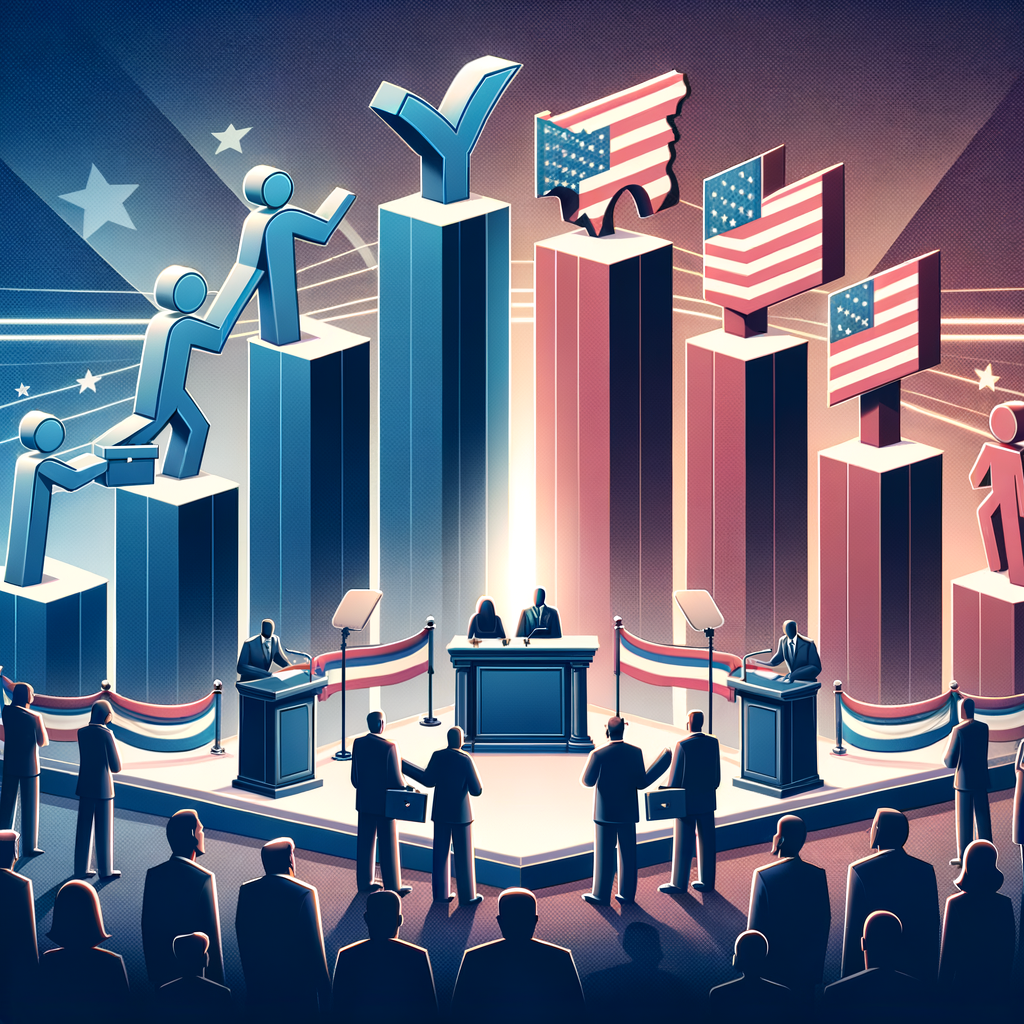
The political landscape in the United States has long been dominated by two major parties: the Democrats and the Republicans. These parties have become deeply entrenched over the years, shaping and dictating the tone, direction, and policies of American governance. Yet, amidst this powerful duopoly, there exist numerous smaller parties commonly referred to as third parties. These third parties struggle for recognition, influence, and a significant stake within the American political system. Despite possessing ideas and perspectives that sometimes resonate with a sizeable segment of the population, these parties face a multitude of challenges in their quest for electoral success and political relevance. Understanding why these third parties struggle is both necessary and illuminating, as it sheds light on the barriers they face in an inherently restrictive and deeply polarized two-party system.
Third-party politics, while full of potential, often seems relegated to the periphery of the political conversation. The reasons for this are multifaceted, ranging from institutional hurdles and limited media exposure to financial constraints and strategic voting patterns among the electorate. As we delve deeper into these aspects, it becomes evident that third parties must navigate a uniquely challenging political topography. Despite these challenges, their continued existence and efforts suggest an undercurrent of demand for alternatives beyond the dominant binary political choices. This article aims to unpack these hurdles, dissect the underlying factors that contribute to third-party struggles, and examine their potential role and future in American politics.
Historical Context and Institutional Barriers
To grasp the current state of third parties in American politics, it is imperative to look at their historical context. Historically, the U.S. political system has been characterized by the dominance of two main parties. After the founding of the country, political coalitions quickly formed into two principal groups – Federalists and Anti-Federalists – which laid the foundation for today’s two-party system. Over time, other parties emerged and dissolved, with the Democratic and Republican Parties establishing themselves as the primary contenders by the mid-nineteenth century.
This two-party system is bolstered by several institutional mechanisms. Chief among these is the single-member district plurality system, often referred to as “first-past-the-post” voting. In this electoral framework, the winner is the candidate who receives the most votes in a constituency, even if it is not a majority. This system naturally favors larger parties, as votes for third-party candidates do not translate into representation unless they can win outright, which is a significant challenge. This electoral structure creates a formidable barrier for third parties attempting to make substantive gains in representation at both the federal and state levels.
Moreover, the Electoral College, used in Presidential elections, further complicates matters for third parties. Each state awards its electoral votes to the candidate who wins the majority in that state, making it extremely difficult for third-party candidates to secure sufficient electoral votes to impact the outcome meaningfully. Consequently, voters are often hesitant to support third-party candidates, fearing that their votes will be wasted on candidates with slim chances of winning. This feeds into a cycle of strategic voting, where voters settle for the “lesser of two evils” rather than risking a vote for a candidate who aligns more closely with their views.
The Role of Media in Third-Party Marginalization
The media landscape plays a critical role in political discourse and has notable influences on third-party viability. Major media outlets often focus primarily on the two dominant parties, driven by the notion that these parties reflect the “real” contest. This creates a coverage imbalance where third-party candidates struggle to gain visibility. Media coverage is pivotal in shaping public perception and influencing voter decisions, yet third-party candidates often find themselves excluded from national debates and rarely receive the same depth of coverage afforded to Republican and Democratic candidates. This lack of exposure perpetuates a cycle of obscurity, limiting third-party candidates’ ability to reach a broader audience and communicate their platforms effectively.
Additionally, the media often frames elections as a binary choice, reinforcing false dichotomies and reducing political complexities to oversimplified narratives. This framing reinforces the perception that votes for third-party candidates are wasted, further discouraging potential supporters from defecting from the major parties. The media’s role in shaping political narratives cannot be understated, as it has the power to either amplify or stifle the voices of alternative parties attempting to be heard amid the robust dialogue dominated by the two main parties.
Financial Constraints and Ballot Access
Financial solvency poses another significant hurdle for third parties. Major party candidates benefit from well-established fundraising networks, substantial monetary donations, and a wealth of institutional support. In contrast, third-party candidates generally face limited resources, with donors typically hesitant to invest in campaigns perceived as long-shots. Such financial disparities limit third-party campaigns’ effectiveness, restricting their ability to conduct widespread advertising, organize extensive ground operations, and engage voters comprehensively.
In addition to financial constraints, third parties also encounter significant challenges in maintaining consistent ballot access across states. Each state sets its own ballot access requirements, often necessitating a significant collection of signatures and meeting other stringent criteria just to appear on the ballot. These requirements impose significant logistical and financial burdens on third-party candidates, further diverting resources that could otherwise be used for campaign-building initiatives.
Despite these barriers, third parties have achieved some successes at local levels, where the barriers to entry are generally lower, and grassroots movements can wield a stronger influence. However, transitioning from local to national recognition remains a steep climb, exacerbated by these financial and regulatory challenges.
Impact of Strategic Voting and Political Polarization
Strategic voting is a phenomenon that further disadvantages third parties, reinforcing the two-party stronghold. When faced with limited electoral opportunities, voters often feel compelled to cast their vote to prevent their less-preferred major party candidate from winning. This “lesser evil” voting strategy arises from a fear that supporting a third-party candidate could inadvertently aid the major party candidate they oppose. Consequently, third-party candidates frequently serve as a temporary outlet for voter dissatisfaction rather than viable alternatives for capturing electoral victories.
Additionally, increasing political polarization has solidified the cultural and ideological alignment within the two major parties. Today’s political climate is marked by heightened partisanship, where party allegiance strongly correlates with voters’ identities and social affiliations. This deepening divide amplifies loyalty to the two dominant parties, leaving less room for alternative voices and reducing the appeal of third-party platforms, which often strive to bridge these entrenched divides.
Interestingly, this landscape of polarization presents both a challenge and an opportunity for third parties. While polarization strengthens major party allegiance, it also generates disillusionment among voters seeking less radical and more pragmatic solutions. Third parties could potentially capitalize on this desire for alternative perspectives, provided they can overcome the structural barriers and strategic voting tendencies that limit their growth.
Conclusion: Potential Paths to Relevance for Third Parties
The struggle of third parties in American politics reveals a complex interplay of historical antecedents, institutional structures, media dynamics, financial limitations, and strategic electoral behaviors. Facing these formidable challenges, third parties have fought hard to remain in the conversation, even as marginalized participants. Despite the obstacles, their persistence indicates an underlying yearning for more diverse political representation—a demand that grows louder during periods of amplified discontent with the status quo.
One potential path forward for third parties lies in cultivating local victories, which could gradually build a foundation for broader influence. By establishing themselves in local governments, third parties can prove their capabilities, build grassroots support, and slowly create momentum for higher-level bids. Additionally, advocacy for electoral reforms, such as ranked-choice voting, could provide third parties with fairer opportunities to vie for votes without penalizing voters for straying from the major parties.
As discontent with political polarization grows and issues become more nuanced, third parties stand as potential vehicles for representation, offering diverse solutions to the pressing challenges of modern governance. While the established barriers are daunting, the perseverance of third parties showcases a continued—albeit uphill—battle for relevance in American politics. Cultivating environments that welcome such diversities in political representation could lead to enriching the democratic fabric of the nation, potentially reshaping it to form a more inclusive political landscape.
In conclusion, while third parties face an uphill endeavor within the American political system, acknowledging and addressing their struggles highlights the importance of diversified political discourse. Expansion of the political spectrum allows for more nuanced representation and challenges the homogenized narrative often dictated by the dominant parties. If the American democratic ethos is to truly reflect the diverse voices it claims to honor, the path to opening doors to third-party influence must be critically examined and eagerly pursued.
Frequently Asked Questions
1. What are third parties in American politics?
Third parties in American politics refer to any political party that isn’t one of the two dominant ones: the Democratic Party or the Republican Party. They’re often smaller organizations that spring up to address issues mainstream parties may ignore, advocate for specific ideologies or represent various societal concerns. Examples of third parties include the Libertarian Party, the Green Party, and the Constitution Party, among others. Each of these parties has its own platform and goals, which can sometimes align with or oppose various aspects of Democrat and Republican policies.
2. Why do third parties struggle to gain a foothold in American politics?
Third parties face numerous structural and systemic hurdles when trying to gain traction in the American political system. Firstly, the United States employs a first-past-the-post electoral system where the candidate with the most votes wins. This often results in a two-party system because voters typically hesitate to “waste” their vote on a candidate unlikely to win, leading to strategic voting for one of the major parties. Furthermore, third parties struggle with getting media attention and are frequently excluded from major debates, which hinders their ability to communicate their platforms broadly. Financial constraints also play a significant role, as third parties struggle to match the fundraising capabilities of the Democrats and Republicans, which impacts campaign infrastructure and visibility.
3. How do ballot access laws impact third parties?
Ballot access laws are yet another roadblock for third parties. In the United States, each state dictates its own set of rules regarding how political parties and their candidates can appear on the ballot. These rules often require third parties to gather a substantial number of signatures or meet specific vote threshold percentages in prior elections—criteria that can be exceedingly difficult to satisfy without existing name recognition or infrastructure. The burdensome nature of these laws not only impedes new parties from competing but also deters potential candidates from running under third-party banners, as the effort and resources required might outweigh the potential benefits.
4. What role do third parties play despite their struggles?
Even with their limited success in winning national elections, third parties play crucial roles within the political ecosystem. They often serve as incubators for new ideas that sometimes get adopted by major parties. For instance, environmentalism, once championed primarily by the Green Party, has increasingly found representation within Democratic platforms. Additionally, third parties can influence the outcome of elections by drawing votes away from major parties—often serving as “spoilers” in closely contested races. More broadly, they provide voters with alternatives and contribute to a more diverse political dialogue, challenging the status quo and keeping big parties accountable.
5. Can third parties ever become more prominent in American politics?
While third parties face substantial challenges, it’s not impossible for them to gain more prominence. As public discontent with the two major parties grows, there’s potential for a third party to capitalize on this dissatisfaction. Several paths could lead to increased third-party influence: broad electoral reform—such as ranked-choice voting—could reduce the need for strategic voting, giving third-party candidates a better chance. Significant socio-political shifts, leading to realignments within the electorate, might also favor third-party inclusion. Additionally, increased public demand for diverse political representation could pressure media and debate organizers to include third parties more regularly. While these changes won’t happen overnight, they represent potential avenues for increasing the influence and success of third parties in American politics.