
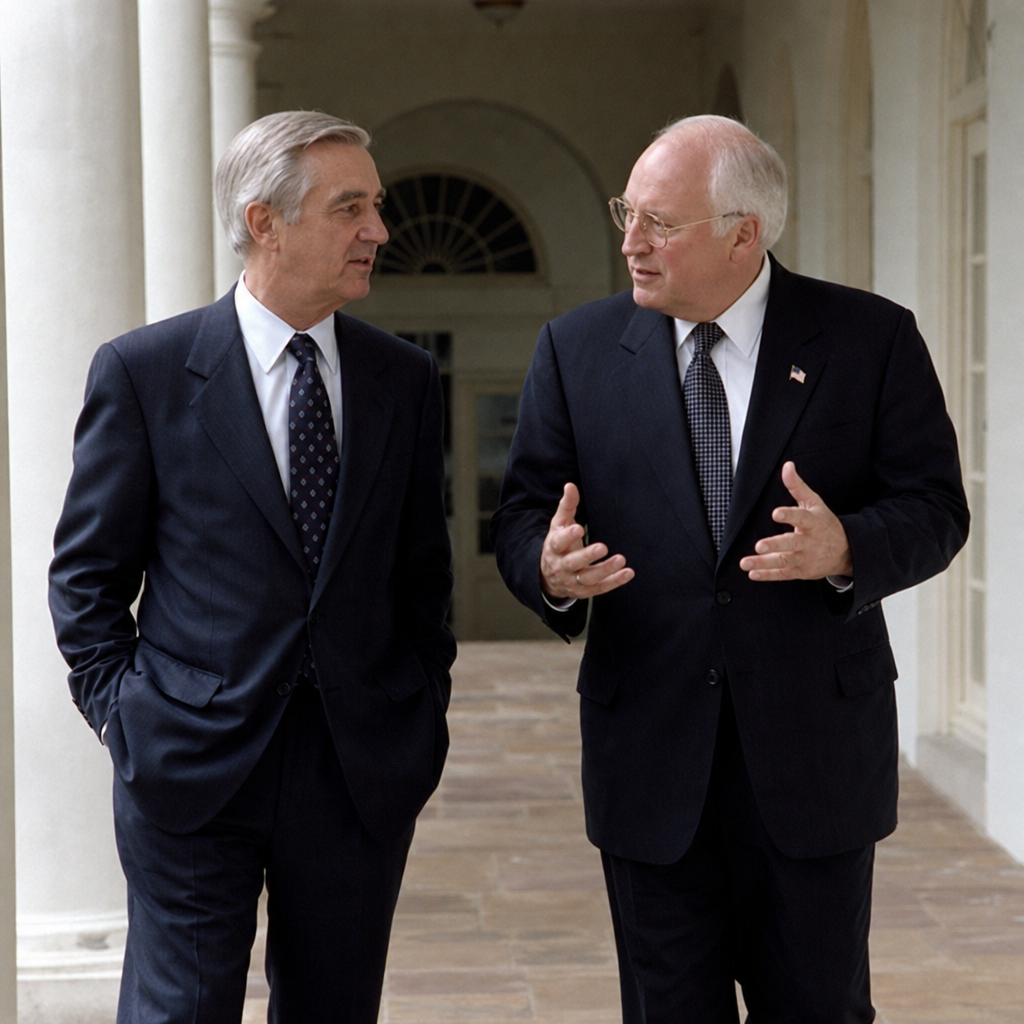
The modern vice presidency is no longer a ceremonial waiting room. After Walter Mondale under Jimmy Carter and Dick Cheney under George W. Bush, the office became a central instrument of executive governance, party management, and crisis response. In AP Government and Politics, that shift matters because it shows how constitutional text can remain sparse while institutional power grows through practice, relationships, and precedent. The Constitution gives the vice president only a few explicit duties: preside over the Senate, cast tie-breaking votes, and succeed the president when necessary. Yet the office today often includes policy advising, diplomatic representation, legislative negotiation, campaign leadership, and emergency readiness. Understanding how and why that happened helps explain the modern presidency itself.
When students ask what changed, the short answer is access. Mondale secured a standing role as a trusted adviser with regular private meetings, office space in the West Wing, and inclusion in major deliberations. Cheney later demonstrated how an experienced vice president could shape national security, staffing, and executive branch process on a vast scale. Between and after them, vice presidents such as Al Gore, Joe Biden, Mike Pence, and Kamala Harris inherited a stronger platform, though each used it differently. The office is stronger not because the Constitution was rewritten, but because presidents found practical reasons to delegate influence to a partner who is nationally elected, politically valuable, and constitutionally positioned to step in immediately.
Key terms define the issue. An institutional office is a position whose power comes from regularized resources, routines, and expectations, not just from the personality of the person holding it. Informal power means influence based on trust, access, expertise, and political leverage rather than explicit legal authority. Succession refers to the vice president’s constitutional role in taking over if the president dies, resigns, or becomes unable to serve, a system clarified significantly by the Twenty-Fifth Amendment. The vice presidency after Mondale and Cheney is therefore best understood as a stronger institutional office built from informal power, executive delegation, and the constant shadow of succession. That evolution is one of the clearest examples of how American political institutions adapt in practice.
Why Mondale transformed the vice presidency
Before Mondale, many vice presidents operated at the margins of executive power. John Nance Garner famously compared the office to a worthless possession, and even influential figures like Richard Nixon often had broad assignments without consistent integration into White House decision-making. From my experience teaching executive power, students often assume vice presidential weakness was inevitable because the Constitution is thin on details. Mondale proves otherwise. Carter chose him not simply as an electoral balance but as a governing partner. He gave Mondale weekly private lunches, access to sensitive memos, and an office in the West Wing. Those practical decisions created something more important than a title: routine proximity to presidential choice.
Mondale also professionalized the vice president’s staff and policy role. He insisted on being the last adviser in the room before major decisions and the first defender of those decisions in public when appropriate. That did not make him a co-president. It did make him a central node in information flow, coalition management, and political troubleshooting. In institutional terms, Mondale established a template later administrations could copy regardless of party. Once presidents saw that a vice president could absorb difficult assignments, reassure factions within the administration, and maintain loyalty because his political fate was tied to theirs, the office acquired durable strategic value. Modern vice presidents benefit from that architecture even when their influence is less visible.
How Cheney expanded operational and policy influence
Cheney did not invent vice presidential activism, but he pushed the office to a new level of operational reach. A former White House chief of staff, House member, and secretary of defense, he arrived with unmatched procedural knowledge. In the George W. Bush administration, Cheney was deeply involved in personnel selection, energy policy, national security deliberations, and the design of executive branch processes after the September 11 attacks. His influence was especially visible in debates over intelligence, detention, surveillance, and the scope of presidential power in wartime. Whether one views that record positively or critically, the lesson is clear: the vice presidency had become capable of shaping first-order policy outcomes.
Cheney’s example also revealed the limits and risks of a stronger office. Because much vice presidential power is informal, it can be difficult for Congress, the press, and even executive branch actors to map where influence begins and ends. Critics argued that Cheney operated through opacity, task forces, and legal theories that stretched accountability. Supporters argued that his experience and discipline were indispensable in crisis. Both views underscore the same structural point. Once the office has access to classified information, trusted ties to the president, and its own network inside agencies, it can become a major center of coordination. The vice presidency after Cheney remained stronger, but also more contested, because Americans saw how much depends on the president-vice president relationship and on norms of transparency.
What makes the modern vice presidency strong
The stronger office rests on several reinforcing foundations: presidential delegation, staff capacity, issue specialization, party politics, and constitutional readiness. Delegation matters because presidents face impossible workloads. A vice president can lead negotiations, represent the administration abroad, attend funerals and summits, campaign for midterm candidates, and test policy proposals with Congress. Staff capacity matters because influence requires expertise, scheduling leverage, memo access, and contacts across departments. Issue specialization allows a vice president to become the administration’s point person on topics such as climate policy, voting rights, infrastructure, space policy, public health, or foreign alliances. Party politics matters because a vice president often has relationships with governors, senators, donors, labor leaders, and interest groups that the president needs.
Constitutional readiness gives all of that power a unique edge. Cabinet secretaries can be fired and replaced, but the vice president is elected nationally and sits one heartbeat away from the presidency. That fact makes foreign leaders, legislators, markets, and agencies pay attention. It also means presidents have incentives to keep the vice president informed, because a sudden transfer of power is more manageable if the vice president already knows the personnel, the policy disputes, and the intelligence picture. The Twenty-Fifth Amendment reinforced this logic by setting procedures for filling vice presidential vacancies and addressing presidential disability. In effect, constitutional succession and modern governance pressures combined to strengthen the office beyond its original minimal design.
Comparing the office before and after institutional growth
| Feature | Earlier pattern | Modern pattern after Mondale and Cheney |
|---|---|---|
| Access to president | Irregular, often ceremonial | Scheduled meetings and inclusion in major deliberations |
| Staff resources | Small, limited policy reach | Professional staff with legislative, policy, and communications roles |
| Policy portfolio | Occasional assignments | Defined issue leadership and cross-agency coordination |
| Public role | Mainly campaigning and representation | Campaigning plus negotiations, diplomacy, and crisis messaging |
| Succession readiness | Variable preparation | Continuous briefing and closer integration into governance |
This comparison helps answer a common AP Government question: is the vice presidency powerful because of law or because of politics? The best answer is both, but politics drives most day-to-day influence. The law provides succession, tie-breaking authority in the Senate, and a place in the constitutional system. Politics determines whether the vice president becomes a confidant, a specialist, a liaison, or a marginal figure. Since Mondale, however, complete marginalization has become less likely because the office now comes with expectations, staff structures, and precedent. Since Cheney, administrations have also recognized that a vice president can be a force multiplier for executive action, for better or worse.
Examples from Gore, Biden, Pence, and Harris
Al Gore showed how a vice president could lead major policy initiatives without dominating every issue area. In the Clinton administration, he worked on government reinvention, technology policy, environmental issues, and relations with Congress. His work on streamlining federal management connected the office to administrative reform, a subject often overlooked in basic constitutional summaries. Joe Biden, serving under Barack Obama, played a major role in foreign policy, Senate negotiations, and implementation of the 2009 Recovery Act. Because he had decades of Senate experience, he functioned as a legislative broker at moments when personal relationships mattered as much as formal whip counts.
Mike Pence illustrates another dimension: the vice president as party and coalition manager. Under Donald Trump, Pence was often tasked with maintaining ties to congressional Republicans and key conservative constituencies. His role during the COVID-19 response showed how a vice president can be placed in charge of a major intergovernmental effort, though success still depends on presidential backing, administrative coherence, and public trust. Kamala Harris has taken on migration diplomacy, reproductive rights advocacy after Dobbs v. Jackson Women’s Health Organization, and tie-breaking votes in a closely divided Senate. Her Senate role is a reminder that the vice presidency can become unusually visible when partisan margins are narrow. In 2021 and 2022, her tie-breaking votes helped confirm nominees and advance significant legislation, directly linking constitutional design to modern party government.
The vice president in Congress, elections, and succession
The vice president remains a legislative actor in a limited but sometimes decisive way. As president of the Senate, the vice president rarely presides over routine debate, yet tie-breaking votes can alter policy, nominations, and judicial confirmations. John Adams cast 29 tie-breaking votes, a record from the early republic, while recent vice presidents have used the power under polarized conditions where a 50-50 Senate is realistic. The office also performs ceremonial but consequential duties in counting electoral votes. After the Electoral Count Reform Act of 2022, the vice president’s role in that process is more clearly ministerial, an important clarification after disputes surrounding January 6, 2021.
Succession remains the office’s most critical function. Nine vice presidents have become president due to death or resignation, from John Tyler to Gerald Ford. The Twenty-Fifth Amendment, ratified in 1967, addressed earlier uncertainty by confirming that a vice president becomes president, not merely acting president, upon a vacancy, and by providing a method to fill a vacant vice presidency. Ford’s path is the strongest example: he became vice president after Spiro Agnew resigned, then became president after Richard Nixon resigned. For AP Government students, this is a model case of constitutional continuity under stress. A stronger vice presidency improves succession because preparedness is no longer an afterthought; it is built into the office’s daily integration with executive power.
Why this topic matters in AP Government and Politics
This subject connects directly to recurring AP themes: constitutional interpretation, informal institutions, checks and balances, executive power, political parties, and legitimacy. It teaches that institutions can evolve through precedent without formal amendment. It also shows that power in American government is often relational. A vice president with legal authority but no trust may be weak; one with modest formal duties but constant access can be highly influential. That distinction helps students analyze not just the vice presidency, but also the presidency, Congress, the bureaucracy, and the courts. In each case, written rules matter, yet norms, incentives, expertise, and organizational design often determine real outcomes.
The strongest analytical takeaway is balance. A stronger vice presidency can improve governance by enhancing coordination, preparing for succession, and giving presidents a reliable governing partner. It can also create accountability problems if influence expands without transparency. After Mondale and Cheney, the office became undeniably stronger, but not uniformly in the same way in every administration. Its power depends on the president’s management style, the vice president’s experience, the national agenda, and the broader political environment. If you are building your AP Government understanding of executive institutions, use the vice presidency as a hub topic: study succession, Senate procedure, presidential advisory systems, and crisis governance together. That broader view will make the modern executive branch far easier to understand.
Frequently Asked Questions
How did Walter Mondale change the vice presidency into a stronger governing office?
Walter Mondale is widely seen as the turning point in the modern vice presidency because he transformed the role from a mostly ceremonial position into an active part of presidential decision-making. Before Mondale, many vice presidents were sidelined, given limited information, and used mainly for symbolic duties, travel, and political appearances. Under President Jimmy Carter, however, Mondale negotiated a different arrangement. He secured regular access to the president, an office in the West Wing, inclusion in major policy discussions, and a genuine advisory relationship built on trust. Those changes mattered far beyond Carter’s administration because they created a practical model for how future vice presidents could become central participants in executive governance.
In AP Government and Politics, Mondale’s importance is that he shows how institutions can gain power even when the Constitution does not formally expand their duties. The vice president’s constitutional responsibilities remain sparse: presiding over the Senate, casting tie-breaking votes, and being first in the line of presidential succession. But Mondale demonstrated that proximity to the president, access to information, and involvement in internal White House processes could dramatically increase the office’s influence. His example established a precedent that later administrations could follow, making the vice presidency a more permanent part of the modern executive branch rather than a political afterthought.
Why is Dick Cheney often cited as an example of the vice presidency at its most powerful?
Dick Cheney is often cited because he represented one of the clearest examples of a vice president exercising broad influence over policy, administration, and national security. Serving under President George W. Bush, Cheney was far more than a backup official waiting in reserve. He was deeply involved in executive deliberations, especially after the September 11 attacks, and played a major role in shaping responses related to defense, intelligence, terrorism, and the Iraq War. His experience in government, including prior service as White House chief of staff, congressman, and secretary of defense, gave him unusual credibility inside the administration and allowed him to operate as a central governing figure.
Cheney’s vice presidency matters because it illustrates how informal power can be just as significant as formal constitutional authority. The Constitution did not suddenly give the vice president new powers during the Bush years. Instead, Cheney’s influence came from his relationship with the president, his policy expertise, his network within the executive branch, and the high-stakes context of national crisis. For students of government, that is a key lesson: institutions often become more powerful through precedent, strategic use of access, and historical circumstances. Cheney showed how a vice president can shape agendas, affect bureaucratic outcomes, and become a major force in presidential governance, especially when the president delegates substantial responsibility.
If the Constitution says so little about the vice presidency, how has the office become so influential?
The vice presidency has become influential because constitutional text is only one source of political power. The Constitution gives the vice president very limited explicit duties, but modern government runs on relationships, routines, information flows, and institutional expectations. As the presidency itself expanded in the twentieth and twenty-first centuries, presidents needed trusted partners to manage policy coordination, legislative strategy, party politics, public messaging, and crisis response. The vice president was well positioned to fill that need, especially because the officeholder is nationally elected and enjoys immediate legitimacy within the executive branch.
Over time, presidents began assigning vice presidents more substantial tasks, and those assignments gradually hardened into precedent. Walter Mondale established the expectation that the vice president could be a close presidential adviser. Later vice presidents built on that foundation in different ways, taking on roles in foreign policy, domestic policy, congressional relations, and electoral strategy. Dick Cheney pushed the office even further by showing how influential a vice president could become in a strong White House with a high level of presidential trust. The result is a modern vice presidency whose power rests less on formal constitutional amendment and more on custom, access, and repeated institutional practice. This is a classic AP Government example of how informal institutions can reshape the meaning of an office without changing the written Constitution.
What does the stronger modern vice presidency reveal about informal powers in American government?
The stronger modern vice presidency reveals that informal powers are often essential to understanding how American government actually works. Formal powers are the ones written into the Constitution or statutes. Informal powers come from access, influence, precedent, expertise, and political relationships. The vice presidency is one of the best examples of this distinction because the formal job description is thin, but the real-world office can be highly significant. A vice president who sits in on key meetings, advises the president daily, coordinates policy teams, and serves as a trusted emissary to Congress or foreign leaders may wield far more practical influence than the constitutional text alone would suggest.
This matters because students are often tempted to view institutions only through their formal legal powers. But American politics frequently works through norms and evolving practices. Presidents decide how much authority to delegate. Staff structures can elevate or marginalize an office. Crises can increase the importance of trusted advisers. Party dynamics can also make a vice president valuable as a coalition manager or public advocate. The post-Mondale and post-Cheney vice presidency demonstrates that power in the U.S. system is not always fixed; it can grow when officeholders successfully expand expectations and when presidents find institutional reasons to rely on them. In that sense, the vice presidency is a strong case study in the development of informal power across time.
Why is the evolution of the vice presidency important for AP Government and Politics students to understand?
It is important because the vice presidency helps students connect several major AP Government themes at once: constitutional design, informal institutions, executive power, political parties, and the role of precedent in shaping government. On paper, the vice president has limited duties. In practice, however, the office can become a major governing tool depending on the administration. That contrast teaches students not to confuse constitutional silence with political insignificance. It also shows how the American system is dynamic. Offices can evolve as leaders adapt them to new political realities, policy demands, and administrative challenges.
The vice presidency after Mondale and Cheney is especially useful because it offers a clear before-and-after story. Earlier vice presidents were often marginal figures. Modern vice presidents are more likely to be integrated into White House operations, consulted on major decisions, and deployed in both governance and party leadership. For AP Government, that evolution demonstrates how power can expand through precedent and executive practice rather than through formal amendment alone. It also helps explain broader developments in the presidency itself, including the growth of the executive branch and the increasing need for trusted, high-level partners in an era of constant media attention, complex policymaking, and frequent domestic or international crises.