
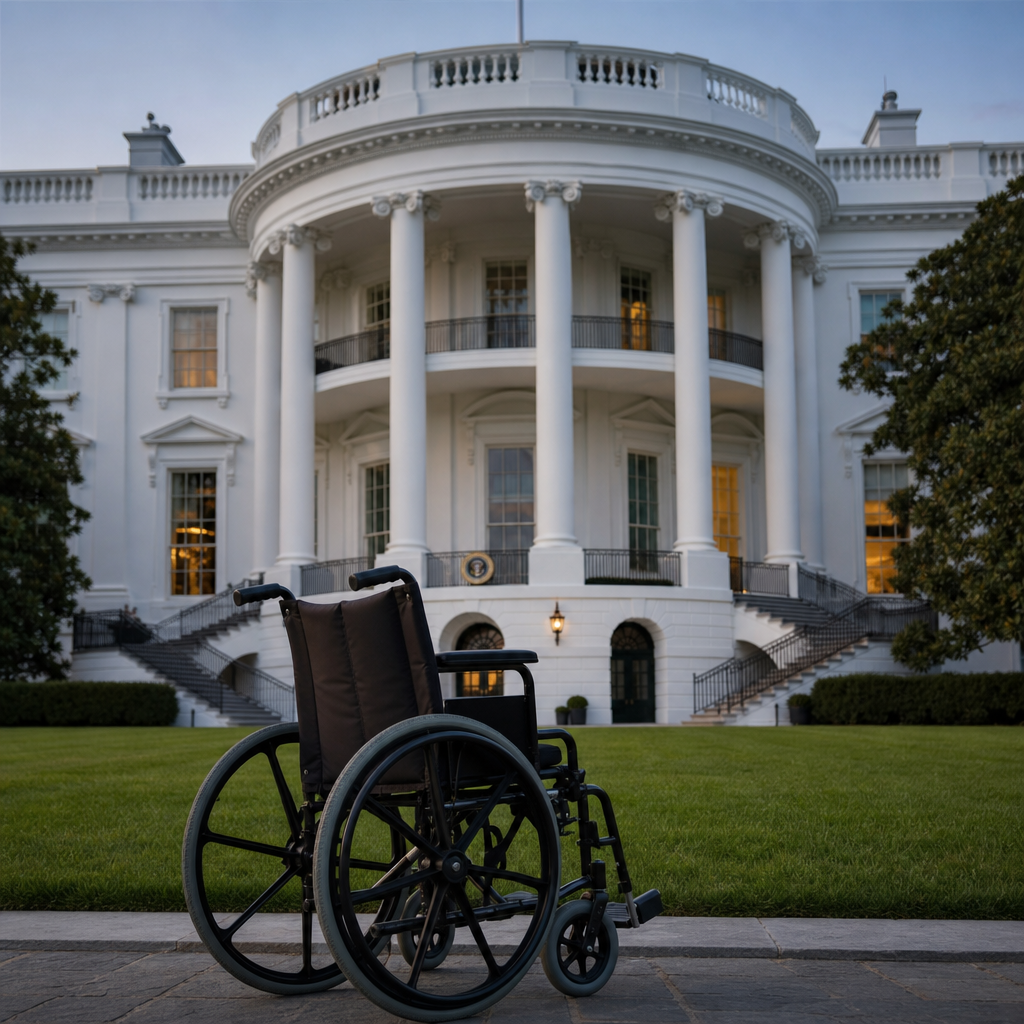
The Twenty-Fifth Amendment defines how presidential power transfers when a president dies, resigns, is removed, or cannot perform the duties of office. Ratified in 1967 after years of uncertainty exposed by assassinations, illnesses, and Cold War risk, it is one of the most practical constitutional fixes in American government. In AP Government and Politics, it matters because it connects constitutional design, separation of powers, party politics, executive legitimacy, and crisis management in a single amendment. It also serves as a hub topic for broader “Misc” questions that do not fit neatly into elections, Congress, the courts, or federalism but appear regularly in coursework and exam prompts.
Before the amendment, the Constitution said the vice president would assume the “powers and duties” of the presidency when the president faced death, removal, inability, or resignation, but it did not clearly explain whether the vice president became president or merely acted as president. It also failed to define inability, set procedures for declaring it, or create a reliable method for filling a vacant vice presidency. Those gaps were not abstract. They became urgent during moments like President Woodrow Wilson’s debilitating stroke in 1919 and President Dwight Eisenhower’s heart attack in 1955. In practice, aides, spouses, doctors, and political allies often improvised around a constitutional silence that was dangerous in a nuclear age.
The Twenty-Fifth Amendment answers four basic questions. First, what happens if the president dies, resigns, or is removed? Second, how is a vice-presidential vacancy filled? Third, how can a president voluntarily transfer power during a medical procedure or temporary impairment? Fourth, what happens if a president cannot or will not admit inability, but others believe the president is unable to serve? Those questions sound technical, but they shape national stability. Markets, military command, diplomatic signaling, and public confidence depend on there being no ambiguity about who is in charge. That is why this amendment is not a side note. It is a core mechanism of constitutional continuity.
In teaching and writing about this topic, I have found that students understand it best when they stop viewing it as only an emergency rule. It is also a blueprint for orderly succession, a check on executive incapacity, and a test of institutional trust. Understanding the amendment means understanding how law, medicine, politics, and timing interact under pressure. It also opens the door to related “Misc” topics in AP Government and Politics, including cabinet roles, impeachment versus incapacity, informal power around the presidency, and how constitutional amendments evolve in response to historical crisis.
Why the Amendment Was Needed
The immediate push for the Twenty-Fifth Amendment came from the assassination of President John F. Kennedy in 1963, but its roots go much deeper. The framers created the vice presidency and a line of succession, yet they left ambiguity about incapacity. In the nineteenth century, ambiguity was often tolerated because the federal government was smaller and communication slower. By the mid-twentieth century, that tolerance was reckless. A commander in chief might need to make decisions within minutes, and adversaries had to know there was a lawful, functioning authority at all times.
Historical cases showed the weakness of the earlier system. When President William Henry Harrison died in 1841, Vice President John Tyler insisted he became president, not merely acting president. That precedent stabilized succession after death, but it was custom rather than explicit constitutional text. In Woodrow Wilson’s case, his stroke left him severely impaired for months, yet no formal transfer occurred. His wife Edith Wilson and close aides managed access and information, creating what many scholars describe as an informal regency. No constitutional process existed to resolve the issue openly. Eisenhower later made private arrangements with Vice President Richard Nixon during his illnesses, but those understandings were not legally binding.
Senator Birch Bayh played a central role in drafting the amendment, and the American Bar Association strongly supported reform. The final text reflected a practical compromise: preserve executive continuity without making removal too easy. That balance is why the amendment is narrow, procedural, and difficult to abuse casually. It assumes that presidential inability may be temporary or contested and creates different paths for each.
What Each Section Does
Section 1 states that when the president is removed, dies, or resigns, the vice president becomes president. This codified the Tyler precedent and removed lingering doubt. Section 2 says that when the vice presidency is vacant, the president nominates a new vice president who takes office after confirmation by a majority vote in both houses of Congress. That solved a serious structural problem because vice-presidential vacancies had been common, and before 1967 they could remain open for years.
Section 3 allows the president to declare in writing that he is unable to discharge the powers and duties of office, transferring authority to the vice president as acting president until another written declaration says the inability has ended. This is the section used during planned medical procedures. It is designed for transparency and temporary continuity, not political conflict.
Section 4 is the most debated part. It allows the vice president and a majority of the principal officers of the executive departments, usually understood as the Cabinet, to declare that the president is unable to discharge the powers and duties of office. The vice president then becomes acting president. If the president contests that declaration, Congress must decide the matter, and a two-thirds vote in both houses is required to keep the vice president as acting president. The threshold is intentionally high, making Section 4 a crisis tool rather than a routine political weapon.
| Section | Main Function | Who Acts | Historical Use |
|---|---|---|---|
| 1 | Vice president becomes president after death, resignation, or removal | Vice president | Clarified longstanding practice |
| 2 | Fills a vice-presidential vacancy | President and Congress | Ford in 1973, Rockefeller in 1974 |
| 3 | Voluntary temporary transfer of power | President and vice president | Reagan 1985, George W. Bush 2002 and 2007 |
| 4 | Involuntary transfer during contested inability | Vice president, Cabinet, Congress | Never formally invoked |
Real-World Uses and Near Uses
Section 2 was tested first during the Nixon era. Vice President Spiro Agnew resigned in 1973 after criminal charges related to tax evasion and bribery. President Richard Nixon nominated House Minority Leader Gerald Ford, and Congress confirmed him. When Nixon resigned in 1974 because of Watergate, Ford became president under Section 1. Ford then nominated Nelson Rockefeller as vice president, and Congress confirmed him under Section 2. That sequence proved the amendment could maintain continuity even during overlapping scandal and resignation. Without it, the nation could have faced a prolonged vacancy in the vice presidency while the presidency itself was under stress.
Section 3 has been used several times. President Ronald Reagan signed a letter in 1985 before surgery, though the wording was less explicit than later practice. President George W. Bush clearly invoked Section 3 in 2002 and 2007 during colonoscopies performed under sedation, transferring power briefly to Vice President Dick Cheney. Those episodes demonstrated the amendment working exactly as intended: routine, calm, documented, and reversible. In my experience, these examples help students see that constitutional crisis planning is not only about dramatic breakdowns. It is also about ordinary governance done correctly.
Section 4 has never been formally used, but it has repeatedly entered public debate. After the attempted assassination of Reagan in 1981, some scholars argued that the administration should have considered it because of uncertainty during surgery and recovery. More recently, public discussion intensified during periods of concern about presidential behavior or health, especially after the January 6, 2021 attack on the Capitol. Debate alone does not trigger the section. The vice president and a majority of the Cabinet would have to act together, and then Congress could become the final decision-maker. That design makes the process legal rather than speculative.
Disability, Inability, and the Limits of Definition
The amendment uses the word “unable,” not a detailed medical checklist. That was deliberate. Drafters knew that inability could result from stroke, anesthesia, severe cognitive decline, kidnapping, mental breakdown, or another condition that prevents responsible execution of office. A rigid definition would create loopholes. At the same time, the lack of precision leaves room for dispute. Not every serious illness creates constitutional inability, and not every erratic political decision is evidence of incapacity. The standard is functional: can the president discharge the powers and duties of office?
This functional approach creates both strength and tension. Its strength is flexibility. If a president is unconscious for six hours during surgery, inability is obvious even without a statutory formula. If a president has a chronic condition but remains capable, the amendment need not be triggered. Its tension is that controversial facts may be filtered through partisan incentives. Cabinet officers are political appointees. The vice president may be loyal to the president personally, politically, or electorally. Congress may hesitate to intervene unless the evidence is overwhelming. For that reason, constitutional text alone cannot guarantee action. Norms of candor and institutional responsibility matter just as much.
Legal scholars often compare inability with impeachment, but the two are fundamentally different. Impeachment addresses misconduct, such as treason, bribery, or other high crimes and misdemeanors. The Twenty-Fifth Amendment addresses incapacity. A president might be fully capable yet impeachable, or medically impaired yet not blameworthy. Confusing those categories leads to poor constitutional reasoning. In AP Government and Politics, that distinction is essential because it shows how the Constitution separates punishment from continuity of governance.
How the Amendment Fits the Broader AP Government “Misc” Hub
As a hub topic under AP Government and Politics, the Twenty-Fifth Amendment links to several commonly tested themes. It reinforces separation of powers because Congress confirms a replacement vice president and can decide contested inability. It illustrates checks and balances because the Cabinet and vice president can initiate a transfer, but they cannot permanently displace a president without constitutional thresholds. It demonstrates informal institutions because doctors, staff, and family members often shape the information that officials use when judging capacity. It also connects to presidential power, executive departments, and political legitimacy.
This topic also belongs in a “Misc” hub because it teaches students how constitutional development happens outside the original 1787 text. The amendment responded to historical experience, especially modern warfare, assassination risk, and mass media scrutiny. It is a strong example of formal constitutional change solving practical governance problems that informal custom could no longer manage safely. When students compare it with the Twelfth, Twentieth, and Twenty-Second Amendments, they can trace how the presidency became more structured over time.
For writing and exam preparation, students should know several high-value points: Section 1 makes the vice president president, not merely acting president, after death, resignation, or removal; Section 2 requires majority confirmation in both houses for a new vice president; Section 3 is voluntary and temporary; Section 4 is involuntary, contested, and has never been formally invoked. They should also be able to distinguish inability from impeachment and explain why ambiguity before 1967 created genuine national security risk.
Criticisms, Gray Areas, and Modern Relevance
The amendment is effective, but not perfect. One criticism is that Section 4 depends heavily on political courage from insiders who may owe their careers to the president. Another is that the phrase “principal officers of the executive departments” may be complicated when acting secretaries serve or when cabinet positions are vacant. Scholars have also debated whether Congress should create an alternative body, as the amendment permits, to help determine inability. No such body has replaced the Cabinet, leaving the executive branch itself at the center of a potentially explosive judgment.
Modern presidents are older on average than many earlier officeholders, and medicine can prolong life while complicating assessments of capacity. That makes succession rules more important, not less. Nuclear command authority, financial markets, cyber incidents, and global crises do not pause for uncertainty. The chief virtue of the Twenty-Fifth Amendment is that it reduces ambiguity when delay would be costly. Its deeper lesson is constitutional: stable government requires rules for weakness as well as for power.
The Twenty-Fifth Amendment is the Constitution’s clearest answer to presidential disability succession and crisis. It closes dangerous gaps left by the original text, establishes an orderly way to fill a vice-presidential vacancy, and provides voluntary and involuntary procedures for temporary transfers of power. Its history shows why constitutional design often follows real failure. Illness, assassination, and resignation forced the nation to replace custom with law.
For AP Government and Politics, this amendment is more than a stand-alone rule. It is a hub for understanding executive legitimacy, institutional continuity, cabinet government, congressional checks, and the difference between incapacity and misconduct. If you can explain the four sections, cite Ford, Rockefeller, Reagan, and George W. Bush as examples, and analyze why Section 4 remains controversial, you have mastered the essentials. Use this page as your foundation, then connect it to related topics on presidential power, impeachment, amendments, and constitutional change.
Frequently Asked Questions
What does the Twenty-Fifth Amendment actually do?
The Twenty-Fifth Amendment explains what happens when a president dies, resigns, is removed from office, or becomes unable to carry out presidential duties. Before it was ratified in 1967, the Constitution did not clearly answer several practical questions about presidential succession and temporary disability. It was understood that the vice president would step in, but there had long been uncertainty about whether the vice president became the full president or merely acted as president, and there was very little guidance for situations in which a president was alive but seriously ill, unconscious, or otherwise unable to govern.
The amendment addresses those problems in four sections. Section 1 makes clear that if the president dies, resigns, or is removed, the vice president becomes president, not just acting president. Section 2 allows a vacancy in the vice presidency to be filled by presidential nomination and confirmation by both houses of Congress. Section 3 allows a president to voluntarily transfer power to the vice president temporarily by declaring an inability to perform the office; the vice president then serves as acting president until the president declares that the inability has ended. Section 4 creates a process for the vice president and a majority of the principal officers of the executive departments to declare that the president is unable to discharge the powers and duties of office, even if the president does not admit it.
In AP Government and Politics, the amendment matters because it shows how constitutional design is adjusted to solve real governance problems. It is not just a technical rule. It is a framework for continuity, legitimacy, and stability in the executive branch during moments of national stress. The amendment connects directly to separation of powers, because Congress has a role in confirming a new vice president and, in certain disputes, deciding whether a president or acting president should hold power. It also relates to party politics and crisis management, since decisions about presidential ability can affect public trust, national security, and the balance of power in government.
Why was the Twenty-Fifth Amendment needed if the Constitution already had rules about succession?
The original Constitution provided only a partial answer. It established that the “powers and duties” of the presidency would pass to the vice president when a president was removed, died, resigned, or was unable to discharge the office, but it did not define key terms and did not create a reliable process for determining presidential inability. That ambiguity became more dangerous as the presidency grew more powerful and as the United States entered an era of global military and nuclear responsibility.
Historical events exposed these weaknesses repeatedly. After President William Henry Harrison died in 1841, Vice President John Tyler insisted that he became the full president, not merely a caretaker. That precedent was eventually accepted, but it was not textually settled until the Twenty-Fifth Amendment. Later crises showed other problems. Presidents such as James Garfield and Woodrow Wilson were severely incapacitated for extended periods, yet there was no clear constitutional mechanism for formally transferring authority. In Wilson’s case, after his stroke, his disability was concealed and decision-making became murky. Those episodes raised serious questions about who was truly governing and whether the public and political system could trust executive decision-making during emergencies.
The assassination of President John F. Kennedy in 1963 added urgency. It highlighted not only the need for clear succession after death but also the risks of vacancies in the vice presidency and the possibility of sudden presidential incapacity during the Cold War. In a world shaped by rapid military threats and the existence of nuclear weapons, uncertainty at the top of the executive branch was no longer acceptable. The amendment therefore became one of the most practical constitutional reforms in modern American government. It translated informal assumptions and inconsistent precedents into formal procedures that could be used under pressure, which is exactly why it remains so important in constitutional law and AP Government study.
How do Sections 3 and 4 differ when a president is unable to perform the duties of office?
Sections 3 and 4 both deal with presidential disability, but they operate in very different ways. Section 3 is voluntary. It is used when the president recognizes a temporary inability and formally declares it, usually by sending a written statement to congressional leaders. In that situation, the vice president becomes acting president until the president later declares that the inability has ended. This section is designed for predictable or temporary situations, such as medical procedures requiring anesthesia. It is a controlled and orderly transfer of power initiated by the president.
Section 4 is far more dramatic and politically sensitive because it applies when the president does not, or cannot, declare an inability. Under Section 4, the vice president and a majority of the principal officers of the executive departments declare in writing that the president is unable to discharge the powers and duties of office. Once they do so, the vice president immediately becomes acting president. If the president contests that declaration, Congress may have to decide the issue. A two-thirds vote in both the House and the Senate is required to keep the vice president as acting president; otherwise, the president retakes power.
The distinction is important in both constitutional and political terms. Section 3 is administrative and cooperative. Section 4 is institutional and confrontational. Section 3 assumes trust and self-awareness. Section 4 exists for the harder case in which the president may be unwilling, medically incapable, or politically unable to acknowledge impairment. That makes Section 4 one of the most serious constitutional emergency provisions in the American system. It is not a substitute for impeachment, which addresses misconduct or abuse of power. Instead, it addresses inability, meaning a failure of capacity rather than a violation of law. In AP Government, that distinction matters because it shows how constitutional mechanisms serve different purposes even when they can affect the same office and the same balance of power.
Has the Twenty-Fifth Amendment ever been used in real life?
Yes, several parts of the amendment have been used, though not all with the same frequency. Section 1 has effectively governed moments when the vice president became president after a presidential death, but those transfers are now understood through the amendment’s clear language. Section 2 has been used in especially significant moments. In 1973, Vice President Spiro Agnew resigned, and President Richard Nixon nominated Gerald Ford to fill the vacancy; Congress confirmed him. Then, after Nixon resigned in 1974, Ford became president under Section 1 and nominated Nelson Rockefeller as vice president under Section 2. Those events demonstrated how the amendment could preserve continuity even during major scandal and political instability.
Section 3 has been used multiple times for temporary medical situations. Presidents have transferred power briefly to their vice presidents during procedures involving sedation or anesthesia. These uses show the amendment functioning exactly as intended: quietly, lawfully, and without constitutional confusion. In those moments, continuity of executive authority is maintained without panic or uncertainty.
Section 4, however, has never been formally invoked to remove presidential power over a president’s objection. That does not mean it is unimportant. In fact, its existence may itself shape behavior, because it provides a constitutional backstop in an extreme emergency. Public discussion of Section 4 has intensified during periods when presidential health, judgment, or capacity became major political issues. But because invoking it would require the vice president and cabinet to act against or without the president, and because any dispute could escalate into a major confrontation requiring congressional action, it remains a tool of last resort.
For students of government, the amendment’s real-life use is revealing. It shows that constitutional provisions are not all dramatic. Some of the most effective ones are successful precisely because they reduce uncertainty and make a crisis more manageable. The Twenty-Fifth Amendment is an example of constitutional maintenance: it keeps the executive branch functioning when personalities, illness, resignation, or sudden crisis could otherwise produce instability.
Why is the Twenty-Fifth Amendment so important for understanding presidential power, legitimacy, and crisis management?
The Twenty-Fifth Amendment is important because it addresses one of the central problems in constitutional government: how to maintain lawful authority during moments when leadership is disrupted. Presidential power in the United States is highly concentrated. The president is commander in chief, head of the executive branch, and a key national symbol. If there is confusion about who holds that power, the consequences can affect military command, diplomacy, law enforcement, financial stability, and public confidence all at once. The amendment reduces that risk by creating procedures for continuity and legal clarity.
It also matters because legitimacy is not just about elections; it is also about accepted constitutional process. In a crisis, people need to know not only who is in charge but why that person has lawful authority. The amendment helps answer that question. If a vice president becomes president after death or resignation, or serves as acting president during disability, that transition is grounded in explicit constitutional rules. That protects the office from appearing improvised or arbitrary. In other words, the amendment strengthens executive legitimacy by ensuring that even emergency transfers of power happen within a recognized legal framework.
At the same time, the amendment reveals how constitutional law interacts with politics. Decisions about inability are never purely mechanical. They can involve medical judgments, cabinet loyalty, party interests, public opinion, congressional calculations, and concerns about national security. That makes the amendment a rich topic in AP Government and Politics, because it sits at the intersection of formal institutions and real political behavior. It demonstrates that constitutional systems are designed not only for ordinary times but also for abnormal ones. In that sense, the Twenty-Fifth Amendment is one of the