
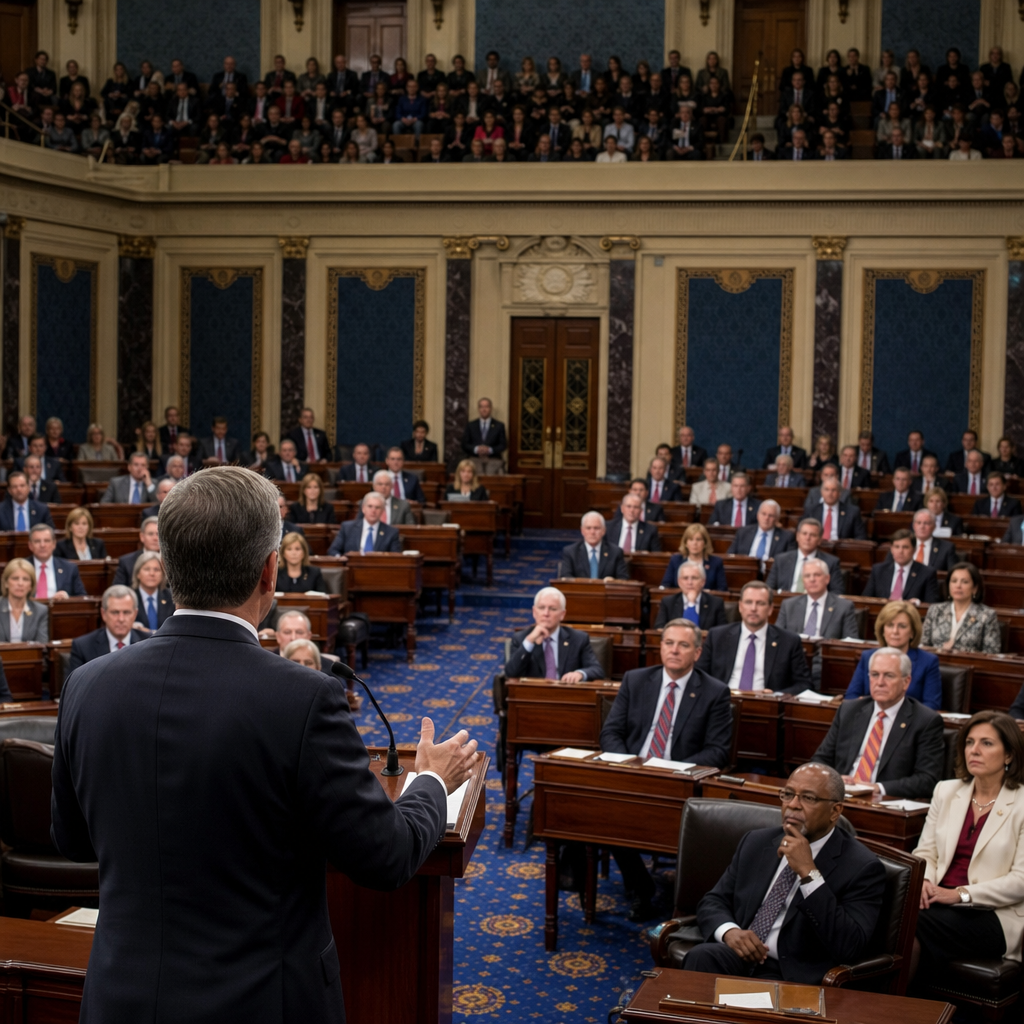
The Speech or Debate Clause protects legislators from being questioned elsewhere for legitimate legislative acts, and it remains one of the Constitution’s most misunderstood safeguards. Found in Article I, Section 6, the clause states that Senators and Representatives “shall not be questioned in any other Place” for “any Speech or Debate in either House.” In plain terms, this means members of Congress receive a constitutional privilege designed to preserve legislative independence from intimidation by the executive or judiciary. The protection is broad, but it is not absolute, and understanding where it begins and ends is essential for students of AP Government and Politics.
I have found that many students initially confuse this clause with free speech rights under the First Amendment or with general immunity from criminal law. It is neither. The Speech or Debate Clause is a structural protection, not a personal license. It exists to keep Congress functioning as a coequal branch by preventing arrests, prosecutions, civil suits, or courtroom questioning based on core legislative work. Historically, the Framers borrowed the idea from the English Bill of Rights of 1689, which responded to monarchs punishing lawmakers for parliamentary speech. The American version reflects the same concern: legislators cannot deliberate freely if every speech, vote, committee report, or investigation creates personal legal danger.
For AP Government and Politics, this clause matters because it sits at the intersection of separation of powers, congressional behavior, accountability, and constitutional interpretation. It helps explain why committee hearings can be aggressive, why members can make controversial statements on the House or Senate floor, and why courts often draw sharp lines between legislative acts and political acts. It also connects to larger themes in this subtopic, including congressional oversight, ethics rules, privilege, impeachment, lobbying, and the limits of institutional power. As a hub article for miscellaneous constitutional issues within AP Government and Politics, this page frames the Speech or Debate Clause as both a shield for democracy and a source of recurring legal disputes over corruption, leaks, subpoenas, and staff conduct.
To analyze it well, students should know four key terms. A legislative act is an action integral to deliberation and lawmaking, such as speaking on the floor, voting, introducing bills, preparing committee reports, and issuing subpoenas tied to authorized inquiries. Legislative privilege is the immunity that prevents outside questioning about those acts. Political acts are activities such as press releases, newsletters, campaign events, or constituent services; these may relate to a legislator’s job, but they are not protected in the same way. Finally, immunity differs from evidentiary privilege: the clause can block prosecution or testimony based on legislative acts, but it does not automatically protect every document or every conversation a member has.
Constitutional purpose and the core scope of protection
The central purpose of the Speech or Debate Clause is institutional independence. The Framers knew that if presidents, prosecutors, or judges could punish lawmakers for what they said in Congress, legislative oversight would collapse. In practice, the clause prevents inquiry into acts that are “an integral part of the deliberative and communicative processes” by which members participate in proceedings. That language comes from Supreme Court doctrine and captures the basic rule used in modern cases. Protected conduct includes floor speeches, debates, votes, committee hearings, committee reports, and many preparatory activities closely tied to legislative decision-making.
A useful way to think about the clause is to ask whether the activity is part of making law or conducting formal congressional investigation. If the answer is yes, protection is usually strong. If the activity is aimed at publicity, reelection, or helping a constituent navigate a federal agency, protection is weaker or absent. This distinction matters because members do many things beyond legislating. Congress is a lawmaking body, but legislators are also politicians, communicators, and service providers. The Constitution shields the first category most strongly because separation of powers depends on it.
The clause also extends beyond spoken words. Students often assume “speech or debate” means only remarks on the chamber floor. In fact, courts have read it functionally rather than literally. Drafting legislation, circulating materials among members, conducting committee inquiries, and issuing an authorized report can all fall within the privilege. Congressional aides may receive derivative protection when acting as the member’s alter ego in legislative tasks. Without that extension, the privilege would be easy to defeat by subpoenaing staff instead of members.
Leading Supreme Court cases every student should know
The most important cases define the line between legitimate legislative acts and unprotected conduct. In Kilbourn v. Thompson (1881), the Court recognized broad protection for actions within the “sphere of legitimate legislative activity.” That phrase still anchors modern analysis. In Tenney v. Brandhove (1951), involving state legislators, the Court emphasized that legislative immunity protects against judicial interference even when motives are challenged. The point was clear: courts should not examine legislators’ purposes when the conduct itself is legislative.
United States v. Johnson (1966) reinforced the rule in a criminal context. The government could not prosecute a former member of Congress by questioning his House speech as evidence of wrongdoing. Soon after, United States v. Brewster (1972) clarified an important limit. A member accused of taking a bribe could be prosecuted because accepting a bribe is not a legislative act, even if the alleged bribe was offered to influence future votes. The case is crucial for AP exam analysis because it shows that the clause protects the legislative process, not corruption.
Gravel v. United States (1972) is another landmark. Senator Mike Gravel arranged for the Pentagon Papers to become public and had read part of them during a subcommittee meeting. The Court held that legislative acts and some aide activities were protected, but arranging private publication through Beacon Press was not. That distinction remains one of the clearest examples of where privilege ends: official legislative use is protected; broader republication outside Congress is generally not.
Finally, Doe v. McMillan (1973) and later cases stressed that official reports distributed as part of congressional business are protected, while wider public dissemination by officials outside the legislative sphere may not be. Together, these decisions teach a stable rule set that appears often in advanced civics classes and constitutional law: legislative acts receive strong immunity; political messaging, administration, and criminal transactions do not.
What is protected and what is not protected
When I teach this topic, the most effective approach is a side-by-side comparison. The constitutional test turns on function, not job title or location. A senator speaking at a committee hearing is protected. The same senator repeating the same accusation at a campaign rally is not protected by this clause. A representative preparing questions for an oversight hearing is usually protected. The representative’s press secretary drafting a television talking point is not.
| Usually Protected | Usually Not Protected | Why the Difference Matters |
|---|---|---|
| Floor speeches and debate | Press conferences and interviews | Only formal legislative deliberation is constitutionally shielded |
| Voting on bills or resolutions | Campaign promises about future votes | Official acts are distinct from electoral politics |
| Committee reports and hearing questions | Newsletters sent to constituents | Communicating with the public is political, not legislative |
| Drafting legislation and amendments | Helping a donor with agency access | Constituent service and influence-peddling are outside the clause |
| Authorized subpoenas in investigations | Taking bribes or destroying evidence | Criminal conduct never becomes legislative merely because a lawmaker does it |
These distinctions answer common AP questions directly. Can a member of Congress be sued for defamation based on a floor speech? Usually no, because the speech is protected. Can the member be sued for the same statement in a television interview? Potentially yes, because the interview is outside formal legislative activity. Can prosecutors use a committee report itself as the basis for criminal questioning? Generally no. Can they investigate whether the member accepted money in exchange for influence? Yes, if they do so without probing protected legislative acts.
Another subtle limit involves administrative and personnel decisions. Not everything done in a congressional office counts as legislative. Employment actions, office management, and routine administration may fall outside the privilege, depending on context. Courts often ask whether the conduct was essential to deliberation or simply part of running an office. This becomes important in workplace disputes, records requests, and litigation involving congressional staff.
How the clause affects oversight, corruption investigations, and modern disputes
The Speech or Debate Clause shapes how Congress investigates the executive branch and how the executive investigates Congress. During oversight fights, committees rely on the clause to protect subpoenas, staff preparation, internal memos, and questioning strategies from interference. That protection strengthens Congress when examining agency misconduct, intelligence failures, military operations, or misuse of federal funds. It is one reason oversight can function even when the White House is hostile.
At the same time, prosecutors regularly test the limits when public corruption allegations arise. The lesson from Brewster and related cases is that members are not above the law, but investigators must build cases carefully. They can examine bank records, meetings with donors, lobbying contacts, and quid pro quo evidence, yet they must avoid using protected legislative acts as proof. That limitation can make prosecutions harder, but it preserves the larger constitutional principle that lawmaking itself cannot be criminalized through hostile interpretation.
Modern disputes also involve search warrants, digital records, and congressional staff communications. In the 2006 FBI search of Representative William Jefferson’s office, lawmakers from both parties objected that executive agents had seized legislative materials. The controversy illustrated a practical challenge the Framers never saw coming: electronic files mix protected and unprotected content in the same devices. Courts and investigators now use filter teams, privilege review procedures, and negotiated protocols to separate legislative documents from political or personal records. The technology changed, but the constitutional question remained the same.
For students, the big takeaway is balance. The clause is not a loophole for secrecy, and it is not a dead letter. It is an operating rule of interbranch conflict. It protects serious legislative work, especially oversight and deliberation, while still allowing ethics enforcement, bribery prosecutions, and public accountability for nonlegislative conduct. That balance explains why the clause appears in cases involving leaked documents, subpoenas, contempt disputes, and even debates over impeachment-related investigations.
Why this clause matters across the AP Government and Politics “Misc” subtopic
As a hub topic, the Speech or Debate Clause connects to several issues students often study separately. It links directly to congressional committees because most protected legislative fact-finding happens there. It connects to impeachment because committee investigations, evidence gathering, and report drafting are legislative functions with constitutional implications. It also overlaps with lobbying and ethics because the line between persuasion and corruption often turns on whether the government is examining protected acts or unprotected exchanges of money, access, or favors.
It also belongs alongside broader lessons about federalism and comparative institutions. Many state constitutions contain similar protections for state legislators, and courts frequently borrow federal doctrine when interpreting them. Comparative politics offers another useful point: parliamentary systems often protect debate more broadly inside legislative chambers, but the American clause sits within a presidential system that creates sharper branch conflict. That context helps explain why U.S. courts have invested so much effort in defining legislative privilege with precision.
Most importantly, this clause teaches a recurring AP theme: constitutional democracy depends on limiting power in order to preserve it. Congress must be free enough to criticize presidents, expose scandals, and write controversial laws without fear of retaliation. But lawmakers must also remain answerable for bribery, publicity stunts, campaign misconduct, and ordinary crimes. The Speech or Debate Clause is the doctrine that keeps those principles from collapsing into each other.
Students preparing for exams should remember three points. First, the clause protects legislative acts, not all acts by legislators. Second, the Supreme Court uses a functional test focused on deliberation and lawmaking. Third, major cases such as Johnson, Brewster, and Gravel show both the strength and the limits of the privilege. If you are building out your AP Government and Politics notes, use this article as the foundation, then connect it to congressional committees, oversight, lobbying, ethics, and separation of powers for a complete understanding.
Frequently Asked Questions
What is the Speech or Debate Clause, and why does it exist?
The Speech or Debate Clause is a constitutional protection found in Article I, Section 6 of the U.S. Constitution. It provides that Senators and Representatives “shall not be questioned in any other Place” for “any Speech or Debate in either House.” Although the wording sounds narrow, the protection is broader than floor speeches alone. Its central purpose is to preserve the independence of the legislative branch by preventing the executive or judicial branches from punishing, intimidating, or harassing lawmakers for carrying out legitimate legislative work.
Historically, the clause reflects a long struggle against political retaliation. The Framers understood that representative government could not function properly if legislators feared prosecution or civil lawsuits every time they debated controversial issues, proposed legislation, voted, or participated in committee work. In that sense, the clause is not a personal perk for members of Congress. It is a structural safeguard intended to protect democratic decision-making itself. When lawmakers are free to deliberate without outside coercion, Congress is better able to perform its constitutional role as a coequal branch of government.
That is also why the clause is often misunderstood. Many people assume it gives members of Congress blanket immunity for anything they say or do. It does not. The protection is powerful, but it applies only to acts that fall within the “legitimate legislative sphere.” Courts have repeatedly emphasized that the clause exists to protect legislative independence, not to place lawmakers above the law.
What kinds of actions are actually protected by the Speech or Debate Clause?
The clause protects conduct that is part of the legislative process itself. That generally includes delivering speeches on the House or Senate floor, participating in debates, voting, introducing bills, preparing committee reports, conducting hearings, issuing subpoenas as part of authorized committee activity, and performing other acts integral to deliberation and lawmaking. Courts often use the phrase “legitimate legislative acts” to describe the category of conduct that falls within the clause’s core protection.
The key question is not whether the action was political in a broad sense, but whether it was legislative in a constitutional sense. For example, a member’s work in drafting legislation, consulting with aides about bill language, or participating in committee investigations closely tied to potential legislation may be protected because those actions are directly connected to Congress’s lawmaking and oversight functions. The privilege can also extend to congressional aides when they are functioning as the legislator’s alter ego in carrying out legislative tasks.
Importantly, the protection is not limited to courtroom testimony. The clause can bar criminal prosecutions, civil suits, discovery requests, and other forms of inquiry that would force a legislator to defend or explain protected legislative conduct. In practical terms, if the government or a private party tries to use a member’s legislative acts as the basis for liability or as evidence against them, the clause may block that effort. That is what gives the protection real constitutional force.
What does the Speech or Debate Clause not protect?
The Speech or Debate Clause does not shield every activity undertaken by a member of Congress. It does not protect political campaigning, constituent services, press interviews, newsletters, speeches delivered outside Congress, negotiations with executive agencies unrelated to formal legislative activity, or purely administrative and personal conduct. Those actions may be important parts of a legislator’s job in the real world, but they are not necessarily part of the legislative process in the constitutional sense.
One of the most important limits is that the clause does not immunize criminal conduct simply because a legislator was involved. Courts have drawn a line between protected legislative acts and unprotected acts such as accepting bribes, arranging private deals, or engaging in corruption. A member cannot avoid investigation by claiming that unlawful conduct became privileged merely because it related in some general way to official duties. For example, while a vote or speech in Congress may be protected, an agreement to exchange official action for money is not itself a legislative act covered by the clause.
This distinction matters because it preserves the balance the Constitution intended. The clause is meant to prevent intimidation of legislators, not to create a safe harbor for wrongdoing. If courts interpreted it too broadly, lawmakers could evade accountability for conduct that falls outside the actual business of legislating. As a result, the privilege is best understood as strong but carefully confined: it protects legislative independence without erasing legal responsibility for non-legislative acts.
How have courts interpreted the phrase “legitimate legislative acts”?
Courts have spent decades defining what counts as a “legitimate legislative act,” and the Supreme Court has generally taken a functional approach. Rather than focusing on a job title or the political importance of an action, courts ask whether the conduct is an integral part of the deliberative and communicative processes by which members participate in committee proceedings, debate, investigation, and voting on matters within Congress’s jurisdiction. If the act is part of the process of considering and passing laws, it is much more likely to be protected.
That functional approach explains why some activities that seem closely related to politics are still unprotected. A press release about a bill, for example, may concern legislation, but communicating with the public is not the same thing as participating in the internal legislative process. Likewise, helping a constituent deal with a federal agency may be a routine congressional activity, but it is not usually treated as a protected legislative act. The same goes for republication of congressional materials outside Congress; the underlying legislative activity may be privileged, but repeating it elsewhere may not be.
At the same time, courts have interpreted the clause robustly when genuine legislative activity is at stake. They have recognized that compelled questioning about motives, internal deliberations, committee work, and other lawmaking functions can threaten the separation of powers just as much as direct punishment would. That is why the phrase “legitimate legislative acts” remains so important. It serves as both the source of the clause’s strength and the boundary that keeps it from becoming unlimited immunity.
Why is the Speech or Debate Clause still important today?
The Speech or Debate Clause remains vital because the risk of political pressure on lawmakers did not disappear with the Founding. In modern government, investigations, subpoenas, prosecutions, civil litigation, and intense partisan conflict can all create opportunities for one branch or private actors to interfere with legislative independence. The clause helps ensure that members of Congress can debate, investigate, and vote without fearing that those core legislative acts will later become the basis for retaliation in another forum.
Its modern relevance is especially clear during periods of sharp political division. Legislative oversight of the executive branch, controversial hearings, and investigations into national issues can easily generate accusations of bad motives or abuse. The Speech or Debate Clause does not guarantee that legislators are always right or wise, but it does protect the constitutional space they need to perform their institutional role. Without that protection, aggressive legal challenges could chill debate and weaken Congress’s ability to serve as a check on the other branches.
At the same time, the clause’s limits are just as important as its protections. Public confidence depends on understanding that legislative privilege is not a license for secrecy, corruption, or lawlessness. Properly understood, the Speech or Debate Clause is a constitutional safeguard for the legislative process, not a personal escape hatch for individual politicians. That combination of strong protection and clear limits is exactly why the clause continues to matter in constitutional law and public life.