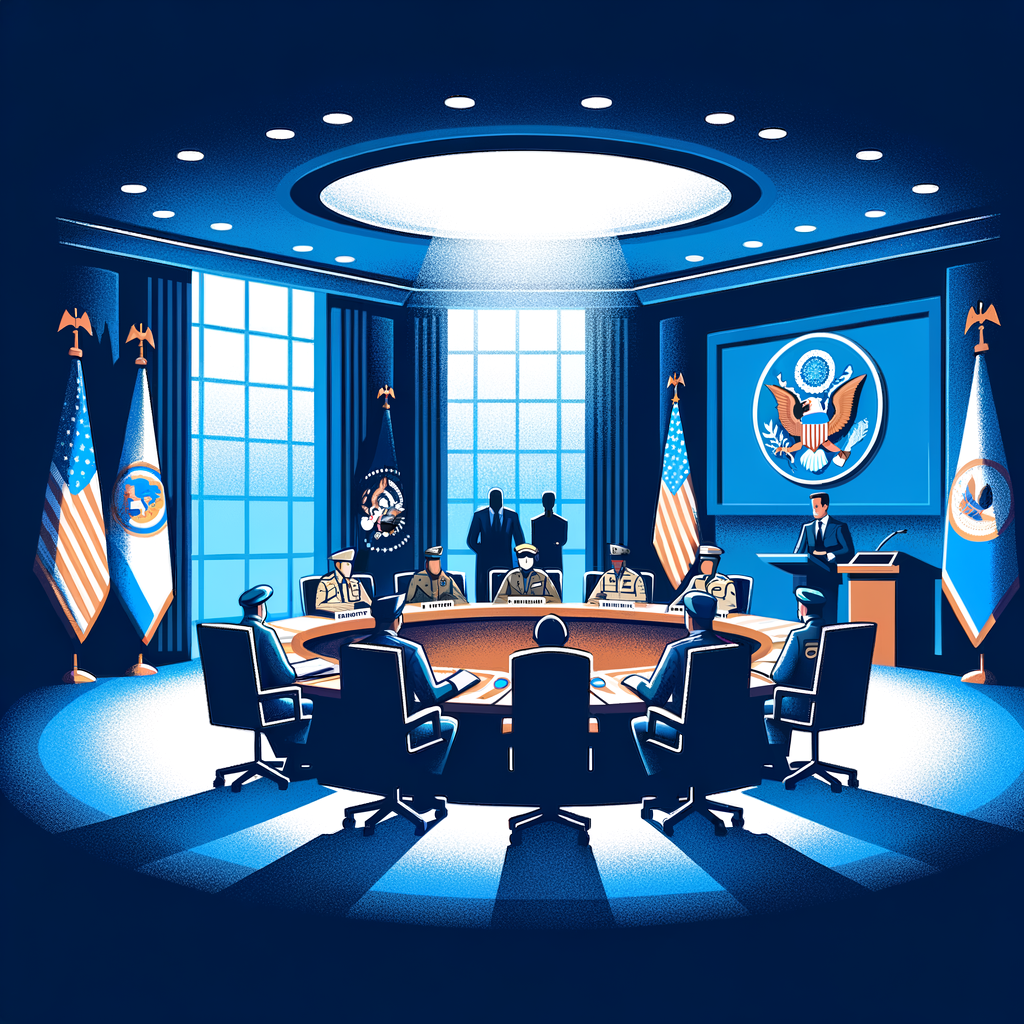
The National Security Council (NSC) plays a pivotal role in shaping the foreign policy of the United States. Often operating behind the scenes, this crucial entity works to coordinate national security strategy across various government departments and agencies. Given the complexity of international relations, the NSC is tasked with ensuring that the country’s foreign policy is coherent, measured, and strategically sound. This influence over foreign policy has evolved significantly since its establishment and continues to adapt to new global challenges. This article delves into the essence of the NSC, exploring its history, structure, operations, and impact on shaping U.S. foreign policy. By examining these facets, we gain insight into how the NSC navigates the intricate web of global diplomacy and international security.
The Origins and Evolution of the National Security Council
The National Security Council was established by the National Security Act of 1947, a legislative response to the geopolitical realities following World War II. The primary goals of the council are to ensure coordination across various branches of the defense and intelligence community while advising the President on matters concerning national security. Initially, the NSC’s focus was narrower, aimed at addressing post-war security concerns. However, as the global political landscape evolved through the Cold War and beyond, so has the role of the NSC. The council has since become an indispensable nerve center for crafting U.S. foreign policy.
The NSC is chaired by the President and includes high-ranking officials such as the Vice President, Secretary of State, and Secretary of Defense. This inner circle embodies both the executive branch’s approach to quick decision-making and a collaborative, interdisciplinary strategy to tackling international issues. Over the decades, the NSC’s framework has expanded, adapting to include roles like the National Security Advisor, who plays a critical advocacy and coordination role within the council.
Structure and Functionality of the NSC
The NSC’s structure resembles a bureaucratic matrix designed to optimize decision-making efficiency and ensure a comprehensive approach to national security. Unlike many government bodies, the NSC operates primarily out of the White House, thus enabling rapid access to the President and other key advisors. However, this proximity extends beyond mere physical location; it underscores the NSC’s centrality in foreign policy deliberations.
Within the NSC, various committees tackle specific issues. For instance, the Principals Committee, composed of key cabinet members, serves as the primary vehicle for interim policy formulation when Presidential involvement isn’t immediately necessary. Subordinate to this is the Deputies Committee, which functions as the preparatory body, developing detailed policy options and recommendations.
Working groups and specialized task forces also fall under the NSC’s purview, each focusing on specific geographical or thematic concerns, ranging from counterterrorism measures to cybersecurity. This organizational flexibility allows the NSC to adapt its strategies to a rapidly changing world, a necessity given the dynamic nature of international relations and technological advances.
The National Security Advisor’s Influence
The National Security Advisor, an often-misunderstood position, wields substantial influence within the NSC. Appointed directly by the President, the advisor serves as the chief coordinator of policy development and analysis. Their role is crucial: bridging inter-agency divides, synthesizing intelligence and policy recommendations, and ultimately, ensuring that the President receives well-rounded advice on matters of security and foreign policy.
Historically, the effectiveness of the National Security Advisor has varied, depending largely on their relationship with the President and their ability to balance the perspectives of different departments. Advisors such as Henry Kissinger and Condoleezza Rice have shaped foreign policy by virtue of both their advisory role and their policy advocacy, demonstrating the power and potential of the position.
An effective National Security Advisor maintains a careful balance between offering their expert opinion and ensuring a wide array of policy options are presented. This balance ensures that the President can make informed decisions that align with broader governmental priorities as well as immediate political considerations.
NSC’s Role in Crisis Management
One crucial aspect of the NSC’s function is its role in managing international crises. When the United States faces a foreign policy emergency—be it military conflict, diplomatic breakdown, or international terrorism—the NSC is the engine that drives a coordinated response. Its swift decision-making capabilities and expert personnel make it the government’s first line of action in crisis scenarios.
The NSC uses Situation Rooms, facilities equipped to facilitate real-time communication and command, as a hub for managing crises. This infrastructure enables the NSC to effectively monitor unfolding situations and recommend appropriate governmental and military actions. Through crisis simulations and strategic planning, the NSC prepares to effectively manage potential threats, ensuring rapid and coordinated responses.
In times of crisis, the NSC’s communication and coordination prowess is showcased. By consolidating information from various intelligence agencies and military operations, the NSC is able to provide the President and his team with a clear, actionable picture that properly informs decision-making.
Integration of Technology and Intelligence in Policy Formulation
In an era where technology advances rapidly, the integration of digital tools and intelligence is imperative for effective foreign policy. The NSC plays a critical role in directing cyber policy and integrating technology into national security strategies. Through partnerships with other government bodies like the Department of Homeland Security and private sector firms, the NSC works to protect against cyber threats and employs advanced technological resources in intelligence gathering and data analysis.
The NSC’s ability to synthesize real-time intelligence data helps it formulate proactive policies. By leveraging tools like artificial intelligence and machine learning, the council can predict potential international crises before they manifest fully. Furthermore, technology aids in the communication and enforcement of complex international strategies, ensuring rapid deployment and policy adjustment where necessary.
By collaborating with technical experts, the NSC is able to interpret and implement the sophisticated data analyses required for modern diplomacy, from countering terrorist networks to regulating artificial intelligence in military applications.
The Impact and Criticism of the NSC
The impact of the NSC on U.S. foreign policy is profound, but it is not without controversy. Given its prominent role, the NSC has faced criticism for issues such as overreach and lack of transparency. Its operations can sometimes appear opaque, leading to a perception of undue influence outside public scrutiny or traditional checks and balances.
Critics argue the NSC occasionally undermines formal diplomatic channels by prioritizing swift action over deliberative processes typical of the State Department. Furthermore, incidents of disproportionate influence by certain figures within the NSC—often revealed through information leaks or post-event analyses—raise questions about the balance of power within the executive branch.
Defenders of the NSC stress its necessity in maintaining national security in a complex world. They argue that its structure and function enable the United States to respond effectively and quickly to global challenges, factors increasingly important in an interconnected international arena where delays can have significant consequences.
The Balance Between Diplomatic and Security Utilities
The NSC is tasked with striking a delicate balance between its diplomatic endeavors and security responsibilities. In executing foreign policy, it must reconcile the often conflicting priorities of these two domains. As the provider of high-level coordination, the NSC aims to ensure that diplomatic efforts and security measures are not only aligned but also mutually supportive.
For instance, in nuclear negotiations, the NSC provides strategic guidance that aims to protect national interests while seeking cooperative engagement with global partners. This role necessitates an intricate balance, requiring negotiations that are tough enough to serve security needs yet flexible enough to invite diplomacy.
Ultimately, the NSC’s ability to mediate between security imperatives and diplomatic objectives is a testament to its central position in shaping foreign policy. Its effectiveness in this realm is critical not just for peace and stability, but for maintaining robust international alliances as well.
Conclusion
The National Security Council remains an indispensable component of American foreign policy and national security strategy. Its ability to coordinate across multiple government sectors ensures that the United States is well-prepared to confront international challenges head-on. Despite criticisms, the efficiency and professionalism of the NSC enable it to navigate complex geopolitics effectively.
As global dynamics continue to evolve, so too must the approaches and methodologies employed by the NSC. Innovations in technology and intelligence offer new means of understanding and responding to international issues. Keeping pace with these changes ensures that the NSC retains its ability to advance U.S. interests on the world stage.
The future of foreign policy depends significantly on the NSC’s ability to maintain its vital role amidst growing challenges. Its ongoing development will determine how effectively it contributes to global peace, security, and cooperation, confirming its central position in the international policy framework. Through its dedicated service, the NSC continues to be a vital fulcrum for the United States’ engagement with the world, tackling both immediate threats and long-term strategic goals.
Frequently Asked Questions
1. What is the National Security Council (NSC) and how does it function in the realm of foreign policy?
The National Security Council (NSC) is an integral component of the U.S. government’s executive branch designed to advise the President on national security and foreign policy matters. Formed under the National Security Act of 1947, the NSC’s primary role has been to merge various strands of advice concerning national security into a cohesive strategy. Essentially, it’s like the President’s central nerve system for national security affairs, bringing together expertise from the military, intelligence community, foreign policy experts, and economic departments to ensure a well-rounded perspective on global matters.
The NSC operates behind the scenes, functioning as a coordinating body that synthesizes information and advice from various departments such as the Department of Defense, State Department, and intelligence agencies. It plays a critical role in problem-solving and policy formulation, ensuring that the foreign policies implemented are both strategic and coherent with national interests. The council’s recommendations help the President navigate the complex landscape of international relations, with its activities ranging from crafting policy decisions to responding to emerging global threats.
2. How has the role of the NSC in foreign policy changed over time?
The NSC’s role in foreign policy has significantly evolved since its inception in 1947. Initially, the NSC was more of an advisory body to the President, offering policy options and coordinating the interagency activities of different government branches involved in national security. However, the nature of global threats and the complexity of international relations have led to an expanded and more proactive role for the NSC.
Over the years, Presidents have often tailored the structure and influence of the NSC based on their personal management style and the security needs of the era. For instance, during periods of intense global tension such as the Cold War, the NSC’s importance escalated, functioning almost in real-time to address crises like the Cuban Missile Crisis. Presidents such as Richard Nixon and George H.W. Bush further amplified the profile and power of the NSC, embedding it more deeply into the centralized executive policy-making apparatus.
In recent times, with the emergence of non-state actors and cybersecurity threats, the NSC’s role has broadened to include unconventional security challenges. This adaptability showcases the NSC’s continuing transformation, always aligning its strategies with current global dynamics and advances in technology.
3. Who typically participates in NSC meetings, and how are decisions made?
NSC meetings are generally attended by high-ranking officials who are key players in national security policy. This includes the National Security Advisor, who chairs these meetings and acts as the primary liaison between the council and the President. Other integral participants typically include the Vice President, Secretaries of State, Defense, and Energy, the Chairman of the Joint Chiefs of Staff, and the Director of National Intelligence, among others. Depending on the topic, other department heads or experts might be invited to provide their insights.
Decisions within the NSC are often the product of extensive discussion and analysis, reflecting a consensus-building process among these diverse governmental leaders. The President usually considers these strategic discussions and recommendations when making final decisions on foreign policy matters. The process encourages a unified direction towards national security and foreign policy directives, though ultimately, as the Commander-in-Chief, the President holds the final decision-making authority.
4. How does the National Security Advisor influence U.S. foreign policy?
The National Security Advisor plays a crucial role in shaping U.S. foreign policy as the key intermediary who advises the President on security and foreign affairs matters. Sitting in a unique position, often just steps away from the Oval Office, the Advisor helps in filtering and consolidating pertinent information for the President, presenting comprehensive policy options, and implementing the President’s directives across the various agencies involved.
The Advisor’s influence largely stems from their ability to ensure a streamlined flow of information and decisions between the NSC and the President. Their role is not just advisory but also involves coordinating with different arms of the executive branch to execute the formulated policies seamlessly. The degree of influence that a National Security Advisor wields can vary greatly depending on their relationship with the President, the prevailing global situations, and their personal expertise in international affairs.
5. What are some significant contributions of the NSC to U.S. foreign policy in recent history?
The NSC has been pivotal in guiding some of the most critical foreign policy decisions in recent history. For example, during the Obama Administration, the NSC played a vital role in the decision to locate and eliminate Osama bin Laden, a move that demanded intricate coordination and rapid decision-making, directly involving the President. In this instance, the NSC’s capacity to integrate intelligence from multiple agencies was crucial.
Another hallmark contribution was during the Cold War, when the NSC, under numerous Presidents, orchestrated the strategic policies that eventually led to significant arms control agreements and the eventual dissolution of the Soviet Union. More recently, the NSC has been involved in addressing contemporary challenges such as the ongoing efforts to address North Korea’s nuclear ambitions and the development of comprehensive cybersecurity and counterterrorism strategies.
The NSC’s influence is seen in these and numerous other instances, showcasing its essential function in the seamless execution and strategic crafting of U.S. foreign policy.