
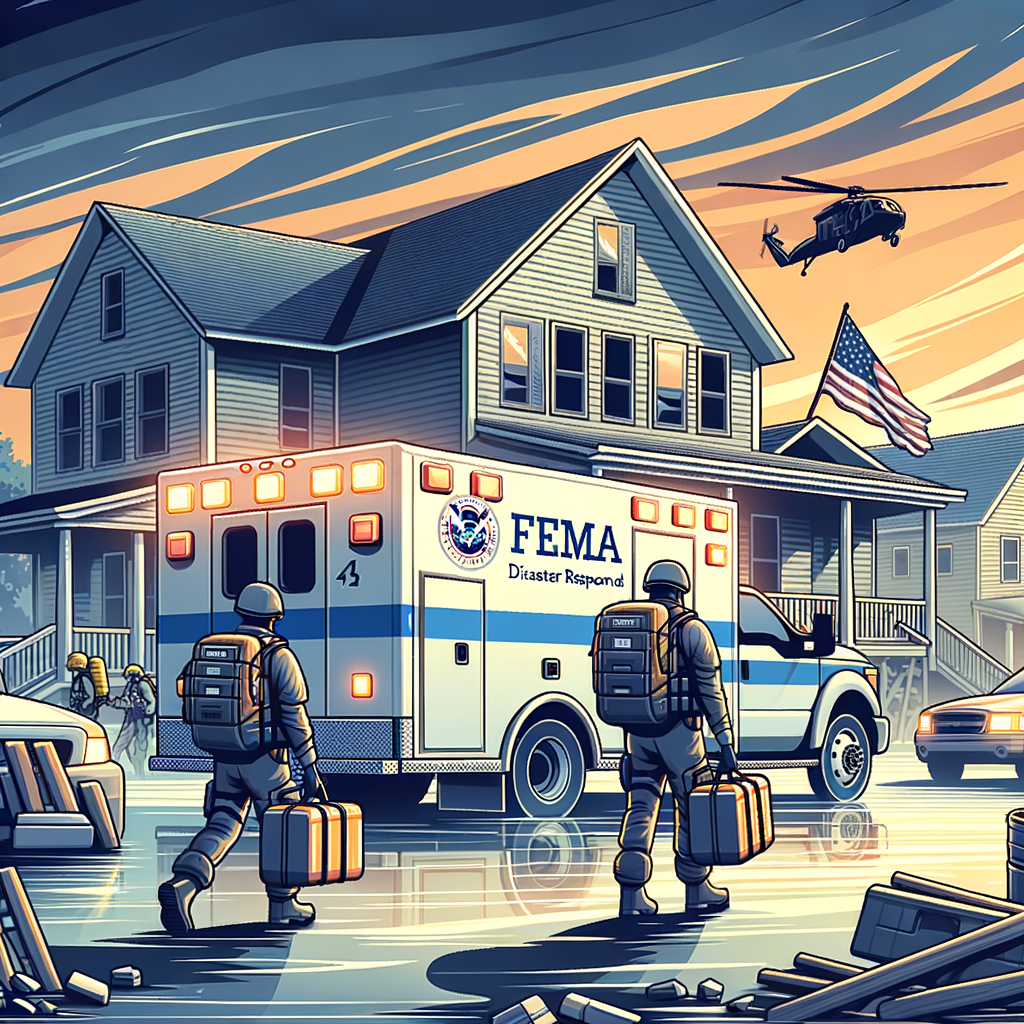
The Federal Emergency Management Agency (FEMA) plays a pivotal role in disaster response within the United States. Established in 1979, FEMA’s primary mission is to help American citizens and first responders ensure that as a nation, everyone works together to build, sustain, and improve capability to prepare for, protect against, respond to, recover from, and mitigate all hazards. Over the years, FEMA has become synonymous with federal disaster aid, coordinating the federal government’s role in preparing for, preventing, mitigating the effects of, responding to, and recovering from all domestic disasters, whether natural or man-made. In recent times, FEMA’s response to significant disasters such as wildfires in California and South Carolina has underscored its crucial role in orchestrating comprehensive disaster response strategies. This article examines the critical functions that FEMA serves in disaster scenarios, illustrating its operations through recent case studies.
The Foundation of FEMA and Its Evolution
FEMA was established through an executive order by President Jimmy Carter in 1979, amalgamating several government agencies with varied responsibilities for emergency management. The new agency was tasked with coordinating government efforts to effectively manage disasters. FEMA’s foundation came during a period when natural disasters were increasingly demonstrating the inadequacy of a fragmented system. Over the decades, especially following the criticism of its response to Hurricane Katrina in 2005, FEMA has undergone substantial transformations to enhance its capability in managing complex emergencies.
Today, FEMA operates within the Department of Homeland Security, emphasizing its importance in national security frameworks. Its scope includes preparedness grants, training programs, emergency exercises, and partnering with federal, state, local, tribal, and territorial governments. The integration within a broader security context allows FEMA to leverage a robust network, collaborate effectively, and implement comprehensive responses to emergencies of varying magnitude.
FEMA’s Role in Disaster Preparedness and Mitigation
One of FEMA’s fundamental roles is disaster preparedness and mitigation. This proactive approach involves risk assessment, community education, drills, and strategic planning to minimize the impact of disasters before they occur. FEMA provides guidance and funding to support state and local emergency planning through various programs such as the Homeland Security Grant Program (HSGP) and the Emergency Management Performance Grants (EMPG). By fostering a culture of preparedness and resilience, FEMA encourages communities to develop robust local emergency plans and increase public awareness of potential hazards.
FEMA’s mitigation efforts include undertaking initiatives that aim to reduce disaster risk, lessen the severity of disaster impacts, and enable faster recovery processes. The agency utilizes tools like the National Risk Index and Hazard Mitigation Assistance (HMA) grants to identify vulnerabilities and fund projects that enhance community resilience. These interventions not only save money by reducing the need for disaster response but also protect lives and property.
Coordination and Communication: FEMA’s Operational Backbone
At the heart of FEMA’s operations is its ability to coordinate and communicate effectively among numerous stakeholders. During a disaster, FEMA acts as the central hub, ensuring coherent communication and the efficient allocation of resources amongst federal, state, local, tribal entities, and private sectors. This coordination is facilitated by the National Response Framework (NRF), which provides guiding principles that enable all response partners to prepare for and provide a unified national response to disasters and emergencies.
FEMA’s strategic use of Incident Management Assistance Teams (IMATs) plays a vital role here. IMATs are deployed quickly to assess the situation on the ground and ensure the effective flow of information between affected regions and central command. This seamless information exchange is critical in deploying the right resources to the right places swiftly, minimizing the lag between disaster impact and aid delivery.
The Operational Logistics of FEMA in Disaster Response
A critical aspect of FEMA’s response capabilities is its logistical operations. These operations hinge on a well-defined and flexible structure that allows FEMA to move large quantities of resources, including personnel, equipment, and supplies, to disaster-affected areas. FEMA’s logistics supply chains are strategically established to ensure readiness for rapid deployment anywhere within the continental U.S.
Moreover, the agency maintains strategic stocks of essential supplies like food, water, shelter materials, and medical supplies in distribution centers across the country. These resources are indispensable during the early stages of an emergency, providing immediate relief to displaced and suffering populations. Through a combination of government partnerships and private-sector collaborations, FEMA ensures an agile and responsive supply chain that can adapt to the ever-shifting challenges disasters present.
Case Study: FEMA’s Response to Wildfires
The wildfires that ravaged California and South Carolina in recent years present a compelling case of FEMA’s dynamic operational tactics. Wildfires have been some of the most destructive natural disasters in the past decade, exacerbated by climate change and leading to significant losses in human lives and damage to property. As these infernos become more frequent and intense, FEMA’s role has become indispensable in providing much-needed federal support.
In California, for instance, FEMA’s involvement began well before the flames were controlled. Through pre-positioned resources and close coordination with state agencies such as CAL FIRE, FEMA ensured that prepared response capabilities were in place. Immediate post-disaster actions included deploying IMATs to the worst-affected regions for damage assessment and needs analysis. FEMA quickly approved federal disaster declarations that unlocked federal funds to support firefighting efforts, aid affected residents, and eventually kickstart recovery operations.
South Carolina, though facing wildfires on a slightly lesser scale, also benefited from FEMA’s intervention. The agency provided vital recovery grants to help communities rebuild and rehabilitate public infrastructure. Furthermore, FEMA coordinated housing assistance for those displaced by fires, ensuring temporary shelters were promptly made available to affected families. These actions significantly mitigated the negative impacts of these wildfires, aiding in faster recovery rates for affected communities.
FEMA’s Challenges and Criticisms
While FEMA is lauded for its significant contributions, it is not without criticisms and challenges. Managing large-scale disasters tests the agency’s limits, and incidents such as Hurricane Katrina revealed weaknesses in coordination and response times. Critics often point out bureaucratic inefficiencies, the slow release of funds, and inconsistency in aid distribution as areas needing improvement. The challenge of dealing with an increasing number of emergencies due to climate change further strains FEMA’s resources and capabilities.
The agency has also faced criticism regarding its response to marginalized communities, with allegations of inequitable distribution of resources often raised. Addressing these concerns necessitates nuanced policy reforms and the strengthening of local partnerships to ensure a more inclusive approach in disaster management that considers the unique needs of diverse communities.
Conclusion
FEMA stands as a cornerstone in America’s disaster response strategy, underlined by its commitment to ensuring preparedness, mitigation, and recovery. Through its coordinated efforts in handling natural disasters like the California and South Carolina wildfires, FEMA showcases the importance of robust federal involvement in disaster management. Despite facing challenges and criticisms, FEMA’s continued evolution and its unparalleled capacity to mobilize and manage resources underscore its essential role in providing a safety net for all Americans during times of disaster.
Looking forward, FEMA must continue to adapt to the evolving landscape of threats, particularly as climate change increases the frequency and intensity of natural disasters. Strategic investments in technology, infrastructure resilience, and inclusive policy development will be essential in strengthening FEMA’s operational capacity. Ultimately, FEMA’s ongoing mission resonates as a vital element in safeguarding lives, property, and well-being amidst the unpredictable forces of nature.
Frequently Asked Questions
1. What is FEMA and when was it established?
The Federal Emergency Management Agency, commonly known as FEMA, is an agency of the United States Department of Homeland Security. It was established in 1979 with the primary mission of coordinating federal disaster response operations. Essentially, FEMA is all about ensuring that everyone, from individual American citizens to local first responders, can come together effectively to deal with the repercussions of disasters. FEMA fundamentally aims to help prepare for, protect against, respond to, recover from, and mitigate all kinds of hazards, whether they be natural or man-made.
2. How does FEMA assist in disaster response?
FEMA plays a crucial role in disaster response by acting as the central coordinator for federal assistance. When a disaster strikes, FEMA steps in to provide a structured, strategic response, working hand-in-hand with state and local governments. Their role includes deploying resources on the ground, offering technical and financial assistance, and, quite critically, coordinating the efforts of various federal agencies so there’s harmony and unified action. This coordination ensures resources are efficiently allocated and that the affected communities receive the support they need in a timely manner.
3. How does FEMA collaborate with other agencies and organizations during a disaster?
During a disaster, FEMA is not a solo player; instead, it acts as the quarterback for a vast team that includes other federal agencies, state and local governments, and non-profit organizations. Collaboration is key. FEMA ensures there’s a seamless integration of resources and efforts across the board. They maintain constant communication lines with all agencies and coordinate logistics to make sure that every bit of aid, whether it’s manpower, supplies, or financial assistance, reaches where it’s needed most efficiently. By doing so, FEMA maximizes the impact of every dollar spent and person deployed during these critical response periods.
4. What types of disasters does FEMA respond to?
FEMA’s scope of response isn’t limited to just hurricanes or earthquakes; they respond to a broad spectrum of disasters. This includes both natural disasters, such as tornadoes, floods, and wildfires, and human-caused events like acts of terrorism. FEMA’s mandate covers such a wide range because each of these events can have devastating impacts on communities. Their aim is to ensure that no matter the type of disaster, the federal government is ready and able to provide support to the affected areas to help minimize damage and support recovery.
5. How does FEMA support recovery efforts post-disaster?
Recovery is just as critical as immediate response, and FEMA is deeply involved in these efforts post-disaster. Post-disaster recovery involves helping individuals and communities bounce back by restoring infrastructure, helping rebuild homes, and providing financial assistance to those impacted. FEMA offers various programs aimed at supporting recovery, such as housing assistance for displaced families or grants for repairing and rebuilding homes. They also work on the long-term rebuilding of public infrastructure, ensuring the resilience of communities to future disasters. FEMA continues to provide expertise and advice, helping states and localities to build back better and stronger.