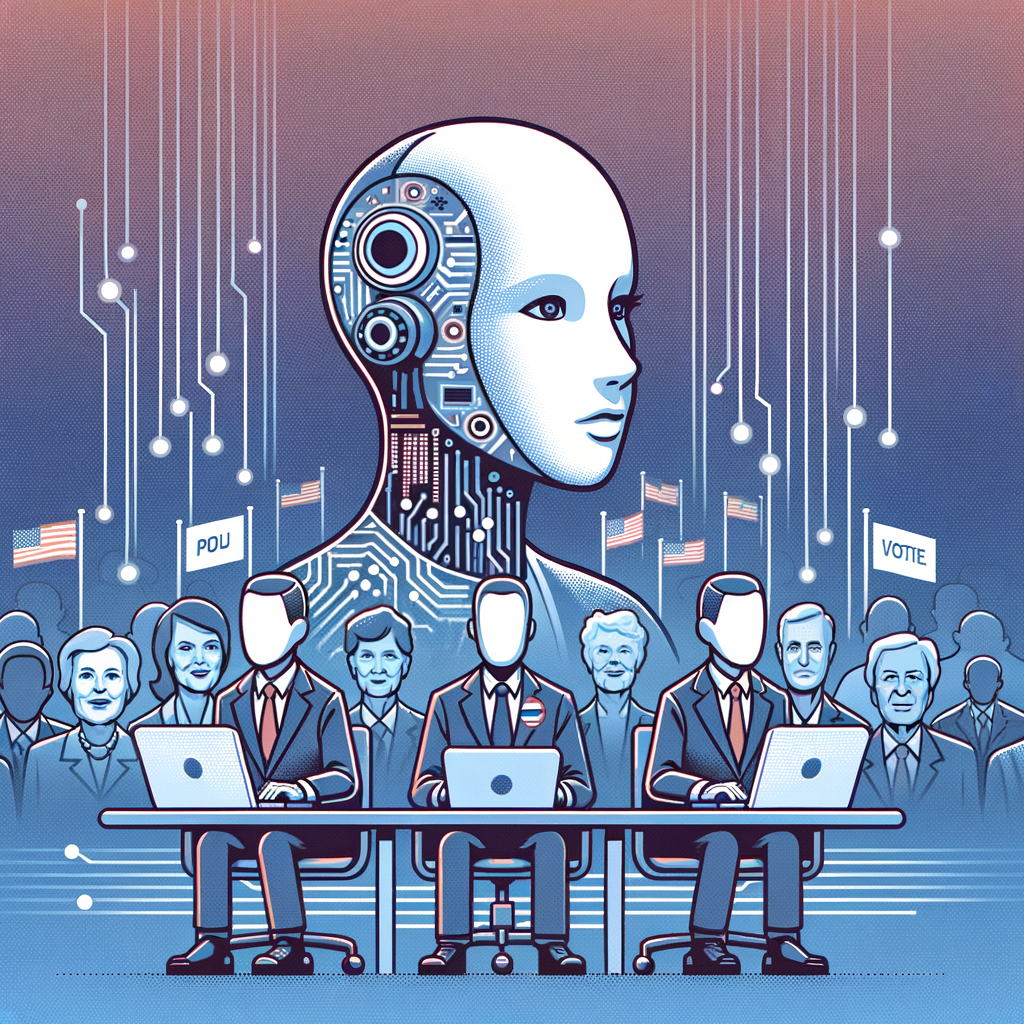
The integration of Artificial Intelligence (AI) within political campaigns has been a transformative development in modern political strategy. As technology continues to evolve, its application in politics is no longer a novel concept but rather a necessity. Campaigns today leverage AI to gain strategic advantages, from improving voter engagement to optimizing resource allocation. Since Donald Trump’s hypothetical return to office in January 2025, AI’s role in political campaigns has significantly evolved, reflecting the changing landscape of electoral politics. This article examines the multifaceted role AI plays in the planning and execution of contemporary political campaigns, exploring the various applications and impacts of this technology from the initial stages of a campaign to its concluding phases.
Acknowledging the importance of this technological innovation is paramount, as it transcends mere efficiency improvements. AI infiltrates the very fabric of campaign strategies, transforming data management, voter interaction, and media engagement. This profound influence not only streamlines existing processes but also creates new paradigms within political operations. As we delve into this topic, it becomes clear that understanding AI in political campaigns is crucial for comprehending modern political maneuvers and outcomes. Through this exploration, we will highlight the specific tools and methodologies that have been implemented since 2025, demonstrating AI’s pivotal contribution to political success and its implications for the future of political strategy.
Data Analysis and Voter Profiling
In recent years, the use of AI in voter data analysis has become a cornerstone of political campaigns. With vast amounts of data available from social media, voting history, and public records, AI algorithms can identify patterns and segment voters with unprecedented accuracy. These insights allow political campaigns to tailor messages to specific audiences, enhancing the relevance and impact of their communications.
Since 2025, there has been a significant advancement in AI-driven voter profiling. Campaigns are now able to integrate data from multiple sources, such as smart home devices and browsing behavior, providing a more comprehensive voter profile. This granular level of detail enables campaigns to predict voter behavior, assess sentiments towards candidates, and even identify likely political influencers within communities. Consequently, campaigns can allocate resources more effectively, concentrating efforts on undecided or swing voters who are most likely to influence election outcomes.
Personalized Campaign Messaging
The ability to deliver personalized messages to voters has become an essential component of modern campaigns. AI technologies enable the creation of dynamic content that resonates with different voter segments, allowing candidates to address individual concerns effectively. By using AI algorithms to analyze voter data, campaigns can craft messages that reflect personal interests, cultural backgrounds, and issues of importance, creating a persuasive narrative that aligns with voter values.
AI’s influence extends to real-time message adjustments based on changing voter dynamics. For example, if a candidate’s stance on climate change becomes a trending topic on social media, AI systems can swiftly tailor campaign content to strengthen their position. AI’s role in message personalization not only enhances voter engagement but also builds a stronger voter-candidate connection, fostering loyalty and support.
Social Media Monitoring and Engagement
Social media platforms have become critical arenas for political discourse and campaigning. AI plays a vital role in monitoring social media activity, enabling campaigns to track public opinion, identify influential conversations, and gauge campaign performance. Advanced sentiment analysis tools driven by AI can rapidly assess public reactions, providing campaigns with the ability to respond to developments quickly and strategically.
Furthermore, AI-powered chatbots have revolutionized voter interaction on social media. These automated systems can engage with voters 24/7, answering questions, providing information, and encouraging voter registration and participation. By using natural language processing, chatbots can comprehend and respond to a wide array of voter queries, ensuring that voters feel heard and valued throughout the campaign process. AI’s contribution to social media engagement has undoubtedly bolstered the efficacy of political outreach, making campaigns more interactive and responsive.
Resource Allocation and Strategy Optimization
Effective resource allocation is crucial for any political campaign, ensuring that human, financial, and technological resources are utilized optimally. AI assists in this aspect by analyzing data to forecast which areas require more attention and investment. Campaigns can use predictive modeling to determine where efforts will yield the highest returns, focusing on specific demographics or geographical locations.
In the competitive landscape of political campaigning, strategy optimization is essential. AI provides campaigns with analytical insights into past performance, helping to refine strategies for greater impact. By learning from historical data, campaigns can identify successful tactics and adjust underperforming ones, ultimately leading to more efficient resource allocation and better overall results.
Media Planning and Advertisement
The political advertisement landscape has been revitalized by AI, which streamlines media planning and buying. AI systems are capable of determining optimal channels, timing, and content for advertisements, maximizing reach and engagement. Through data analysis, campaigns can evaluate which media outlets and platforms are most effective for targeting specific voter bases.
Moreover, AI facilitates programmatic advertising, automating the acquisition and placement of ads. This automation ensures that ads are delivered at the right time and place, to the right audience, making the advertising process significantly more efficient. The precision offered by AI in media planning ensures that political messages are not only widespread but also impactful, aligning with voter preferences and behaviors.
AI-Driven Debate Preparation
Debate preparation has also seen advancements through AI. Candidates can now utilize AI-powered tools to analyze opponent speeches and potential debate questions, allowing them to anticipate arguments and craft effective responses. Speech recognition and natural language processing technologies enable these systems to dissect language, tone, and argument patterns, providing candidates with a competitive edge.
AI can simulate debate scenarios, offering real-time feedback on delivery and content. This technological support aids candidates in enhancing their public speaking skills, ensuring they are well-prepared and composed during live engagements. The application of AI in debate preparation is yet another example of how technology can bolster confidence and effectiveness in high-pressure situations.
Predictive Analytics for Election Outcomes
Throughout a campaign, predicting election outcomes is paramount for strategic planning and candidate positioning. AI offers sophisticated predictive analytics by processing vast datasets, ranging from historical voting patterns to current polling data. Machine learning algorithms refine these predictions continuously, adapting models based on emerging trends and data inputs.
Predictive analytics empower campaigns to make informed decisions regarding resource deployment, message emphasis, and strategic pivots. With accurate forecasts, campaigns can invest time and funds more wisely, shaping strategies that align with projected election dynamics. Since 2025, AI’s predictive capabilities have become more refined, offering campaigns an indispensable tool for shaping electoral success.
Ethical Considerations and Challenges
While AI provides significant advantages in political campaigns, it also raises ethical concerns and challenges. Issues such as data privacy, algorithmic bias, and misinformation pose risks that must be carefully managed. Campaigns must adhere to ethical guidelines, ensuring transparency and fairness in AI applications.
Voter data security is a primary concern, as breaches can undermine trust and credibility. Additionally, the risk of AI perpetuating biases presents challenges in crafting equitable and inclusive campaign strategies. Campaigns must remain vigilant in addressing these challenges, fostering the responsible use of AI technologies.
Conclusion
Since January 2025, the role of artificial intelligence in political campaigns has grown significantly, altering the tactical landscape of electoral politics. AI’s introduction into data analysis, voter engagement, resource allocation, and strategic planning has brought about a paradigm shift in campaign operations. As technology continues to advance, the potential applications of AI in political contexts are likely to expand further.
The integration of AI must be balanced with ethical responsibility, aiming to enhance transparency, trustworthiness, and voter interaction. While the benefits of AI are substantial, campaigns must address ethical concerns to maintain democracy’s integrity and public confidence. As we move forward, the intersection of AI and politics will continue to evolve, demanding vigilance, innovation, and accountability in this dynamic field.
Frequently Asked Questions
What is the significance of Artificial Intelligence in modern political campaigns?
Artificial Intelligence (AI) has revolutionized the way political campaigns are conducted by allowing for more precise and data-driven strategies. In today’s tech-savvy world, AI’s significance in political campaigns is profound. Its ability to analyze vast quantities of data means political campaigns can identify patterns, trends, and voter preferences with greater accuracy than ever before. AI systems can deliver insights that guide campaign strategies, making them more efficient and effective. For example, predictive analytics can forecast voter behavior, helping campaigns tailor their outreach efforts to maximize impact. Additionally, AI can streamline operations, enabling campaigns to allocate resources more effectively to areas where they are needed most, thereby optimizing spending and manpower. In an era where every vote counts, AI gives political campaigns the strategic edge needed to engage with voters more personally and persuasively.
How does AI improve voter engagement during a political campaign?
AI enhances voter engagement by creating personalized and targeted communication strategies. Campaigns utilize AI to sift through demographic and psychographic data, ensuring that messages resonate with individual voters on a personal level. By identifying voter behavior patterns and preferences, AI enables campaigns to craft specific messages that are more likely to garner attention and elicit positive responses. For instance, chatbots powered by AI can mimic human conversation, providing instant responses to voter inquiries and concerns. This helps to keep voters engaged and informed, fostering a sense of connection and trust. Furthermore, AI-driven tools can analyze social media interactions, allowing campaigns to tailor their content to align with current voter sentiments. Overall, AI’s ability to provide customized and relevant interactions enhances voter satisfaction and encourages active participation in the political process.
In what ways has AI transformed strategic decision-making in political campaigns?
AI has fundamentally altered strategic decision-making in political campaigns by offering data-driven insights that enhance the decision-making process. Campaign managers and strategists rely on AI algorithms to process enormous datasets, extracting actionable information that helps in formulating campaign strategies. AI tools can predict election outcomes based on historical data and present sentiments, thereby allowing campaigns to adapt and shift focus as needed. Additionally, AI allows for real-time analysis of campaign performance, identifying strengths and weaknesses promptly. This dynamic ability to adjust strategies on-the-fly helps campaigns stay competitive. Another way AI influences decision-making is through sentiment analysis, which gauges public opinions and voter attitudes. By understanding how voters feel about specific candidates or issues, campaigns can prioritize topics that matter most to their constituents. AI’s strategic contributions are invaluable in making informed decisions that enhance campaign effectiveness.
How can campaigns ensure the ethical use of AI in their strategies?
Ensuring the ethical use of AI in political campaigns involves adopting transparent practices and adhering to strict ethical guidelines. First, campaigns must commit to data privacy by securing voter information and being transparent about how this data is used. This involves limiting data collection to what is necessary for campaign purposes and anonymizing data to protect voter identities. Ethical AI use also means being honest in communication; campaigns should aim to provide voters with truthful information and avoid using AI to spread misinformation or manipulate perceptions through deepfakes or biased data interpretation. Campaigns should also be upfront about AI’s role in their strategy, thereby fostering transparency and trust. Additionally, AI algorithms need to be free from biases that could skew campaign strategies or disenfranchise certain voter groups. Regular audits and evaluations of AI systems can help ensure alignment with ethical standards, ultimately promoting a fair and just electoral process.
What potential challenges do campaigns face when incorporating AI, and how can they overcome these issues?
While AI offers numerous advantages, political campaigns must navigate several challenges when integrating these technologies into their operations. One challenge is the risk of algorithmic bias. If AI systems are built on biased data, they may produce skewed results that could disadvantage certain voter groups. Campaigns can overcome this by ensuring that their AI systems are trained on diverse and inclusive datasets. Another challenge is maintaining data privacy and security; campaigns must implement robust cybersecurity measures to protect sensitive voter information from breaches or misuse. Additionally, the complexity of AI systems can be a barrier for teams that lack technical expertise. Overcoming this involves investing in training and hiring specialized talent to manage AI tools effectively. Lastly, there’s a need for campaigns to maintain transparency about AI-driven strategies to build trust with the public. Implementing clear policies and actively communicating AI’s role in campaign efforts can help mitigate these challenges, ensuring a seamless and ethical integration of AI.