
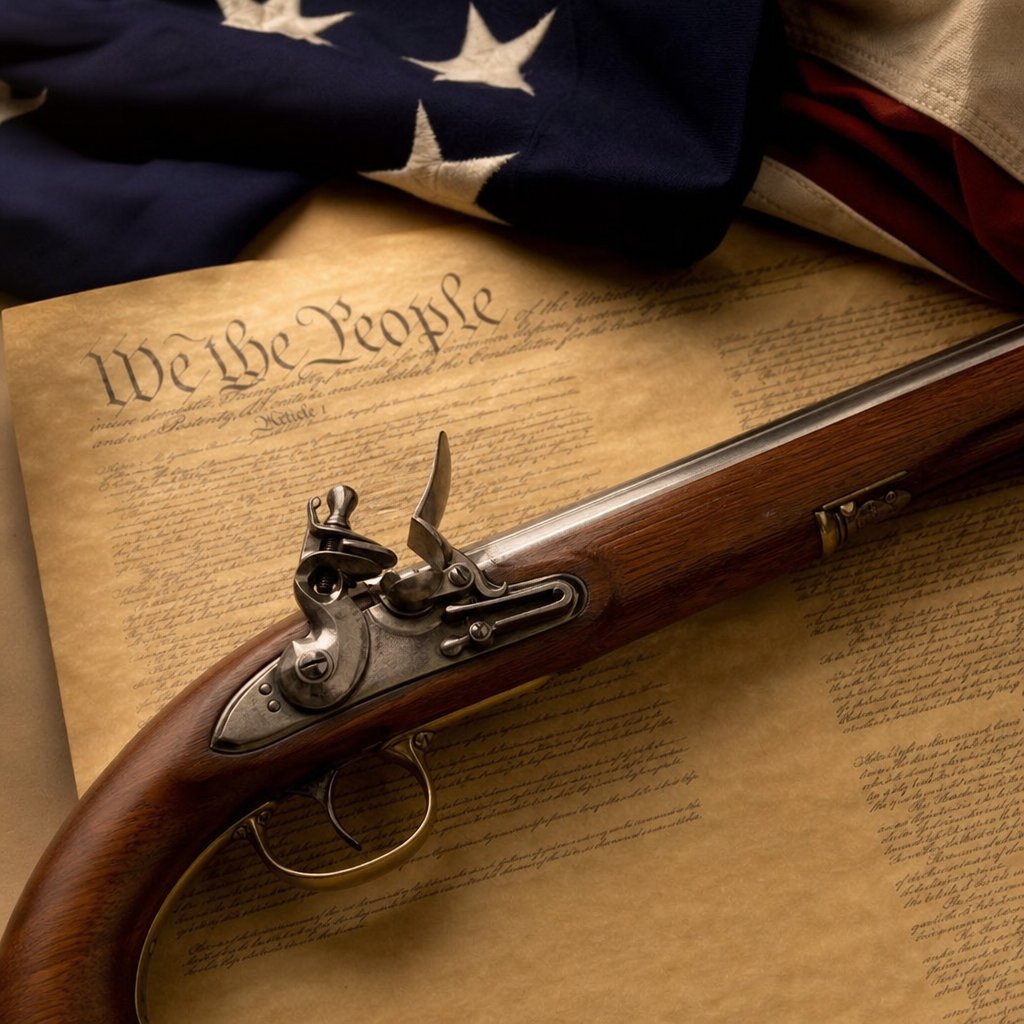
The right to bear arms is one of the most contested and consequential subjects in American constitutional law, and historical tradition tests now sit at the center of that debate. In plain terms, the right to bear arms refers to the protection in the Second Amendment: “the right of the people to keep and bear Arms, shall not be infringed.” A historical tradition test asks whether a modern gun regulation fits within the nation’s established tradition of firearms regulation, especially around the founding era and, in some arguments, the Reconstruction era. For students of AP Government and Politics, this topic matters because it connects constitutional text, judicial review, federalism, civil liberties, public safety, and the evolving role of the Supreme Court in defining rights.
I have taught this issue by starting with a simple distinction: a constitutional right is not self-executing, because judges must decide what the words mean when governments pass laws that affect them. That is exactly why the Second Amendment produces recurring legal conflict. Americans disagree not only about policy, but also about method. Should courts weigh government interests like reducing violence against individual rights? Or should they look first to text and history? In recent years, the Court has shifted decisively toward the second approach, making historical analogies central to modern Second Amendment cases.
Understanding the right to bear arms requires several key terms. “Keep” usually means possess. “Bear” generally means carry for confrontation or defense. “Militia” refers to the prefatory clause of the amendment, which has long fueled argument over whether the right is tied to organized military service or belongs to individuals. “Incorporation” means applying the Bill of Rights to state governments through the Fourteenth Amendment. “Historical tradition” means the pattern of accepted regulations in early American history. These definitions are essential because Second Amendment law now turns on how courts read text and compare modern regulations with older ones that lawmakers and judges treated as legitimate.
This hub article covers the core ideas students need before moving into narrower cases and debates. It explains the constitutional text, the major Supreme Court decisions, the historical tradition framework, the practical questions lower courts now face, and the most important criticisms of the current approach. It also highlights how this area links to broader AP Government themes, including liberty versus order, judicial power, selective incorporation, and competing theories of constitutional interpretation. If you understand those connections, you can analyze not just gun rights cases, but the larger structure of American government.
Constitutional Foundations of the Right to Bear Arms
The Second Amendment was ratified in 1791 as part of the Bill of Rights. Its full text contains a prefatory clause and an operative clause: “A well regulated Militia, being necessary to the security of a free State,” followed by the guarantee of the people’s right to keep and bear arms. For much of American history, courts debated how tightly those clauses were connected. One view treated the amendment mainly as protection for state militias against federal disarmament. Another view treated it as an individual right that existed apart from militia service, though informed by that civic purpose.
In AP Government terms, this debate mirrors larger arguments between collective and individual understandings of liberty. It also shows why constitutional wording matters. The phrase “the people” appears elsewhere in the Bill of Rights, including the First and Fourth Amendments, which supported arguments that the Second Amendment also protects individuals. At the same time, “well regulated Militia” signaled a historical concern with citizen defense, fears of standing armies, and the distribution of military power in the early republic. Both parts of the amendment remain relevant, but the Court today reads the operative clause as securing an individual right.
The federalism dimension is also critical. Originally, the Bill of Rights restricted only the national government. That meant states could regulate firearms without violating the Second Amendment as then understood in federal court. After the Civil War, the Fourteenth Amendment transformed constitutional law by creating new protections against state infringement. Modern incorporation doctrine eventually made most of the Bill of Rights enforceable against the states. That shift is central to gun rights because many significant firearms restrictions come from state legislatures and city governments rather than Congress.
Major Supreme Court Cases Students Must Know
The modern doctrine begins with District of Columbia v. Heller in 2008. In that case, the Supreme Court struck down Washington, D.C.’s handgun ban and requirement that lawful firearms in the home be kept unloaded and disassembled or bound by a trigger lock. Justice Antonin Scalia’s majority opinion held that the Second Amendment protects an individual right to possess a handgun in the home for self-defense. That ruling rejected the idea that the amendment protects only militia-related activity. For AP students, Heller is the essential anchor case because it established the individual-right interpretation that shapes everything after it.
Heller also included an important limitation. The Court said the right is not unlimited and identified examples of “presumptively lawful” regulations, including bans on firearm possession by felons and the mentally ill, laws forbidding guns in sensitive places such as schools and government buildings, and conditions on commercial sales. Those examples matter because they signaled that gun rights, like speech rights, can coexist with regulation. In practice, however, Heller did not provide a complete test for evaluating every law, and lower courts spent years developing balancing frameworks to decide new cases.
The second landmark case is McDonald v. City of Chicago in 2010. There, the Court held that the Second Amendment applies to the states through the Fourteenth Amendment. Chicago’s handgun restrictions therefore had to comply with the same constitutional standard that applied to the federal government. This incorporation ruling made the issue national in a way that Heller alone did not. After McDonald, challenges to state and local gun regulations expanded sharply, because nearly every American firearms law now sits within the orbit of federal constitutional review.
The third and most transformative recent case is New York State Rifle & Pistol Association v. Bruen in 2022. The Court invalidated New York’s requirement that applicants show “proper cause” to obtain a license to carry a handgun in public. More importantly, the Court rejected the two-step framework many lower courts had used, where judges first looked at history and then often applied means-end scrutiny such as intermediate scrutiny. Instead, the Court said that when the Second Amendment’s plain text covers an individual’s conduct, the government must justify its regulation by showing that it is consistent with the nation’s historical tradition of firearm regulation. That is the historical tradition test now driving litigation across the country.
How Historical Tradition Tests Work in Practice
The current framework can be stated directly. First, a court asks whether the amendment’s text covers the person and conduct at issue. If someone is part of “the people” and seeks to keep or bear an “arm,” the conduct is presumptively protected. Second, the burden shifts to the government to identify a sufficiently analogous historical tradition supporting the regulation. In other words, the state cannot simply say a modern law is useful. It must show that American history includes comparable restrictions grounded in similar public concerns and imposing a similar burden on the right.
This method sounds straightforward, but in practice it is complex. History rarely presents exact matches for modern regulations involving semiautomatic firearms, high-capacity magazines, digital records, or urban policing patterns unknown in 1791. Courts therefore use analogical reasoning. They ask whether historical laws addressed a comparable problem and whether they restricted gun use in a similar way. For example, historical bans on carrying firearms in legislative assemblies, polling places, and courthouses may support modern “sensitive places” restrictions. But how far that category extends—to subways, parks, hospitals, or college campuses—remains disputed.
One recurring question is which historical period matters most. Bruen emphasized the founding era because that is when the Second Amendment was adopted, yet it also discussed Reconstruction-era evidence because the Fourteenth Amendment made the right enforceable against states. Lower courts have therefore wrestled with whether 1791 or 1868 should serve as the primary benchmark. That choice is not academic. Firearms technology, policing, and legislative practice changed substantially across the nineteenth century, and selecting one period over another can affect whether a regulation appears rooted in historical tradition.
| Issue | Question courts ask | Example after Bruen |
|---|---|---|
| Text coverage | Does the conduct involve keeping or bearing protected arms? | Public carry generally falls within the amendment’s text. |
| Relevant history | Which period offers the best constitutional benchmark? | Judges compare founding-era and Reconstruction-era sources. |
| Analogical fit | Is the modern law comparable to older regulations in burden and purpose? | Sensitive-place laws may draw support from bans in courthouses or polling places. |
| Scope of limits | Does the tradition permit broad or narrow modern restrictions? | Licensing may survive, but discretionary carry denials may not. |
Current Debates, Lower Courts, and Real-World Consequences
Since Bruen, lower courts have faced a flood of challenges involving assault weapon bans, magazine-capacity limits, age restrictions, ghost gun rules, domestic violence disarmament, licensing fees, and location-based carry bans. I have found that students understand the stakes best when they see how one methodological change reshapes many policy areas at once. A state may have enacted a law after a mass shooting with strong legislative findings and public support, yet under the current doctrine that is not enough. The legal question is whether history contains a relevant analogue, not whether lawmakers produced compelling social science.
One especially important case is United States v. Rahimi, decided in 2024. The Court upheld a federal law barring firearm possession by individuals subject to domestic violence restraining orders under certain conditions. The decision clarified that historical tradition does not require a “historical twin.” Instead, the government can point to broader traditions of disarming individuals who pose a credible threat to the safety of others. That mattered because many observers worried that Bruen would invalidate long-accepted protective laws. Rahimi suggested that the historical approach can sustain at least some modern measures when they fit an established principle of dangerousness.
Still, major uncertainty remains. Assault weapon bans present a good example. Supporters argue that legislatures may regulate unusually dangerous weapons and that historical tradition includes limits on especially hazardous arms. Opponents respond that semiautomatic rifles are in common lawful use, which under Heller strongly supports constitutional protection. Similar tension appears in cases about magazine limits. Governments frame them as public safety measures designed to reduce casualties during attacks. Challengers answer that magazines over ten rounds are owned by millions of Americans for lawful purposes, making them difficult to classify as outside constitutional protection.
These disputes have practical political consequences. Legislatures now draft laws with litigation in mind, building records around historical statutes rather than relying only on criminology or policy evidence. Attorneys hire historians, and judges scrutinize archival materials including founding-era surety laws, antebellum carry restrictions, and nineteenth-century municipal ordinances. This creates a distinctive kind of constitutional politics in which legal outcomes may depend as much on historical interpretation as on present-day policy preferences. For AP Government students, that is a vivid example of how institutions translate public conflict into judicial doctrine.
Critiques, Limits, and Why This Topic Matters in AP Government
Historical tradition tests have supporters and critics across the ideological spectrum. Supporters argue that the method constrains judges by tying constitutional meaning to text and established practice rather than free-form balancing. In their view, courts should not decide how much safety justifies how much liberty without constitutional grounding. The historical approach, they contend, preserves democratic legitimacy by preventing judges from rewriting rights according to current preferences. That argument fits a broader commitment to original meaning and to a judiciary that enforces constitutional boundaries instead of acting as a super-legislature.
Critics raise serious objections. First, historical records are often incomplete, selective, and contested. Early America excluded many people from political participation, so relying on that history can elevate traditions formed without full democratic inclusion. Second, modern problems may lack close historical analogues. Rapid-fire weapons, dense urban transit systems, and contemporary domestic violence enforcement differ from conditions in 1791. Third, historians and judges do different work. Judges must resolve cases quickly and definitively, while historians emphasize context, ambiguity, and change over time. As a result, courts can oversimplify the past or treat scattered regulations as a settled tradition.
For AP Government and Politics, this issue is valuable because it brings together multiple course concepts in one area. It illustrates constitutional interpretation, the power of precedent, selective incorporation, the policy impact of judicial decisions, and the tension between individual liberty and collective security. It also provides a strong case study in agenda setting. A single Supreme Court ruling can reorder legislative strategy, redirect lower court dockets, and reshape national debate. Students who can explain the shift from means-end scrutiny to historical tradition analysis will demonstrate a sophisticated grasp of how constitutional doctrine changes public policy.
The core takeaway is clear: the right to bear arms cannot be understood today without understanding historical tradition tests. Heller recognized an individual right, McDonald applied it against the states, and Bruen made history the controlling framework for many modern disputes, while Rahimi showed that the approach still allows some contemporary safety regulations. If you are building your AP Government foundation, start here, then move outward to the specific cases and controversies linked from this hub. Master the doctrine, learn the competing arguments, and you will be prepared to analyze one of the Supreme Court’s most dynamic areas of constitutional law.
Frequently Asked Questions
What does the “right to bear arms” mean in constitutional law?
In constitutional law, the “right to bear arms” refers to the protection found in the Second Amendment, which states that “the right of the people to keep and bear Arms, shall not be infringed.” At a basic level, this language protects an individual right related to possessing and carrying weapons, most notably firearms. But the legal meaning of that protection has never been limited to the text alone. Courts also examine history, prior case law, and the scope of permissible regulation to determine how far the right extends in practice.
Modern Second Amendment doctrine generally treats the right as belonging to individuals, not just organized militias. That said, the right is not usually understood as unlimited. Courts and lawmakers have long recognized that some gun regulations may still be constitutional, including certain rules involving dangerous persons, sensitive places, commercial sales, or specific categories of weapons. The real constitutional debate is often not whether any regulation is allowed, but which regulations are consistent with the Amendment’s original public meaning and the nation’s legal tradition.
That is why the phrase carries so much weight in current litigation. Cases involving concealed carry, licensing systems, assault weapon bans, magazine capacity limits, and restrictions on firearm possession often turn on how courts define the core of the right. In short, the right to bear arms is both a textual guarantee and a subject of ongoing judicial interpretation, which is exactly why historical analysis has become so important.
What is a historical tradition test in Second Amendment cases?
A historical tradition test asks whether a modern firearms regulation is consistent with the nation’s established tradition of gun regulation, especially around the founding era and, in some cases, the Reconstruction era. Rather than focusing mainly on contemporary policy judgments or balancing public safety against individual rights in the abstract, this approach directs courts to look backward. Judges examine whether similar restrictions existed in American history and whether today’s law is meaningfully analogous to regulations that were widely accepted when the constitutional right was adopted and later applied.
The test became especially significant in recent Supreme Court doctrine because it shifted attention away from interest-balancing frameworks that some lower courts had used for years. Under the historical tradition approach, once the Second Amendment’s text is found to cover the conduct at issue, the burden generally moves to the government to justify the law by pointing to relevant historical analogues. That does not always require a perfect historical twin. Instead, courts often ask whether earlier regulations addressed a comparable problem and imposed a similar burden on the right.
In practice, this method can be difficult to apply. Historical records may be incomplete, regions may have regulated firearms differently, and judges may disagree about which time period matters most. Even so, the historical tradition test now sits at the center of major Second Amendment disputes because it provides the framework many courts use to decide whether modern gun laws are constitutional.
Why has the historical tradition approach become so important in gun rights litigation?
The historical tradition approach matters because it can determine the outcome of a case before a court ever reaches broader policy arguments. If a regulation lacks support in the historical record, a court applying this method may be more likely to strike it down. If there is a strong tradition of analogous regulation, the law has a better chance of surviving constitutional review. That makes historical evidence, old statutes, early state practices, legal commentary, and prior judicial decisions central pieces of modern litigation.
This approach has also become important because it changes the kind of argument lawyers must make. Instead of relying primarily on social science data, legislative findings, or general public safety rationales, governments now often need to show that similar limits were accepted in earlier American history. Challengers, by contrast, try to show that the law is historically unprecedented or imposes a burden unlike anything the founding generation would have recognized as lawful. The courtroom debate therefore becomes deeply historical, not merely doctrinal or empirical.
Just as important, the historical tradition framework reflects a broader constitutional philosophy. It suggests that the meaning of the Second Amendment should be anchored in text, history, and tradition rather than changing judicial views about policy wisdom. Supporters see that as a principled constraint on judicial discretion. Critics argue that history can be selective, contested, and hard to translate to modern conditions. Either way, the method now plays a decisive role in cases involving carry rights, possession bans, licensing systems, and other contested firearm regulations.
How do courts decide whether a modern gun law fits within historical tradition?
Courts generally begin by asking whether the regulated conduct falls within the Second Amendment’s text. If the answer is yes, the analysis typically turns to history. The government must then identify historical analogues showing that comparable regulations were accepted in the relevant periods of American history. Judges do not always require a one-to-one match, because modern problems may not have existed in exactly the same form centuries ago. Instead, they look for similarity in how and why the regulation operates.
For example, a court may examine whether older laws restricted who could possess weapons, where arms could be carried, or what kinds of conduct were considered threatening to public order. It may ask whether a modern law burdens the right in a way similar to past regulations or whether it addresses a comparable safety concern through a comparable legal mechanism. Historical sources can include colonial laws, founding-era statutes, 19th-century enactments, treatises, and judicial opinions. Courts may also weigh how widespread a historical practice was and whether it represented a durable national tradition rather than an isolated outlier.
The challenge is that reasonable judges can read the same record differently. One court may see a historical pattern broad enough to support modern regulation, while another may conclude the examples are too few, too late, or too different. Questions about the proper reference period, the level of generality, and the treatment of new technologies all complicate the analysis. So while the test sounds straightforward in theory, applying it to present-day laws often involves difficult judgments about analogy, historical significance, and constitutional method.
What are the biggest controversies surrounding historical tradition tests and the future of Second Amendment law?
The biggest controversy is whether history provides a sufficiently clear and workable rule for judging modern firearms laws. Supporters of the historical tradition test argue that it respects the Constitution’s fixed meaning and prevents judges from upholding or invalidating laws based simply on personal policy preferences. In their view, requiring governments to point to established historical analogues creates discipline in constitutional adjudication and keeps the judiciary tied to the original scope of the right.
Critics respond that historical inquiry can be uncertain, selective, and difficult to apply to modern firearms technology and modern public safety conditions. The founding generation did not confront the same weapons, urban environments, statistical evidence, or regulatory institutions that exist today. That creates hard questions about how closely a historical analogue must resemble a present-day law. Critics also worry that emphasizing old practices may understate historical inequalities or elevate sparse historical evidence into decisive constitutional rules.
Looking ahead, these debates will likely shape the future of Second Amendment law for years. Courts will continue to confront challenges to bans, licensing laws, possession restrictions, and regulations aimed at high-risk individuals. Much will depend on how judges define the relevant historical tradition, how much flexibility they allow in drawing analogies, and how they handle gaps in the record. For readers trying to understand the bigger picture, the key point is this: the future of gun rights litigation is no longer driven only by present-day arguments about safety and liberty, but by a deeper struggle over how constitutional history should control modern law.