
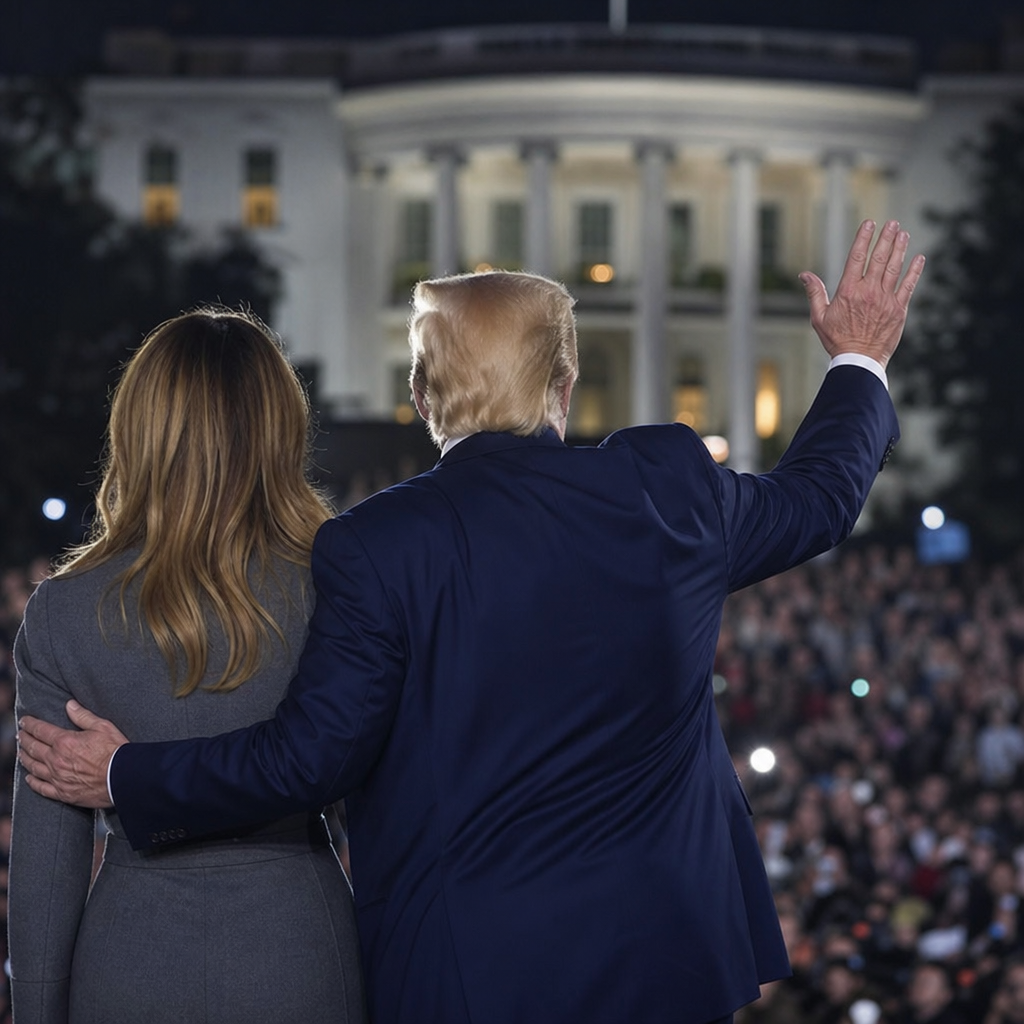
The presidential transition process is the structured transfer of executive power between administrations, beginning when election results clarify a winner and ending when the new president takes the oath of office on January 20. In AP Government and Politics, this period matters because it reveals how constitutional design, federal law, party organization, and practical management work together under intense time pressure. A transition is not only ceremonial. It involves national security briefings, staffing thousands of positions, preparing a governing agenda, coordinating with agencies, and preserving continuity so the federal government can function without interruption.
At its core, the process connects several key terms students should know. The president-elect is the apparent winner after the general election, though formal selection occurs through the Electoral College. The lame-duck period is the interval between the election and the end of the incumbent’s term, when outgoing officials still hold legal authority. The General Services Administration, or GSA, plays a crucial administrative role by ascertaining the apparent winner so transition funds, office space, and support can be released under the Presidential Transition Act. In modern practice, transitions also include pre-election planning because campaigns are expected to prepare for governing before voters cast ballots.
I have worked with transition planning materials and agency briefing structures, and the first lesson is that speed and order matter as much as politics. A winning campaign has roughly seventy-five days to move from candidate rhetoric to executable government decisions. That short timeline is why transitions are studied as both a constitutional procedure and a management challenge. Delays affect cabinet vetting, policy rollout, intelligence access, and market confidence. Smooth transitions reassure allies, federal employees, and the public that the presidency is bigger than any one individual.
For students, this topic also serves as a hub for related questions across AP Government and Politics. It touches federal bureaucracy, checks and balances, presidential power, political parties, elections, civil-military relations, public administration, and the role of norms. Understanding the presidential transition process helps explain why some incoming administrations begin with momentum while others struggle immediately. It also shows that democratic stability depends not just on election outcomes, but on accepted rules for handing over power, sharing information, and preparing a new executive branch to govern on day one.
Constitutional foundations and the modern legal framework
The Constitution establishes the key endpoints of the transition but leaves much of the machinery to later law and practice. Article II creates the presidency, and the Twelfth Amendment structures Electoral College voting. The Twentieth Amendment, ratified in 1933, shortened the lame-duck period by moving Inauguration Day from March 4 to January 20. That reform was practical and democratic. Before the amendment, defeated presidents remained in office for four months, an especially dangerous delay during crises such as the Great Depression. Shortening the interval reduced the time during which outgoing leaders lacked a current electoral mandate.
Modern transitions operate under statutes rather than constitutional text alone. The Presidential Transition Act of 1963 authorized federal support for incoming and outgoing administrations. Congress updated it repeatedly, especially after the contested 2000 election and after the September 11 attacks highlighted the national security risks of delay. Today, eligible transition teams can receive office space, communications support, funding, and agency assistance. The Pre-Election Presidential Transition Act of 2010 encouraged major-party candidates to plan before Election Day. The Presidential Transition Enhancement Act of 2019 further required agencies to create transition councils and succession planning structures.
The law matters because transitions are too large to rely on informal goodwill alone. Thousands of political appointments exist across the executive branch, including roughly 1,200 positions requiring Senate confirmation. Ethics rules, background investigations, records preservation, and classified information handling must all be addressed quickly. The White House Transition Coordinating Council and the Agency Transition Directors Council help synchronize these tasks across government. In practical terms, the legal framework turns a potentially chaotic political handoff into an organized administrative project with deadlines, roles, and accountability.
What happens on election night and in the days that follow
Election night does not itself install a new president, but it often starts the visible phase of the transition. Media organizations project winners state by state, campaigns prepare victory or concession speeches, and transition teams stand ready to activate. If the result is clear, the president-elect begins receiving heightened security and preparing public messages about cabinet selection, governing priorities, and national unity. If the margin is close, however, legal disputes, recounts, or delayed certifications can postpone normal transition activity, as happened in 2000 when the Bush-Gore contest was unresolved for weeks.
The most important administrative trigger after the election is GSA ascertainment. Once the GSA administrator determines an apparent winner, the incoming team gains access to appropriated transition resources. That includes secure office space, technology services, and coordination with agencies. In recent decades, observers have learned that ascertainment is not a trivial formality. Any delay compresses the already short schedule for hiring, security clearances, ethics reviews, and policy planning. The 9/11 Commission later concluded that the shortened transition after the 2000 dispute weakened national security preparedness because key appointees arrived later than they otherwise would have.
In the first days after a clear result, the transition team also shifts from campaign mode to governance mode. Messaging becomes more restrained because every statement can affect markets, allies, and federal personnel. Senior advisers begin identifying immediate decisions for January 20, including executive orders to revoke, emergencies to monitor, and nominations to prioritize. At the same time, outgoing administrations usually designate career and political officials to brief successors on budget issues, ongoing litigation, military operations, and international commitments. The public often sees speeches and photos, but the deeper story is operational preparation.
Building the incoming administration
The transition’s central management task is staffing the executive branch. Every incoming president needs a White House staff, cabinet secretaries, subcabinet officials, agency heads, counsels, communications teams, and policy specialists. In my experience reviewing transition staffing plans, the bottleneck is rarely finding talent. It is vetting candidates fast enough to avoid vacancies in critical roles. Nominees undergo FBI background checks, financial disclosure review, ethics screening, and sometimes tax scrutiny. Positions requiring Senate confirmation add another layer because nominees need hearing preparation and support from the Office of Presidential Personnel and legislative affairs staff.
Presidents usually announce cabinet choices in stages to send policy signals. A defense secretary can reassure allies, a treasury secretary can calm investors, and an attorney general pick can indicate priorities for civil rights or criminal justice. Personnel choices therefore function as early governing decisions. Ronald Reagan used appointments to signal deregulation and anti-Soviet resolve. Barack Obama selected experienced economic officials during the financial crisis to project competence and continuity. Joe Biden emphasized pandemic response capacity and administrative experience. Staffing is not separate from policy. It is one of the first forms of policy.
There are limits, and students should note them. Presidents cannot simply fill every office instantly with loyalists. Many agencies depend heavily on career civil servants who remain in place across administrations and provide continuity, technical knowledge, and lawful implementation. Political leaders set direction, but the permanent bureaucracy maintains operations. Tension sometimes arises when campaign promises collide with administrative constraints, procurement rules, collective bargaining agreements, or scientific findings. A realistic transition team identifies where presidential control is direct, where Senate confirmation is required, and where durable change depends on patient bureaucratic management rather than quick announcements.
National security, intelligence, and continuity of government
National security is the least visible but most urgent dimension of a transition. The president-elect and key advisers receive classified briefings on military operations, covert actions, cyber threats, and terrorism risks. These briefings begin before Inauguration Day because no new president gets a grace period after taking office. On January 20, command authority transfers immediately, including responsibility as commander in chief. That reality is why transitions involve the National Security Council, the intelligence community, the Pentagon, the State Department, and continuity planners who prepare for emergencies during the handoff itself.
The historical lesson here is clear: adversaries may test a new administration early. The transition after the 2000 election is often cited because delayed staffing left fewer confirmed national security officials in place when the George W. Bush administration began. After 9/11, Congress and executive agencies strengthened pre-election preparation so incoming teams could receive information sooner. More recent transitions have also emphasized cybersecurity, election infrastructure protection, and pandemic planning. Continuity is not only about military threats. It includes disease surveillance, border operations, embassy security, disaster response, and economic sanctions enforcement.
| Transition task | Why it matters | Example |
|---|---|---|
| Classified briefings | Prepare the president-elect for immediate threats | Daily intelligence summaries on terrorism and cyber risks |
| Agency review teams | Identify urgent operational problems and pending decisions | Reviewing vaccine supply chains or military deployments |
| Personnel clearance process | Allows senior officials to access secure information quickly | FBI background checks for national security nominees |
| Continuity planning | Maintains government function during emergencies | Protocols for crisis response during inauguration events |
For AP Government and Politics, this part of the transition illustrates a broader principle: democratic accountability must coexist with administrative continuity. Voters can change leadership, but they should not create vulnerability. That is why outgoing and incoming teams often cooperate even when campaigns were bitter. The best transitions are disciplined enough to separate electoral conflict from the permanent need to protect the country. When that norm weakens, the costs are practical, not abstract.
From the Electoral College to Inauguration Day
After the popular vote, the constitutional selection process continues. States certify results and appoint electors. In December, the Electoral College meets in each state and the District of Columbia to cast official votes for president and vice president. Those votes are transmitted to Congress, which counts them in early January. The process is usually routine, but it remains legally significant because it converts projected victory into constitutionally recognized electoral support. Students should distinguish clearly between media calls, state certification, Electoral College voting, and congressional counting; each stage serves a different legal purpose.
Once Congress counts the electoral votes, the transition enters its final stretch. The incoming administration accelerates nomination paperwork, White House office assignments, communications planning, and inaugural logistics. Simultaneously, the outgoing administration finalizes records transfers under the Presidential Records Act, prepares last-minute regulations or clemency decisions, and coordinates practical matters such as residence turnover at the White House. On inauguration morning, one family departs as another arrives. That symbolic exchange captures a core democratic idea: office belongs to the constitutional system, not the officeholder.
At noon on January 20, the legal transfer occurs. The chief justice usually administers the presidential oath prescribed in Article II. From that moment, the new president possesses the full powers of the office, regardless of whether every appointee is in place. The inaugural address then frames priorities and tone. Some presidents call for reconciliation, others for renewal or reform. Yet the speech matters less than readiness. A successful transition means memoranda are drafted, crisis channels are active, and agencies know who is authorized to decide. Ceremony is important, but preparedness is decisive.
Why transitions succeed or fail
Presidential transitions succeed when preparation begins early, roles are clear, and both administrations treat continuity as a constitutional duty. They fail when politics overwhelms logistics, when staffing pipelines are thin, or when legal disputes consume valuable time. The strongest transitions build policy teams before the election, rehearse agency review processes, and coordinate closely with career officials who understand institutional realities. They also set realistic priorities. No administration can do everything in the first week. The disciplined ones identify a short list of urgent actions, sequence nominations carefully, and avoid creating preventable operational confusion.
For students using this page as a hub within AP Government and Politics, the presidential transition process ties together many themes in one concrete timeline. It shows constitutional structure in action, from the Twentieth Amendment to the Electoral College count. It demonstrates how statutes such as the Presidential Transition Act supplement the Constitution. It reveals the importance of bureaucracy, Senate confirmation, executive leadership, and political norms. Most of all, it shows that peaceful transfer of power is not automatic. It depends on law, preparation, professional administration, and public acceptance of legitimate outcomes.
The main benefit of understanding this topic is perspective. Election night is dramatic, but governing begins in the difficult weeks after the votes are cast. That period determines whether a new president can enter office informed, staffed, and ready to act. If you are studying AP Government and Politics, use the transition as a map for connecting elections, institutions, and public administration into one system. Follow the timeline from certification to inauguration, compare historical examples, and explore the related topics linked from this hub to deepen your understanding of how American government actually changes hands.
Frequently Asked Questions
When does the presidential transition process officially begin?
The presidential transition process begins in practical terms once the election outcome becomes clear enough that a winner is identified, even if some states are still finishing vote counts or resolving narrow disputes. In modern practice, transition planning often starts much earlier, because major-party nominees usually organize pre-election transition teams to prepare for the possibility of victory. That early planning matters because the period between Election Day and January 20 is short, and the incoming administration must be ready to govern immediately.
Formally, several legal and constitutional milestones shape the transition. States certify election results, electors cast their Electoral College votes in December, Congress counts those votes in early January, and the president-elect is inaugurated on January 20 under the Twentieth Amendment. During that time, the president-elect works with federal agencies, receives intelligence and national security briefings, begins selecting Cabinet secretaries and senior advisers, and coordinates with the outgoing administration. So while Election Night often marks the public beginning of a transition, the full process is a structured sequence of legal confirmation, administrative preparation, and political decision-making that continues until the oath of office is taken.
Why is the period between Election Day and Inauguration Day so important?
This period is important because it is when executive power is prepared for transfer, even though the outgoing president remains in office until noon on January 20. The incoming team must build the leadership structure of the executive branch, review urgent policy challenges, and get ready to manage the federal government from the first minute of the new term. That includes staffing the White House, choosing Cabinet nominees, preparing executive actions, reviewing agency priorities, and planning how to communicate goals to Congress and the public.
It is also a critical time for continuity and stability. The federal government cannot pause while one administration leaves and another arrives. National security threats continue, economic conditions can change quickly, and agencies must keep operating. For that reason, the transition process includes classified briefings, agency review teams, and coordination on emergencies or ongoing military and diplomatic matters. In AP Government and Politics, this period is especially significant because it shows how constitutional rules, federal statutes, party networks, and administrative expertise all interact. The transition demonstrates that governing is not just about winning an election; it is also about being institutionally ready to assume authority over a vast executive branch under serious time pressure.
What role does the outgoing president and administration play during a transition?
The outgoing president and administration remain fully in power until the new president is inaugurated, so they continue to make decisions, enforce laws, conduct foreign policy, and manage the executive branch. At the same time, they usually have an important responsibility to support an orderly transfer of power. This support can include granting the president-elect access to federal transition resources, arranging meetings with agency officials, sharing policy and budget information, and coordinating on national security matters. A cooperative outgoing administration can make the transition smoother, faster, and safer.
Career civil servants also play a major role during this stage. Across federal departments and agencies, officials prepare briefing materials, summaries of major programs, lists of pending decisions, and descriptions of immediate operational concerns. These agency briefings help the incoming team understand what requires attention on day one. In a well-functioning transition, the outgoing administration balances two duties at once: continuing to govern responsibly while also helping the incoming administration prepare to govern effectively. This balance is a core feature of peaceful democratic transfer and a major reason the presidential transition process is treated as a serious element of constitutional government rather than merely a ceremonial handoff.
What does the president-elect do during the transition period?
The president-elect uses the transition period to build a governing administration. One of the most visible tasks is selecting key personnel, including White House staff, Cabinet nominees, and leaders for major agencies. These choices shape the priorities, management style, and ideological direction of the new administration. The president-elect also works with advisers and transition teams to review agency operations, draft policy agendas, prepare legislative proposals, and identify actions that can be taken immediately after inauguration.
Another major responsibility is receiving information needed to govern safely and effectively. The president-elect is typically given intelligence briefings and updates on military operations, diplomatic negotiations, homeland security concerns, and economic conditions. Transition teams often meet with agency officials to assess ongoing programs, identify urgent issues, and determine what can be changed quickly versus what requires longer-term strategy. This period is therefore both political and managerial. The president-elect is not only setting goals for the administration but also learning how to direct a massive executive bureaucracy. In AP Government and Politics, this helps illustrate how the presidency is an institution, not just an individual officeholder, and why preparation before taking office is essential to successful leadership.
How do constitutional rules and federal law shape the presidential transition process?
The Constitution provides the basic framework for the transfer of executive power, while federal law adds practical rules and support. The Twentieth Amendment establishes January 20 as the end of one presidential term and the beginning of the next, creating the fixed deadline that gives the transition its urgency. The Electoral College process, state certification of results, and congressional counting of electoral votes all help determine who becomes president. These procedures are meant to turn election outcomes into lawful authority through a recognized constitutional sequence.
Federal law further organizes the transition by authorizing resources, office space, funding, and administrative assistance for the president-elect and vice president-elect. Over time, Congress has recognized that transitions are too important to leave entirely informal, especially given the size and complexity of the modern executive branch. Legal rules and institutional practices now support pre-election planning, post-election briefing access, ethics procedures, and coordination with federal agencies. Together, constitutional design and statutory support make the transition process more orderly and secure. For students of AP Government and Politics, this is a strong example of how formal structures and real-world governance intersect: the Constitution defines legitimacy, while laws and institutions help make the transfer of power workable in practice.