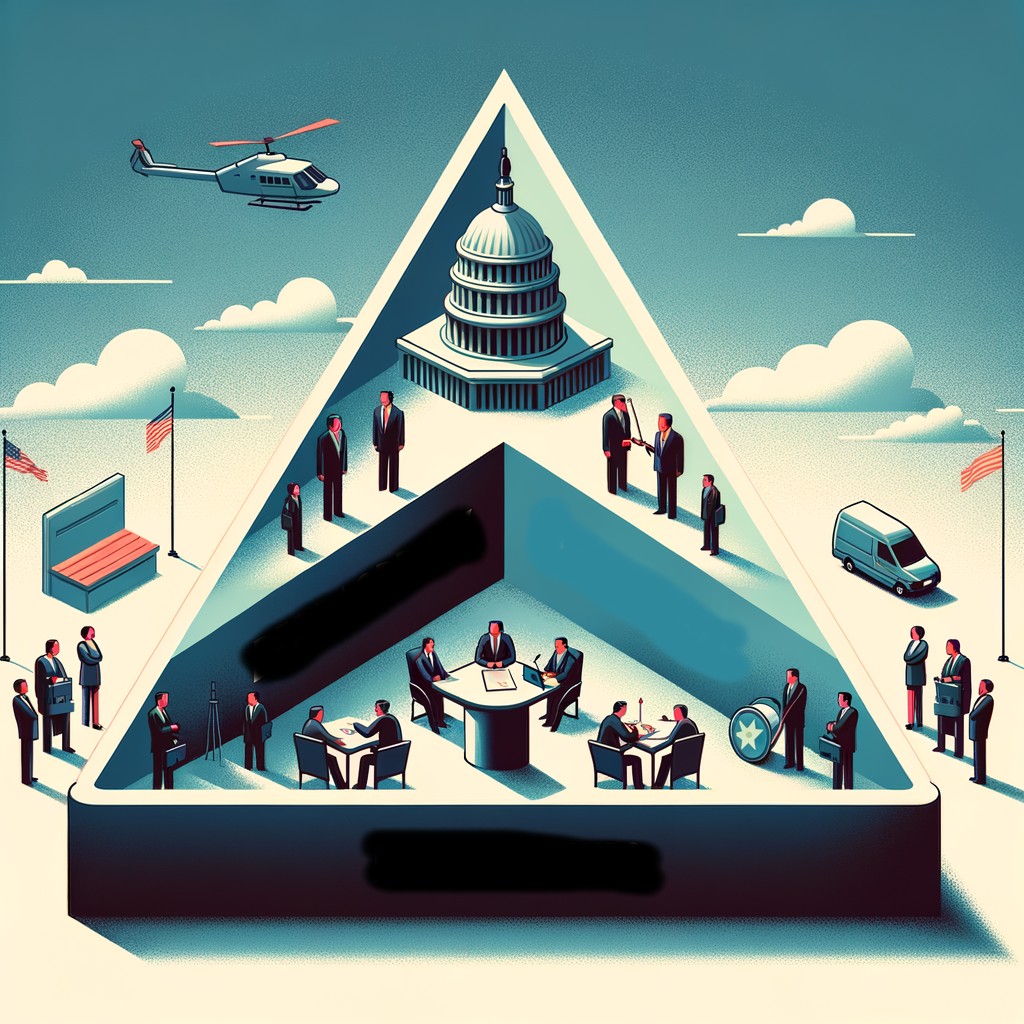
The elements that make up the fabric of political operations are intricate and interconnected. Within this landscape, there exists a powerful yet often misunderstood mechanism known as the “Iron Triangle.” This concept encapsulates the dynamic interactions between three critical components of governance: the bureaucracy, Congress, and interest groups. Individually, each part of the triangle wields significant influence, shaping policy, directing administrative action, and lobbying for specific interests. However, when these entities interact, as they often do, they form a robust and sometimes impenetrable triad that can redefine policy direction in profound ways. As a metaphor, the Iron Triangle vividly describes the tri-fold power structure not just as static points but as entities engaged in a continuous exchange where goals, information, and resources are robustly shared. Understanding how the Iron Triangle operates offers key insights into why certain policies endure, why some regulations come into being, and how public interests are either advanced or sidelined. The interplay within this triad impacts everything from legislation to implementation, revealing much about how government processes are inherently knitted with the influences of administrative power, legislative approval, and external advocacy, thus weaving the frameworks driving policy decisions.
The Role of Bureaucracy
Bureaucracies comprise the numerous agencies and departments responsible for implementing government policies and regulations. These entities are vital for ensuring that laws passed by legislators are efficiently and effectively executed. Bureaucrats, who are generally career government employees, possess expertise in specific fields, providing the technical knowledge necessary for the complex administrative tasks that accompany policy execution. The bureaucracy’s power in the Iron Triangle arises from this expertise and their role in translating legislative intent into practical applications. They interpret laws, develop rules, and often propose new regulations that require specific actions from various sectors. Due to their proximity to the implementation process, bureaucrats become critical players in the formulation and adjustment of public policy. This power to interpret and adapt policy confers upon them a significant degree of discretionary authority, thus placing them in a crucial position within the triangle.
Moreover, bureaucracies maintain continuity and stability within the administration, irrespective of the political changes that occur within Congress or the executive branch. This long-term presence affords bureaucrats a deeper understanding of legislative intents and an ability to form lasting relationships with both legislators and interest groups. Such relationships can result in reciprocal advantages where bureaucrats support specific legislative goals in exchange for sustained or expanded agency authority and funding discretion. Their role is not merely that of passive implementers; they actively shape policy through regulatory writing and adjustments that align with both Congressional goals and their operational capabilities. This symbiotic relationship enhances their influence within the Iron Triangle.
The Legislative Power of Congress
Congress, as the legislative branch of government, is tasked with crafting laws and providing the requisite oversight to ensure the bureaucracy implements these laws appropriately. Members of Congress, including both representatives and senators, possess the authority to approve funding, revise legislative measures, and conduct hearings to oversee bureaucratic actions. Their role in the Iron Triangle is pivotal as they lay the groundwork for policy through statutory mandate and financial appropriation. This power to make laws and allocate budgets gives them significant leverage in interactions with bureaucracies and interest groups. By controlling the purse strings and the statutory language of policies, Congress wields considerable power in influencing the structure and direction of government programs.
Furthermore, Congressmen and Congresswomen often rely on bureaucratic agencies to provide insights into the technical and logistical feasibility of proposed legislation. This dependence fosters a give-and-take dynamic where bureaucratic expertise informs legislative decision-making. In exchange, legislators may advocate for policies that align with the agencies’ capabilities and objectives, ensuring efficient implementation. Additionally, the need for electoral support and campaign contributions can make legislators amenable to the inputs and pressures from interest groups, who hold sway over constituent opinions and campaign finances. This dependency underscores Congressional involvement within the Triangle as not merely transactional but deeply interwoven with maintaining electability and satisfying public and special interests.
Interest Group Influence
Interest groups represent a broad spectrum of societal concerns, ranging from business lobbies and labor unions to environmental and civil rights organizations. These entities actively seek to influence public policy in ways that benefit their members or advance specific agendas. Within the Iron Triangle, interest groups play a crucial role by providing Congress with critical constituent perspectives and advocating for specific legislative outcomes. They employ various strategies, including lobbying, political contributions, and public relations campaigns, to sway the direction of policy formulation. Their resources and organizational capacity enable them to impact legislative priorities, often becoming instrumental in framing issues and mobilizing public opinion in favor or against certain policies.
The interaction of interest groups with Congress and the bureaucracy is fueled by mutual benefits. Groups offer policymakers valuable information and political support, which can be pivotal in tightly contested legislative environments. In return, they seek to secure legislative language that favors their objectives or obstructs opposing interests, thereby wielding significant influence over policy outcomes. Interest groups also frequently collaborate with bureaucratic agencies to ensure that regulations reflect their expert opinions or provide feedback during rule-making processes. This collaboration ensures that specific interests are well-represented in both the legislation and its implementation phases, making these groups an essential component in the policy-making and regulatory processes.
Interactions and Implications of the Iron Triangle
The interactions within the Iron Triangle highlight a complex web of relationships that drive policy outcomes in predictable and nuanced patterns. The Triangle’s functioning is based on mutual dependency, with each corner of the Triangle seeking benefits from the others—Congress seeks agency expertise and electoral support, bureaucracies seek funding and legislative backing, and interest groups seek policy favorable to their interests. This interdependency creates a stable yet dynamic system where policies are shaped, and legislative goals aligned through continuous negotiation and compromise.
The implications of the Iron Triangle on governance are profound. While the system provides a mechanism for efficient policy formulation and implementation, ensuring that expert voices and vested interests are represented, it also poses challenges to democratic principles of transparency and accountability. The close-knit relationships between these entities can lead to policy outcomes that favor entrenched interests over broader public concerns. For instance, the alignment between well-funded interest groups and Congressional committees can sometimes lead to preferential treatment in legislative appointments or funding allocations, thus skewing policies towards specific agendas rather than the public good.
The power dynamics within this triangle can also lead to the entrenchment of bureaucratic agencies, where institutional inertia perpetuates existing policies even when changes might be needed to adapt to new circumstances. This resistance to change often reflects the need to maintain established benefits and opportunities within the Triangle, showing how deeply each vertex of the Triangle is enmeshed in maintaining the status quo or achieving incremental adjustments rather than pursuing transformative reforms.
Balancing Interests and Promoting Reforms
Achieving a balanced and effective relationship within the Iron Triangle requires strategic interventions that enhance transparency and accountability. This involves encouraging more inclusive and diverse representation within policymaking processes so that all public interests are considered, not just those with substantial resources. Legislative reforms that increase oversight and foster public participation can reduce the overreliance on particular interest groups and diminish the potential for bias in policy outcomes. Encouraging active participation from a wider array of stakeholders ensures that policy decisions are more reflective of society’s varied needs.
In addition, fostering openness and ethical conduct within bureaucracies and legislative offices helps curtail the narrow alignment of interests that may derive from overly close relationships. Implementing rigorous disclosure requirements and conflict-of-interest rules can help mitigate undue influence by clearly delineating acceptable forms of interaction among Triangle participants. Additionally, empowering watchdog organizations and independent commissions to oversee bureaucratic and legislative activities can ensure adherence to fair practices and integrity in governance.
Technological advancements also offer promising avenues for reforming the interactions within the Iron Triangle. Digital platforms and data analytics can improve transparency through open data initiatives that ensure public access to information regarding government proceedings and regulatory developments. Moreover, leveraging technology can enhance civic engagement by facilitating broader participation in public consultations and feedback mechanisms, providing citizens and smaller interest groups with a more significant voice in the policymaking process.
Conclusion
Understanding the Iron Triangle is crucial for comprehending the intricate mechanisms of policy formation and the delicate balance of power within government systems. The interactions among bureaucracy, Congress, and interest groups represent not only the practical realities of policymaking but also the challenges inherent in maintaining democratic governance amid complex socio-political environments. While the Triangle facilitates the efficient implementation and continuous operation of government functions, it also emphasizes the importance of vigilance in ensuring transparency and accountability. The symbiotic relationships within the Iron Triangle must be navigated with care to ensure that the derived benefits cater to the public interest widely rather than merely serving entrenched powers. To cultivate a governance framework that is both robust and equitable, the principles of inclusivity, transparency, and ethical integrity must be championed to mitigate potential biases and enhance the responsiveness of government actions. By striking a balance between collaboration and oversight, the challenges posed by the Iron Triangle can be transformed into an opportunity for creating more dynamic and representative democratic processes that truly reflect the broad spectrum of society’s interests and values.
Frequently Asked Questions
1. What is the Iron Triangle and why is it important in political operations?
The Iron Triangle is a fundamental concept in understanding how political operations occur within a stable network of three entities: the bureaucracy, Congress, and interest groups. It’s coined as an ‘iron’ triangle because of its strong and often unbreakable influence over the policymaking process. The importance of this structure lies in the interdependence of these three players, each shaping and reinforcing the policies and decisions that impact a wide array of public and private interests.
The bureaucracy refers to government agencies and departments designed to perform specific functions, ranging from enforcing laws to implementing regulations. Congress, on the other hand, consists of elected legislators who author laws and allocate funds necessary to enforce and create these policies. Finally, interest groups are organized collectives, ranging from corporations to advocacy groups, that seek to influence policy to benefit their specific interests.
When these three components work in tandem, they create a powerful force that significantly shapes political landscapes. The cooperation within the Iron Triangle can lead to the creation, maintenance, and evolution of policies that reflect the priorities set by each member of the triangle. Understanding the Iron Triangle is key to grasping the complexities of policy formation and governmental operations.
2. How does the Iron Triangle affect policy-making?
The Iron Triangle plays a pivotal role in the policy-making process, acting as a microcosm of influence where each entity—bureaucracy, Congress, and interest groups—impacts the direction and substance of policy. Here’s how it works:
The bureaucracy administers policies and implements laws, crafting how regulations are interpreted and enforced. These agencies gather crucial information, often working closely with interest groups that provide data, research, and expertise on specific subjects. This collaboration helps bureaucracies regulate and stipulate policy effectiveness and priorities.
Congress, influenced by both bureaucratic insights and interest group lobbying, plays a crucial role in drafting and passing legislation. Lawmakers depend on information and pressure from interest groups to craft laws that reflect the needs and demands of their constituents, often tailoring legislation to align with interest group interests. This isn’t inherently negative, as these groups often share expert insights that legislators may lack.
Interest groups, for their part, lobby Congress and the executive branch to advocate for policies that favor their constituencies. They wield influence through campaign donations, voter mobilization, and the promise of electoral support or opposition.
Together, these interactions result in a pervasive influence over public policy. While this can lead to effective and informed governance due to expertise and focus, it can also engender critiques of undue influence, lack of transparency, and favoritism towards specific interests.
3. In what ways do interest groups exert influence in the Iron Triangle?
Interest groups are essential players in the Iron Triangle, wielding substantial power and resources to influence both Congress and the bureaucracy. They deploy a variety of strategies to further their goals, most prominently through lobbying, which involves direct interaction with legislators and government officials to shape policy outcomes.
These groups also engage in what’s known as “grassroots lobbying,” meaning they mobilize the public to contact their representatives and demonstrate broad support or disapproval of particular issues. By harnessing public opinion, they create a constituency-led pressure on politicians to align with specific policy positions.
Additionally, interest groups contribute financially to political campaigns, gaining access and influence over politicians who tend to be more sympathetic to substantial contributors and organized electoral support. By backing candidates who support their policies, they help elect politicians who will advocate for favorable policies within Congress.
In providing expertise and information, interest groups partner with government agencies to supply data and technical details necessary for informed policy drafting and implementation. This collaboration can significantly impact how rules and regulations are established and enforced, as agencies rely on the specialized knowledge these groups offer.
These strategies enable interest groups to effectively guide policy developments, making them indispensable partners within the Iron Triangle. However, their influence also raises concerns about disproportionate control over policy by a limited number of well-resourced entities.
4. Can you provide examples of the Iron Triangle at work?
Numerous examples demonstrate the Iron Triangle’s structural dynamics in various policy domains. One notable case is the defense industry in the United States:
The Department of Defense (bureaucracy) develops and manages military operations and contracts, maintaining an ongoing relationship with defense contractors like Lockheed Martin or Boeing (interest groups). These companies advocate for military spending and development through intense lobbying, arguing for increased budgets and specific projects.
In Congress, legislators on defense committees often have constituents employed by or benefited from such companies. They authorize the military budget, directing funds towards projects proposed by defense contractors, thus facilitating the legislative phase of the triangle. Legislators, funded or supported by these interest groups, push for policies that assure continued or expanded military spending.
Within the environmental sphere, the Environmental Protection Agency (EPA) frequently works with environmental interest groups who furnish scientific data and advocate for legislative changes to combat climate change. Simultaneously, Congressional committees work on developing environmental laws that align with the advocacies of these interest groups, considering the regulatory impact assessments provided by the EPA.
These examples highlight the interconnected nature of policymaking, where the operations and outcomes within the Iron Triangle fiercely influence the policy landscape across diverse sectors. They illustrate both the effectiveness and the potential drawbacks, such as entrenchment and limited accountability, that are inherent within this political mechanism.
5. What are the criticisms of the Iron Triangle, and are there any alternatives?
Critics of the Iron Triangle often point out that this mechanism can lead to policy outcomes heavily biased towards the interests of powerful, well-organized entities, sometimes at the expense of broader public interest. This can foster policy stagnation, encourage regulatory capture, and reduce transparency as behind-the-scenes negotiations dictate policy, often outside of the public eye.
Another significant concern is the exclusion of wider societal input, as smaller or less organized groups struggle to have their voices heard within the intricacies of the triangle. This can result in policies that favor a select few, leading to charges of elitism or corporatism in governance.
Alternatives and solutions include implementing a more transparent lobbying process and campaign finance reform to mitigate undue influence. Strengthening institutional checks, such as enhancing oversight committees in Congress or inspections in the bureaucracy, can ensure that policies are aligned more broadly with public interest rather than being driven solely by specialized groups. Furthermore, increasing public engagement in the policy process, through forums, consultations, and digital platforms, can serve as a counterbalance to the concentrated powers within the Iron Triangle.
While the Iron Triangle remains a fundamental part of American governance, its dynamics and potential drawbacks call for continuous scrutiny to balance influential power with democratic responsibility and responsiveness.