
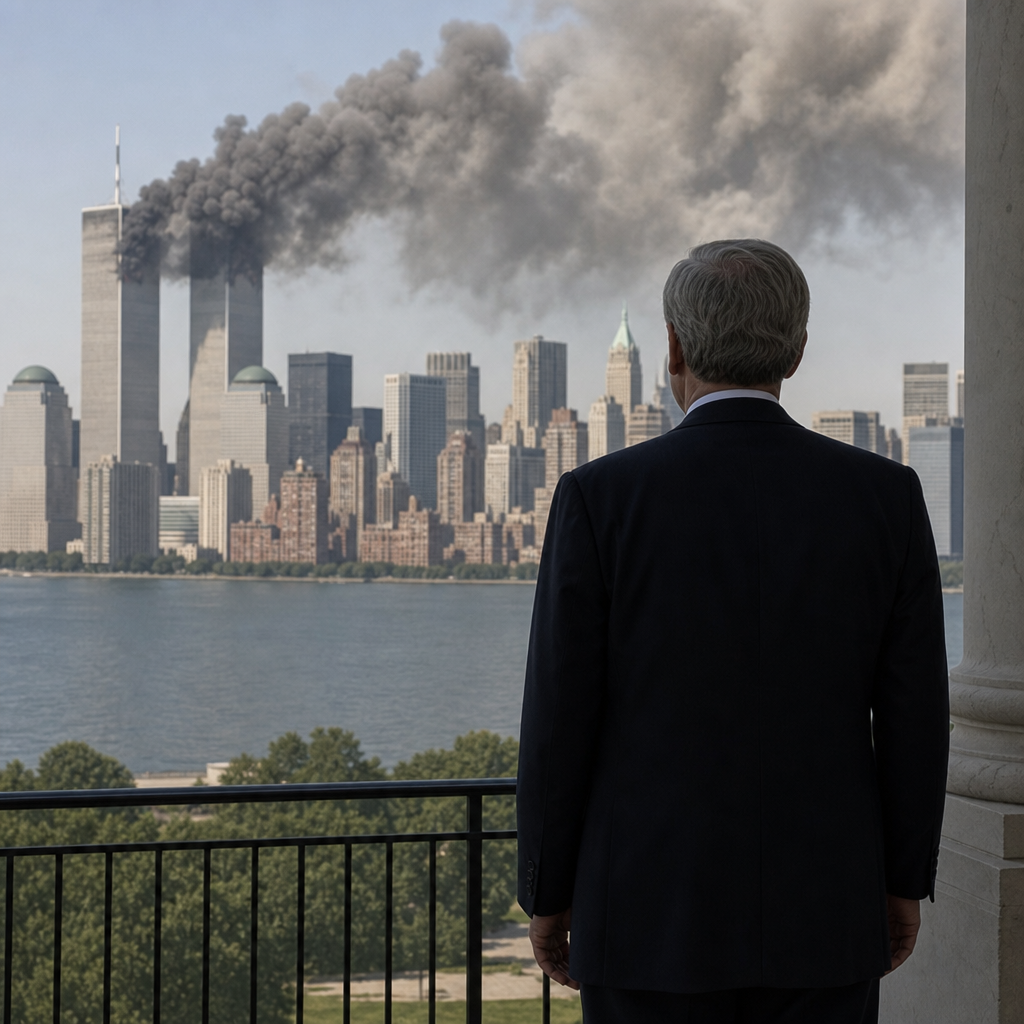
The imperial presidency debate after 9/11 reshaped how Americans discuss executive power, national security, civil liberties, and constitutional limits. In AP Government and Politics, the phrase imperial presidency refers to a presidency that accumulates power beyond what many believe the Constitution originally contemplated, often by stretching war powers, emergency authority, administrative control, and secrecy. The modern debate did not begin in 2001, but the terrorist attacks of September 11 gave it new urgency because presidents gained broad public support to act quickly against unconventional threats. From that moment forward, the central question became whether expanded presidential authority was necessary to protect the country or whether it weakened checks and balances that preserve republican government.
I have found that students often understand this topic best when it is framed as a constitutional argument with real policy consequences. The issue is not simply whether presidents became stronger after 9/11; presidents had already been strengthened by twentieth-century wars, executive agencies, and global leadership expectations. The deeper issue is how far a president may go when Congress authorizes force in broad terms, courts defer to national security claims, and the public demands immediate protection. That combination creates the conditions for executive expansion, especially when threats are diffuse, intelligence is classified, and military action does not fit the traditional model of declared war between states.
Why does this matter in AP Government and Politics? Because the topic sits at the intersection of constitutional design, federal institutions, civil liberties, political behavior, and public policy. It connects Article II powers, congressional oversight, judicial review, bureaucratic implementation, and the role of the media. It also helps explain later debates over surveillance, drone strikes, detention, immigration enforcement, emergency declarations, and the use of administrative power during crises. If students can analyze the imperial presidency after 9/11, they can better understand how American institutions respond when fear, technology, and geopolitical pressure push authority toward the executive branch.
Several key terms anchor the discussion. War powers refer to the shared constitutional authority of Congress and the president over military action. Executive privilege is the claimed power to withhold certain internal communications from Congress or the courts. Signing statements are presidential interpretations issued when approving legislation. Unitary executive theory is the view that the president controls the executive branch with strong constitutional independence from congressional interference. The Authorization for Use of Military Force, usually called the 2001 AUMF, became especially important because it authorized force against those responsible for the attacks and functioned as a durable legal foundation for counterterrorism policy across multiple administrations.
How 9/11 changed the constitutional balance
After 9/11, the presidency expanded because the attacks created extraordinary demand for speed, secrecy, coordination, and military readiness. Congress passed the 2001 AUMF only days after the attacks, and that statute became the legal backbone for operations against al-Qaeda, the Taliban, and associated forces. In practice, the AUMF operated like an open-ended delegation. Unlike a formal declaration of war with a defined enemy state and clearer endpoint, it supported a conflict against networks, affiliates, and evolving threats across multiple countries. That ambiguity mattered because broad authorization tends to increase presidential discretion.
The Bush administration used that discretion aggressively. It argued that the president, as commander in chief, possessed inherent constitutional authority to detain enemy combatants, conduct military operations, and gather intelligence even when statutory limits appeared to constrain action. Officials in the Office of Legal Counsel produced influential memoranda that interpreted executive power expansively. In plain terms, the administration claimed that in wartime, and especially in a war against terrorism, the president needed flexibility that ordinary peacetime governance did not require. Supporters saw realism and constitutional energy. Critics saw unilateralism that tested legal boundaries.
The institutional environment also favored expansion. Congress initially deferred because members feared appearing weak on security. Courts moved cautiously, often recognizing national security expertise while still preserving a review function. The public rewarded visible presidential action. Bureaucracies, including the Department of Defense, the Department of Justice, the Central Intelligence Agency, and the newly created Department of Homeland Security, became central to implementation. Once those systems were built, they did not disappear when the emergency atmosphere softened. That persistence is one reason the imperial presidency debate after 9/11 extends well beyond the Bush years.
Major flashpoints: detention, surveillance, and the war on terror
The clearest controversies involved detention, surveillance, interrogation, and targeted force. Guantanamo Bay became a symbol of the detention debate because the government held suspected terrorists there while arguing that ordinary criminal process did not fully apply. The administration maintained that unlawful enemy combatants could be detained without the same protections given in civilian courts. Critics answered that indefinite detention without robust due process undermined constitutional norms and damaged American legitimacy. Cases such as Hamdi v. Rumsfeld, Rasul v. Bush, Hamdan v. Rumsfeld, and Boumediene v. Bush showed that the judiciary would not completely withdraw from reviewing executive claims.
Domestic and international surveillance created another front in the debate. The USA PATRIOT Act expanded investigative tools, including roving wiretaps and broader access to business records. Separately, the National Security Agency conducted warrantless surveillance that generated intense constitutional and statutory controversy. Defenders argued that existing legal mechanisms were too slow for modern terrorism networks. Opponents argued that bypassing the Foreign Intelligence Surveillance Act framework weakened privacy protections and legislative safeguards. When Edward Snowden later disclosed surveillance practices during the Obama administration, many Americans realized how enduring the post-9/11 security architecture had become, even under a president who had criticized aspects of it.
Interrogation policy intensified the conflict further. The use of so-called enhanced interrogation techniques, including waterboarding, raised profound legal and moral objections. Administration lawyers attempted to define torture narrowly, but that position was rejected by many military lawyers, human rights advocates, and later policymakers. I have seen students quickly grasp the imperial presidency concept when they compare this dispute to the basic Madisonian idea that ambition should counteract ambition. If executive lawyers can internally authorize coercive practices with limited external review, then the checking function of Congress and the courts weakens in the exact moment it is most needed.
| Issue | Executive branch justification | Main constitutional concern | Key example |
|---|---|---|---|
| Detention | Prevent combatants from rejoining hostilities | Due process and habeas corpus limits | Guantanamo Bay cases |
| Surveillance | Detect threats before attacks occur | Privacy, warrants, and statutory compliance | NSA warrantless monitoring |
| Interrogation | Extract intelligence rapidly in emergencies | Torture prohibitions and executive overreach | Waterboarding controversy |
| Targeted force | Neutralize imminent threats globally | War powers, transparency, and accountability | Drone strike policies |
Congress, courts, and the limits of oversight
Congress did not disappear after 9/11, but its oversight was uneven. It passed the AUMF and the USA PATRIOT Act, funded wars in Afghanistan and Iraq, and held hearings. Yet oversight often lagged behind executive innovation. Classified programs limited what members could publicly challenge, partisan incentives shaped scrutiny, and many legislators preferred broad delegations that avoided direct responsibility for security decisions. This pattern is common in separation-of-powers disputes: Congress defends its institutional authority in theory but frequently cedes operational discretion in practice, especially when voters prize decisiveness and fear blame for inaction.
The judiciary imposed some boundaries, but usually not absolute ones. In Hamdi, the Supreme Court recognized detention authority while requiring a citizen detainee to have a meaningful opportunity to challenge that status. In Hamdan, the Court rejected military commissions that lacked proper legal authorization. In Boumediene, the Court affirmed habeas corpus rights for detainees at Guantanamo. These decisions mattered because they signaled that war on terror policies were not beyond constitutional review. At the same time, the Court did not dismantle the broader architecture of presidential counterterrorism authority. Judicial review constrained methods more than it eliminated executive capacity.
Oversight also depended on inspectors general, career lawyers, journalists, and civil society groups. Reporting by The New York Times, The Washington Post, ProPublica, and others brought hidden programs into public debate. The American Civil Liberties Union and human rights organizations used litigation and public records requests to force disclosure. Within government, some military officers and Justice Department officials resisted legal interpretations they considered unsound. That internal resistance is part of the story that students often miss. The presidency is powerful, but executive agencies are not monolithic, and internal dissent can shape outcomes even before courts act.
Continuity across presidents: Bush, Obama, Trump, and Biden
A crucial lesson is that the imperial presidency debate after 9/11 is bipartisan. President George W. Bush built the most visible post-9/11 framework, but President Barack Obama preserved significant parts of it while revising tactics and legal rationales. Obama ended certain interrogation practices, sought greater procedural regularity, and emphasized legal review, yet his administration expanded drone strikes, defended state secrets claims, continued surveillance programs, and relied on the AUMF for military action. The presidency did not simply contract when party control changed. Instead, powers acquired in one emergency became tools available to successors with different priorities.
That continuity reveals an institutional truth: presidents rarely surrender useful authority. The Obama administration’s targeted killing program, including the strike against Anwar al-Awlaki, an American citizen linked to terrorism, raised difficult questions about due process outside conventional battlefields. Supporters argued that capture was infeasible and the threat was operationally serious. Critics argued that secret executive review could not substitute for transparent judicial process. This was not the same policy package as the early Bush years, but it reflected the same structural pattern: presidents adapt and normalize powers first justified in crisis.
The Trump and Biden administrations inherited that same legal landscape. Trump’s broad view of executive authority appeared in areas beyond counterterrorism, including emergency funding disputes and administrative control, which reinforced wider concerns about presidential aggrandizement. Biden ended the U.S. military mission in Afghanistan but still operated within longstanding post-9/11 authorities and security institutions. That is why this topic functions as a hub for broader AP Government and Politics study. The debate touches war powers, emergency powers, bureaucratic politics, judicial doctrine, party polarization, media framing, and civic expectations about presidential leadership in times of danger.
How to evaluate the debate in AP Government and Politics
For AP analysis, the best approach is balanced and evidence driven. A strong argument for expanded presidential power says modern threats move faster than Congress can legislate and often require secrecy that large institutions cannot maintain. Terrorist networks do not wait for lengthy floor debates. Intelligence decisions may need hours, not weeks. Article II gives the president unique advantages in unity, speed, and access to classified information. Alexander Hamilton in Federalist 70 praised energy in the executive, and supporters of post-9/11 presidential action often rely on that logic, whether or not they cite the paper directly.
The strongest critique is that emergency logic can become permanent. If a broadly worded authorization, classified legal reasoning, and public fear combine to expand executive authority, then the normal safeguards of constitutional government erode over time. James Madison’s vision of separated powers depends on each branch defending its role. When Congress delegates too much, courts defer too much, and the public prizes outcomes over process, presidents can accumulate power with little immediate resistance. The costs are not abstract. They include weaker transparency, reduced accountability, and possible violations of privacy, due process, and individual rights.
Students should also recognize that the debate is not all or nothing. The question is not whether presidents need emergency power at all; they clearly do. The question is how to define, supervise, and sunset that power. Proposed reforms include narrowing or replacing the 2001 AUMF, strengthening FISA oversight, increasing reporting requirements for covert and military actions, clarifying detention standards, and requiring more regular congressional reauthorization for extended conflicts. If you are using this article as a hub, the next step is to connect it to separate topics such as war powers, civil liberties, the bureaucracy, and Supreme Court checks on the executive branch.
The imperial presidency debate after 9/11 remains one of the clearest windows into how American government changes under pressure. It shows that constitutional meaning is shaped not only by text but by statutes, institutions, crises, and political incentives. After the attacks, presidents gained wider room to act because Congress delegated, courts moved cautiously, agencies built durable security systems, and voters demanded protection. Those decisions produced real security benefits, but they also generated serious disputes over detention, surveillance, interrogation, secrecy, and accountability. The result was not a temporary argument confined to one administration. It became a continuing struggle over the boundaries of executive power.
For AP Government and Politics, this issue matters because it brings core course ideas into one debate: separation of powers, checks and balances, federal institutions, civil liberties, and public policy. The most accurate conclusion is neither that strong presidents are always dangerous nor that expansive executive power is always necessary. The better conclusion is that emergencies test whether constitutional limits can survive when speed and secrecy seem indispensable. Study the cases, statutes, and examples closely, then trace how each branch responded. That method will strengthen your understanding of this subtopic and prepare you to analyze related articles across the broader course hub.
Frequently Asked Questions
What does the term “imperial presidency” mean, and why did it become especially important after 9/11?
The term “imperial presidency” refers to a view of the modern presidency in which the executive branch accumulates power beyond what many critics believe the Constitution originally intended. In AP Government and Politics, it usually describes a president who expands authority through broad interpretations of commander-in-chief power, emergency authority, executive orders, administrative control, secrecy, and unilateral decision-making. The phrase itself gained prominence during the Vietnam and Watergate eras, but it took on renewed urgency after the terrorist attacks of September 11, 2001.
After 9/11, Americans faced a new kind of security threat: transnational terrorism that did not fit neatly into traditional categories of war or criminal law. In response, the federal government moved quickly to prevent additional attacks, and that urgency created conditions in which presidential power could expand. Presidents and executive branch lawyers argued that speed, secrecy, and centralized decision-making were essential for national defense. That argument gave new force to claims that the president needed broad discretion in surveillance, military operations, detention policy, intelligence gathering, and emergency action.
The debate became especially important because it raised a core constitutional question: how much power should the president have in a crisis, and who gets to decide when that power has gone too far? Supporters of strong executive action argued that the country needed flexibility and decisive leadership. Critics countered that emergencies often become the justification for permanent power expansions, weakening Congress, the courts, and civil liberties. In that sense, 9/11 did not create the imperial presidency debate from scratch, but it dramatically intensified it and made it central to modern discussions of executive power.
How did 9/11 change the balance between national security and civil liberties?
9/11 pushed national security to the center of American politics and government, often in ways that placed pressure on civil liberties. In the months and years after the attacks, policymakers prioritized prevention, intelligence sharing, and disruption of potential threats. That shift encouraged broader surveillance, expanded investigative authority, tougher detention policies, and more secret executive action. The underlying argument was straightforward: the government had to detect threats before they became attacks, even if doing so meant giving the executive branch more room to operate.
One major example was the passage of the USA PATRIOT Act, which expanded government authority in areas such as roving wiretaps, access to business records, and information sharing among agencies. Supporters said these tools modernized law enforcement and intelligence operations for a dangerous new era. Critics argued that some provisions reduced privacy protections, lowered barriers to government intrusion, and made oversight more difficult. At the same time, the executive branch adopted detention and interrogation policies that sparked intense legal and ethical controversy, especially when applied to suspected terrorists held without traditional criminal trials.
The larger constitutional issue was whether civil liberties would remain strong during a national emergency or become secondary to executive claims of necessity. This tension affected Fourth Amendment debates over searches and surveillance, Fifth and Sixth Amendment concerns about due process, and broader concerns about transparency and accountability. The post-9/11 era showed how quickly security demands can reshape legal norms. It also reminded Americans that constitutional rights are often tested most severely during moments of fear, when the public may be more willing to accept concentrated power in exchange for promises of safety.
What role did Congress and the courts play in checking presidential power after 9/11?
Congress and the courts both played important but uneven roles in checking presidential power after 9/11. Congress initially granted the executive branch substantial flexibility, most notably through the Authorization for Use of Military Force, or AUMF, passed in 2001. That resolution gave the president authority to use force against those responsible for the attacks and associated forces. Over time, however, it became the legal foundation for a wide range of military and counterterrorism actions extending far beyond the immediate aftermath of 9/11. Critics argued that Congress had effectively delegated too much war-making discretion to the presidency.
At the same time, Congress also exercised oversight through hearings, reauthorization battles, funding decisions, and legislative revisions to surveillance law. Yet many observers believed congressional checks were often limited by partisanship, secrecy, and the political risks of appearing weak on national security. In practice, that meant Congress sometimes reacted to executive power more than it defined clear boundaries in advance. This is one reason the imperial presidency debate remained so active: the formal constitutional powers of Congress did not always translate into strong institutional resistance.
The courts became especially significant in disputes over detention, military commissions, and habeas corpus. Supreme Court decisions such as Hamdi v. Rumsfeld, Rasul v. Bush, and Hamdan v. Rumsfeld signaled that the president’s wartime authority was not unlimited and that detainees could still claim certain legal protections. These rulings did not eliminate broad executive power, but they did reaffirm that even in matters of national security, the president is not above judicial review. Taken together, Congress and the courts served as partial checks, but the post-9/11 period demonstrated how difficult it can be for the other branches to restrain a presidency acting under the banner of emergency and defense.
Why is the Authorization for Use of Military Force so central to the imperial presidency debate?
The 2001 Authorization for Use of Military Force is central to the imperial presidency debate because it illustrates how congressional approval, once granted in broad terms, can significantly enlarge presidential power over time. Passed just days after the attacks, the AUMF authorized the president to use “all necessary and appropriate force” against those responsible for 9/11 and those who harbored them. Although it was not a formal declaration of war in the traditional constitutional sense, it functioned as a powerful legal basis for military action and counterterrorism operations across multiple countries and over many years.
What made the AUMF so significant was its flexibility. Presidents from both parties relied on it to justify not only military operations in Afghanistan but also drone strikes, detentions, and actions against groups linked, directly or indirectly, to al-Qaeda and the Taliban. As the war on terror expanded geographically and organizationally, the AUMF remained in place, even though the nature of the conflict evolved. This led many scholars and critics to argue that the resolution became a standing grant of war powers that allowed presidents to conduct prolonged military campaigns without returning to Congress for a fresh and more specific authorization.
From a constitutional perspective, the controversy centers on Article I and Article II. Congress has the power to declare war, while the president serves as commander in chief. The AUMF blurred the practical line between those roles by giving the president a broad mandate without tight limits on duration, geography, or targets. Supporters argue that this flexibility is necessary to fight a decentralized enemy. Critics argue that it undermines the constitutional design by allowing presidents to define the scope of conflict themselves. For that reason, the AUMF is often treated as one of the clearest post-9/11 examples of how emergency decisions can contribute to a more powerful and more enduring executive branch.
Is the imperial presidency debate after 9/11 still relevant today?
Yes, the imperial presidency debate remains highly relevant because many of the legal, political, and institutional patterns that intensified after 9/11 are still with us. Even as the immediate shock of the attacks has faded, the broader questions have not. Presidents continue to rely on expansive interpretations of executive authority in areas such as military force, intelligence operations, immigration, emergency declarations, regulatory control, and the use of executive orders. The central issue is still whether crisis governance creates temporary exceptions or lasting precedents that future presidents can use in very different circumstances.
The post-9/11 era also changed expectations about what the presidency can do. Americans became more accustomed to a president acting quickly and sometimes unilaterally in the name of security or national necessity. That model can carry over into other policy domains, including border policy, public health emergencies, and domestic unrest. Once institutions normalize broad executive discretion, it becomes harder to restore older limits. That is one reason AP Government courses often connect the imperial presidency debate not just to terrorism policy, but to broader concerns about separation of powers, checks and balances, and democratic accountability.
In practical terms, the debate is still relevant because it asks whether the constitutional system can preserve liberty while responding effectively to danger. It forces citizens and students alike to think about how much trust should be placed in one office, how transparent national security policy should be, and how actively Congress and the courts should intervene. The legacy of 9/11 is not only about one historical moment; it is about the long-term expansion of executive capacity and the continuing struggle to define its limits. That makes the imperial presidency debate an enduring issue in American constitutional politics, not just a chapter from the early 2000s.