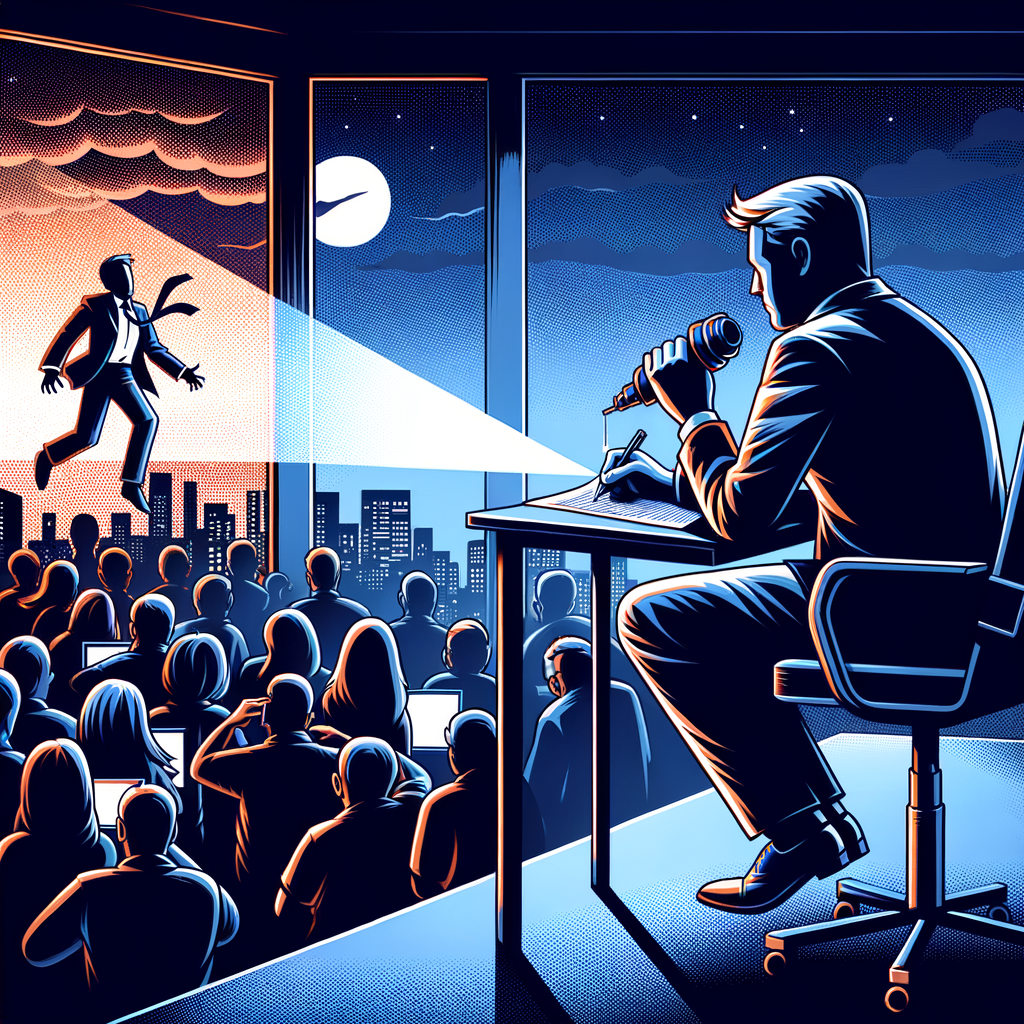
In contemporary society, political satire and late-night shows have ascended to the forefront of media influence, molding public opinion and challenging conventional political discourse. These platforms, blending humor with critical commentary, have carved their place in the media landscape as distinct conduits for political engagement. The impact of these platforms extends beyond mere entertainment, informing and sometimes reshaping public perception of political figures and issues. In a world where traditional news media is often scrutinized for bias or untrustworthiness, late-night comedic commentary offers an alternative—often seen as more relatable and digestible—source of political insight. Through clever satire and sharp wit, hosts dissect the day’s news and present it in a manner that resonates with the public, prompting critical thinking and discussions. This widespread phenomenon transcends demographics, engendering a unique influence on society’s political dialogue. By analyzing the mechanisms through which political satire and late-night shows affect public perception, one gains insight into how these cultural staples could potentially alter the course of political engagement and societal attitudes. Therefore, this article aims to delve into the intrinsic elements of these media formats, examining their historical evolution, prevalence, and the psychological underpinnings of their impact on audiences. We will explore how they shape electoral outcomes, influence policymaking, and maintain relevance amidst changing media consumption habits.
Historical Evolution of Political Satire and Late-Night Shows
The roots of political satire can be traced back to ancient times when written and performative forms symbolically critiqued authority figures and policies. Extending this tradition, modern political satire has continually evolved, adapting to emerging media forms and changing political landscapes. From the initial satire-laden columns in print media to quirky radio shows in the early 20th century, the evolution has mirrored societal changes. Television further revolutionized this trend, with pioneering shows like “That Was The Week That Was” in the 1960s setting the stage for today’s political satire. The diversification provided a broader platform for satirical engagement, allowing satire to penetrate the mainstream, extending its influence.
In parallel, the late-night show format, primarily dominated by comedy, began incorporating political content as a significant aspect of their programming. In the United States, Johnny Carson added political punchlines to monologue routines on “The Tonight Show”, establishing a precedent for others. However, it was in the late 20th century that shows like “Saturday Night Live” and hosts like David Letterman popularized politically-charged content. “The Daily Show with Jon Stewart” subsequently redefined the genre in the early 2000s, blending news reporting with satirical critique, sparking similar show concepts globally. The evolution of these platforms echoes broader political narratives and societal sentiments, offering both a mirror and a conduit for public discourse.
Prevalence and Influence in Contemporary Media
Today, political satire and late-night shows are not only prevalent in the Western world but have become a global phenomenon, adapted in various cultural and political contexts. With the advent of digital media, these formats have enjoyed wider dissemination and greater audience engagement. Viral clips and social media excerpts amplify their reach, attracting diverse audiences. The top hosts have gaining influence similar to prominent journalistic figures. Their content often goes beyond simple humor, engaging audiences with critical interpretations of political events, policies, and leaders. The shows serve as an accessible entry point into political debates, attracting viewers who might otherwise remain disengaged from traditional news channels.
The influence is evident in increased political consciousness among viewers, who often cite these shows as sources of information and inspiration. By framing complex political phenomena in entertaining segments, satire and late-night hosts make politics approachable. This approachability equates to not only youth engagement but extends across age demographics, influencing varying spectrum of political awareness. The infusion of humor disarms audience defensiveness, making them more receptive to otherwise contentious political discussions. This allows deep shared moments that spark dialogues and are often brought up in casual or serious conversations. The ripple effect leads to more informed citizens, more aware of policies and the actions of political figures.
Psychological Impact on Public Perception
The psychological mechanisms underlying the impact of political satire and late-night shows are deeply rooted in cognitive and emotional engagement. Humor, a key element, serves a dual purpose: it provides relief from political stress and encourages critical thinking. Comedy engages audiences by simplifying complex issues through humor, aiding memory retention, and encouraging reflective evaluations of political events. This makes satire an effective tool for both criticism and engagement, drawing viewers into political dialogue. Many people feel truth hidden beneath the laughter, giving credibility to the satirists, which in turn influences public perception.
The humor’s relatability creates a sense of community among viewers, who often share satirical content with peers, thus broadening its influence. Cognitive dissonance also plays a role by urging audiences to resolve the incongruence between their political beliefs and the political satire shown. This encourages audiences to weigh the satirical critiques against personal convictions, potentially reshaping perceptions. Such dynamism propels public reconsideration of previously held biases toward specific policies or political figures, fostering a more engaged and reflective electorate.
Effects on Electoral Outcomes and Policymaking
The influence of political satire and late-night shows extends to tangible political arenas, including electoral outcomes and policymaking. During election cycles, these platforms often serve both as influence-shapers and as mirrors reflecting public sentiment. For example, satirical segments often deconstruct political rhetoric and campaign promises, enabling audiences to critically assess candidate platforms. This has contributed to shaping electoral narratives that either reinforce or challenge mainstream political discourse.
Equally significant is their indirect influence on policymaking. These shows frequently spotlight policy shortcomings in a manner that resonates with the public, leading many viewers to develop a critical stance towards ineffective policies. By keeping policymakers in check, these platforms ensure public accountability, crucial in democracies. Policymakers are often compelled to address critiques aired on popular satirical platforms, either by defending their policies or revising them to better align with public expectations. This speaks to the broader societal expectation that political figures remain transparent and accountable.
Relevance Amid Changing Media Consumption Trends
Amidst rapidly changing media consumption trends, political satire and late-night shows have adapted to digital platforms, ensuring their ongoing relevance. Viewers increasingly consume content via digital streaming platforms and social media, requiring traditional media to evolve. Programs now cater to segmented audiences’ tastes, often compelling producers to diversify formats and embrace innovative techniques to maintain viewer engagement. With snippets going viral across platforms such as YouTube and Twitter, hosts find themselves more often in leaders of conversation and online discourse.
These shows’ adaptability is exemplified by interactive online content fostering direct audience participation, intensifying their relational feel. Online commentary and social media engagement offer instant feedback loops, reflecting real-time audience sentiments. This evolution ensures that political satire continues to play a pivotal role in mediating how politics is discussed and consumed, responding to generational shifts in media usage patterns. Shows that have creatively leveraged these new media have expanded their reach and maintained their cultural salience.
Conclusion
In conclusion, political satire and late-night shows have established themselves as integral elements of modern political discourse, wielding significant influence over public perception. These platforms, through humor and critique, have transformed how societies engage with politics, offering an accessible, entertaining lens that speaks to diverse populations. The historical evolution from ancient satire to modern media allegory marks a continuity of critique, adapting dynamically with technological and political changes.
The contemporary relevance of satire in shaping political understanding underscores its function beyond entertainment, a blend of reflection and accountability. These shows, creative in delivery yet profound in impact, have advanced public consciousness, encouraging critical evaluation of political narratives. By informing, entertaining, and provoking discussions, political satire and late-night shows contributes towards a more engaged electorate, integral for healthy democratic practices.
Moreover, the psychological dynamics they employ, fostering both intellectual and emotional engagement, redefine how society interacts with political realities. This unique positioning empowers satire to subtly guide electoral and policymaking processes, holding political entities accountable through public scrutiny. With evolving media consumption trends, political satire and late shows remain adaptable, leveraging digital advancements to amplify their influence across diverse audiences. Therefore, as these formats continue to innovate, their role in shaping the public’s political outlook remains significant.
The growing prominence of these shows in mediating political discourse suggests a trend towards continued impact. Global examples exhibit political critique’s universality, reflecting and influencing local political climates. As the world navigates complex political landscapes, the role of political satire and late-night shows in aiding public understanding could become ever more critical, solidifying their place in the future of media.