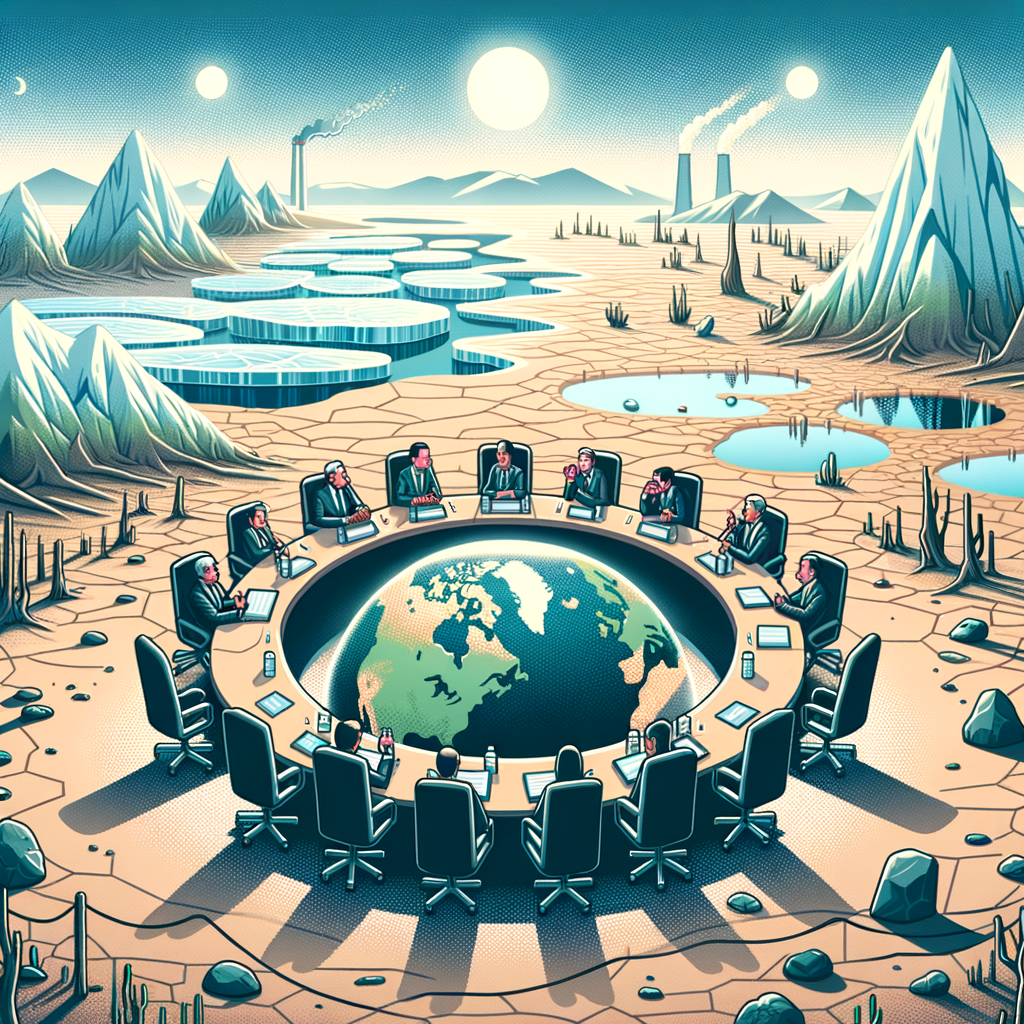
Climate change has evolved from being a peripheral environmental concern to a central issue influencing global political agendas. Originally primarily tackled by environmentalists and scientists, its widespread consequences have insisted upon a re-evaluation of national and international political strategies. The phenomenon’s ramifications stretch far beyond ecological disruption; they cascade into economic instability, humanitarian crises, and geopolitical tensions. The severity and breadth of climate change demand that it take precedence over numerous other political matters, dictating the need for immediate and sustained intervention. Nations across the globe are faced with the pressing task of reordering their priorities to mitigate the adverse effects of climate change, while simultaneously recalibrating policy frameworks to better align with this daunting challenge. The following examination delves into how climate change reshapes political priorities, influencing policy, international relations, and national economic strategies. Understanding these impacts is essential for framing future political agendas that will effectively tackle this unparalleled global crisis.
Climate Change as a Political Imperative
The increasing manifestation of climate-induced catastrophes has forcibly pushed climate change to the forefront of political priorities worldwide. Governments are compelled to confront rising sea levels, extreme weather events, and biodiversity loss, which pose immediate threats to their populations’ safety and economic stability. This shift in focus is not merely a reaction to environmental reports but is rooted in observable symptoms of climate crises affecting livelihoods, infrastructure, and public health. Consequently, political agendas are being rewritten to accommodate climate change as a pivotal concern.
Infrastructure initiatives and urban planning are increasingly incorporating climate resilience to withstand the logical progression of environmental changes. Political leaders recognize the necessity to invest in sustainable infrastructure that can endure the climatic extremities. Similarly, energy policies are undergoing significant transformations, with a focused shift from fossil fuels to renewable energy sources. Countries are setting ambitious targets for carbon neutrality, prompting legislative action, subsidies, and incentives aimed at reducing carbon footprints. This energy transition is mirrored in international diplomacy, where agreements like the Paris Agreement serve as milestones for collective climate action.
Restructuring Economic Policies
The impact of climate change on economic policies is monumental. The need to transition to a low-carbon economy has led to significant changes in economic planning and spending priorities. Governments are now channeling funds into green technologies and sustainable practices that promise long-term environmental benefits while stimulating economic growth. Economic policies are being reoriented to support industries that contribute to environmental conservation and reduce greenhouse gas emissions, thus accelerating the shift towards sustainable economic models.
Moreover, global markets are being influenced by climate-related policies that demand international cooperation and competitiveness. As countries impose carbon taxes and trade regulations that incentivize green practices, there is a ripple effect on industries reliant on traditional energy sources. This has led to a redefinition of economic alliances and partnerships, oriented towards sustainability. Financial institutions and investors are also pivoting their focus towards environmentally responsible investments, acknowledging both an ethical prerogative and a market demand for sustainable options. Climate risk assessments are now integral to economic forecasting and investment strategies, influencing how resources are allocated globally.
The Influence on Social Policy and Humanitarian Efforts
Climate change exacerbates social inequalities, making vulnerable populations even more susceptible to its impacts. As sea levels rise and weather patterns become unpredictable, the displacement of communities has become a pressing issue. Political strategies are increasingly focused on addressing climate-induced migration, with policies being developed to provide aid and resettlement opportunities for affected populations.
Further, health policies are being directly influenced by climate change’s impact on air quality, water resources, and food security. Political priorities now include strategies for managing the health implications posed by environmental deterioration, such as respiratory illnesses and malnutrition. These strategies often intersect with economic policies, necessitating robust funding for healthcare systems and international assistance programs tailored to environments affected by climate catastrophes. Social policies are thus evolving to incorporate frameworks that support climate adaptation, provide social safety nets, and foster community resilience.
Geopolitical Dynamics and International Relations
Climate change significantly alters the geopolitical landscape, influencing diplomatic relations and international security strategies. With natural resources becoming scarcer due to climate effects, the geopolitical arena has pivoted towards addressing the competition for these dwindling resources. Countries are increasingly engaging in diplomatic dialogue and treaties to manage resource allocation coordination effectively.
Additionally, climate change acts as a catalyst for international cooperation and conflict. Nations are compelled to collaborate on global platforms to develop joint strategies for crisis management. This has given rise to new alliances based on shared environmental concerns, promoting collective action over traditional bilateral relations. Simultaneously, there is a risk of climate-induced conflicts, particularly in regions where water scarcity and crop failures could lead to political instability and human displacement. Governments must prioritize diplomatic efforts to prevent potential conflicts and mitigate the risks associated with national security threats exacerbated by environmental changes.
Technical Innovation and Policy Implementation
To tackle the pervasive impacts of climate change effectively, political priorities must include the advancement and implementation of technological innovations. Technological development is pivotal in mitigating climate effects, from carbon capture and storage solutions to the proliferation of clean energy resources. Political agendas are now harnessing policy instruments to incentivize research and development in technologies that can reduce emissions and improve energy efficiency.
Governments are also adopting digital platforms and smart technology to enhance monitoring and response efficacy. The integration of technology in climate policy enables more precise data analyses and predictive modeling, facilitating timely interventions. Legislative frameworks now emphasize the adoption of sustainable practices across all sectors, capitalizing on digital advancements to maintain regulatory compliance and achieve international climate goals.
Citizen Activism and Political Accountability
Climate change has spurred an unprecedented level of citizen activism, influencing political priorities at regional, national, and international levels. Public demand for transparent and accountable climate policies is catalyzing political action. Grassroots movements and advocacy groups are mobilizing citizens to influence policy decisions and hold leaders accountable for environmental stewardship.
Political landscapes are evolving with these rising civic expectations, significantly influencing electoral platforms and party priorities. Policies relating to climate change are pivotal in election campaigns, with political candidates increasingly championing environmentally sustainable agendas to garner public support. The demand for political accountability in addressing climate change has instilled a culture of ecological consciousness, compelling politicians to integrate environmental considerations into their core agendas.
Conclusion
In conclusion, the multifaceted impact of climate change on political priorities is becoming apparent across various domains, including economic strategies, social policies, international relations, and technological advancements. As climate change continuously alters the political landscape, it necessitates a comprehensive restructuring of national and international agendas, promoting ecological resilience and sustainability. Political leaders and policymakers must recognize the complexity and urgency of responding to climate change, committing to long-term strategies that incorporate innovative solutions, international cooperation, and citizen involvement.
The recalibration of political priorities to address climate change is not only a response to environmental exigencies but also a forethought into shaping a sustainable future. The success of these endeavors will hinge on the collective will and collaborative spirit of the global community to embrace transformative change, ensuring a resilient and equitable world capable of thriving amidst climate adversity. Stephenson’s wijder perspective underscores the imperative of integrating climate strategies into mainstream political discourse, ensuring enduring stability and prosperity for generations to come.
Frequently Asked Questions
1. How does climate change influence political agendas in countries around the world?
Climate change is increasingly shaping political priorities internationally because it isn’t just an environmental issue—it’s a multifaceted challenge that impacts economies, security, and societies at large. In many countries, governments are beginning to realize that climate change requires urgent attention. As a result, political agendas are incorporating climate considerations through policies such as carbon reduction targets and renewable energy incentives. Cities and states are crafting policies that foster sustainable urban planning, while national governments are leveraging regulations to mitigate environmental harm. This global focus is reflected in international agreements like the Paris Accord, where nations convene to discuss collective climate action. The mere presence of climate discussions in political debates indicates the growing acknowledgment of its importance, influencing not just domestic policies, but also foreign policy relations and priorities as countries strive to address the global climate crisis collaboratively.
2. In what ways does climate change lead to economic instability?
Climate change is a serious catalyst for economic instability, playing havoc with various sectors. Agriculture is one where impacts are seen firsthand—shifts in precipitation patterns and extreme weather events can destroy crops, leading to loss of income for farmers and increased food prices for consumers. In coastal areas, rising sea levels threaten infrastructure and property, leading to increasing costs for repairs and adaptations and creating pockets of economic uncertainty. Insurance sectors face mounting claims linked to climate impacts, prompting higher premiums and reduced coverage. In the energy industry, there’s a push towards transitioning from fossil fuels to renewable energy sources, shaking up traditional markets. Nations heavily reliant on industries vulnerable to climate fluctuations, such as tourism, could face economic downturns as weather patterns become unpredictable. Meanwhile, the costs of inaction may outweigh adaptation investments, making it economically prudent for governments to take decisive climate-focused actions now.
3. How does climate change exacerbate humanitarian crises?
Climate change intensifies humanitarian crises as extreme weather events like hurricanes, floods, and droughts become more frequent and severe. Such events often lead to displacement; millions of people are uprooted annually, seeking refuge from rising waters or drought-stricken areas that can no longer support agriculture. These migration patterns put additional stress on already resource-constrained regions, potentially creating tensions and conflict. Climate change also impacts access to clean water and food, posing direct threats to health and nutrition, especially in vulnerable regions. Contaminated water sources following floods can lead to outbreaks of diseases like cholera, straining health systems that may already be fragile. As these crises become more prevalent and long-lasting, they require comprehensive humanitarian responses that are increasingly challenging to sustain, necessitating ramped-up international support and intervention.
4. What geopolitical tensions arise due to climate change?
Climate change has the potential to provoke geopolitical tensions as countries grapple with its impacts on resources and security. As temperatures rise and weather patterns change, water scarcity becomes a pressing issue, particularly in regions where rivers and lakes cross national borders. Disputes over water rights can create friction between nations, impacting diplomatic relations and cooperation. Similarly, as sea levels rise, coastal territories may become uninhabitable or change dynamically, leading to conflicts over maritime boundaries. Moreover, as Arctic ice melts, new shipping routes emerge, prompting discussions over territorial claims and resource exploration. These maritime and territorial shifts require nuanced, strategic geopolitical dialogues to avert conflicts and ensure fair use of emerging resources. Countries also vie for leadership in climate initiatives, positioning themselves as champions of sustainability and securing funding for innovative environmental technologies, reflecting a complex geopolitical chessboard influenced by climate considerations.
5. How are international collaborations addressing the issue of climate change?
International collaborations are pivotal in the fight against climate change as the phenomenon transcends borders and requires unified action. Initiatives like the United Nations Framework Convention on Climate Change (UNFCCC) serve as platforms for global dialogue, fostering agreements such as the Paris Accord, where countries commit to limiting global warming to below 2 degrees Celsius. These forums enable nations to share strategies, set emission targets, and collectively monitor progress. Collaborative efforts extend to scientific research, where countries pool resources and expertise to improve climate models and adaptation technologies. Financial mechanisms are also established to support developing nations in mitigating climate impacts and transitioning to greener energy sources. Collaborations foster innovation through ideas and technology transfer, helping enhance resilience against climate-related challenges. These partnerships are crucial in building a cohesive global front, making climate change a central priority on the international stage, and ensuring that every nation, regardless of its size and wealth, contributes to and benefits from global climate action.