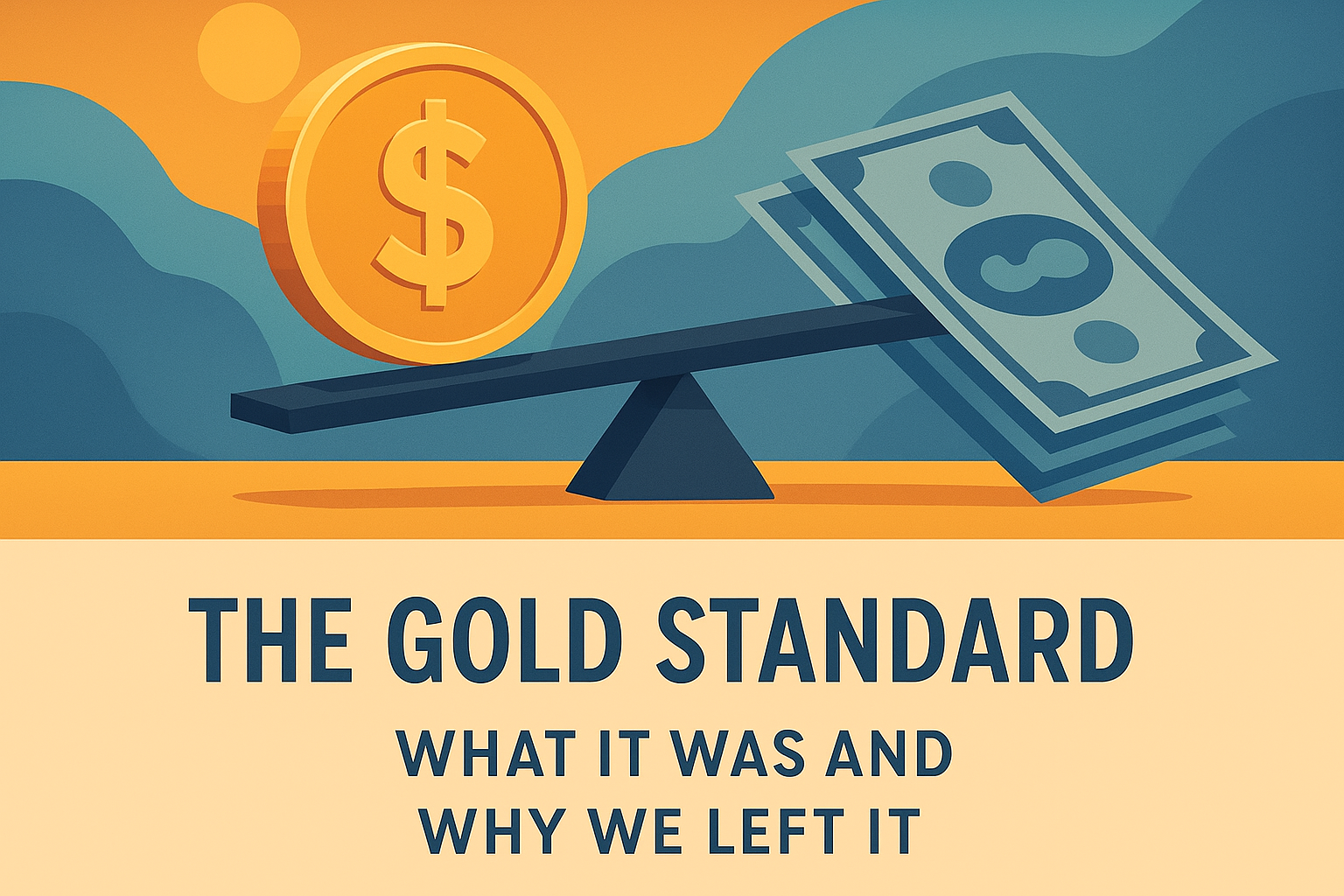
The term “gold standard” is often tossed around in discussions about currency, finance, and economics but what does it really mean? The gold standard, in its simplest form, refers to a monetary system where a country’s currency or paper money has a value directly linked to gold. With this system, countries agreed to convert paper money into a fixed amount of gold, thus underpinning the currency with tangible value. This article delves into the intricacies of the gold standard, exploring what it was, its significance, and the reasons for eventually abandoning it. Comprehensive understanding of this topic not only sheds light on the historical economic landscape but also helps readers comprehend why economies operate the way they do today.
At the heart of modern economies are central banks and fiat money, both of which have their roots entwined with the gold standard. In its heyday, the gold standard played a crucial role in stabilizing and fostering global trade and economic confidence. However, the transition away from a gold-backed monetary system marked one of the most significant shifts in the global economy, influencing contemporary fiscal policies and monetary decisions. Grasping the rationale and events leading to the abandonment of the gold standard is essential for anyone interested in the historical and ongoing evolution of economic frameworks.
The Rise and Fall of the Gold Standard
The gold standard has a long history dating back to the 19th century. The British Empire was one of the first to officially adopt the gold standard in 1821, creating a system where the pound’s value was directly linked to gold. This paved the way for other nations, resulting in a widespread adoption among major economies by the 1870s. The appeal of the gold standard lay in its ability to limit inflation and ensure monetary stability since currency supply could not exceed gold reserves. Additionally, it facilitated global trade as it rendered exchange rates stable and predictable.
Real-world Example: Consider the post-World War I economy. Many nations attempted to return to the gold standard after the war in a bid to restore pre-war economic stability. However, this transition proved to be challenging due to large debt burdens and gold reserve depletion. The interwar period exposed the vulnerabilities of tying currency values strictly to gold reserves, leading to unemployment and economic stagnation due to deflationary pressures.
The collapse of the gold standard began in the Great Depression era when countries sought to devaluate their currencies to stimulate growth. The United Kingdom abandoned the gold standard in 1931, with the United States following in 1933 under President Franklin D. Roosevelt. This abandonment provided an insight into a flexible monetary policy’s capacity to counter economic shocks by allowing currencies to float and be independently controlled based on national interests rather than fixed to gold.
Post-World War II and the Bretton Woods Agreement
While the classical gold standard had collapsed by the 1930s, gold continued to play an influential role in shaping the post-World War II economic order. The Bretton Woods Agreement of 1944 established a new financial system where currencies were pegged to the U.S. dollar, which in turn was convertible to gold at the fixed rate of $35 per ounce.
This arrangement aimed to achieve economic stability and facilitate international trade by creating a more flexible and resilient global trading system than the pre-war gold standard. This system, however, still relied on gold indirectly, placing immense pressure on the United States to maintain gold reserves adequate enough to back its dollar commitments globally.
- Advantage: Promoted post-war economic recovery and growth.
- Disadvantage: U.S. gold reserves depleted as global economies expanded.
Real-world Example: During the Vietnam War era, the U.S. found it challenging to balance fiscal policy due to excessive spending. By 1971, mounting pressure on U.S. gold reserves led to President Richard Nixon suspending dollar convertibility to gold, effectively ending the Bretton Woods system. This marked the beginning of the current floating exchange rate system where currencies are valued based on supply and demand dynamics.
The Modern Floating Exchange System
The transition to a fiat currency system marked by floating exchange rates signaled a significant departure from gold-based stabilization. Fiat currencies derive value from trust and governmental decree rather than intrinsic value tied to a commodity like gold. This modern system allows for more flexible monetary policies addressing dynamic economic conditions and promoting innovation.
Real-world Example: Following the 2008 financial crisis, central banks worldwide could engage in quantitative easing — a policy of injecting liquidity into the economy to spur growth. Under a rigid gold standard, such measures would have been severely constrained.
Fiat currency with a floating exchange system promotes international trade, investment, and economic stability but also requires vigilance to prevent misuse and manage inflation effectively. It enables central banks to implement targeted policies based on specific economic needs, ensuring adaptability in times of crisis.
Pros and Cons: A Balanced Perspective
The gold standard system, while hailed for its stable monetary value, proves to be a double-edged sword when it comes to economic flexibility. Here, we weigh the benefits and drawbacks of the historical gold standard compared to fiat currency systems.
Advantages of the Gold Standard:
- Stability: Provided a self-regulating cycle since money supply was limited to gold reserves.
- Inflation Control: Inflation was historically lower due to limited currency issuance.
- Predictable Exchange Rates: Facilitated trade by removing uncertainty in exchange rate fluctuations.
Drawbacks of the Gold Standard:
- Economic Rigidity: Limited ability for governments to respond to economic fluctuations and crises due to fixed currency value.
- Dependency on Gold Supply: Economy’s growth potential was tied to gold discoveries and mining output, leading to uneven economic development.
- Global Imbalances: Gold imbalances among trading nations created disparities in wealth and economic power.
The shift from gold-backed currency to fiat systems improved flexibility and crisis response, though at the cost of potential currency over-issuance and inflationary scenarios. A balanced perspective serves as a lesson in maintaining fiscal prudence while leveraging the benefits of modern monetary frameworks.
Lessons Learned and Moving Forward
The transition from the gold standard to fiat currency hasn’t been without its challenges, yet it has provided significant lessons in economic management. The ability to adjust monetary policies in response to dynamic global conditions has proven crucial; however, it also demands a balance between inflation management and currency stability.
Fiat systems enable governments to address economic demands and stimulate growth through monetary policy interventions but require trust, regulation, and management to ensure economic credibility. An acute understanding of the historical evolution from gold to modern currency systems encourages responsible fiscal governance and informs contemporary economic policy decisions.
Conclusion: Embracing Currency Flexibility with Caution
Understanding the history behind the gold standard and why we departed from it underscores important lessons for today’s economic policymakers and enthusiasts. While the gold standard offered monetary stability, its rigidity limited economic adaptability during crises, leading to its eventual abandonment. Learning from history, we appreciate the flexibility of fiat currencies, which allow us to respond dynamically to economic changes albeit with the caution towards careful governance and regulation.
As we navigate ever-evolving financial landscapes influenced by global events, grasping former economic frameworks fosters informed decision-making in seeking sustainable growth and stability. In your journey to explore and comprehend economic systems, examine how historical contexts shape modern-day policies and what the transition away from fixed-value currency models signifies for future economic evolutions.
For those who wish to delve deeper into economic principles and frameworks, consider exploring courses focused on monetary policies and global economic trends. In doing so, you equip yourself with the tools and insights necessary to engage in informed discussions and contribute positively to ongoing economic dialogues.
Frequently Asked Questions
1. What is the gold standard, and how did it work?
The gold standard was a monetary system in which the value of a country’s currency or paper money was directly linked to gold. Essentially, it meant that you could exchange your paper money for a fixed amount of gold. The government’s role was to maintain a stockpile of gold to back its currency and facilitate this exchange. This system gave currency a tangible value because it could be converted into something of intrinsic worth – that shiny, alluring metal called gold.
Historically, under the gold standard, each participating country’s currency had a value that could be expressed in terms of a certain quantity of gold. For example, if one U.S. dollar was defined as equivalent to a specific amount of gold, you could theoretically walk into a bank and exchange your paper bills for this predetermined measure of gold. This system was supposed to provide stability in exchange rates between countries because if someone could always trade gold internationally at the same fixed value, currency conversions would be seamless and prices more predictable. It added a level of certainty to international trade that was widely appreciated.
However, for the system to work smoothly, participants had to trust that their governments would stick to the rules about exchanging currency for gold and maintaining the gold price. If everyone knew a country’s currency could be redeemed for a definite quantity of gold, this would uphold its value and contribute to financial stability. As you can imagine, this required an immense amount of discipline from governments since it constrained their ability to print money and thereby limited their responses to financial crises.
2. Why did countries adopt the gold standard in the first place?
Countries adopted the gold standard primarily for stability and credibility. Throughout history, paper money without backing from a precious metal was an experiment fraught with uncertainties. Linking currency to gold helped earn people’s trust, as currency had a solid backing of something both physically tangible and widely valued across cultures. Gold itself is limited in supply, enduring, and universally acknowledged for its worth, making it the perfect candidate for this monetary roping.
Another pivotal reason was seen in the hope for economic stability. By adopting a gold standard, countries stabilized their currency values relative to one another, reducing the fluctuation risks in foreign exchange that are inevitable with floating currencies. It ushered in an era where predictable exchange rates mattered for booming international trade and investment. Such economic interactions flourished with the certainty a gold-backed currency provided, proceeding on terms foreign governments and businesses found reliable.
Furthermore, the gold standard was a guardrail against inflation. When currency was tied directly to gold, a country couldn’t print an unlimited amount of money. So, the reserve of gold directly dictated the money supply, keeping inflation in check. This connection made economies more disciplined and conscientious about fiscal policy, promoting long-term economic health over the shorter gains of unrestrained monetary expansion. In many ways, adopting the gold standard was seen as adopting fiscal responsibility itself.
3. What led to the decline and eventual abandonment of the gold standard?
Though the gold standard came with its advantages, its rigidity often proved detrimental, especially during economic turmoil. As economies evolved, the stringent rules of the gold standard introduced more challenges than solutions, leading to its gradual unraveling. One significant reason for ending it was the inability to adjust money supply quickly in times of economic distress.
During financial calamities — think the Great Depression of the 1930s — governments needed the flexibility to respond, often by increasing the money supply to stimulate economic activity and create jobs. However, under the gold standard, the ability to print money was shackled by a nation’s gold reserves. Such inflexibility exacerbated economic downturns, contributing to prolonged or more severe economic contractions.
Another contributing factor to moving away from the gold standard was the unfair burden it placed on countries running trade deficits. Nations with deficits were bound to pay in gold, quickly depleting their reserves. This enforced discipline led to painful deflationary policies: reducing wages and economic activities to align trade accounts. It placed countries under enormous pressure and often resulted in domestic strife and unrest.
Furthermore, the system demanded a symbiotic participation where major economies adhered strictly to gold exchange. Even if one participant abandoned its obligations or devalued its currency against gold, the credibility and efficiency were compromised. The increasing complexity in global finance, combined with shifting economic philosophies that favored more government intervention, eventually paved the way for the dissolution of the gold standard, culminating in President Richard Nixon’s 1971 decision to suspend direct convertibility of the U.S. dollar into gold, effectively ending the system.
4. How did the end of the gold standard affect global economies?
The end of the gold standard was a seismic shift in global economics, moving the world into an era of fiat currency, meaning currencies that were declared by governments to have value but were not backed by physical commodities. The initial transition changed how economies managed their money supplies, giving central banks more control and flexibility to counter cyclical economic patterns.
One immediate effect was the newfound ability for countries to voluntarily adjust their monetary policies, allowing them to target unemployment, inflation, and economic growth more effectively. Central banks could increase or decrease the money supply as needed, steering towards fuller employment and more stable prices than the gold standard permitted. This flexibility was seen as a boon for policymakers who previously chafed under the strictures of gold-backed currency rigidities.
However, this shift wasn’t without challenges. As currencies no longer had a definitive conversion to gold, exchange rates began to fluctuate based on market forces of supply and demand, driven by perceptions of economic strength and geopolitical stability. This introduced a new layer of uncertainty to the financial world, affecting trade balances and making international transactions riskier. Overall, while the move away from the gold standard granted economies the leverage necessary to navigate modern financial complexities, it also meant heightened responsibility for inflation control and monetary discipline, sometimes leading to fluctuating confidence in currencies.
5. Could we ever return to the gold standard? Why or why not?
While the concept of returning to the gold standard holds a tantalizing appeal for proponents who value economic discipline and fixed currency value, practical realities make such a return improbable on a global scale. Several reasons underlie this complexity. For one, the sheer expansion of global economics and trade requires a much larger monetary base than gold reserves could realistically support. The physical scarcity of gold would severely limit liquidity, hampering government and business responsiveness in today’s agile market conditions.
Moreover, gold’s value itself is subject to fluctuations based on market speculation or geopolitical tensions, which could introduce volatility rather than stability. Major economies have built incredibly intricate financial systems dependent on fiat money’s flexibility, and unwinding these structures could risk massive instability, an unintentional side effect counteracting the envisioned benefits.
Lastly, modern economic objectives often strongly emphasize growth, employment, and other social metrics that require nimble monetary policy tools, completely at odds with the restrictive nature of the gold standard. Today’s world economies are interconnected and dynamic, demanding responsive and sometimes unconventional solutions far beyond the scope of fixed gold valuation.
However, despite these challenges, the allure of the gold standard persists in debates around fiscal responsibility, counterinflation measures, and currency stability, reminding us of its historical prestige and its legacy as a symbol of economic integrity and discipline.