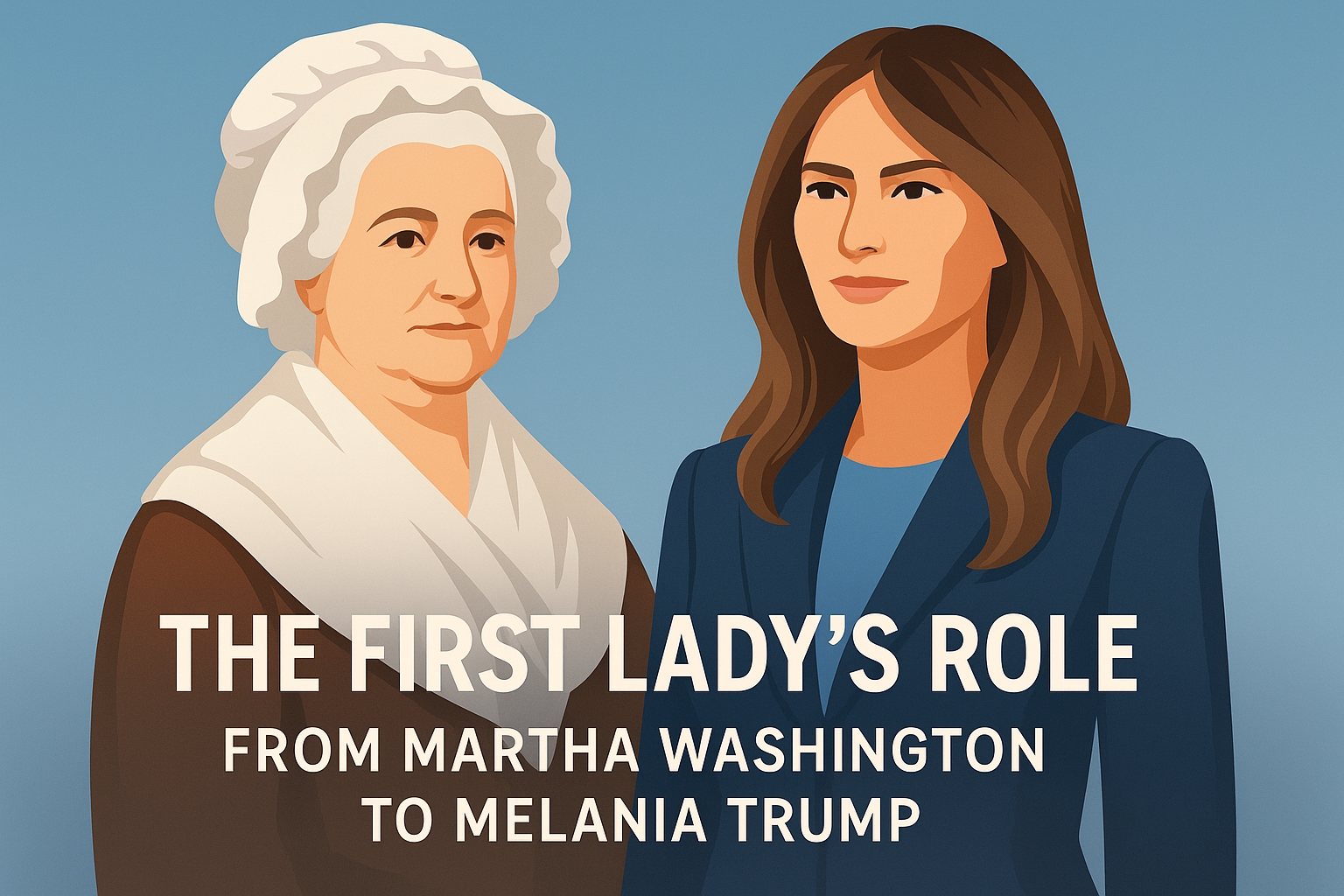
The First Lady’s Role: How It Has Changed from Martha Washington to Present
The role of the First Lady of the United States has evolved significantly since the era of Martha Washington to the present day, encompassing a wide array of social, political, and cultural responsibilities. The First Lady is often perceived as a pivotal figure representing American womanhood, exerting influence in both domestic and international spheres. This evolution matters because it reflects broader societal changes and the increasing political awareness and engagement of women in American society. Understanding this transformation offers insights into how public roles and expectations have shifted over time, shedding light on the changing dynamics within American political life and the potential future directions for this influential position.
The Beginnings: Martha Washington’s Traditional Role
When Martha Washington became the inaugural First Lady in 1789, the role was undefined and lacked any official duties. Her responsibilities were mostly ceremonial and revolved around hosting events, supporting her husband, President George Washington, and maintaining the domestic affairs of the presidential household. Martha’s role was largely confined to the private sphere, typical of women’s roles in the 18th century. Her primary example established a template for future First Ladies, where hospitality and social functions were key components. Despite this, her standing as a figurehead was crucial in setting the precedent for the level of decorum and modesty expected from the position.
Emergence of Advocacy: Abigail Adams and Beyond
As the role continued into the 19th century, Abigail Adams distinguished herself by engaging more directly with political issues, notably advocating for women’s rights and education. Her extensive correspondence with her husband, John Adams, showcased her intellectual prowess and political insight. Abigail famously urged her husband to “remember the ladies” when drafting new laws, highlighting her early feminist leanings. This marked the beginning of First Ladies moving beyond domestic duties and engaging with public policy.
Social Champions: Eleanor Roosevelt’s Transformative Influence
Eleanor Roosevelt is often credited with revolutionizing the role of the First Lady. Serving from 1933 to 1945, she became a proactive advocate for civil rights, women’s issues, and humanitarian causes. Eleanor held press conferences, wrote a daily newspaper column, and frequently traveled to promote her agenda, setting a new standard for engagement and activism. Her influence transcended the traditional boundaries of the role, as she acted as a diplomat and even an unofficial ambassador for her husband, Franklin D. Roosevelt. Her tenure exemplified how the role could be used to effect significant social change.
The Political Companion: Jacqueline Kennedy and Modern Image Building
In the 1960s, Jacqueline Kennedy brought style and elegance to the White House, redefining the public image of the First Lady. Her focus on cultural sophistication, including the restoration of the White House and promoting arts and history, set a new tone for how the position could be used to enhance American cultural identity. Jacqueline’s efforts drew international admiration and respect, suggesting that the First Lady could leverage her platform to influence public perception globally. Her approach infused the role with elements of celebrity, highlighting how style and visual appeal could complement advocacy and public engagement.
Policy Advocates: Hillary Clinton’s Active Political Role
Perhaps one of the most politically active First Ladies, Hillary Clinton, pushed the boundaries by taking on a more direct policy role than her predecessors. Serving from 1993 to 2001, she was instrumental in healthcare reform efforts and became a lightning rod for discussions on gender roles in politics. Hillary’s experience as a lawyer and public servant before entering the White House allowed her to navigate and impact areas typically reserved for elected officials. Her tenure illustrated an increasing public expectation that First Ladies engage substantively with key national issues, particularly ones involving social welfare and equity.
- Hillary’s Initiatives: Focused on healthcare reform, women’s rights, and children’s welfare
- Public Reactions: Both praised for her active engagement and critiqued for overstepping traditional boundaries
Modern Diplomats: Michelle Obama and International Impact
Michelle Obama’s tenure as First Lady further broadened the role’s scope by focusing on global initiatives related to health, education, and veterans. From her Let’s Move campaign to combat childhood obesity to the Let Girls Learn initiative aimed at facilitating education for girls worldwide, Michelle demonstrated a keen understanding of the First Lady’s potential as an instrument for international soft power. Her engaging public speaking and media appearances helped elevate the profile of these issues, appealing to a younger demographic and enhancing the influence of American values abroad.
Symbol of Elegance: Melania Trump’s Classical Approach
Melania Trump, First Lady from 2017 to 2025, chose a more traditional and restrained approach, emphasizing classical elements of dignity and grace within the role. Her Be Best initiative, focused on children’s well-being, cyberbullying, and opioid abuse, mirrored the historic First Lady emphasis on non-partisan and broadly accepted issues. Melania’s approach highlighted a return to foundational values, as she opted for minimal direct political engagement, thus ensuring the focus remained on her chosen causes and the symbolic aspects of the position. Her tenure also illustrates the diverse ways First Ladies can adapt the role to suit their styles and priorities, maintaining impact while respecting historical precedents.
The First Lady’s Evolving Influence: Trends and Projections
As we look to the future, the role of the First Lady is likely to continue evolving. With increasing societal focus on gender equality and political activism, future First Ladies may continue to expand their influence in public policy and international diplomacy. The dual expectation for advocacy and representation presents both challenges and opportunities, requiring a balance between tradition and innovation. As the demographic and cultural fabric of America diversifies, the role will likely reflect these changes, further enriching its historical legacy and potential impact.
Conclusion: Reflecting Societal Change Through the First Lady’s Office
The evolution of the First Lady’s role from Martha Washington to Melania Trump highlights significant shifts in the expectations and responsibilities associated with this esteemed position. From a primarily domestic role to one encompassing significant advocacy and public influence, this journey mirrors broader societal changes regarding gender roles, political engagement, and cultural influence. Understanding this history not only enriches our appreciation of American political life but also offers foresight into future developments. As society continues to progress, it will be essential for future First Ladies to adapt, ensuring their contributions continue to inspire and affect change. We encourage all to recognize the immense potential this role holds for fostering positive societal transformation, underscoring its relevance and importance in contemporary American politics.
Frequently Asked Questions
1. How has the role of the First Lady changed since Martha Washington’s time?
The role of the First Lady has undergone substantial transformations since Martha Washington set the initial tone in the late 18th century. Initially, the First Lady was primarily a hostess, responsible for entertaining guests and managing the White House social calendar. Martha Washington set this standard by hosting events and gatherings to support her husband’s presidency. However, as time progressed, First Ladies began to wield more influence, participating in a wide range of political and social issues. Today, the First Lady plays an instrumental role in advocacy, shaping of national discourse, and even policy initiatives. They spearhead causes ranging from education and health to military family support and childhood nutrition. This shift underscores dramatic changes in societal expectations and gender roles, and modern First Ladies often use their platforms to champion issues of importance, showing a capacity for profound societal impact.
2. In what ways have First Ladies contributed to social change?
First Ladies have made significant contributions to social change through advocacy and public initiatives. Eleanor Roosevelt, for instance, used her position to champion civil rights, women’s rights, and became an outspoken advocate for the poor. She redefined the potential of the role by holding press conferences and writing a newspaper column. Jackie Kennedy is credited with fostering an appreciation for the arts and historic preservation. More recently, Michelle Obama spearheaded initiatives like “Let’s Move!” aimed at combating childhood obesity, and Jill Biden has focused on education and military families. These initiatives have often spotlighted underrepresented issues, mobilizing public opinion and influencing legislative change. Their efforts reflect a broader role, transcending mere ceremonial duties, to align with prevailing social currents and exert real influence.
3. How do First Ladies influence political agendas without holding public office?
While First Ladies do not hold an elected office, they possess a unique platform that allows them to influence political agendas indirectly. By championing specific causes, they can draw national attention to issues, galvanize public support, and even influence legislative priorities. Their proximity to the President allows them to informally advise and shape discussions on critical issues. For instance, Nancy Reagan’s “Just Say No” campaign against drug abuse brought significant attention to the drug epidemic in the United States. Hillary Clinton, while First Lady, was an active participant in health care reform discussions and laid groundwork for future policies. Additionally, their public appearances, speeches, and advocacy work can sway public opinion and garner support, effectively pushing certain issues to the forefront of national attention.
4. How has media attention altered the role of the First Lady over time?
The role of the First Lady has been significantly shaped by media attention, especially with the advent of television and, later, social media. Initially, the public’s view of First Ladies was shaped through written accounts and photographs. However, with radio and then television, First Ladies like Jackie Kennedy and Pat Nixon became more visible public figures. Mass media elevated their everyday activities to national news. More recently, with the rise of internet and social media platforms, First Ladies have a direct line of communication with the public, allowing them to share their initiatives and personalities more widely and manage their own narratives. This media scrutiny can both empower and challenge First Ladies, shaping public expectations and increasing their ability to influence. Through careful image management, they can engage citizens and advocate more effectively for their causes, making them central figures in both domestic and international arenas.
5. Are there any common misconceptions about the First Lady’s role throughout history?
Several misconceptions about the First Lady’s role continue to persist. One common misconception is that the First Lady has always held significant political power. Historically, First Ladies like Dolly Madison and Mary Todd Lincoln were more involved in social hosting and White House management than direct political influence. Over time, their roles expanded, but they remain unelected and lack formal legislative authority. Another misconception is that First Ladies comfortably accept their roles. Some, like Bess Truman and Mamie Eisenhower, found the intense public scrutiny taxing and preferred a background role. Additionally, not every First Lady has prioritized the same issues or held the same visibility; preferences and comfort levels vary widely based on personal interests and societal contexts. While they indeed hold a potential to influence, it is shaped significantly by individual choices, personality, and external societal expectations, making each First Lady’s contribution uniquely nuanced.