
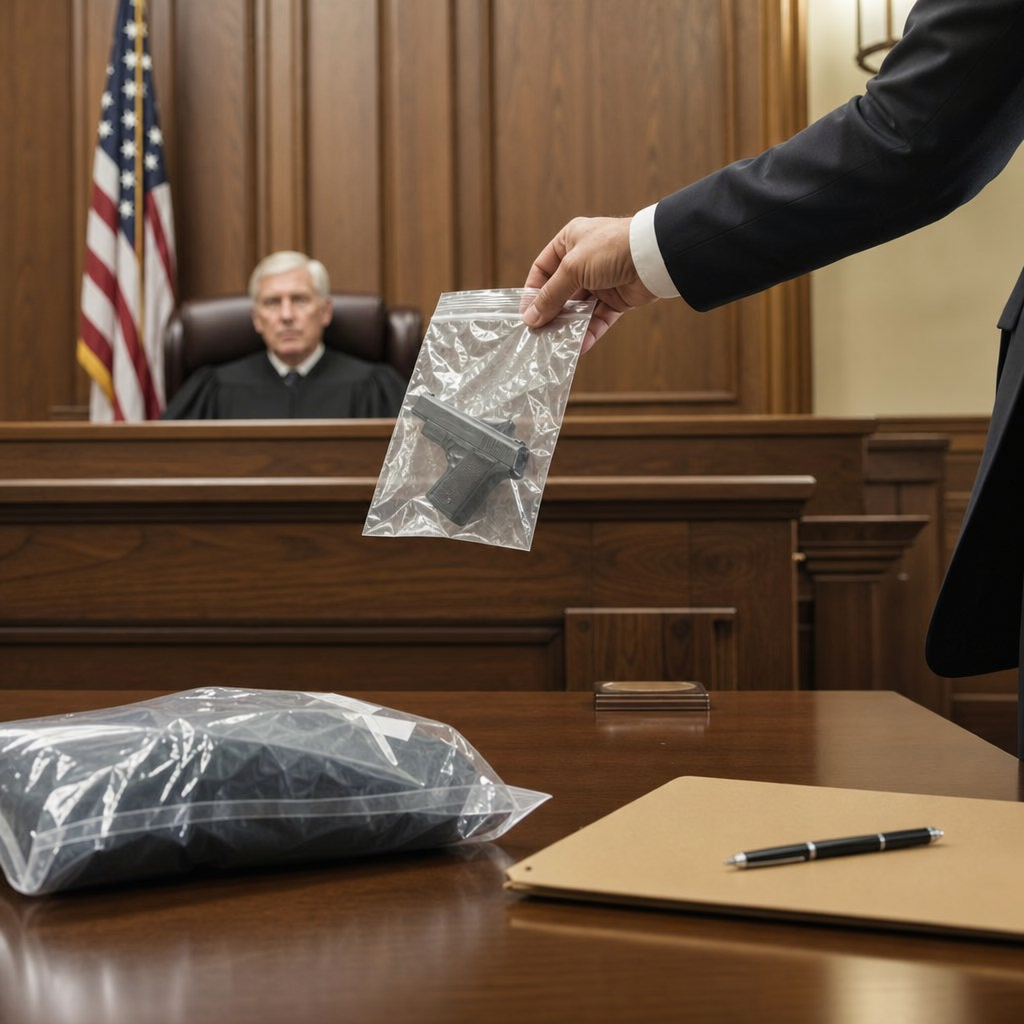
The exclusionary rule is a cornerstone of American criminal procedure because it determines whether evidence gathered through an illegal search or seizure can be used in court. In plain terms, the rule generally bars prosecutors from introducing evidence obtained in violation of the Fourth Amendment, which protects people against unreasonable searches and seizures. In AP Government and Politics, this topic matters because it connects constitutional rights, police power, judicial review, federalism, due process, and the ongoing debate over public safety versus civil liberties. It is also a practical doctrine, not just a theory. In trial work, a single suppression ruling can collapse a felony case, force a plea bargain, or reshape the prosecution’s strategy overnight.
When students first encounter the exclusionary rule, they often confuse several related ideas. A search occurs when the government intrudes on a reasonable expectation of privacy or physically trespasses to obtain information. A seizure of property happens when the government meaningfully interferes with someone’s possessory interests; a seizure of a person occurs when a reasonable person would not feel free to leave. Suppression means excluding evidence from trial. The “fruit of the poisonous tree” doctrine extends suppression beyond the original illegally obtained item to derivative evidence discovered because of the illegality. I have seen this distinction decide hearings: officers may find a phone unlawfully, then later obtain messages from it; if the phone was seized illegally, the messages may also be vulnerable.
The rule matters for three reasons. First, it gives teeth to constitutional protections. Without a remedy, a right can become symbolic. Second, it shapes police behavior by discouraging unlawful shortcuts. Third, it affects how courts balance individual liberty against the costs of excluding reliable evidence. Critics argue that guilty defendants sometimes benefit, while supporters respond that constitutional government requires meaningful limits on state power. That tension explains why the Supreme Court has both expanded and narrowed the rule across different eras. For AP Government and Politics students, the exclusionary rule is a high-value topic because it links landmark cases, institutional power, and broader questions about how constitutional rights are enforced in real criminal trials.
Constitutional foundation and why the exclusionary rule exists
The constitutional foundation begins with the Fourth Amendment, but the exclusionary rule itself is a judicially created remedy rather than language written directly into the amendment. The Fourth Amendment bars unreasonable searches and seizures and requires probable cause for warrants, supported by oath or affirmation, with particularity describing the place to be searched and the persons or things to be seized. The amendment says nothing explicitly about excluding evidence. The Supreme Court developed the exclusionary rule because rights without remedies are often ineffective. If police could violate the Fourth Amendment and still use the resulting evidence freely, the incentive to comply would weaken.
The modern doctrine grew through major Supreme Court decisions. In Weeks v. United States (1914), the Court applied the exclusionary rule in federal prosecutions. In Mapp v. Ohio (1961), the Court incorporated the rule against the states through the Fourteenth Amendment, making it binding on state and local police as well. That incorporation was transformative. Since most criminal cases occur in state courts, Mapp turned the exclusionary rule into a nationwide rule of criminal procedure. In AP Government and Politics, this is an important example of selective incorporation and the Supreme Court’s role in nationalizing constitutional protections.
The core purpose of the rule today is deterrence. The Court repeatedly states that exclusion is not a personal constitutional right to have evidence suppressed in every case; instead, it is a remedy used when the deterrent benefit outweighs the social cost of losing probative evidence. That cost-benefit framing explains why the doctrine has exceptions. Courts ask whether suppressing the evidence would meaningfully deter police misconduct, especially deliberate, reckless, or systemic violations. If officers acted in objectively reasonable reliance on a warrant, a statute, or existing appellate precedent, courts are less likely to exclude. In practice, this means suppression is strongest where police conduct is clearly unlawful and least available where the error is remote, technical, or made by someone outside law enforcement.
How illegal searches are identified in criminal cases
An illegal search is usually identified through a motion to suppress filed by the defense before trial. In the hearings I have reviewed, these motions are often the real battleground, because the jury may never see evidence that gets excluded. The defense first has to show standing, meaning the defendant’s own Fourth Amendment rights were violated. A person generally cannot challenge a search of someone else’s home or car unless they had a legitimate expectation of privacy there. Courts then analyze whether police conduct counts as a search or seizure, whether a warrant was required, and whether an exception applies.
Warrants are preferred, but many searches happen without them. Police may conduct warrantless searches under recognized exceptions such as consent, search incident to lawful arrest, exigent circumstances, plain view, automobile searches based on probable cause, inventory searches, border searches, and certain limited stop-and-frisk encounters under Terry v. Ohio (1968). Each exception has boundaries. Consent must be voluntary. Exigency must be real, not police-created in bad faith. A Terry frisk is for weapons based on reasonable suspicion that a person is armed and dangerous, not a full evidence hunt. Many suppression disputes turn on these details rather than broad principles.
Digital evidence has made illegality questions more complex. In Riley v. California (2014), the Supreme Court held that police generally need a warrant to search a cell phone seized incident to arrest because phones contain vast quantities of private information. That rule changed everyday practice. Before Riley, some officers treated phones like containers found in a pocket. After Riley, investigators typically secure the device, prevent remote wiping, and seek a warrant. Similar issues arise with GPS tracking, historical cell-site location information, and smart-home data. The broader lesson is that the exclusionary rule adapts to technology because privacy intrusions now often occur through data rather than physical entry.
What happens at trial when evidence is suppressed
When a judge grants suppression, the immediate effect is straightforward: the prosecution cannot introduce the excluded evidence in its case-in-chief. But the downstream consequences can be enormous. If the suppressed evidence is central, prosecutors may dismiss charges, reduce them, or offer a favorable plea. If the evidence is only part of the case, prosecutors may pivot to independent witnesses, surveillance footage, financial records, or admissions obtained through lawful means. I have seen narcotics prosecutions become nearly unwinnable after a vehicle search was ruled unlawful because the drugs, packaging materials, and phone contents were all excluded as derivative evidence.
Suppression can also alter witness strategy and jury presentation. Without the key physical evidence, the prosecutor may rely more heavily on officer testimony, confidential informants, or circumstantial proof. Defense counsel, in turn, may gain leverage by highlighting investigative sloppiness. Even when the case proceeds, the narrative changes. A burglary case with recovered property and a confession looks very different from a case built only on presence near the scene. Judges carefully instruct prosecutors not to reference excluded evidence. Violations can trigger mistrials or appellate issues, especially if the prosecution tries to imply facts the jury is not allowed to hear.
Derivative evidence raises especially important trial questions. If police illegally enter a home and find a ledger that leads them to a storage unit, the contents of the unit may also be suppressed unless an exception saves it. Courts examine causation and attenuation: how directly did the unlawful conduct produce the later evidence? If the chain is tight, suppression is more likely. If significant lawful events intervened, the derivative evidence may come in. This is why trial outcomes depend not only on whether officers made a mistake, but also on how that mistake affected the entire investigation from first contact to courtroom presentation.
Major exceptions that limit the exclusionary rule
The exclusionary rule is powerful, but it is not absolute. The Supreme Court has created several major exceptions that often determine whether evidence survives an illegal search challenge. Students should know these because exam questions frequently test not just the rule, but its limits. In practice, prosecutors almost always argue at least one exception, and suppression hearings often become battles over which doctrine best fits the facts.
| Exception | What it means | Illustrative case or example |
|---|---|---|
| Good-faith exception | Evidence is usually admitted when officers reasonably rely on a warrant later found defective. | United States v. Leon (1984) |
| Independent source | Evidence first discovered unlawfully may still be admitted if later obtained through a separate lawful path. | Police secure a scene, then get a valid warrant based on untainted facts. |
| Inevitable discovery | Evidence is admissible if police would have found it lawfully anyway. | Nix v. Williams (1984) |
| Attenuation | Evidence is admitted when the connection between illegality and discovery becomes sufficiently remote. | An outstanding warrant discovered during a stop may break the chain in some cases. |
| Impeachment use | Suppressed evidence may sometimes be used to challenge a defendant’s false testimony. | Not for the prosecution’s main case, but to test credibility. |
The good-faith exception is especially significant. Under United States v. Leon, if officers rely on a warrant they reasonably believe is valid, exclusion often does not apply even if the warrant is later held unsupported by probable cause. The logic is that suppressing the evidence would not meaningfully deter police misconduct when the officers did what the warrant process asks them to do. But this exception has limits. It does not protect officers who mislead the magistrate, rely on a warrant so facially deficient that no reasonable officer would trust it, or submit an affidavit so bare that belief in probable cause is entirely unreasonable.
Independent source, inevitable discovery, and attenuation all address causal distance. They prevent defendants from benefiting when the evidence did not truly result from the illegality in a meaningful way. These doctrines matter in real investigations. Suppose officers enter a warehouse unlawfully, see contraband, leave, and then obtain a warrant based only on information from a reliable informant and surveillance gathered earlier. A court may admit the evidence under independent source. By contrast, if the warrant affidavit depends on what officers saw during the unlawful entry, suppression is much more likely. The practical lesson is that courts do not treat every constitutional violation as contaminating everything forever; they ask whether exclusion would realistically serve the purpose of deterrence.
Landmark cases every AP Government and Politics student should know
Several cases define this area and frequently appear in AP Government and Politics study materials. Weeks v. United States established the exclusionary rule in federal court. Mapp v. Ohio applied it to the states. Terry v. Ohio authorized limited stop-and-frisk searches based on reasonable suspicion, showing that not every police encounter requires probable cause. United States v. Leon created the good-faith exception. Nix v. Williams recognized inevitable discovery. Riley v. California applied Fourth Amendment principles to cell phones, reflecting the Court’s response to digital privacy.
Other cases add nuance. In Katz v. United States (1967), the Court famously stated that the Fourth Amendment protects people, not places, helping define privacy-based search analysis. In Illinois v. Gates (1983), the Court adopted a totality-of-the-circumstances test for probable cause based on informant information. In Hudson v. Michigan (2006), the Court refused to apply exclusion for a knock-and-announce violation, signaling a narrower approach where deterrence was considered weak. In Herring v. United States (2009), the Court declined suppression when an arrest resulted from negligent bookkeeping about an old warrant, emphasizing that exclusion is most justified for deliberate, reckless, or systemic misconduct.
For students building a hub-level understanding of this “Misc” criminal procedure area, the pattern matters more than memorizing isolated holdings. The Court protects privacy and restrains police power, but it also weighs public costs and limits suppression when officers act reasonably or when the connection between the violation and the evidence is weak. That balanced pattern is central to exam writing. A strong response explains both the constitutional protection and the practical limitation, then applies a case to a factual scenario. That is exactly how courts, teachers, and AP free-response readers evaluate understanding.
Why the exclusionary rule remains controversial
The exclusionary rule remains controversial because it forces a direct choice between enforcing constitutional limits and preserving reliable evidence of guilt. Supporters argue that without exclusion, the Fourth Amendment would be hollow. Civil lawsuits are difficult, qualified immunity limits many damages claims, juries may sympathize with police, and internal discipline is inconsistent. Exclusion, by contrast, directly affects the prosecution’s ability to benefit from unlawful conduct. It creates an institutional incentive for departments to train officers on warrants, body-camera policy, consent procedures, and report accuracy. In departments that track suppression rulings, repeated losses often lead to revised checklists and better supervision.
Critics answer that suppression can free plainly guilty defendants, especially in gun and drug cases where the physical evidence is the case. They also argue that modern policing already faces extensive regulation through statutes, body-worn cameras, civilian review, and professional standards, making exclusion less necessary than it was in earlier eras. Some judges share this skepticism, which helps explain the Court’s move toward a deterrence-focused, cost-benefit framework. The debate is not really about whether police should obey the Constitution; everyone agrees they should. The fight is about what remedy best enforces that command without imposing too much social cost.
The most accurate conclusion is that the exclusionary rule is neither a loophole nor a magic shield. It is a targeted judicial remedy that shapes criminal trials by screening out evidence obtained through unconstitutional methods, while allowing room for exceptions when suppression would not meaningfully deter misconduct. For AP Government and Politics students, it is a model topic because it ties together constitutional text, incorporation, Supreme Court precedent, law enforcement practice, and public policy tradeoffs. Master the basic rule, the major exceptions, and the leading cases, then apply them to facts. If you do that, you will understand not only how illegal searches affect criminal trials, but also how constitutional rights become real in everyday government action.
Frequently Asked Questions
What is the exclusionary rule, and why is it important in criminal trials?
The exclusionary rule is a legal principle that generally prevents prosecutors from using evidence in court if that evidence was obtained through an illegal search or seizure. In most discussions, this means evidence gathered in violation of the Fourth Amendment, which protects individuals from unreasonable searches and seizures by the government. If police officers search a home, stop a person, or seize property without following constitutional requirements, the evidence they find may be excluded from trial. In practical terms, that can mean drugs, weapons, documents, digital records, or even statements connected to the unlawful search may not be presented to the jury.
This rule matters because it gives real force to constitutional protections. Without a remedy for violations, the Fourth Amendment would be much weaker in practice. The exclusionary rule is designed to discourage unlawful police conduct by removing the incentive to ignore constitutional limits. Courts have treated it as a way to preserve judicial integrity as well, because judges do not want court proceedings to rely on evidence obtained through government misconduct. In criminal trials, the rule can shape the entire case. If key evidence is suppressed, charges may be reduced, plea negotiations may change, or a prosecution may collapse altogether.
For students of AP Government and Politics, the exclusionary rule is especially important because it sits at the intersection of civil liberties, law enforcement power, and judicial review. It illustrates how courts interpret the Constitution and how those interpretations affect everyday government action. It also shows how the judiciary can limit executive branch actors, such as police, by enforcing constitutional boundaries in criminal procedure.
How does a court decide whether a search was illegal under the Fourth Amendment?
A court looks at whether the government’s actions were “reasonable” under the Fourth Amendment, and that analysis often begins with whether police had a warrant supported by probable cause. A valid warrant usually must be issued by a neutral judge, describe the place to be searched and the items to be seized, and be based on enough evidence to justify the intrusion. If officers searched without a warrant, the court then asks whether the search falls within one of the recognized exceptions to the warrant requirement, such as consent, exigent circumstances, a search incident to a lawful arrest, the automobile exception, or plain view.
Courts also examine whether the person challenging the search had a legitimate expectation of privacy in the place or item searched. For example, a person usually has strong privacy protections in a home, but the analysis may be different for items exposed to the public or information voluntarily shared in certain ways. Judges look closely at the specific facts: what officers knew at the time, what they did, where the search occurred, whether the person consented, and whether the scope of the search stayed within lawful limits. A search can become unconstitutional not only because officers lacked a warrant, but also because they exceeded the terms of a warrant or used unreasonable methods.
In a criminal case, the defense typically raises the issue through a motion to suppress evidence before trial. At a suppression hearing, both sides present arguments and sometimes testimony about what happened. The judge then decides whether the search complied with the Constitution. If the judge finds a Fourth Amendment violation and no exception applies, the exclusionary rule may bar the evidence from being used at trial. That decision can have a major effect on the prosecution’s ability to prove guilt.
Does the exclusionary rule apply to all evidence connected to an illegal search?
Not always. The exclusionary rule can reach more than the specific item directly seized during an unlawful search, but its application is not unlimited. Courts often distinguish between primary evidence, which is the evidence found during the illegal search itself, and derivative evidence, which is additional evidence discovered because of the initial illegality. This broader concept is often called the “fruit of the poisonous tree” doctrine. Under that doctrine, if police violate the Fourth Amendment and that violation leads them to other evidence, the later-discovered evidence may also be excluded.
For example, if officers unlawfully enter a building and find records that lead them to a storage unit, the contents of that unit might also be challenged as tainted by the original illegality. The same can apply to witness statements, confessions, or other evidence uncovered because of the unconstitutional search. The key question is whether the later evidence was obtained by exploiting the illegal conduct or instead came from a source sufficiently separate from it. Courts look at the connection between the violation and the evidence to decide whether suppression is appropriate.
There are important limits, however. Evidence may still be admitted if the prosecution can show an independent source for it, that it would have been inevitably discovered through lawful means, or that the connection between the illegality and the evidence became too attenuated to justify exclusion. Because of these exceptions, suppression disputes can become highly fact-specific. The exclusionary rule is powerful, but it does not automatically erase every piece of evidence that appears somewhere down the chain after police misconduct.
What are the main exceptions to the exclusionary rule?
Several major exceptions can allow evidence to be admitted even when a constitutional violation occurred. One of the most important is the good-faith exception. Under this principle, evidence may be used if police officers reasonably relied on a warrant they believed to be valid, even if the warrant is later found defective. The basic idea is that excluding the evidence would do little to deter misconduct when officers acted in objectively reasonable reliance on a judge’s approval. This exception reflects the modern view that the exclusionary rule is not automatic, but a remedy aimed mainly at deterrence.
Another important exception is the independent source doctrine. If police later obtain the same evidence through a separate, lawful investigation unconnected to the illegal search, the evidence may still come in. Closely related is the inevitable discovery doctrine, which allows evidence if the government can show it would have been found anyway through proper procedures. Courts also recognize attenuation, meaning evidence may be admitted when the link between the unconstitutional act and the discovery of the evidence has become weakened by time, intervening circumstances, or other factors.
There are also situations in which the exclusionary rule does not apply in the same way outside a criminal trial, or where a defendant cannot challenge the search because they lacked a personal Fourth Amendment interest in the place searched. In practice, these exceptions matter a great deal. They show that the rule is not an absolute shield for defendants, but a balancing mechanism shaped by constitutional rights, deterrence of police misconduct, and the truth-seeking function of the courts. Understanding these exceptions is essential to understanding how exclusionary rule cases are actually decided.
Why is the exclusionary rule such a significant topic in AP Government and Politics?
The exclusionary rule is a significant AP Government and Politics topic because it turns a constitutional promise into a working legal protection. It helps explain how the Bill of Rights affects criminal justice, how Supreme Court decisions shape police practices, and how individuals can enforce rights against the government. Rather than being an abstract concept, the rule demonstrates how constitutional law operates in real disputes involving arrests, searches, and prosecutions. It is one of the clearest examples of the judiciary’s role in checking government power.
This topic also connects to selective incorporation and federalism. Although the Fourth Amendment originally restricted the federal government, Supreme Court decisions made its protections enforceable against the states through the Fourteenth Amendment. That means the exclusionary rule became relevant not just in federal court, but also in state criminal proceedings. For AP Government students, that development highlights how constitutional protections expand through judicial interpretation and how national standards can shape state and local law enforcement practices.
More broadly, the exclusionary rule invites debate about the balance between liberty and order. Supporters argue that without strong remedies, constitutional rights become meaningless and police abuses are more likely. Critics argue that excluding reliable evidence can allow guilty defendants to avoid conviction. That tension makes the rule politically and legally important. It captures a central question in American government: how far should the state be allowed to go in the name of public safety, and what remedies should exist when it crosses constitutional lines? That is exactly the kind of institutional, constitutional, and civil liberties issue that AP Government and Politics is designed to explore.