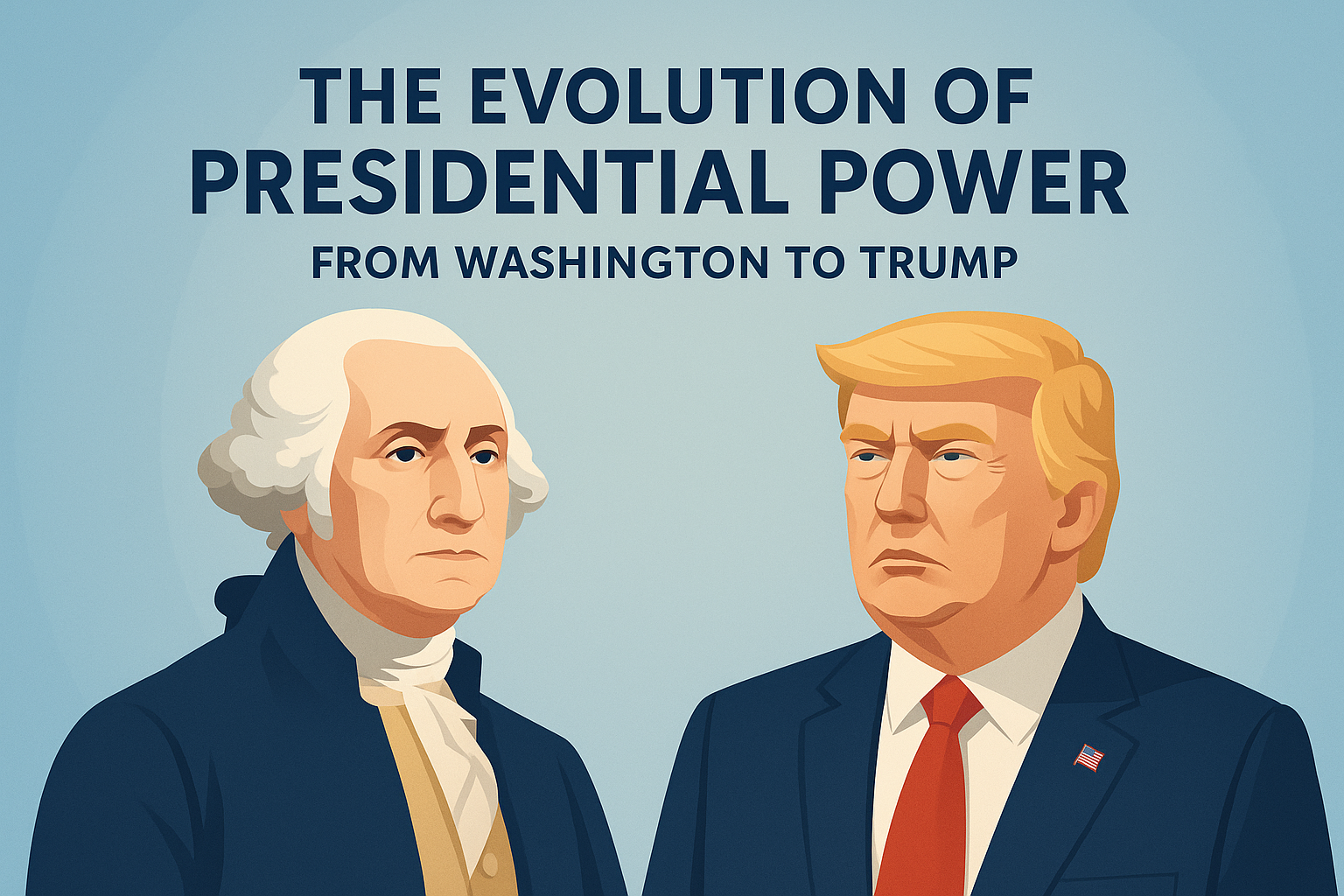
Introduction: Understanding Presidential Power
The concept of presidential power has been a cornerstone of American democracy since the nation’s inception. Starting with George Washington, the first President of the United States, each subsequent leader has wielded powers that have, over time, been expanded, constrained, and redefined in response to the nation’s changing needs and circumstances. Understanding how presidential power has evolved is crucial because it offers insights into the balance of power between the executive branch and other government branches, as well as its implications on the nation’s democratic processes.
Key terms such as “executive orders” and “veto power” are fundamentally tied to the scope of a president’s influence. Executive orders, for example, allow a president to manage operations within the federal government, while veto power provides the ability to reject legislation. These tools, among others, have been used in varying degrees by presidents to effect change, reflecting their leadership styles and the era’s political landscape.
This evolution of power is not just a historical curiosity; it’s a mirror through which we can see the shifting priorities and concerns of the American populace throughout generations. As we track these changes from Washington’s tenure to contemporary times, particularly examining recent administrations, we gain a better understanding of the potential future trajectory of presidential authority.
The Foundational Era: Washington to Lincoln
The early years of the American presidency set a precedent for future officeholders. George Washington’s presidency established a template for the role, emphasizing restraint and respect for the nascent nation’s structures. Washington was acutely aware of his actions’ potential to set enduring precedents, as seen in his decision to end his presidency after two terms, which laid the groundwork for the 22nd Amendment.
Following Washington, Thomas Jefferson expanded the power of the presidency significantly. His acquisition of the Louisiana Territory in 1803 illustrated how executive action could dramatically alter the country’s landscape, both geographically and politically. Jefferson’s decision to proceed with this purchase—despite his own constitutional reservations—set a benchmark for presidential authority in foreign affairs.
During Abraham Lincoln’s presidency, the Civil War tested the limits of presidential power more than any previous event. Lincoln’s suspension of habeas corpus and issuance of the Emancipation Proclamation were unprecedented exercises of executive power, emphasizing the flexibility of presidential authority in times of national crisis.
The Progressive Expansion: Roosevelt to Truman
The early 20th century saw further augmentation of presidential powers. Theodore Roosevelt’s presidency marked a shift toward a more proactive executive role. His “stewardship theory” of the presidency asserted that the president was entitled to take any action necessary to benefit the public, as long as it wasn’t specifically forbidden by the Constitution. This perspective allowed Roosevelt to embark on trust-busting campaigns and extensive environmental conservation efforts.
Franklin D. Roosevelt’s New Deal further entrenched the presidency as a central force in American government. The series of economic programs implemented in response to the Great Depression required significant coordination across varying government sectors, enhancing the executive branch’s leverage. Furthermore, his unprecedented four-term presidency during World War II underscored the wartime exigencies that expand executive powers.
Following Roosevelt, Harry Truman’s presidency reinforced the theme of expanded powers during crises. His decision to use atomic weapons in World War II and the subsequent institutionalization of national security mechanisms like the National Security Council highlighted a new level of executive influence over national and global affairs.
The Cold War and Vietnam Era: Eisenhower to Nixon
As the Cold War set the stage for modern presidential practices, Dwight D. Eisenhower’s administration marked a focus on national security and foreign policy. His “domino theory” justified significant involvement in global affairs, contributing to the enlargement of military and executive resources.
The Vietnam War under Presidents Lyndon B. Johnson and Richard Nixon positioned the executive branch under intense scrutiny. Johnson’s Gulf of Tonkin Resolution authorized military escalation without a formal declaration of war by Congress, demonstrating an expanded interpretation of presidential military power. Nixon’s presidency further complicated the dynamics of presidential authority. Utilizing executive privilege during the Watergate scandal, and his subsequent resignation, illustrated the complex interplay of executive powers and the mechanisms checking them.
From Reagan to Clinton: The Modern Presidency
Ronald Reagan’s administration marked a shift towards conservatism with an emphasis on reducing government’s size, yet paradoxically utilizing robust executive action to influence both domestic and foreign policy. His adept use of media redefined the presidential public persona, while his economic policies showcased the president’s role in shaping national agendas.
Bill Clinton’s presidency exemplified an era of globalization and technological advancement. The ratification of NAFTA under his term reflected the growing significance of executive influence in international trade agreements. Clinton’s presidency also highlighted the personal aspects of presidential power, with his impeachment underscoring the nature of political strategy and public opinion in maintaining or challenging executive power.
The Post-9/11 Era: Bush to Trump
The September 11, 2001 attacks dramatically reshaped the boundaries of presidential power. George W. Bush’s presidency saw the introduction of the USA PATRIOT Act, which expanded surveillance and security measures. The subsequent initiation of wars in Afghanistan and Iraq further emphasized the president’s role as Commander-in-Chief in exercising military authority.
Barack Obama’s presidency focused on healthcare reform, notably the Affordable Care Act, representing a significant expansion of presidential influence in domestic policy. Executive orders became a crucial tool for implementing policy in the face of congressional gridlock, exemplified by executive actions on climate change and immigration reform.
Donald Trump’s presidency demonstrated a unique manifestation of executive power through direct communication with the public via social media. This approach bypassed traditional media channels, showcasing a new dimension of presidential authority. The administration’s handling of issues such as immigration, with policies like the travel ban, further highlighted the scope of executive orders in shaping national policy.
| President | Significant Expansion of Power |
|---|---|
| George Washington | Established precedents like the two-term limit |
| Thomas Jefferson | Louisiana Purchase |
| Franklin D. Roosevelt | New Deal Policies |
| Lyndon B. Johnson | Gulf of Tonkin Resolution |
| George W. Bush | USA PATRIOT Act |
Conclusion: The Future of Presidential Power
The evolution of presidential power from Washington to Trump highlights the adaptable nature of the executive office in addressing the challenges and opportunities presented by each era. The shifting dynamics between expanding authority and safeguarding democratic principles demonstrate the constant balancing act faced by both presidents and the other branches of government.
It is evident that the extent of presidential power depends significantly on the historical context, public opinion, and institutional checks and balances. Moving forward, understanding these dynamics is crucial for fostering informed citizens who can critically engage with political processes. Observing how contemporary presidents navigate issues like climate change, international relations, and technological advancement will provide further insights into the trajectory of executive power.
A continued commitment to vigilance and participation in the democratic process is essential, as it ensures that the balance and integrity of presidential power are maintained. Readers are encouraged to stay informed, participate in civic dialogue, and engage in political processes to contribute to the continued evolution of a balanced and effective executive branch.
Frequently Asked Questions
1. How did George Washington set the precedent for presidential power?
George Washington, as the first President of the United States, set crucial precedents that have shaped the use and scope of presidential power for centuries. Beginning his term in 1789, Washington faced the monumental task of defining the role of the presidency, as the Constitution provided a framework but left many specifics undeclared. To assert the authority of the national government and the presidency, he established initiatives that reinforced the position’s legitimacy. For instance, Washington’s decision to step down after two terms in office laid the groundwork for the tradition of a peaceful transfer of power, which became a cherished democratic principle until it was codified with the 22nd Amendment to the Constitution in 1951, limiting presidents to two terms.
Furthermore, Washington’s handling of the Whiskey Rebellion in 1794 was pivotal. By utilizing the military to suppress the insurgency, Washington demonstrated the president’s role as commander-in-chief, proving the federal government’s ability to enforce laws and maintain order. He also chosen not to exercise veto power extensively, except in cases of legislative acts he believed unconstitutional, thus setting a tone of restraint for future presidents. Washington established the principle of a balanced executive power, which future presidents would build on according to the needs of their times.
2. How has presidential power expanded over time?
Since the era of George Washington, presidential power has experienced significant expansion. This gradual change can be attributed to a variety of factors including crises, war, economic needs, and shifts in public expectations. During the Civil War, President Abraham Lincoln took unprecedented measures that expanded executive power. Notably, he suspended habeas corpus and instituted wartime measures without prior Congressional approval in his steadfast commitment to preserve the Union. Lincoln’s actions exemplified how a national crisis can enhance presidential authority.
In the early 20th century, Presidents such as Theodore Roosevelt and Woodrow Wilson continued to expand the scope of presidential power through their progressive policies and international engagement. Roosevelt’s “stewardship theory” advocated that the president could take any action in the nation’s interest unless specifically restricted by law. Wilson’s leadership during World War I further entrenched the president’s role as a lead international figure and legislative agenda-setter.
The New Deal era of Franklin D. Roosevelt marked a profound transformation. In response to the Great Depression, FDR implemented expansive economic reforms, dramatically increasing federal government involvement in American life and reinforcing the president’s role as an architect of policy for economic and social progress. World War II cemented this expanded role as the president became central to both national and international affairs.
3. How have checks and balances influenced the evolution of presidential power?
The system of checks and balances, as conceived by the framers of the Constitution, was designed to ensure that no single branch of government could dominate. Over time, the interactions between the executive, legislative, and judicial branches have critically influenced presidential power’s evolution. Congress, with its power to legislate and control funding, has often acted to restrain or challenge presidential initiatives that felt overreaching.
Judicial rulings have significantly impacted presidential power, defining its limits and occasionally supporting its expansion. Landmark Supreme Court decisions, such as United States v. Nixon, limited executive privilege, reinforcing that the president is not above the law. Conversely, decisions like Korematsu v. United States, although controversial, validated instances where executive power was broadened during wartime.
Moreover, the effectiveness of checks and balances often hinges on the partisan dynamics within Congress and the presidency. When the president’s party controls Congress, there might be less opposition to presidential agendas, leading to greater executive power. Conversely, divided government, where different parties control Congress and the presidency, can lead to gridlock, limiting the president’s legislative effectiveness.
4. In what ways have presidential powers been constrained?
While presidential power has expanded in certain respects, it has also faced significant constraints complemented by legal, political, and institutional mechanisms. Internally, past presidents have often adhered to established norms and traditions that limit overextension of their powers, although these are not formal regulations. Externally, Congress possesses significant checks through its powers to investigate, impeach, fund, and legislate counter to presidential actions.
Significant constraining moments in presidential history include the aftermath of the Watergate scandal, which led to the resignation of President Richard Nixon. This era prompted Congress to enact laws like the War Powers Resolution of 1973, aiming to curtail unlimited military engagement without Congressional consent, and the Federal Election Campaign Act amendments, regulating campaign finance. These legal reforms served as direct responses to perceived abuses of presidential power.
Public opinion also plays a formidable role in constraining presidential power. Presidents mindful of their domestic and international reputations may opt for restraint to maintain public support. Furthermore, the increasing role of media scrutiny has introduced an additional layer of accountability, ensuring that any overreach is swiftly brought to the public’s attention.
5. How does modern technology impact presidential power today?
Modern technology has fundamentally transformed presidential power, providing advantages and introducing new challenges. With the advent of the internet and social media platforms, presidents have direct communication channels with the public. This ability to bypass traditional media outlets can be a powerful asset, enabling them to foster support, shape narratives, or clarify policy positions without intermediary interpretation.
However, the digital age has also introduced complexities. Cybersecurity threats necessitate vigilant executive oversight, leading to expansions in military and intelligence capabilities to counter these new-age threats. The ease of information dissemination can escalate international relations rapidly, requiring diplomatic agility from the presidency. Furthermore, misinformation and disinformation campaigns can undermine presidential messages, complicating the administration’s ability to effectively communicate policies.
Modern technology also enhances the government’s surveillance capabilities, raising significant civil liberties and privacy debates. Balancing national security with individuals’ rights is an ongoing challenge requiring presidential consideration and restraint to ensure measures align with constitutional values while addressing contemporary threats.