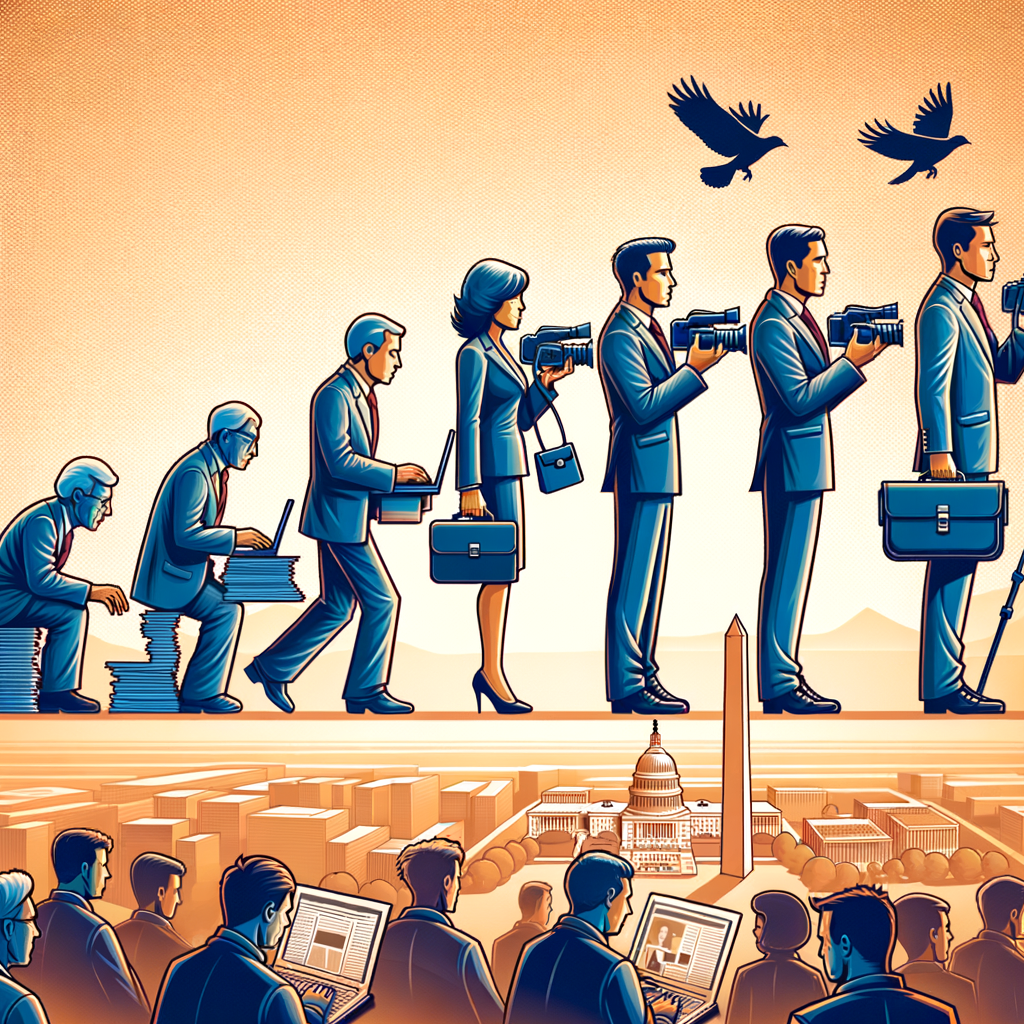
The evolution of political journalism in the United States is a rich and complex story that reflects broader developments within American media and society at large. Its roots stretch back to the colonial era, where pamphleteers and small independent newspaper publishers courageously provided coverage despite various challenges. It transformed through several key eras, each one leaving an indelible mark on its current landscape. From the introduction of party-supportive presses to the rise of commercial journalism and the subsequent shift towards television dominance, political journalism has continuously evolved with changing technologies, audience demands, and societal shifts. Today, it stands at yet another crossroads with the advent of digital media, social platforms, and their profound impact on how political news is consumed and interpreted. This exploration delves into the fascinating journey of political journalism and seeks to understand how it has shaped and been shaped by America’s democratic ideals.
In the early years of the republic, journalism served as a tool for political advocacy. It played an instrumental role in the fight for independence and the establishment of democracy. This form of journalism was deeply intertwined with politics, often reflecting the views of the political elites who owned the newspapers. Over time, as the United States expanded and matured, journalism transitioned through distinct phases such as the partisan press of the 19th century to the emerging concept of objective reporting in the 20th century. Each phase was characterized by technological advancements and the shifting priorities of news consumers. These changes have provided both opportunities and challenges for journalists striving to maintain credibility as watchdogs of the government while adapting to new methods and tools.
Understanding the evolution of political journalism is critical not just for media historians but also for anyone seeking insight into how news influences political realities. In an era defined by fast-paced information flow and threats from information manipulation, appreciating this history is more pertinent than ever. The conversation around fake news, polarization, and the digital landscape invariably hinges on how journalism has been defined and redefined. Thus, we embark on this journey through time, unwrapping the threads of political journalism from its inception to the digital age, understanding its changing role and enduring significance.
The Colonial Era and Early Republic
Political journalism in America began as a form of political expression that was instrumental during the colonial era. Newspapers such as the Pennsylvania Journal were crucial in spreading revolutionary ideas and fostering debate among colonists. These early publications were generally partisan, aligning with a particular political figure or movement, a trend that would continue for many decades. Operating with little technological aid, journalists of this era relied on the printing press to disseminate their views and engage readers. Despite limited circulation, the influence of these publications was immense, igniting passion for independence and advocating for political change.
As the United States transitioned from a collection of colonies to an independent republic, the role of newspapers grew significantly. Many papers functioned as platforms for political parties, advocating for their policies and often launching attacks against opponents. This era marked the beginning of party-affiliated journalism, where newspapers not only reported facts but were heavily editorialized, aligning with Federalist or Democratic-Republican parties. The emergence of notable figures like Benjamin Franklin, who was both a statesman and a publisher, illustrated the deep connections between politics and the press. During this time, journalism was an essential vehicle for political discourse, shaping public perception and engagement in unprecedented ways.
The 19th Century and Yellow Journalism
The rise of the penny press in the early 19th century represented a democratization of news consumption, as affordable newspapers broadened access to political information for the average American. These innovations led to increased literacy rates and a more informed public, feeding the appetite for political news. As newspapers became more widespread, the role of political journalism evolved, encouraging competitive news practices that emphasized sensationalism, laying the groundwork for yellow journalism. This style of reporting, characterized by exaggerative headlines and minimal concern for factual accuracy, was epitomized by the fierce rivalry between media moguls Joseph Pulitzer and William Randolph Hearst. Driven by circulation wars, yellow journalism was criticized for its sensational reporting yet played an undeniable role in shaping public opinions during events like the Spanish-American War.
The late 19th century also saw the beginning of the journalism that sought to balance sensational stories with more responsible reporting. At times, political journalism served to hold those in power accountable. Muckrakers emerged, exposing corruption and societal issues while battling the inaccurate landscape created by yellow journalism. Despite early criticisms, these journalists laid the groundwork for future investigative reporting, demanding accountability from public officials and institutions, ultimately contributing to the reformist spirit of the Progressive Era.
The Rise of Broadcast Media
The 20th century heralded significant changes in the landscape of political journalism with the advent of broadcast media. Radio emerged as a powerful medium during the 1920s and 1930s, bringing real-time news directly into the homes of Americans. Influential figures like President Franklin D. Roosevelt masterfully utilized radio, particularly through his ‘Fireside Chats’, revolutionizing political communication and enhancing the personal connection between leaders and citizens. Radio, with its wide-reaching audience, democratized information yet again, providing new opportunities for political engagement.
Television, which gained prominence during the 1950s, further transformed political journalism. The visual component of television allowed for a more comprehensive and immediate understanding of events. Iconic broadcasts, such as the Kennedy-Nixon debates in 1960, underscored television’s impact on political processes. Viewers were captivated by not only what was said but also how it was presented, marking a shift where image appeared just as influential as message. Television journalism brought political figures and events into the public’s living room, profoundly influencing public perception and engagement.
The rise of cable television in the latter part of the 20th century, exemplified by networks like CNN, created a 24-hour news cycle. This evolution demanded constant content delivery and paved the way for today’s information-saturated environment. While it greatly increased political engagement, it also led to criticisms concerning superficial coverage and the reinforcement of political biases. It pushed the boundaries of journalism into rapid, continuous reporting but often at the expense of depth and thorough analysis.
Digital Age: Triumphs and Challenges
The dawn of the digital age at the turn of the 21st century revolutionized political journalism. The internet provided unprecedented access to information, allowing individuals to consume news in dynamic ways. Online platforms became essential tools for delivering timely political analysis and coverage, expanding the reach far beyond traditional newspapers, radio, and television. Additionally, blogs and independent news sites began to shape political discourse, often challenging mainstream outlets in terms of speed and depth of coverage.
Social media intensified this transformation, enabling instant dissemination of information and facilitating direct interaction between politicians and the public. Platforms like Twitter, Facebook, and Instagram have become integral to political journalism, changing not only how news is reported but also who can be a reporter. This accessibility has democratized journalism, broadening its reach and impact. However, it also brought new challenges, such as the spread of misinformation and the rise of “fake news,” which threaten journalistic integrity and influence electoral outcomes. Managing the balance between freedom of speech and maintaining fact-based, reliable reporting remains a crucial challenge of this era.
Conclusion
The evolution of political journalism in the United States is a dynamic narrative that highlights the integral role the media plays in shaping civic understanding and participation. From colonial pamphleteers to the modern digital age, it reflects deep transformations influenced by technological advancements, societal changes, and political demands. This journey through history showcases how political journalism has continuously adapted while striving to maintain its core values of informing the public, promoting accountability, and fostering democracy.
Today, the role of political journalism remains as essential as ever. It stands as a vital component in the functioning of democracy, requiring continuous adaptation to address modern challenges of misinformation and media polarization. Journalists today must navigate a complex landscape where rapid information dissemination can conflict with the necessity for accuracy and depth.
As we move forward, understanding the historical evolution of political journalism equips consumers of news with the context needed to critically evaluate information sources. Awareness of journalism’s past challenges and achievements empowers a more informed populace, encouraging engagement in democratic processes critically and reflectively. In the end, political journalism’s journey underscores its enduring value and the perpetual need for vigilance, innovation, and integrity in uncovering the truths that shape the nation’s discourse.