
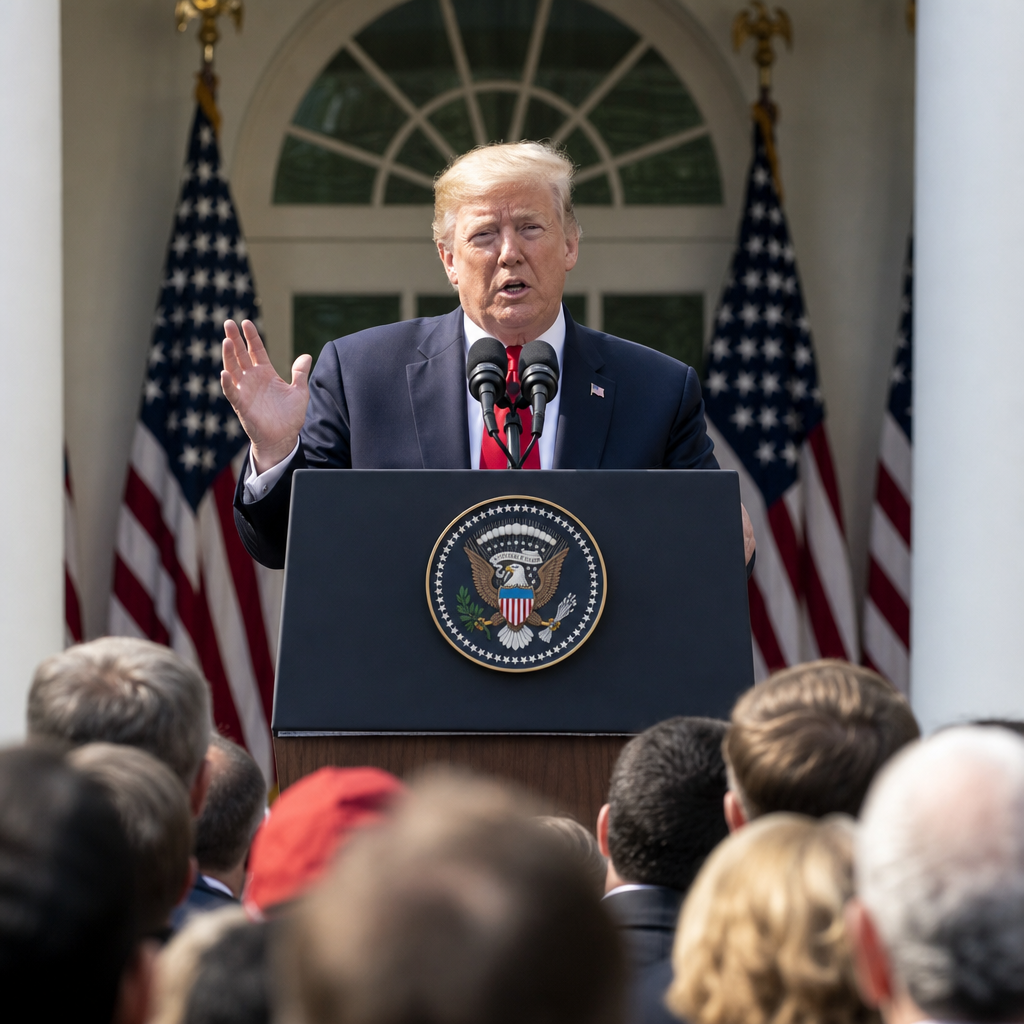
The bully pulpit is the president’s unique platform to shape public opinion, frame national priorities, and pressure other political actors through words rather than formal commands. In AP Government and Politics, the term refers to the power of presidential persuasion: the ability to use visibility, prestige, and access to media to move voters, influence Congress, reassure allies, and define what problems deserve immediate attention. I have found that students often confuse this informal power with constitutional authority. They are different. The Constitution grants specific powers such as vetoes, appointments, and commander in chief duties. The bully pulpit, by contrast, depends on credibility, timing, communication skill, and the public’s willingness to listen.
The phrase itself came from Theodore Roosevelt, who used “bully” in its older sense of “excellent” or “first-rate.” Roosevelt understood that the presidency offered unmatched exposure. From that insight grew a central feature of modern government: presidents lead not only by signing laws but also by narrating events for the nation. When a president delivers an inaugural address, responds to a disaster, speaks after a school shooting, or promotes an economic plan from the Oval Office, that president is using the bully pulpit. The goal may be legislative action, public calm, electoral support, or moral leadership, but the mechanism is similar: frame the issue, repeat the message, and make inaction politically costly.
This matters because much of American politics runs on attention. Congress can ignore a bill more easily than it can ignore a topic dominating cable news, social media, and local town halls. Agencies often move faster when the White House publicly signals a priority. Interest groups mobilize when presidential messaging gives them language and urgency. For students studying AP Government and Politics, the bully pulpit connects directly to broader themes: informal powers, media and politics, public opinion, agenda setting, presidential approval, and the limits of institutional design. Understanding it helps explain why some presidents seem powerful even during divided government, while others struggle despite large formal authority.
It also serves as a hub concept for several related topics in this subfield. Discussions of executive orders, State of the Union addresses, approval ratings, press conferences, party leadership, crisis communication, and the “going public” strategy all fit under this umbrella. So do debates about whether modern presidents inform citizens or manipulate them. A strong hub article needs to define the tool, show how it works, identify when it succeeds, and admit where it fails. That is the purpose of this guide.
What the bully pulpit means in presidential politics
In practical terms, the bully pulpit is the president’s capacity to command national attention and use that attention to persuade. Political scientists often distinguish between bargaining inside Washington and going public outside it. Richard Neustadt, in Presidential Power, argued that presidential influence rests heavily on persuasion, not simple command. Later scholars such as Samuel Kernell described how modern presidents increasingly “go public,” appealing directly to citizens in hopes that voters will pressure Congress. That strategy is now a routine part of governing.
Several features make the presidential message unusually powerful. First, the office is singular. There is one president, so the media naturally centers coverage on that person. Second, presidents have ceremonial and political roles at the same time. They can speak as head of state during mourning and as chief executive when promoting policy. Third, the White House communications apparatus is vast, including speechwriters, press staff, digital teams, pollsters, and policy experts who coordinate language carefully. Presidential persuasion is rarely spontaneous. It is planned, tested, and repeated across platforms.
Still, the bully pulpit is not magic. Presidents cannot simply talk the public into any position. Research shows that they are often better at reinforcing views among supporters than converting opponents. They can elevate an issue on the agenda more easily than they can settle it. They also face fragmented media, partisan distrust, and declining institutional confidence. In my experience reviewing speeches and public approval trends, the most effective messaging usually clarifies a public mood already forming rather than creating one from nothing.
How presidents use public messaging to set the agenda
Agenda setting is the most reliable function of the bully pulpit. When presidents devote repeated attention to an issue, journalists cover it, party leaders respond, and the public starts ranking it as more important. The message may not win every policy fight, but it changes what the country is discussing. Franklin D. Roosevelt’s fireside chats are a classic example. During the Great Depression, he used radio to explain banking policy in plain language, restore confidence, and make federal action seem understandable and necessary. He did not just describe events; he organized public understanding of them.
Ronald Reagan used televised addresses to frame tax cuts, defense policy, and the proper role of government. Barack Obama used speeches after the financial crisis and during the debate over the Affordable Care Act to define health coverage as a matter of economic security. Donald Trump used rallies and social platforms to dominate the news cycle, often bypassing conventional gatekeepers. Joe Biden has used prime-time speeches and local appearances to emphasize infrastructure, prescription drug costs, and democracy-related concerns. The ideology differs, but the communication logic is consistent: repeat a narrative until it structures public debate.
The bully pulpit is especially visible in formal presidential addresses. The State of the Union gives presidents a constitutionally rooted national stage to identify problems, propose solutions, and signal priorities to Congress. Successful speeches include memorable lines, named beneficiaries, and concrete asks. Presidents often invite citizens in the gallery to humanize policy, a technique that turns abstract legislation into a story with faces and consequences. Those moments are designed to travel beyond the chamber into evening news segments, classroom discussions, and social clips.
| Messaging tool | Primary purpose | Typical audience effect | Example use |
|---|---|---|---|
| State of the Union | Set yearly legislative agenda | Raises visibility of selected issues | Promoting budget, health, or security priorities |
| Oval Office address | Signal urgency and presidential control | Can reassure or alarm depending on tone | War, economic crisis, or national emergency statements |
| Press conference | Shape daily narrative and answer criticism | Generates immediate media coverage | Responding to legislative negotiations |
| Rally or local event | Mobilize supporters and pressure lawmakers | Builds grassroots enthusiasm | Traveling to a swing district to promote a bill |
| Social media post | Bypass traditional filters | Fast amplification, often polarizing | Framing a controversy in real time |
When presidential persuasion works and when it fails
Presidential persuasion works best under identifiable conditions. One is high public trust after an election victory, military success, or effective crisis response. Another is message simplicity. A clear proposal such as emergency disaster aid is easier to sell than a technical regulatory overhaul. Third is alignment with existing public sentiment. George W. Bush’s approval surged after the September 11 attacks because the country was already unified by grief and fear; his rhetoric gave voice to that shared emotion. Lyndon Johnson used national addresses and moral framing to support civil rights legislation during a moment of intense national focus, though success also depended on congressional skill and movement activism.
Failure is just as instructive. Presidents often overestimate how much one speech can change minds. Obama’s efforts to sell health reform improved issue knowledge among supporters but did not erase deep partisan resistance. Jimmy Carter’s 1979 “crisis of confidence” speech is remembered less for policy gains than for its political fallout, in part because many listeners heard scolding rather than reassurance. Gerald Ford’s declaration that “there is no Soviet domination of Eastern Europe” during a 1976 debate damaged credibility because presidential messaging only helps when facts and framing align. A weak or inaccurate message can harden opposition.
Events matter more than rhetoric alone. If inflation rises, a speech about economic strength may sound detached. If a foreign policy operation fails, repeated assertions of control lose force. Scholars sometimes call this the limits of the rhetorical presidency: speaking constantly can cheapen attention, and media saturation can produce diminishing returns. The office guarantees visibility, not persuasion.
The media environment: from fireside chats to fragmented platforms
The bully pulpit has changed dramatically with technology. Roosevelt benefited from a radio era with limited channels and a large captive audience. In the television age, presidents such as John F. Kennedy and Reagan gained from visual charisma and network concentration. Today, presidents communicate in a fragmented environment shaped by cable segments, podcasts, algorithmic feeds, partisan outlets, livestream clips, and direct-to-follower posts. That fragmentation increases speed but reduces shared national attention.
Modern presidential communications offices therefore pursue layered messaging. A major speech may be delivered live, clipped into short videos, translated into graphics, emailed to supporters, and echoed by cabinet secretaries, governors, and allied lawmakers. The White House often uses regional media to reach audiences more likely to trust local outlets than national ones. Data-driven targeting, rapid response teams, and digital analytics now sit alongside older tools such as speechwriting and press briefings. In practice, the bully pulpit is no longer one podium. It is a coordinated ecosystem.
This shift creates opportunities and risks. The opportunity is precision. Presidents can tailor messages to veterans, students, union households, or small-business owners. The risk is polarization and misinformation. A statement can be clipped out of context within minutes. Opponents can counter-message immediately. Deepfakes and edited videos increase the burden on official transcripts and verified accounts. Effective public messaging now requires consistency across platforms and a disciplined fact pattern that can survive hostile reinterpretation.
Limits, ethics, and democratic tradeoffs
The bully pulpit raises serious democratic questions. Presidents need public communication to lead, but visibility can slide into manipulation if facts are distorted or fear is exploited. Ethical presidential messaging should inform citizens, acknowledge uncertainty, and avoid turning every issue into a permanent campaign. During crises, trust depends on candor. Dwight Eisenhower and George H. W. Bush often benefited from reputations for restraint, showing that not every persuasive act requires emotional escalation.
Institutional limits remain important. Congress writes laws, courts interpret them, and federalism divides authority with states. A president can spotlight border policy, abortion, student debt, or disaster management, but constitutional structure still constrains outcomes. This is why AP Government students should treat the bully pulpit as an informal power with variable effectiveness, not a substitute for legislation or judicial approval. Public messaging can open doors, but it cannot by itself create durable policy.
There is also a normative tradeoff between leadership and constant campaigning. Since the late twentieth century, many scholars have argued that permanent public appeals can weaken private bargaining, encouraging lawmakers to posture for cameras instead of negotiating. Yet the alternative is not silence. In a mass democracy, citizens expect presidents to explain choices, justify priorities, and respond visibly to danger. The challenge is balance: enough communication to lead responsibly, not so much that every message becomes noise.
Why this concept matters across AP Government and Politics
As a hub topic within AP Government and Politics, the bully pulpit connects multiple units students encounter separately. It links the presidency to public opinion because approval ratings shape how persuasive any message will be. It links the presidency to Congress because going public is often used when bargaining stalls. It links to political parties because presidents speak as national party leaders, not just constitutional officers. It links to the media because communication channels determine reach, framing, and backlash. It even links to civil liberties when debates emerge over protest, misinformation, national security, and the boundaries of executive rhetoric.
The clearest takeaway is simple: presidential persuasion is powerful because attention is political power, but attention is not control. The bully pulpit helps presidents set agendas, define stakes, and mobilize supporters. It works best when facts, timing, and public mood line up. It fails when credibility erodes, events contradict the message, or audiences are too polarized to be moved. For students building a strong foundation in AP Government and Politics, mastering this concept makes many other topics easier to understand. As you continue through this subtopic, connect each related article back to one core question: when a president speaks, who listens, and what changes because of it?
Frequently Asked Questions
What does the term “bully pulpit” mean in AP Government and Politics?
In AP Government and Politics, the “bully pulpit” refers to the president’s informal power to influence public opinion and shape the national conversation through speeches, media appearances, public statements, and symbolic leadership. The phrase does not mean “bullying” people into agreement. Instead, it uses the older meaning of the word “bully,” which meant excellent or impressive. The idea is that the presidency offers a powerful platform, or pulpit, from which the president can speak to the entire nation and command attention in a way few other political figures can.
This concept is important because it highlights a major difference between formal and informal presidential powers. Formal powers are written into the Constitution or granted by law, such as vetoing legislation, appointing officials, or serving as commander in chief. The bully pulpit, by contrast, is not a legal command power. The president cannot force Congress, the courts, foreign governments, or the public to obey simply by giving a speech. What the president can do is persuade, frame issues, rally supporters, and put pressure on other political actors by focusing public attention on a problem or policy goal.
That is why the bully pulpit matters so much in practice. A president who speaks effectively can make an issue seem urgent, define what is at stake, and encourage citizens to contact lawmakers or support executive priorities. In AP Gov, students should understand that this is a core example of presidential persuasion: the ability to use visibility, prestige, and media access to influence politics even when direct legal power is limited.
How is the bully pulpit different from the president’s formal powers?
The key difference is that formal powers allow the president to take official action, while the bully pulpit allows the president to influence others through communication and persuasion. Formal powers include things like signing or vetoing bills, issuing pardons, making treaties with Senate approval, nominating judges and executive officials, and directing parts of the executive branch. These powers have legal force and are rooted in constitutional or statutory authority.
The bully pulpit does not create law, require compliance, or guarantee results. Instead, it works through attention, image, credibility, and pressure. When a president addresses the nation from the Oval Office, holds a prime-time press conference, delivers a State of the Union address, or uses social media to highlight a problem, the goal is often to shape what people think about an issue and what they expect government to do next. That can indirectly influence members of Congress, interest groups, party leaders, bureaucratic agencies, and even international audiences.
This distinction matters because students often assume that if a president talks forcefully about a policy, that policy will automatically happen. In reality, the president may be very persuasive and still fail to get legislation passed if Congress disagrees, if the courts intervene, or if public support is weak. The bully pulpit is powerful, but it is not unlimited. It is best understood as an informal political resource that helps presidents build momentum, define priorities, and encourage action from others rather than as a substitute for actual governing authority.
Why is the bully pulpit considered such an important source of presidential power?
The bully pulpit is considered important because the president is uniquely visible in American politics. No senator, representative, governor, or cabinet secretary has the same combination of national attention, symbolic leadership, and media access. When the president speaks, news organizations usually cover it, political leaders respond to it, and the public often treats it as a signal of national importance. That gives the president a major advantage in setting the agenda and framing debates.
Agenda setting is one of the most significant effects of the bully pulpit. Presidents often cannot solve every problem directly, but they can influence which problems the country talks about first. If a president repeatedly emphasizes inflation, immigration, war, public health, climate change, or economic inequality, those topics are more likely to dominate headlines, legislative conversations, and public concern. In that sense, the bully pulpit helps determine what counts as an urgent national issue.
It is also important because politics is not only about legal rules; it is about persuasion, legitimacy, and public support. Members of Congress may be more likely to cooperate if they believe the president has energized voters. Allies abroad may feel reassured when the president publicly commits to a policy. Bureaucratic agencies may respond more quickly when presidential messaging signals strong priorities. Even opponents may feel pressure if presidential rhetoric changes the political costs of inaction. For all of these reasons, the bully pulpit is a central part of how modern presidents try to govern in a system built on separation of powers and shared authority.
What are some examples of how presidents use the bully pulpit?
Presidents use the bully pulpit in many different ways, ranging from major national speeches to everyday media messaging. One classic example is the State of the Union address, where the president presents policy priorities to Congress and the public at the same time. This speech is not just a report on government conditions; it is a strategic opportunity to frame problems, propose solutions, and pressure lawmakers by making those proposals highly visible. A president may also give Oval Office addresses during war, economic crisis, or national emergencies to reassure the country and explain next steps.
Presidents also use press conferences, campaign-style rallies, town halls, interviews, and social media to amplify their message. These tools allow them to bypass some institutional barriers and speak more directly to voters. If a president wants Congress to act on healthcare, disaster aid, border security, or education funding, public messaging can be used to build support and make resistance more politically difficult. The message itself matters, but so does repetition. Effective use of the bully pulpit often means staying on the same theme long enough to make it central to the public conversation.
There are also international uses of the bully pulpit. A president’s words can calm allies, warn rivals, signal military resolve, or promote democratic values. In moments of tragedy or unrest, presidential speeches can serve a symbolic role by unifying the country, honoring victims, and reinforcing national identity. These examples show that the bully pulpit is not limited to domestic policy debates. It is a broader leadership tool that helps presidents communicate priorities, shape perceptions, and influence political behavior without issuing direct legal commands.
What are the limits of the bully pulpit, and why doesn’t presidential persuasion always work?
The bully pulpit is influential, but it has clear limits. First, attention does not equal control. A president may dominate headlines and still fail to persuade Congress, especially in periods of divided government or intense partisan polarization. Lawmakers have their own constituencies, party pressures, ideological commitments, and strategic incentives. If supporting the president would hurt them politically, even a strong public appeal may not move them.
Second, the effectiveness of the bully pulpit depends heavily on credibility and context. Presidents who are popular, trusted, and seen as strong communicators usually have more persuasive power than presidents with low approval ratings or damaged credibility. Timing matters too. During a national emergency, the public may be more receptive to presidential leadership. In a routine policy dispute, people may be less attentive or more firmly divided. Media fragmentation also makes persuasion harder than it once was, because audiences now consume news from many different sources and often choose outlets that reinforce views they already hold.
Third, not every issue can be solved through messaging. Structural problems, constitutional limits, judicial review, bureaucratic constraints, and economic realities can all prevent outcomes the president wants. A speech can inspire support, but it cannot by itself pass a bill, lower prices, end a war, or overturn a court ruling. That is why AP Gov students should think of the bully pulpit as a powerful but incomplete tool. It can elevate issues, shape narratives, and apply public pressure, but it works best when combined with negotiation, coalition building, institutional strategy, and favorable political conditions.