
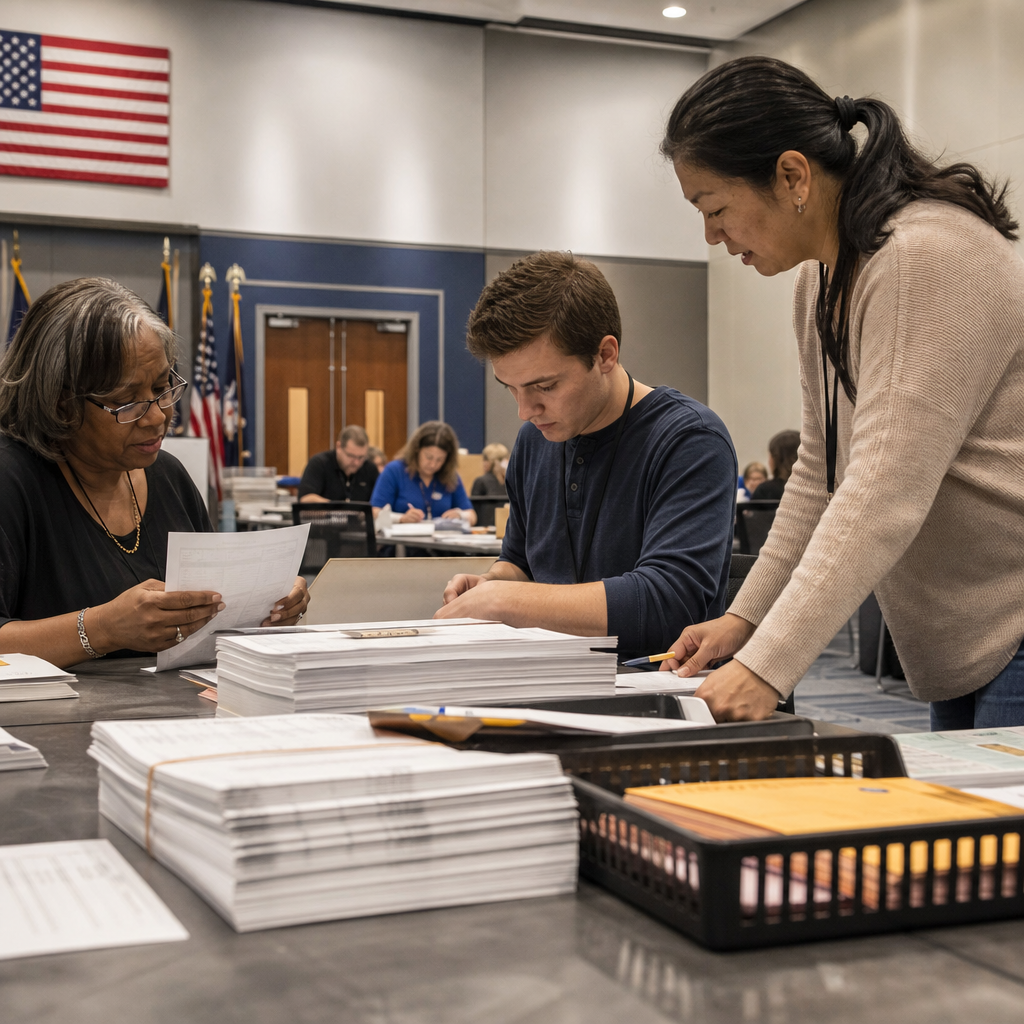
State election administration determines how Americans register, vote, count ballots, certify results, and resolve disputes. In plain terms, it is the network of state and local officials, laws, procedures, and technology that turns constitutional rights into an actual election. When students ask who runs American elections, the short answer is not Washington. Elections are decentralized. States set the main rules, counties and municipalities carry out most of the work, and federal law establishes important guardrails on voting rights, accessibility, campaign finance disclosure, and election security. Understanding that layered system is essential in AP Government and Politics because it shows federalism in action, reveals how institutions shape participation, and explains why election rules can vary so much from one state to another.
In my experience working through state election manuals, county canvass reports, and postelection audits, the biggest misconception is that one national office controls Election Day. No single administrator does. Secretaries of state often oversee statewide election systems, but their authority differs by state. In some places, bipartisan state election boards share power. In others, county clerks, registrars, or boards of elections do most of the operational work. Terms also matter. Election administration refers to managing registration databases, staffing polling places, testing voting machines, processing absentee ballots, reporting unofficial results, canvassing returns, certifying winners, and preserving records. Election policy refers to the laws that govern those tasks, such as voter ID rules, registration deadlines, early voting periods, and recount standards.
This topic matters because administration can expand or restrict access without changing the Constitution itself. Registration rules affect turnout. Ballot design affects error rates. Poll worker training affects wait times. Audit procedures affect public confidence. Disputes over certification or absentee deadlines can shape national outcomes, especially in close presidential or Senate races. Major statutes such as the Voting Rights Act of 1965, the National Voter Registration Act of 1993, the Help America Vote Act of 2002, and the Uniformed and Overseas Citizens Absentee Voting Act all influence state practice. Supreme Court decisions also matter, including cases on redistricting, voting rights, and the role of state legislatures. For students using this page as a hub for the broader miscellaneous election administration unit, the core idea is simple: American elections are run through shared authority, and every layer of government affects how democracy works on the ground.
The decentralized structure of election administration
American elections are administered through federalism, meaning authority is divided between national and state governments. The Constitution gives states primary responsibility for the times, places, and manner of elections for Congress, subject to congressional alteration. States also administer presidential elections because they appoint electors under state law. That constitutional design produces fifty different statewide systems, plus variation across thousands of local jurisdictions. According to the U.S. Election Assistance Commission, local election offices number in the thousands, and they are the front line for voter registration, polling place management, ballot printing, and tabulation.
State law defines the administrative map. Some states centralize authority in the secretary of state, usually an elected official. Others rely on appointed chief election officers, state boards of elections, or election commissions. Wisconsin, for example, uses the Wisconsin Elections Commission, while Georgia assigns major responsibilities to the secretary of state and county boards. New York has a state board and county boards. These structural choices matter because they affect accountability, professionalism, and conflict management. An elected secretary of state may have a high public profile and clear responsibility, but can face accusations of partisanship if also active in party politics. A bipartisan board can diffuse power, yet deadlock is possible when members split along partisan lines.
Local governments conduct the visible work. County clerks, registrars of voters, probate judges, township officials, or municipal clerks may recruit poll workers, secure voting equipment, process mail ballots, and conduct canvasses. In large urban counties, election administration resembles a major logistics operation with warehouse space, chain-of-custody protocols, multilingual materials, and real-time troubleshooting teams. In small rural counties, the same office may operate with a handful of permanent staff and intense dependence on temporary workers. Despite those differences, the legal requirement is the same: eligible voters must be able to cast ballots and have them counted accurately under uniform state standards.
What state officials actually do before, during, and after an election
Election administration is a year-round process, not a single day event. Before an election, officials maintain statewide voter registration lists, verify eligibility, assign voters to precincts, approve ballot layouts, test voting systems, publish notices, mail absentee ballots, and train poll workers. List maintenance is heavily regulated. The National Voter Registration Act permits states to remove ineligible voters, such as people who moved or died, but it also restricts aggressive purges and requires notice procedures. Good administration balances accuracy with protection against wrongful removal.
During voting, local officials check in voters, issue ballots, assist voters with disabilities, manage provisional ballots, respond to equipment problems, and enforce rules against electioneering near polling places. The Help America Vote Act required at least one accessible voting unit in each polling place for federal elections and created provisional voting for people whose eligibility is uncertain at check-in. Those reforms addressed failures highlighted by the 2000 presidential election, especially ballot design confusion and unequal equipment quality across counties. Since then, many states have replaced punch-card systems with optical scan ballots or ballot-marking devices paired with paper records.
After polls close, the work intensifies. Election night results are unofficial. Local jurisdictions tabulate ballots, review provisional and cured absentee ballots where state law permits, reconcile voter check-ins against ballots cast, and transmit returns for canvassing. A canvass is the formal verification process that confirms totals and resolves discrepancies. Certification follows canvassing and makes results official. Some states then conduct risk-limiting audits or other postelection audits. A risk-limiting audit uses statistics to test whether the reported winner is correct by manually checking a random sample of paper ballots. Colorado is a leading example; it implemented statewide risk-limiting audits and became a national model for evidence-based verification.
| Stage | Main state or local tasks | Why it matters |
|---|---|---|
| Pre-election | Maintain voter rolls, design ballots, test machines, train staff | Prevents confusion, delays, and registration errors |
| Voting period | Operate polling sites, process mail ballots, assist voters, issue provisional ballots | Protects access, accessibility, and orderly participation |
| Canvass and certification | Verify totals, resolve discrepancies, certify winners | Turns unofficial returns into legal results |
| Postelection review | Audit ballots, preserve records, evaluate performance | Builds confidence and improves future elections |
Key institutions: secretaries of state, boards, county clerks, and poll workers
The secretary of state is often the most visible election official, but the office is not identical across states. In many states, the secretary serves as chief election officer, issues guidance, certifies candidates, oversees the statewide voter registration database, and coordinates with counties. In others, authority is divided. For AP Government and Politics, the important institutional point is that administrative power is fragmented by design. Fragmentation can check abuse, but it can also create inconsistency if local practices differ too much.
State election boards or commissions often write regulations, adjudicate disputes, approve forms, or supervise campaign finance reporting. Bipartisan composition is common, intended to increase trust. Yet bipartisan design does not automatically eliminate conflict. If rules are unclear, a board may deadlock over absentee ballot curing, drop box placement, or recount procedures. Courts then become involved. That judicial role is a recurring feature of modern elections, especially when deadlines are tight and the margin is narrow.
County clerks and local election directors are the operational core of the system. They contract for ballot printing, secure storage, logic and accuracy testing, polling place leases, and result reporting systems. They also manage compliance with the Americans with Disabilities Act, language assistance under Section 203 of the Voting Rights Act, and military and overseas ballot transmission under UOCAVA. In practice, strong local administration depends on detailed process control: documented chain of custody, bipartisan teams for handling ballots, sealed containers, public testing, and transparent canvass meetings. Poll workers are equally important. Most are temporary workers, often retirees, teachers, students, or public employees. Poor staffing causes long lines more quickly than most legal disputes do.
How laws and courts shape election administration
State election administration follows both state statutes and federal constraints. The Voting Rights Act prohibits racial discrimination in voting and still shapes redistricting, language access, and litigation over practices that dilute minority voting strength. The National Voter Registration Act standardizes registration opportunities at motor vehicle agencies and certain public offices. HAVA created the Election Assistance Commission, funded equipment upgrades, and established baseline requirements for voting systems and provisional ballots. These laws do not nationalize elections, but they set minimum standards states must meet.
Courts interpret those standards and often decide late-breaking disputes. Bush v. Gore in 2000 highlighted equal protection concerns in recount procedures. Shelby County v. Holder in 2013 weakened the preclearance formula that previously required certain jurisdictions with a history of discrimination to obtain federal approval before changing election rules. Brnovich v. Democratic National Committee in 2021 addressed how Section 2 of the Voting Rights Act applies to voting regulations. Students should not memorize every holding, but they should understand the pattern: state administrators act within a legal framework that is constantly interpreted by judges.
State constitutions also matter. Some expressly protect free and equal elections, voting secrecy, or absentee voting rights. State courts have used those clauses to review voter ID laws, ballot access restrictions, and mail ballot deadlines. This is one reason election administration is a rich AP Government topic. It combines federalism, separation of powers, civil rights, and judicial review in one policy area.
Major controversies: access, security, trust, and capacity
The central debates in election administration usually involve four goals that can conflict: access, security, trust, and administrative capacity. Expanding early voting or vote-by-mail can increase convenience and reduce polling place congestion, but it requires reliable address data, signature verification procedures, curing systems, and secure ballot handling. Strict voter ID requirements may reassure some voters about security, yet they can burden eligible citizens who lack qualifying documents. Same-day registration can increase participation, especially among younger and recently moved voters, but it demands strong database connectivity and trained staff.
Technology creates tradeoffs as well. Electronic poll books speed check-in but depend on network resilience and backup procedures. Optical scan ballots with voter-verifiable paper records are widely regarded by security specialists as preferable to paperless systems because they support recounts and audits. The Cybersecurity and Infrastructure Security Agency, along with state election offices, now emphasizes layered defenses: paper ballots, physical security, access controls, postelection audits, and incident response planning. After 2016, concerns about foreign interference pushed election offices to improve cyber hygiene, vendor management, and public communication.
Misinformation is now an administrative challenge, not just a campaign problem. False claims about voting dates, machine functionality, or certification rules can overwhelm local offices and erode trust. I have seen well-run counties spend as much time correcting viral rumors as processing ballots. Transparency helps. Publishing clear procedures, livestreaming canvass meetings, releasing audit reports, and explaining that election night totals are incomplete all reduce confusion. Still, trust is fragile when political actors treat routine delays as evidence of fraud. In reality, close elections often take time because administrators are following the law on military ballots, provisional review, and mail ballot curing.
Why this topic matters for AP Government and Politics
State election administration is the hub for understanding how democratic participation is translated into official power. It connects to federalism because states control most procedures. It connects to civil rights because rules can expand or limit effective access. It connects to political behavior because turnout responds to registration systems, early voting options, and ballot design. It connects to institutions because legislatures write election laws, executives administer them, and courts review disputes. It even connects to public policy capacity, since budgets, staffing, procurement, and training determine whether legal rights are meaningful in practice.
For students, the most important takeaway is that elections are not run by one national referee. They are administered through a layered system of state law and local implementation. That structure can be resilient because no single failure controls the entire country. It can also produce uneven experiences, from long lines in one county to efficient processing in another. To master this subtopic, follow the chain of authority in any example: who made the rule, who implemented it, who reviewed disputes, and what effect it had on participation and legitimacy. If you are building out your AP Government and Politics study plan, use this page as the starting point for deeper articles on voting rights, redistricting, campaign finance, political participation, and election security. Understanding who runs American elections makes every one of those topics clearer.
Frequently Asked Questions
Who actually runs American elections?
American elections are run through a decentralized system, which means there is no single national office in Washington that directly manages voting in every community. Instead, states play the leading role. State legislatures write many of the core election rules, such as voter registration deadlines, mail voting procedures, recount standards, and certification processes. State chief election officials, often the secretary of state or a state board of elections, issue guidance, oversee compliance with state law, maintain statewide voter registration systems, and coordinate election administration across the state.
At the local level, counties, cities, towns, and municipalities usually do the hands-on work of administering elections. These local officials recruit and train poll workers, print ballots, test voting equipment, open polling places, process absentee and mail ballots, tabulate votes, and report results. In some states, county election boards handle most responsibilities, while in others local clerks or municipal officials are central. This division of authority is why election administration can look somewhat different from one state to another, and even from one county to the next.
Federal institutions do matter, but they do not directly run ordinary elections. Congress sets certain nationwide legal requirements, especially through laws protecting voting rights, accessibility, and election security. Federal agencies can provide guidance, funding, research, and support, but the day-to-day administration of elections remains primarily a state and local responsibility. So when people ask who runs American elections, the most accurate answer is that states design the framework and local officials carry it out.
What does state election administration include?
State election administration covers the full chain of activities that turns the right to vote into an actual election. It begins long before Election Day with rulemaking, voter registration systems, ballot design, precinct planning, equipment certification, poll worker recruitment, and public education. State law determines key processes such as how voters register, whether same-day registration is allowed, what forms of identification are accepted, and how early voting or absentee voting works. These rules shape the practical voting experience for millions of people.
It also includes the administration of voting itself. Election officials must prepare polling places, ensure accessible voting options for people with disabilities, secure voting machines and paper records, maintain voter rolls, issue ballots, verify absentee ballot applications, and create procedures for counting and auditing votes. Once voting ends, administration continues through tabulation, canvassing, certification, recounts where required, and the resolution of disputes or challenges. In close contests, these post-election procedures can be just as important as the voting period itself.
Just as importantly, state election administration includes the legal and institutional systems that support public trust. Officials must follow transparency requirements, preserve records, test equipment, publish results, and comply with state and federal laws. In many states, bipartisan observers, election boards, and court review help create checks on the process. In plain terms, election administration is not just about collecting ballots. It is the entire structure of laws, officials, procedures, and technology that allows elections to happen in an orderly, lawful, and verifiable way.
Why are elections so decentralized in the United States?
The United States uses a decentralized election system because the Constitution gives states substantial authority over the “times, places, and manner” of holding elections, especially for state offices and, with some federal oversight, for congressional elections as well. Historically, American government was built around federalism, the idea that power is divided between the national government and the states. Election administration developed within that framework, so states retained broad control over the rules and logistics of voting.
That state-centered structure filters down to local government. Counties and municipalities often became responsible for practical election tasks because they were already closest to residents and best positioned to manage polling locations, local voter records, and on-the-ground staffing. As a result, election administration evolved as a layered system rather than a centralized national one. This is why voting methods, ballot formats, early voting periods, and administrative procedures can vary significantly across the country.
Decentralization has both strengths and challenges. On the one hand, it allows states and localities to tailor election procedures to local conditions, populations, and administrative capacities. On the other hand, it can produce inconsistency, confusion, and uneven voter experiences. It also means that reform is often slow and fragmented because changes usually happen state by state, not through one national directive. Still, the decentralized model remains a defining feature of how American elections are run, and understanding it is essential to understanding who governs the voting process.
What role does the federal government play if it does not run elections directly?
The federal government plays an important but limited role. It generally does not administer polling places, print ballots, or count votes in local communities. Those tasks are handled by state and local election officials. However, federal law sets important guardrails that states must follow. Congress has passed laws prohibiting racial discrimination in voting, requiring language assistance in certain jurisdictions, protecting voting access for military and overseas voters, and establishing accessibility requirements for voters with disabilities. These federal standards shape how states administer elections even though they do not replace state control.
Federal agencies also contribute through guidance, coordination, and funding. For example, federal support may help states improve election technology, cybersecurity, and physical security. The Election Assistance Commission develops voluntary guidelines for voting systems, certifies testing laboratories, and provides resources to election administrators. The Department of Justice enforces federal voting rights laws, and agencies involved in homeland security may share threat information and best practices related to election infrastructure protection.
In short, the federal government acts more as a regulator, protector of rights, and support partner than as a direct manager of elections. It can establish minimum standards, enforce civil rights protections, and provide money or expertise, but it usually cannot replace state and local officials as the administrators of elections. That distinction is important because it explains why election rules differ across states while still operating within a broader national legal framework.
How are election results counted, certified, and disputed?
After polls close, local election officials begin the process of collecting and tabulating ballots according to state law. This includes in-person ballots, early votes, and absentee or mail ballots that meet the legal requirements for acceptance. Many states have detailed procedures for verifying signatures, processing envelopes, handling provisional ballots, reconciling voter check-in records, and ensuring that vote totals match the number of ballots cast. Initial results released on election night are often unofficial because many ballots still need to be reviewed, counted, or validated.
Next comes canvassing and certification. Canvassing is the formal review of election returns to confirm accuracy, resolve discrepancies, and compile the final totals. Local officials usually certify results first, and then state officials complete a statewide certification for federal and statewide contests. Depending on state law, this process may involve county boards, secretaries of state, state canvassing boards, or other designated authorities. Audits and recounts may also occur, especially in close races or where state law requires automatic recounts below a certain margin. These procedures are meant to verify the integrity of the outcome before it becomes official.
Disputes can arise at multiple stages, including over ballot access, voter eligibility, ballot rejection, recount procedures, certification issues, or allegations of misconduct. These disputes are usually handled through administrative review, state election boards, or the courts. Judges may interpret election statutes, determine whether procedures were followed, or order remedies when legal violations are found. Although public attention often focuses on election night, the legal completion of an election depends on these post-election processes. Counting, certification, and dispute resolution are not afterthoughts; they are central parts of election administration that ensure results are lawful, reviewable, and legitimate.