
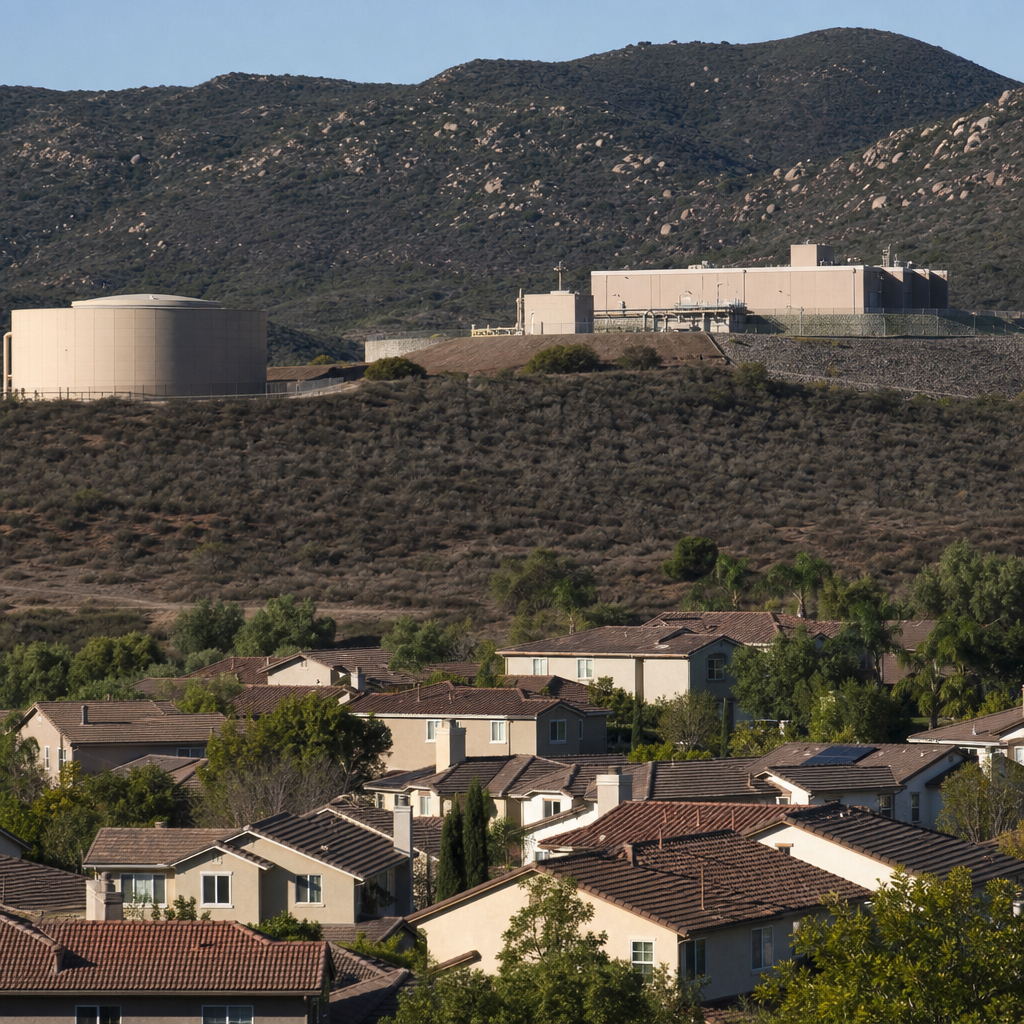
Special purpose districts are one of the least visible yet most influential parts of American local government. They are public entities created to perform a narrow function, such as running schools, supplying water, managing transit, fighting fires, or financing hospitals. Unlike general-purpose governments, which handle many responsibilities across a defined territory, special purpose districts focus on a single service or closely related set of services. For students studying AP Government and Politics, this hidden layer matters because it shows how public power is often fragmented, specialized, and harder to monitor than cities, counties, and states.
In practice, these districts shape daily life more than many people realize. When I have traced local budgets or followed disputes over tax rates, I have often found that the most consequential decisions were being made not by a city council but by a school board, water authority, transit district, or community college district. The U.S. Census Bureau tracks thousands of these governments nationwide, and in many states they outnumber counties and municipalities by a wide margin. That sheer volume makes them essential to understanding how services are delivered, who pays for them, and where democratic accountability can become diffuse.
Key terms help clarify the topic. A special purpose district is a legally created unit of local government with administrative and fiscal independence, usually authorized by state law. Some can levy taxes, issue bonds, charge fees, sue and be sued, and hold property. Others depend mainly on intergovernmental transfers or user charges. Independent districts operate with governing boards and separate budgets, while dependent districts remain under the control of a city, county, or another government. The category includes school districts, water and sewer districts, mosquito abatement districts, flood control districts, transit authorities, library districts, port authorities, and many more. Learning how these entities work gives students a realistic map of American federalism from the ground up.
This article serves as a hub for the miscellaneous side of AP Government and Politics by connecting institutional design, public finance, representation, and policy implementation in one subject. Special purpose districts reveal why local governance is not just a neat ladder of federal, state, county, and municipal authority. Instead, it is a web. Understanding that web helps explain why voters may face long ballots, why policy varies dramatically across neighboring communities, and why interest groups often focus on low-visibility elections. It also helps students interpret broader themes, including pluralism, bureaucratic discretion, fiscal federalism, and the tension between efficiency and accountability.
What Special Purpose Districts Are and Why States Create Them
States create special purpose districts because some public services demand technical expertise, dedicated funding, and boundaries that do not fit neatly inside a city or county. Water systems follow watersheds and pipelines, not city limits. Transit networks connect multiple jurisdictions. Flood control requires regional planning. School systems need stable revenue and administrative continuity. By creating a district with a focused mission, state legislatures can assign a clear task, build a revenue structure around that task, and reduce direct political conflict inside general-purpose governments.
These districts vary widely, but most share several features. First, they are authorized through state constitutions, statutes, or local enabling acts. Second, they have a defined service area that may overlap with cities and counties. Third, they are governed by a board that may be elected, appointed, or mixed. Fourth, they rely on a distinct financing model, including property taxes, sales taxes, assessments, fees, grants, and municipal bond proceeds. Finally, they often operate with more administrative specialization than a city department. A water district, for example, can hire engineers, comply with Environmental Protection Agency standards, and plan capital improvements without competing internally against parks, police, and sanitation for every dollar.
School districts are the most familiar example for most students. They run public schools, hire superintendents, negotiate contracts, set attendance boundaries, and administer local education policy within state and federal rules. But school districts are only one piece of the category. Independent transit authorities such as the Washington Metropolitan Area Transit Authority and regional port authorities demonstrate how states and localities use special governance structures when a service crosses municipal boundaries or requires large capital investment.
How Governance, Funding, and Authority Actually Work
The core question is simple: who controls a district, and how does it pay for its work? Governance arrangements determine both performance and accountability. Elected boards can increase democratic legitimacy, especially for school districts and community college districts. Appointed boards may provide technical expertise and coordination, which is common for utilities, redevelopment bodies, and some transportation authorities. In reality, many districts combine the two through ex officio members, county appointments, or staggered elections that insulate the board from sudden political shifts.
Funding is equally important because financing shapes priorities. Property taxes remain a major source for many districts, particularly schools, libraries, and fire protection. User fees dominate in utilities such as water, sewer, and solid waste systems, where charges can be tied directly to consumption. Special assessments are common when a project increases property value, as with drainage improvements or street lighting. Large infrastructure districts issue bonds, backed either by taxes or expected revenue streams. Bond financing allows districts to spread the cost of capital projects over time, but it also commits future taxpayers and ratepayers to debt service.
| District type | Typical funding source | Common governance model | Main policy challenge |
|---|---|---|---|
| School district | Property taxes, state aid, federal aid | Elected board | Funding equity across communities |
| Water district | User fees, bonds, connection charges | Appointed or elected board | Infrastructure replacement and water quality compliance |
| Transit authority | Sales taxes, fares, grants, bonds | Regional appointed board | Balancing coverage, ridership, and capital costs |
| Fire protection district | Property taxes, fees, EMS billing | Elected board | Service coverage in fast-growing areas |
| Library district | Property taxes, grants | Elected or appointed board | Maintaining access while updating services |
Authority differs by state, and that variation matters for AP Government analysis. Some districts can tax without additional approval; others need voter authorization. Some have eminent domain powers or land-use authority tied to their mission. Others are purely administrative. State oversight may come through audit requirements, open meeting laws, debt limits, procurement rules, ethics statutes, and administrative review. In stronger systems, these safeguards make districts transparent. In weaker systems, overlapping authority and low public attention can allow waste, patronage, or policy drift.
Why Special Purpose Districts Expand and Persist
Special purpose districts grow for practical and political reasons. Practically, they let governments match a service to a functional region. A flood control district can encompass an entire drainage basin. A transit district can connect suburbs with a central city. A mosquito abatement district can target a public health problem that cuts across local boundaries. Politically, districts allow elected officials to isolate controversial costs, create dedicated revenue streams, and sometimes avoid direct accountability inside city hall or the county courthouse.
That political logic is powerful. When a city wants improved transit but fears budget conflict with police, parks, and housing, a separate transit authority can package the issue for voters through a dedicated sales tax. When suburbs and cities distrust each other, a special district may become the compromise vehicle for cooperation. In my experience reviewing local ballot measures, dedicated districts often succeed because supporters can promise voters that money will be restricted to one service rather than absorbed into a general fund. That fiscal earmarking creates trust, even if it also fragments budgeting.
Persistence comes from institutional inertia and stakeholder support. Once formed, districts develop professional staffs, long-term contracts, bond obligations, and constituencies that depend on them. Teachers support school district stability. Developers may favor utility districts that extend infrastructure to new subdivisions. Commuters and employers rely on transit authorities. Bondholders expect predictable governance. Because each district serves a concrete function, abolition is politically difficult even when consolidation might look efficient on paper. States therefore accumulate layers of local governance over decades rather than replacing old structures with cleaner designs.
Benefits: Expertise, Flexibility, and Service Focus
The strongest argument for special purpose districts is performance. Specialized agencies can be better at delivering technically complex services than a broad city or county government. Water treatment requires engineering, chemistry, regulatory compliance, and long-term asset management. Airport and port authorities need logistics expertise and capital planning. Fire districts must align station placement, equipment standards, and response times. A focused organization can build staff capacity, define measurable goals, and direct revenues toward one mission without competing with unrelated priorities.
Flexibility is another advantage. District boundaries can be drawn to reflect service demand rather than municipal borders. That makes regional solutions possible in fragmented metropolitan areas. For example, a transit authority serving several counties can coordinate routes, fare systems, and capital projects more effectively than a patchwork of separate city departments. Similarly, watershed-based districts can address flooding and water supply in a way that recognizes ecological reality. The broader lesson for AP Government is that institutions are often designed around functional efficiency, not just electoral simplicity.
Dedicated funding can also improve planning. A library district with a stable property tax base can pursue multiyear staffing and capital strategies. A community college district can align facilities expansion with enrollment growth. A utility district with bond capacity can replace aging mains before failure becomes catastrophic. These are not abstract gains. The American Society of Civil Engineers has repeatedly documented infrastructure backlogs in water, wastewater, transit, and stormwater systems. Specialized entities can respond more consistently because they exist to maintain those systems every day, not merely when a mayor makes them a priority.
Criticisms: Accountability, Inequality, and Democratic Blind Spots
The main criticism is democratic opacity. Many voters do not know which district provides which service, who sits on the governing board, or when elections occur. Turnout in special district elections is often far lower than in presidential or gubernatorial races, giving organized interests disproportionate influence. Teachers unions, contractors, developers, and public employee groups may dominate low-salience contests. Even well-informed residents can struggle to track multiple overlapping districts with different boundaries, budgets, and meeting schedules.
Fiscal fragmentation can also worsen inequality. Wealthier areas often support districts with strong tax bases, better facilities, and more reliable services, especially in education. State equalization formulas can soften these gaps, but they rarely erase them. The result is a local governance structure in which public goods are partly determined by property wealth and political organization. This is one reason school finance litigation has been a recurring feature of state politics. Courts, legislatures, and governors have repeatedly confronted the tension between local control and equitable access.
There is also the risk of duplication and mission creep. A region might have separate districts for water, sanitation, drainage, transit, housing finance, and redevelopment, each with its own executives, legal counsel, consultants, and debt obligations. That can produce professional competence, but it can also generate administrative overhead and policy silos. A transportation project may be rational for a transit authority yet conflict with housing or environmental goals managed elsewhere. Without strong coordination, specialization can undermine coherent regional planning.
How Special Purpose Districts Connect to Core AP Government Themes
Special purpose districts are a useful bridge to many major course concepts. They illustrate federalism because states create them, define their powers, and often constrain their taxing authority. They show pluralism because organized interests frequently shape district elections and policy decisions. They demonstrate bureaucracy in action through rule implementation, professional administration, and regulatory compliance. They also reveal how public finance works at the local level through taxes, fees, debt, grants, and intergovernmental aid.
They are especially relevant to questions about representation and participation. Who votes in low-turnout board elections? Whose voices matter most at public hearings? How do ballot design, election timing, and district boundaries affect outcomes? These are classic political science questions, and special districts provide concrete case studies. Students comparing institutions should note that local power often depends less on visibility than on control over budgets, contracts, and infrastructure.
For a hub article, the practical takeaway is straightforward. If you want to understand miscellaneous local government topics within AP Government and Politics, start here. From here, readers can branch into school boards, public authorities, local budgeting, municipal bonds, federal grants, intergovernmental relations, ballot measures, and public administration. Special purpose districts sit at the center of those subjects because they connect constitutional structure to everyday governance. Follow the district in your own community, read its budget, inspect its board minutes, and you will see how American government actually operates beyond the headlines.
Frequently Asked Questions
What is a special purpose district, and how is it different from a city or county government?
A special purpose district is a unit of local government created to carry out one specific public function, or a small group of closely related functions. Examples include school districts, water districts, fire protection districts, transit authorities, mosquito control districts, and hospital districts. This makes them different from general-purpose governments such as cities, counties, and towns, which are responsible for a wide range of services at once, including policing, roads, zoning, sanitation, and public administration. In other words, a city or county governs broadly across many issues, while a special district is built to focus deeply on one service area.
That narrow mission is what makes special purpose districts so important. They are often created because a community needs a specialized service that crosses city boundaries, requires technical expertise, or needs dedicated funding and management. A water district, for example, may serve several municipalities at once because rivers, reservoirs, and pipelines do not neatly follow city lines. A transit district may coordinate buses, trains, and regional planning in ways that a single city government cannot easily do on its own. For AP Government students, the key distinction is that special districts are still public governments, but they are designed to solve highly specific public problems rather than govern an entire community in a general way.
Why are special purpose districts often called the “hidden layer” of local government?
Special purpose districts are often described as the “hidden layer” of local government because many people are affected by them every day without realizing it. Residents may pay district taxes or fees, vote in district elections, and depend on district services such as drinking water, schools, hospitals, or fire protection, yet still know very little about who runs those institutions or how decisions are made. Unlike mayors, city councils, or county commissioners, district boards often receive less media coverage and attract less public attention, even though they may control large budgets and make decisions with major long-term consequences.
Part of this invisibility comes from their specialized structure. Many districts operate quietly in the background, focused on technical tasks such as maintaining sewer systems, issuing bonds for infrastructure, managing flood control, or operating public utilities. Because their work can seem administrative or highly specialized, the public may not follow it as closely as broader political debates at the city, state, or national level. Yet these districts can shape everyday life in powerful ways by determining service quality, access, cost, and infrastructure investment. That is why they are “hidden” but still influential: they often work outside the spotlight while exercising real governmental authority over essential services.
How are special purpose districts funded, and why does their financing matter?
Special purpose districts are funded in several ways, depending on state law and the type of service they provide. Some collect property taxes directly from residents within the district. Others rely on user fees, such as water bills, transit fares, utility charges, or hospital service payments. Some receive state or federal grants, while others finance large projects by issuing bonds that are repaid over time. In many cases, districts use a combination of these methods so they can maintain day-to-day operations while also paying for expensive infrastructure such as schools, treatment plants, rail systems, fire stations, or medical facilities.
Their financing matters because it affects both democratic accountability and public policy outcomes. A district with taxing power can raise significant revenue, but taxpayers may not always realize which government is imposing the tax or how the money is being spent. A district funded mainly by user fees may be more insulated from electoral pressure, but it may also create questions about affordability and equal access to services. Bond financing can help communities build major infrastructure quickly, yet it also creates long-term financial obligations that future taxpayers or ratepayers must carry. For students of government, this is a major lesson: budgets are not just accounting tools. They are a reflection of political power, institutional design, and public priorities, and special districts are often central to those choices at the local level.
Who governs special purpose districts, and are they democratically accountable?
Special purpose districts are usually governed by a board, but the method of selecting that board varies widely. In some districts, board members are elected directly by the public. In others, they are appointed by governors, mayors, county officials, or city councils. Some districts have mixed systems, and some are tied closely to other local governments even while remaining legally separate. This variation is important because it affects how responsive a district is to public opinion and how visible its leadership is to voters. A directly elected school board, for instance, may face frequent public scrutiny, while an appointed utility authority may operate with much less public attention.
As for accountability, the answer is yes in theory, but often less clearly in practice. Special districts are public bodies, so they are generally subject to laws on budgeting, public meetings, records access, and audits. However, because they are specialized and often low-profile, citizens may not monitor them closely. Elections for district offices may have low turnout, and appointments may happen with little public awareness. That can create a gap between formal accountability and actual public oversight. Still, supporters argue that these districts can produce more expert and focused management than general-purpose governments. Critics respond that expertise should not come at the expense of transparency. The central debate is whether specialization improves service delivery enough to justify the complexity and lower visibility that often come with it.
Why do special purpose districts matter for students studying AP Government and local politics?
Special purpose districts matter in AP Government because they reveal how American government is more fragmented and layered than it first appears. Many students begin by learning about the three branches of the federal government or the basic roles of states, counties, and cities. But special districts show that real governing power is often spread across many smaller institutions with overlapping boundaries and specialized authority. Understanding them helps students see that public policy is not made only in Congress, state legislatures, or city halls. It is also made in school board meetings, transit authority votes, water district budgets, and hospital district financing decisions.
They also illustrate bigger themes in American politics, including federalism, local control, public finance, representation, and bureaucratic expertise. Special districts can improve efficiency by matching a government structure to a specific service need, but they can also make government harder for ordinary citizens to understand. That tension between effective administration and democratic transparency is a core idea in political science. For local politics, these districts matter because they often decide the quality and availability of the services people depend on most. For AP Government students, learning about special purpose districts is a reminder that power in the United States is not only divided between national and state governments. It is also dispersed across a dense network of local institutions that quietly shape everyday life.