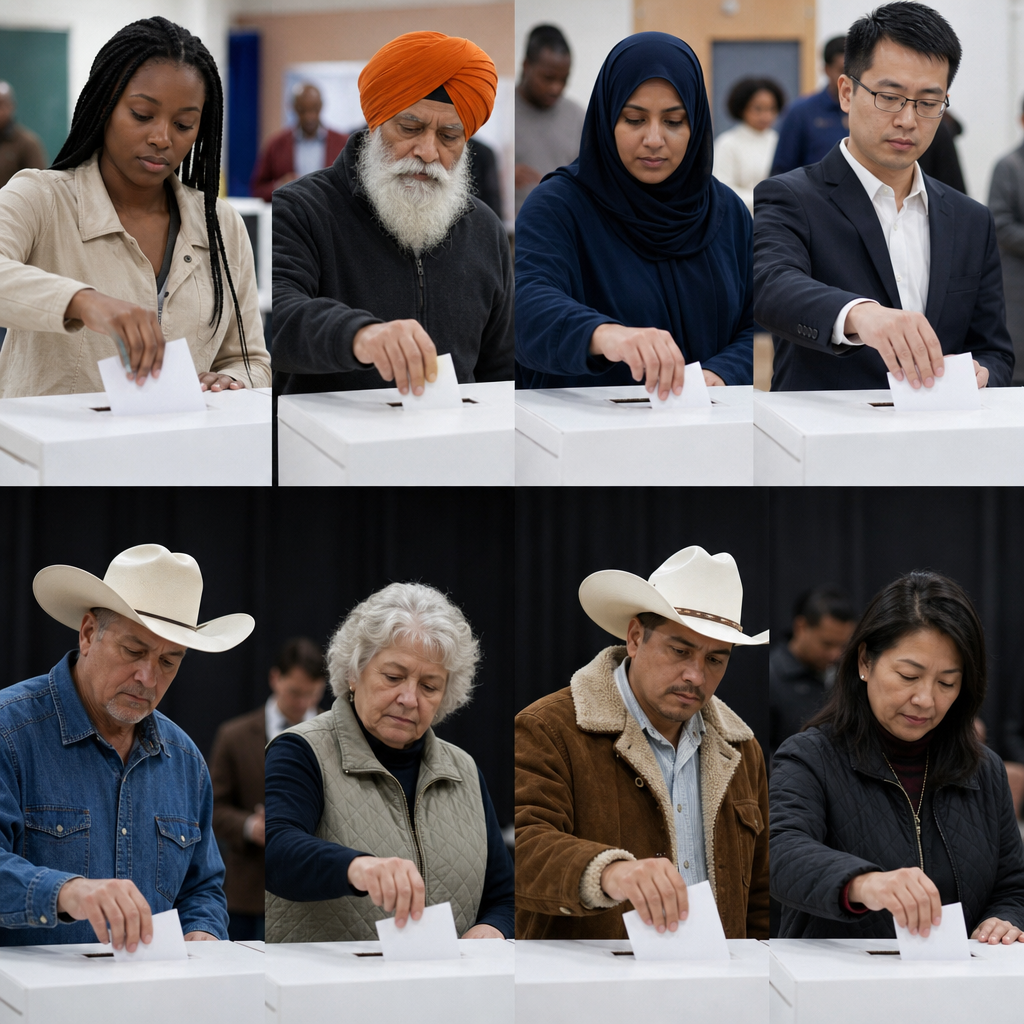
Social identity and voting behavior shape American elections as powerfully as party labels, campaign spending, and candidate charisma. In AP Government and Politics, social identity refers to the ways people understand themselves as members of groups, including race, religion, social class, and region. Voting behavior is the pattern of choices citizens make at the ballot box, from presidential races to local referenda. These identities do not act in isolation. They overlap, reinforce one another, and sometimes pull voters in competing directions. A Black evangelical voter in Georgia, a white union household in Michigan, a Latino Catholic small-business owner in Texas, and an Asian American professional in California may all approach politics through different combinations of lived experience, economic interest, community norms, and historical memory.
This topic matters because elections are not simply contests between policy platforms. They are also contests over belonging, status, representation, and trust. When students study why groups vote the way they do, they can better understand coalition building, party realignment, turnout gaps, and issue framing. In classrooms, I often see students assume that income alone predicts voting or that race always determines partisan loyalty. Real voting behavior is more textured. Group identities shape how voters interpret government action, media narratives, social change, and even basic facts about national priorities. That makes social identity one of the most useful lenses for analyzing public opinion and electoral outcomes.
As a hub for this subtopic, this article explains the major patterns AP students need to know, while connecting them to broader concepts such as political socialization, party systems, demographics, and federalism. It also answers practical questions: Why do some religious voters prioritize moral issues over economic concerns? Why can two voters with similar incomes support different parties? Why does region still matter in a nationally connected media environment? The short answer is that social identity organizes political life. It influences whom people trust, which problems feel urgent, and what kind of leadership seems legitimate. Understanding that process is essential for analyzing both historical elections and current political shifts.
Race and Ethnicity in American Voting
Race has been one of the strongest predictors of voting behavior in the United States because political institutions, public policy, and party strategies have long been shaped by racial conflict and racial inclusion. The legacy of slavery, Reconstruction, Jim Crow, the civil rights movement, immigration policy, and voting rights enforcement all created durable links between racial identity and party alignment. Since the mid-twentieth century, African American voters have overwhelmingly supported Democratic presidential candidates, in large part because the national Democratic Party embraced civil rights legislation while many white Southern conservatives moved toward the Republican Party. That shift was not instantaneous, but it produced one of the clearest long-term voting patterns in modern politics.
Latino voting behavior is more varied than many summaries suggest. Mexican American voters in the Southwest, Cuban American voters in Florida, Puerto Rican voters in the Northeast, and newer immigrant communities in states such as Nevada and Georgia do not vote identically. Religion, generation, immigration experience, language, and local economy all matter. Even so, immigration policy, health care access, education, and labor concerns frequently shape Latino political preferences. Asian American voters are also diverse, with major differences across Indian, Chinese, Filipino, Korean, Vietnamese, and Japanese communities. In recent elections, Asian American voters have leaned Democratic overall, but local context and foreign policy concerns can alter the pattern. Race matters, but subgroup diversity matters too.
Religion and the Moral Framework of Politics
Religion influences voting behavior by shaping values, community networks, and issue priorities. For many voters, religious identity is not only theological; it is social and political. Congregations provide civic information, reinforce norms about leadership and morality, and create strong interpersonal pressure to participate. White evangelical Protestants have been one of the Republican Party’s most reliable constituencies for decades, often prioritizing abortion, religious liberty, judicial appointments, and traditional family structures. Black Protestants, despite similarly high levels of religious observance, have generally remained aligned with Democrats because of the historic centrality of the Black church in civil rights organizing and community advocacy.
Catholics have long been a swing group because they are internally divided by ethnicity, class, and degree of observance. A frequent AP Government mistake is to treat Catholics as a single bloc. In practice, white Catholics in the Midwest may vote differently from Latino Catholics in Arizona or urban Catholics in the Northeast. Jewish voters have generally supported Democrats at high rates, influenced by views on pluralism, church-state separation, and social welfare policy, although attitudes toward Israel and security issues can create variation. Religiously unaffiliated voters, sometimes called the “nones,” have become increasingly important and tend to support Democrats, especially on issues involving abortion rights, LGBTQ rights, and the role of religion in public life.
Class, Education, and Economic Self-Interest
Social class affects voting, but not in a simple rich-versus-poor pattern. Class can refer to income, wealth, occupation, educational attainment, and perceived status. Historically, lower-income and working-class voters often favored Democrats because of labor protections, Social Security, Medicare, unemployment insurance, and other government programs associated with the New Deal and Great Society. Business owners, investors, and higher-income professionals were often more Republican because of tax policy, regulation, and views about limited government. Yet over time, education and cultural identity complicated the old class model.
In recent elections, voters with college degrees have trended more Democratic in many suburbs, while some non-college white voters have shifted strongly Republican, especially in rural and postindustrial areas. This does not mean economics disappeared. It means economic frustration is often filtered through identity, place, and perceived respect. Factory closures, trade competition, wage stagnation, and declining union membership can push voters toward candidates who promise protection, restoration, or disruption. At the same time, affluent metropolitan voters may support Democrats because they combine moderate economic interests with liberal views on immigration, race, and climate policy. Class matters most when understood alongside education and cultural status.
Region and the Geography of Partisanship
Region remains central to voting behavior because political beliefs are embedded in local history, economy, and institutions. The South, Northeast, Midwest, and West each developed different political cultures. The “Solid South” was once Democratic after the Civil War, but the region moved steadily Republican in national elections after the civil rights era. Today, white Southern voters are among the most Republican groups in the country, while Southern metropolitan areas with large Black populations, younger professionals, and growing immigrant communities have become more competitive. Georgia’s recent statewide elections are a clear example of how demographic change and urban growth can reshape a region without erasing its older political traditions.
The Midwest is often treated as the nation’s electoral hinge because it contains a mix of industrial cities, union traditions, agricultural communities, and closely contested suburbs. States such as Michigan, Wisconsin, and Pennsylvania have demonstrated how small shifts among working-class white voters, Black voters in major cities, and suburban college-educated voters can decide presidential outcomes. The Northeast generally leans Democratic, especially in urbanized coastal states, while the Mountain West has mixed patterns shaped by libertarian traditions, public lands policy, and rapid population growth. Region still matters because people inherit political norms from schools, churches, media markets, and state institutions.
How Identities Overlap and Shape Electoral Coalitions
No voter enters the polling place with only one identity. The most accurate way to study voting behavior is to examine how race, religion, class, and region intersect. A wealthy Black Democrat, a low-income white evangelical Republican, and a middle-class secular Asian American independent may each prioritize different issues because their identities generate different experiences with institutions and social belonging. Campaigns understand this. They build coalitions by combining groups with overlapping interests, even when those groups do not agree on every issue. Democrats often assemble support from racial minorities, younger voters, urban residents, union households, and secular professionals. Republicans often unite white evangelicals, rural voters, many business interests, and culturally conservative non-college voters.
These coalitions are durable but never fixed. Shifts happen when parties change their issue emphasis or when voters reinterpret their identities in light of new events. The 2008 election showed the power of multiracial turnout and youth mobilization. The 2016 election highlighted the strength of populist appeals to white working-class voters in the Rust Belt. The 2020 election demonstrated that suburban realignment, Black voter mobilization in cities such as Atlanta, Milwaukee, and Detroit, and modest Republican gains among some Latino voters could all occur at once. Election analysis works best when students stop asking which single identity matters most and instead ask how multiple identities combine.
| Identity factor | Common voting influence | Example |
|---|---|---|
| Race | Shapes views on representation, discrimination, policing, and voting rights | African American voters strongly backing candidates who support civil rights enforcement |
| Religion | Defines moral priorities and civic networks | White evangelical turnout rising around abortion and Supreme Court nominations |
| Class | Connects politics to wages, taxes, benefits, and job security | Union households favoring labor-friendly candidates |
| Region | Reflects local culture, economy, and historical party traditions | Rural Southern counties voting differently from Northeastern suburbs |
Turnout, Mobilization, and Party Strategy
Voting behavior is not only about preference; it is also about participation. Two groups may lean toward the same party, but the group with higher turnout will exert more electoral influence. Turnout is affected by registration rules, voter ID laws, campaign contact, community organizations, and whether voters believe government responds to them. Black women, for example, have been one of the Democratic Party’s most consistent and politically active constituencies, often driving turnout and grassroots organizing in competitive states. Older voters generally participate at higher rates than younger voters, which means age often amplifies the political impact of religion, race, and class.
Parties tailor strategy to social identities through targeting, messaging, and candidate recruitment. Campaigns use voter files, census-based demographic data, and precinct-level results to identify persuadable and mobilizable groups. A candidate speaking in South Florida may emphasize inflation, Cuba policy, and small-business regulation. The same candidate in suburban Philadelphia may stress abortion rights, education, and democratic norms. Effective mobilization depends on matching message to identity without reducing voters to stereotypes. The strongest campaigns do not merely broadcast themes; they build trust through local messengers, language access, field offices, and repeated contact. Social identity shapes not only what voters believe but also how campaigns reach them.
Why This Topic Matters in AP Government and Politics
For AP Government and Politics, social identity and voting behavior connect directly to required ideas about political beliefs, political participation, linkage institutions, and public policy. Students should be able to explain why demographic groups align with parties, how those alignments changed over time, and what consequences they have for elections and governance. This topic also links to discussions of polling, redistricting, federalism, and the media. When a state legislature draws districts, when a campaign chooses where to advertise, or when a president frames an issue for a national audience, assumptions about social identity are always present.
The key takeaway is that race, religion, class, and region are not background details. They are organizing forces in American politics. They influence turnout, party coalitions, issue agendas, and the language candidates use to claim legitimacy. Students who understand these patterns can interpret election results more accurately, write stronger FRQs, and recognize why political conflict persists even when national conditions appear similar for everyone. Use this hub as a foundation, then explore related articles on political socialization, public opinion, party realignment, demographic change, and electoral strategy. The more clearly you can connect identity to institutions and behavior, the more effectively you will understand American politics in practice.
Frequently Asked Questions
What does social identity mean in AP Government, and why does it matter for voting behavior?
In AP Government and Politics, social identity refers to the group memberships people use to understand themselves and their place in society. These identities often include race, religion, social class, region, ethnicity, gender, age, and education. When it comes to voting behavior, social identity matters because people do not make political choices in a vacuum. They interpret issues, candidates, and party messages through the lens of lived experience, community values, and group interests. That means a voter may ask not only, “Which candidate do I like?” but also, “Which party seems to understand people like me?”
Social identity influences voting because groups often share common concerns shaped by history and circumstance. Religious voters may focus on moral questions or the role of government in public life. Working-class voters may prioritize wages, unions, inflation, and job security. Regional voters may care deeply about agriculture, energy policy, immigration, or disaster relief depending on where they live. Race can shape views on civil rights, policing, education, health care access, and representation. These concerns help explain why certain groups often develop recognizable voting patterns over time.
It is also important to understand that identity is not destiny. Social identity strongly shapes behavior, but it does not completely determine how any individual votes. People hold multiple identities at once, and those identities can pull them in different directions. A middle-class suburban churchgoer in Georgia, for example, may weigh religion, race, class, gender, and region differently than a union worker in Michigan or a Latino evangelical voter in Texas. In short, social identity matters because it helps explain why political coalitions form, why parties target certain groups, and why voting patterns can be both predictable at the group level and complex at the individual level.
How does race influence voting behavior in the United States?
Race has long been one of the most powerful influences on voting behavior in the United States because it is tied to the nation’s history, public policy, representation, and access to political power. Different racial and ethnic groups have often developed distinct political preferences based on how government actions affect their communities. Issues such as civil rights enforcement, criminal justice, immigration, education funding, health care access, housing discrimination, and voting rights can all shape how racial groups view parties and candidates. As a result, race is often a strong predictor of how groups vote, especially in national elections.
For example, Black voters have consistently supported Democratic presidential candidates by large margins for decades, in part because of the Democratic Party’s association with civil rights policies and government action on racial inequality. Latino voters are more diverse politically and cannot be understood as a single bloc, but immigration policy, economic opportunity, education, religion, and national origin can all influence their choices. Asian American voters have also become increasingly important in elections, and their preferences can vary based on immigration history, education levels, regional concentration, and policy priorities. White voters are also far from uniform, with major differences often emerging based on education, religion, class, and geography.
Race influences voting not only through policy preferences but also through political mobilization. Community organizations, churches, advocacy groups, and candidates themselves often work to increase turnout by connecting elections to shared group interests and experiences. At the same time, racial voting patterns can shift over time in response to party realignment, economic conditions, generational change, and candidate appeal. The key point is that race matters because it shapes both political identity and the issues voters see as most urgent, but it always interacts with other factors rather than acting alone.
What role does religion play in shaping political attitudes and voting choices?
Religion plays a major role in voting behavior because it can shape a person’s moral values, views on the role of government, sense of community, and opinions on major social issues. In American politics, religious identity is often connected to questions about abortion, marriage, education, religious liberty, poverty policy, immigration, and the place of faith in public life. Religious affiliation can also influence whether a voter leans conservative or liberal, feels politically engaged, and trusts certain parties or candidates more than others.
One of the clearest patterns in recent elections has been the strong Republican support among many white evangelical Christian voters, who often prioritize issues like abortion restrictions, conservative judicial appointments, and traditional social values. On the other hand, Black Protestant voters have often supported Democratic candidates, with their political preferences shaped not just by religion but also by race, civil rights traditions, and the historical role of the church in community organizing. Catholic voters are more mixed and often competitive for both parties, while Jewish voters have historically leaned Democratic on many social and policy issues. Voters with no religious affiliation, sometimes called the religiously unaffiliated or “nones,” have become an increasingly important group and often lean more Democratic, especially on social issues.
Religious influence is not just about denomination. The intensity of belief and level of religious participation also matter. People who attend worship services regularly are often more likely to vote and may be more politically active than those with weaker institutional ties. At the same time, religion overlaps with region, race, class, and education, which means it rarely operates as a single independent force. A rural evangelical voter in the South may have different political priorities than a Catholic union household in the Midwest or a secular professional in the Northeast. Religion matters because it gives many voters a framework for understanding what government should do, what values leaders should promote, and which issues deserve the most attention.
How do social class and economic status affect the way people vote?
Social class affects voting behavior because economic position shapes what voters want from government and how they judge political parties. Class is usually linked to income, occupation, wealth, education, and sometimes family background. People in different economic situations often experience government policy very differently. A low-income voter may focus on wages, affordable housing, health care costs, and public assistance. A middle-class voter may worry about taxes, school quality, home values, and inflation. A wealthy voter may pay closer attention to tax policy, regulation, investment conditions, and business issues. These different priorities can create different voting patterns.
Historically, class has been tied to debates over labor rights, welfare policy, taxation, and the size of government. Working-class voters have often been associated with support for candidates who promise job protection, stronger benefits, and more active government involvement in the economy. However, class voting in the United States is more complicated than a simple rich-versus-poor divide. Education now plays a major role alongside income. In many recent elections, college-educated voters and non-college-educated voters have shown different political tendencies, even when their incomes overlap. This has made class-based voting less straightforward and more connected to culture, identity, and geography.
Class also intersects with race, religion, and region. A white working-class voter in a deindustrialized town may respond strongly to messages about trade, manufacturing, and immigration. A Black middle-class suburban voter may prioritize public education, health care, and voting rights. A high-income evangelical voter may weigh tax cuts and social issues at the same time. Because of these overlaps, class influences voting behavior most clearly when it is understood as part of a larger identity profile. In practical terms, social class matters because it helps explain why some voters support redistributive policies, why others resist government expansion, and why economic frustration can fuel major political change.
Why is region still important in American voting behavior if national politics is so dominant?
Region remains important because where people live shapes their economies, cultures, histories, policy priorities, and political traditions. Even in an era of national media and highly polarized parties, regional differences still help explain why voters in the South, Northeast, Midwest, and West often respond differently to the same candidates and issues. Geography influences daily life in ways that matter politically. Agricultural areas may focus on farm subsidies, water rights, and trade. Energy-producing regions may care deeply about drilling, pipelines, and environmental regulation. Border states may view immigration differently from inland states. Coastal urban areas may prioritize transit, housing, and climate policy more than many rural communities do.
Regional political behavior is also shaped by historical legacies. The South, for example, has undergone major political realignment over the last several decades, moving from a Democratic stronghold in the past to a region that often leans Republican in national elections. The Northeast has become more reliably Democratic in many contests, especially in densely populated metropolitan areas. The Midwest is often treated as a battleground because it contains a mix of industrial cities, farming communities, suburbs, and small towns with varied interests. The West includes both strongly Democratic coastal states and strongly Republican interior states, making it politically diverse rather than uniform.
Region matters not because it overrides everything else, but because it combines with race, religion, and class to create distinct political cultures. A Catholic voter in Massachusetts may not vote like a Catholic voter in Oklahoma. A Latino voter in Florida may have different political concerns than a Latino voter in California or Arizona. A working-class union household in Pennsylvania may view economic policy differently from a working-class household in rural Tennessee. These examples show why region still matters: it helps shape the social environment in which identity and politics meet. For students of AP Government, regional voting patterns are important because they reveal how broad national trends are filtered through local history, economic structure, and community