
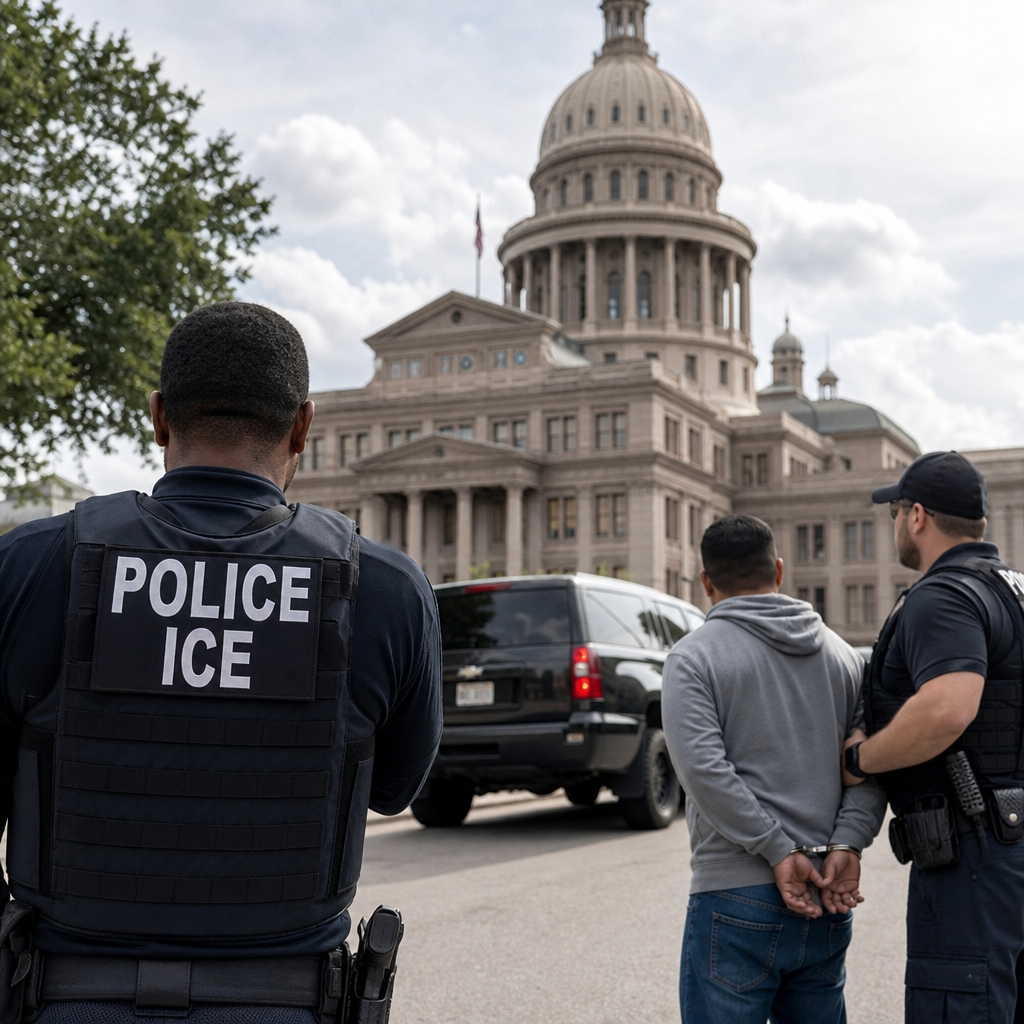
Sanctuary policies and federalism sit at the center of one of the most persistent conflicts in American government because immigration enforcement touches local policing, state sovereignty, national borders, constitutional law, and daily life in schools, workplaces, and courts. In AP Government and Politics, sanctuary policies usually refer to state or local rules that limit how much officials cooperate with federal immigration authorities, especially U.S. Immigration and Customs Enforcement, commonly called ICE. Federalism is the division of power between the national government and state governments, with local governments exercising authority delegated by states. When these systems overlap, disputes emerge over who must enforce immigration law, who pays for detention and policing, and how public institutions should treat residents who lack lawful status. I have worked through these questions with students by starting from one basic point: immigration law is primarily federal, but many of the people and institutions affected by it are governed locally. That gap creates recurring legal and political conflict. The issue matters because it shapes public safety strategies, determines access to services, affects elections and party coalitions, and tests the limits of executive power and congressional spending conditions. It also serves as a practical case study in constitutional design. Questions about commandeering, preemption, due process, equal protection, and the spending power become concrete when a county sheriff refuses an ICE detainer or a state legislature bars local agencies from asking about immigration status. As a hub topic within AP Government and Politics, this subject connects civil liberties, bureaucracy, intergovernmental relations, and public policy. Understanding sanctuary policies is not about memorizing slogans. It is about seeing how constitutional structure produces real-world conflict across levels of government.
What sanctuary policies actually do
Sanctuary policies are not one single law and they do not prevent the federal government from enforcing immigration statutes. In practice, they are a range of rules that restrict voluntary cooperation by state and local officials. A city may bar police from asking crime victims about immigration status. A county jail may decline to hold people past their release dates based only on an ICE detainer request unless there is a judicial warrant. A state may prohibit agencies from sharing certain nonpublic information or from using local funds for federal civil immigration enforcement. These policies rest on a distinction that students often miss: criminal law enforcement and civil immigration enforcement are not identical. Being removable under federal immigration law is generally a civil matter, while many local police powers are tied to criminal enforcement and community safety.
Supporters argue that limited-cooperation policies improve trust between immigrant communities and police. When witnesses fear that reporting domestic violence or wage theft will lead to deportation, crimes go unreported. Police chiefs in large jurisdictions have repeatedly made this point. Critics argue that noncooperation can shield people who pose public safety risks or obstruct federal removal efforts. The facts depend heavily on the specific policy. Some sanctuary jurisdictions still honor judicial warrants, notify ICE after serious convictions, or cooperate through task forces on gangs, narcotics, or trafficking. Others impose broader information-sharing limits. The term sanctuary therefore functions more as a political label than a precise legal category, which is why careful definition matters in exams and public debate.
The constitutional framework behind the conflict
The constitutional conflict turns on several doctrines. First, the Supremacy Clause makes valid federal law supreme over conflicting state law. Congress has broad power over immigration through its authority over naturalization, foreign affairs, and national sovereignty. That means states cannot create their own admissions system or directly contradict federal immigration classifications. Second, the anti-commandeering principle limits the national government’s power to require states to use their personnel to administer federal programs. In New York v. United States and Printz v. United States, the Supreme Court made clear that Congress cannot simply order state legislatures or executive officers to carry out federal regulatory commands. That principle is central to sanctuary disputes because many local governments argue that honoring ICE detainers or sharing resources is voluntary, not mandatory.
Third, preemption determines when federal law displaces state action. In Arizona v. United States, decided in 2012, the Court struck down major parts of Arizona’s SB 1070 because federal immigration law occupied the field or conflicted with national priorities. The ruling is important for both sides. It reaffirmed federal primacy in immigration, but it also showed that states cannot independently intensify immigration enforcement in ways that disrupt federal discretion. Fourth, the spending power allows Congress to attach conditions to federal grants, but those conditions must be related to the funding, clearly stated, and not coercive under South Dakota v. Dole and NFIB v. Sebelius. Litigation over efforts to deny grants to sanctuary jurisdictions often turns on those limits and on whether the executive branch can impose conditions Congress did not authorize.
How federal, state, and local governments interact
Immigration conflict across levels of government is best understood as a chain of separate decisions. Congress writes the statutes defining removability, detention authority, and immigration benefits. Federal agencies such as the Department of Homeland Security, ICE, Customs and Border Protection, and U.S. Citizenship and Immigration Services implement those laws. States define the legal powers of cities, counties, sheriffs, school districts, and public universities. Local officials then decide how to police neighborhoods, manage jails, provide records, and communicate with residents. Because these institutions answer to different electorates and incentives, they often move in different directions.
For example, a county sheriff may prioritize reducing jail liability after court rulings questioned prolonged detention based solely on detainers. A governor may support cooperation with ICE to signal toughness on border security. A mayor may restrict status inquiries to encourage residents to report crimes. A president may direct federal agencies to seek broader cooperation or more targeted enforcement. None of these actors controls the entire system. That fragmented authority is federalism in action. It produces negotiation, litigation, and policy variation rather than one uniform national outcome. In AP Government terms, sanctuary conflict is a clear example of intergovernmental relations shaped by constitutional design, administrative discretion, and electoral accountability.
Major legal flashpoints and leading cases
Several legal disputes define this topic. ICE detainers are requests asking local jails to hold a person for up to forty-eight hours after a release time so federal agents can assume custody. Many jurisdictions became cautious after federal courts found constitutional problems when people were held without probable-cause determinations or judicial warrants. Cases such as Galarza v. Szalczyk reinforced the idea that detainers are requests, not commands, increasing local resistance. Another flashpoint involves 8 U.S.C. section 1373, a federal statute that limits state and local restrictions on sharing immigration-status information with federal officials. Courts have debated both its meaning and whether parts of it conflict with anti-commandeering principles, especially after Murphy v. NCAA strengthened the Court’s reasoning against federal directives telling states what they may not prohibit.
Litigation also surged over Department of Justice attempts during the Trump administration to condition Byrne JAG public safety grants on local cooperation with federal immigration enforcement. Multiple federal courts rejected key parts of those efforts, concluding that the executive branch lacked congressional authorization for the conditions. These rulings mattered beyond immigration because they defended separation of powers as well as federalism. At the same time, some states adopted anti-sanctuary laws requiring local compliance, showing that local governments are not sovereign against their states in the way states are against the federal government. That distinction is crucial. Cities derive power from states, so a state legislature can often preempt local sanctuary ordinances unless constrained by its own constitution.
Policy tradeoffs: public safety, rights, and administration
The strongest classroom discussions come from evaluating tradeoffs rather than choosing slogans. Public safety is the most common argument on both sides. Supporters of cooperation say that information sharing and jail transfers help remove people convicted of serious offenses and prevent reoffending. Supporters of sanctuary policies respond that broad entanglement with civil immigration enforcement can undermine ordinary policing by reducing witness cooperation, especially in mixed-status households. Research findings are mixed and often jurisdiction-specific, which is why careful claims matter. Some studies have found no clear relationship between sanctuary policies and higher crime rates, while local law enforcement leaders continue to report that trust is essential for solving crimes.
Administrative capacity and liability are equally important. Holding someone on an ICE detainer can expose a county to Fourth Amendment claims if the detention lacks adequate legal basis. Training local officers for immigration screening also costs money and time. On the other hand, noncooperation can force federal agents to conduct arrests in neighborhoods or workplaces rather than secure jail settings, which critics argue is less efficient and potentially more disruptive. Due process concerns also arise when databases contain errors, when detainers are issued too loosely, or when citizens and lawful residents are mistakenly flagged. In practice, the debate is not only about ideology. It is about who bears legal risk, operational costs, and political blame.
| Level of government | Typical immigration role | Common sanctuary-related conflict | Example |
|---|---|---|---|
| Federal | Sets immigration law and removal priorities | Seeks state or local cooperation | ICE issues detainers to county jails |
| State | Controls powers of cities, counties, and agencies | Preempts local sanctuary or anti-sanctuary rules | Texas SB 4 required local cooperation |
| Local | Operates police departments, jails, schools, and services | Balances policing, liability, and community trust | City police limit status questions during stops |
Why this topic matters in AP Government and Politics
Sanctuary policies are a hub issue because they connect many units of the course. In constitutional design, they illustrate federalism, the Supremacy Clause, and the Tenth Amendment. In civil liberties, they raise questions about due process, equal protection, and unreasonable seizures. In political behavior, they reveal how public opinion differs across regions, urban and rural areas, and party coalitions. In institutions, they show how presidents use executive priorities, how Congress influences policy through statutes and appropriations, and how courts resolve separation-of-powers disputes. In bureaucracy, they demonstrate that implementation depends on agencies with limited resources, competing goals, and discretion over enforcement.
This topic also helps students think comparatively about policy design. Immigration enforcement resembles other areas where Washington depends on states and localities, including environmental regulation, education, and health policy. The recurring question is whether cooperation is incentivized, negotiated, or compelled. Sanctuary disputes show why that distinction matters. If the national government cannot commandeer state officers, then federal policy must often rely on grants, agreements, information systems, or direct federal action. If states control local governments, then state politics can sharply reshape local choices. For exam writing, the best approach is to define the policy, identify the constitutional principle, name at least one case, and explain the practical consequence. That structure turns a controversial headline into a clear political science answer.
In sum, sanctuary policies and federalism reveal how immigration conflict is produced by the American system itself, not just by partisan disagreement. Immigration law is national, but enforcement touches state institutions and local communities every day. That tension explains why disputes arise over detainers, grants, preemption, police practices, and executive power. The most accurate takeaway is that sanctuary policies do not erase federal authority and federal authority does not automatically command state participation. Instead, the system runs through overlapping powers, constitutional limits, and negotiated cooperation. For AP Government and Politics, this makes the topic an ideal hub for linking courts, bureaucracy, civil liberties, and intergovernmental relations.
If you are building out your understanding of this misc area, focus on four anchors: define sanctuary policy precisely, explain anti-commandeering and preemption, remember key cases such as Arizona v. United States and Printz v. United States, and connect law to real administrative choices made by sheriffs, mayors, governors, and federal agencies. That approach will strengthen both essays and multiple-choice reasoning. From here, explore related articles on federalism, civil liberties, the bureaucracy, and state-local relations so you can place immigration conflict within the broader structure of American government.
Frequently Asked Questions
What are sanctuary policies, and why are they such a major issue in AP Government and Politics?
Sanctuary policies are state or local rules that limit how much public officials, especially police, sheriffs, jail staff, and other local agencies, will cooperate with federal immigration enforcement. In practice, these policies can take several forms. A city might restrict officers from asking about immigration status during routine encounters, a county jail might decline to hold someone longer than their release date based only on an immigration detainer request, or a state might prohibit agencies from using local resources to carry out certain federal immigration functions unless required by law. The exact rules vary widely, which is why “sanctuary” is more of a broad category than a single legal formula.
In AP Government and Politics, sanctuary policies matter because they bring together several core constitutional themes at once: federalism, separation of powers, civil liberties, public safety, and the limits of government authority. Immigration is generally a federal responsibility, but the federal government often depends on state and local institutions to share information, honor requests, or provide jail access. That dependency creates conflict when local or state officials believe cooperation undermines community trust, strains public resources, or risks constitutional violations. The issue becomes a vivid example of how power is divided in the American system rather than concentrated in one level of government.
Sanctuary debates also show that federalism is not just an abstract principle. It affects policing, schools, workplaces, court systems, and everyday interactions between residents and government. Supporters often argue that local police are more effective when immigrant communities do not fear that any contact with law enforcement could lead to deportation. Critics argue that limiting cooperation can obstruct national immigration law and create uneven enforcement across the country. Because both sides frame their arguments in terms of legitimate governmental goals, sanctuary policies have become one of the clearest case studies of intergovernmental conflict in modern U.S. politics.
How do sanctuary policies relate to federalism and the balance of power between national and state governments?
Sanctuary policies are fundamentally a federalism dispute because they raise the question of who must do what when federal law and local policy priorities do not fully align. The federal government has primary authority over immigration law, border control, and removal proceedings. However, states and localities control their own police powers, local budgets, detention facilities, and administrative priorities. That means the national government can set immigration rules, but it cannot automatically command every city, county, or state official to enforce them in the way federal agencies prefer.
This is where the anti-commandeering principle becomes especially important. Under the U.S. constitutional system, the federal government generally cannot force states to administer or enforce federal regulatory programs. In immigration conflicts, that principle means Washington can enforce federal law through federal officers, but it usually cannot require local police or state agencies to become an extension of federal immigration enforcement. State and local governments may choose to cooperate in some ways, but the legal and political debate often centers on whether cooperation is voluntary, incentivized, or unlawfully coerced.
Federalism makes the issue more complex because both levels of government can claim a legitimate constitutional interest. The federal government argues that immigration policy must be nationally uniform and that local resistance can frustrate federal objectives. States and localities argue that they retain authority over local policing, detention practices, and allocation of public resources. In other words, sanctuary policies do not usually mean a state is trying to rewrite immigration law. Rather, they often reflect a decision about how much local participation there will be in carrying out federal priorities. That distinction is central to understanding why sanctuary policies are discussed so often in constitutional law, Supreme Court cases, and AP Government classrooms.
Are sanctuary policies constitutional, and what constitutional principles are usually involved?
In general, sanctuary policies can be constitutional, but whether a specific policy is lawful depends on exactly what it requires or prohibits. The Constitution gives the federal government broad power over immigration, so states and localities cannot create their own immigration system that contradicts federal law. At the same time, the Tenth Amendment and anti-commandeering doctrine protect states from being forced to use their own officers or resources to implement federal programs. That is why many sanctuary policies are designed not to block federal law outright, but to decline optional cooperation beyond what federal law clearly requires.
Several constitutional principles typically appear in these disputes. One is the Supremacy Clause, which establishes that valid federal law overrides conflicting state law. If a state or city tried to directly obstruct federal officers from performing lawful immigration duties, that would raise serious supremacy concerns. Another key principle is the Tenth Amendment, which supports the idea that the federal government cannot simply order state officials to carry out federal policy. Courts often examine where the line falls between federal preemption, which can invalidate conflicting state rules, and unconstitutional commandeering, which bars the federal government from forcing states to administer federal enforcement efforts.
Fourth Amendment concerns may also arise, especially when local jails hold people based only on immigration detainer requests without a judicial warrant or sufficient legal authority. Due process issues can appear when detention, notification, or transfer practices affect a person’s liberty interests. Spending Clause questions come up when the federal government threatens to withhold grants from sanctuary jurisdictions in order to pressure cooperation. For students and readers trying to make sense of the controversy, the key point is that sanctuary policies are not automatically constitutional or unconstitutional as a category. Their legality depends on the design of the policy, the kind of federal action involved, and the constitutional principle at stake in that particular dispute.
Why do some state and local governments support sanctuary policies while others strongly oppose them?
Support for sanctuary policies usually grows out of a mix of public safety concerns, local governance priorities, civil rights arguments, and political values. Many local officials say their police departments work better when residents are willing to report crimes, testify as witnesses, seek help in emergencies, and send children to school without fear that contact with local authorities will automatically lead to immigration consequences. From that perspective, limiting routine involvement in federal immigration enforcement helps preserve trust between immigrant communities and local institutions. Supporters also argue that local tax dollars and personnel should be used for local public safety missions, not redirected toward federal enforcement goals unless legally required.
Opposition comes from a different but equally strong set of concerns. Critics argue that sanctuary policies can undermine respect for federal law, shield removable noncitizens from detection, and create inconsistent enforcement from one jurisdiction to another. They often stress the idea that immigration control is a national responsibility and that public safety may suffer if local agencies do not share information or transfer custody in situations involving criminal defendants. Some opponents also believe sanctuary policies send a broader political message of resistance to federal authority, making them as much a symbolic constitutional conflict as a practical law enforcement issue.
Partisanship, demographics, local crime concerns, immigrant population size, and state political culture all shape these positions. Urban jurisdictions with large immigrant communities often emphasize community relations and administrative discretion. States with leaders who favor stricter enforcement may pass laws requiring greater cooperation with federal authorities and prohibiting local sanctuary measures. That variation itself is a classic federalism pattern: different governments respond to the same national issue in different ways based on local preferences, institutional incentives, and competing interpretations of what public safety and constitutional governance require.
How do sanctuary policies affect everyday life, public safety, and the broader immigration debate?
Sanctuary policies affect everyday life because they shape how local institutions interact with immigrant residents in ordinary settings, not just at the border or in federal court. For example, the rules can influence whether a victim of domestic violence feels safe calling police, whether a parent is comfortable communicating with a school, whether a worker reports wage theft, and whether a witness cooperates in a criminal investigation. Even when a local rule is narrow and applies mainly to jails or law enforcement databases, the broader public message can influence how communities perceive government authority and risk. That makes sanctuary policy both a legal issue and a deeply social one.
On public safety, the evidence and arguments are often contested. Supporters contend that trust-based policing improves crime reporting and community cooperation, which can make neighborhoods safer overall. They argue that when local officers are viewed primarily as protectors rather than immigration screeners, people are more likely to engage with the justice system. Opponents respond that refusing certain forms of cooperation may allow individuals who are removable under federal law, including some with criminal records, to avoid transfer to federal custody. Much of the disagreement turns on what types of cases are being discussed, what kind of cooperation is limited, and whether local officials believe constitutional or practical concerns outweigh enforcement benefits.
In the broader immigration debate, sanctuary policies have become a symbol of a larger argument about the role of government in a federal system. They represent the tension between national uniformity and local autonomy, between enforcement and integration, and between formal legal authority and administrative discretion. For students of government, the issue is especially important because it shows how constitutional conflict moves from court opinions and statutes into daily governance. Sanctuary policies are not just about legal doctrine; they are about how federalism operates in real time when multiple levels of government pursue different priorities on one of the most politically charged issues in the country.