
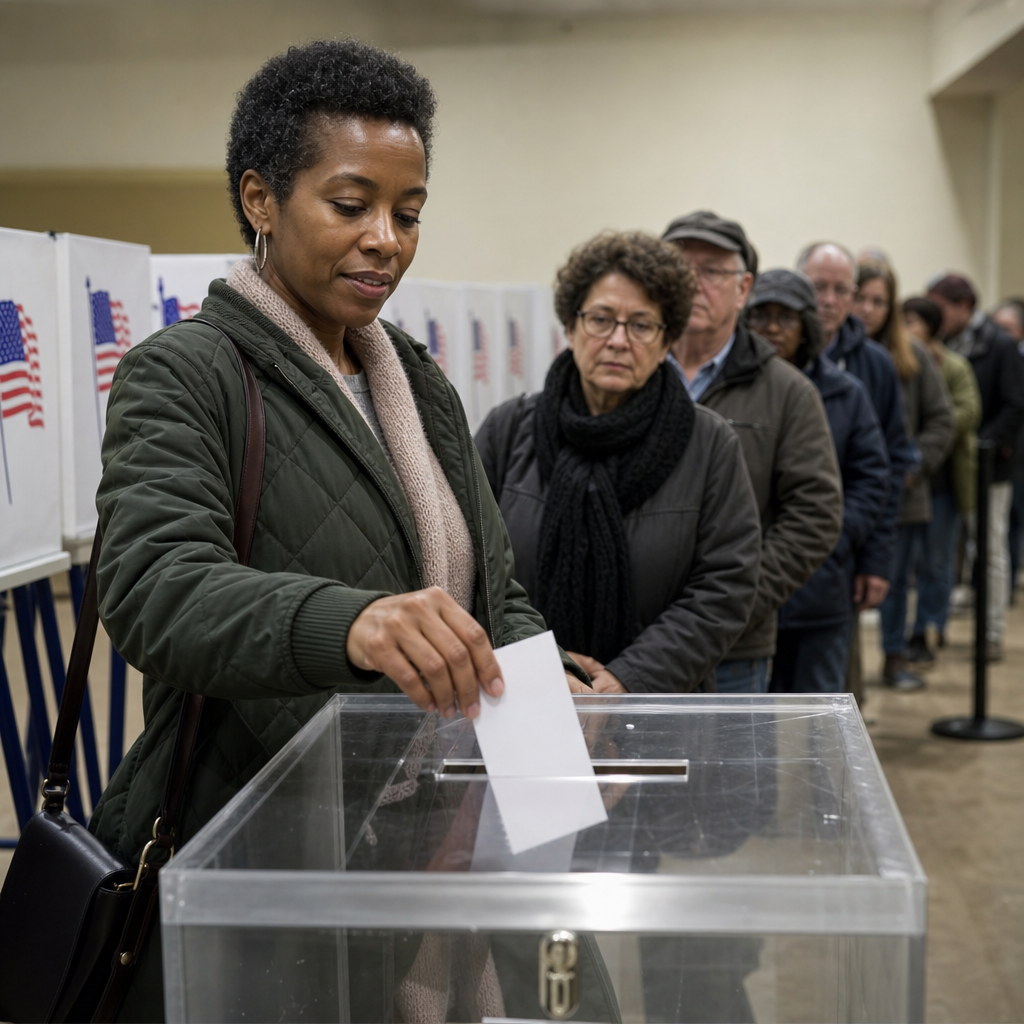
Runoff elections are second-round contests held when no candidate wins the required threshold in the first vote, and they matter because they shape legitimacy, strategy, turnout, and representation in ways every AP Government and Politics student should understand. In the simplest terms, a runoff election happens after an initial election fails to produce a winner under the rules set by a constitution, statute, or local charter. The threshold is usually a majority, meaning more than 50 percent of votes cast, but some systems use other formulas, such as a minimum share plus a margin over the runner-up. I have worked through dozens of election rules with students and campaign staff, and runoff provisions consistently cause confusion because people assume the highest vote-getter always wins. In many places, that is false. A candidate can finish first in round one and still lose later if a majority was not secured and coalition politics change in round two. That possibility is exactly why runoff elections deserve close attention.
For AP Government and Politics, runoff elections belong in the broader study of electoral systems, political participation, campaign strategy, and democratic legitimacy. They appear in presidential systems abroad, primary elections in several U.S. states, municipal contests, and special elections. Georgia’s U.S. Senate elections are one of the best-known American examples, but the concept reaches far beyond one state. To understand why some races need a second round, students need clear definitions. A plurality means more votes than any other candidate, even without a majority. A majority means more than half. A runoff is the follow-up election, usually between the top two finishers, designed to ensure the eventual winner has broader support than a mere plurality might show. That distinction between plurality and majority is the core reason runoff systems exist.
Runoffs matter because election rules influence outcomes just as much as campaign ads, fundraising, or debates. A plurality system can allow a candidate to win with 35 percent support in a crowded field, while a runoff system forces a second test of public backing. Supporters argue this increases legitimacy by requiring a broader coalition. Critics point out that second rounds often produce lower turnout, higher administrative costs, and strategic behavior that may distort voter intent. Both views are grounded in real evidence. France uses a two-round system for presidential elections, many U.S. cities have shifted away from runoffs toward ranked-choice voting, and southern states have long used runoff primaries to shape who appears on general-election ballots. If you are building a strong foundation in AP Government and Politics, runoff elections are not a side issue; they are a practical case study in how rules structure democracy.
What a runoff election is and how it works
A runoff election is a second election held after the first round when no candidate satisfies the legal standard for victory. In most cases, the top two candidates advance, and voters return to choose between them. The logic is straightforward: if the first round shows a fragmented electorate, the second round creates a head-to-head choice that guarantees one finalist receives a majority of votes cast, assuming the rules do not allow ties or unusual exceptions. In classroom discussions, I often frame this as a two-step filter. Round one measures broad preference across all candidates. Round two measures which of the leading options can assemble the widest coalition once minor candidates are removed.
Not all runoffs are identical. Some are immediate and scheduled a few weeks after the first election. Others are delayed for administrative reasons, military ballots, holiday calendars, or legal recount periods. Some jurisdictions require a runoff only if no one gets 50 percent. Others trigger one if no candidate clears 40 percent, or if the leader fails to exceed the runner-up by a prescribed margin. Louisiana’s system has at times used a “jungle primary” format in which all candidates appear on one ballot, and the top two move forward unless someone wins outright. The common principle is the same: the first round narrows the field, and the second round resolves legitimacy under majority-based rules.
The mechanics affect campaigning. In round one, candidates often focus on energizing their base while avoiding mistakes. In round two, messages typically broaden. Endorsements from eliminated candidates matter more, fundraising gets redirected, and opposition research intensifies because the electorate is choosing between only two finalists. Voters also behave differently. Someone whose preferred candidate was eliminated must decide whether to support a remaining candidate, cast a protest vote if permitted, or stay home. That shift makes runoff elections a rich example of strategic voting and coalition formation.
Why some election systems require a second round
The main reason some races need a second round is that the designers of the system value majority support over simple plurality victory. In a crowded race, a plurality winner may represent only a narrow segment of the electorate. Runoff advocates argue that elected officials should demonstrate broader consent, especially in executive positions such as president, governor, or mayor, where one person will speak for the whole jurisdiction. A majority threshold is intended to strengthen the winner’s mandate. When a candidate emerges from a runoff, supporters can say the officeholder survived both an open field and a one-on-one contest.
There is also a practical reason. In highly fragmented party systems, multiple credible candidates can split the vote among ideologically similar groups. Without a runoff, a candidate opposed by most voters could still win because opponents divided support. The runoff reduces that problem by giving voters a second chance to consolidate. France offers a classic example. In the first round of its presidential election, several parties compete. If no one wins an outright majority, the top two advance. That structure allows voters to express sincere first-round preferences without completely sacrificing the ability to unite against their least preferred finalist later.
In the United States, runoff rules have often been justified as a way to ensure nominees or officeholders are not chosen by a fractured minority. Georgia’s statewide runoffs illustrate this clearly. Before recent federal changes shortened the runoff calendar, the state became known for December and January second rounds because no candidate crossed the majority line in November. In those contests, turnout patterns, mobilization efforts, and national attention could dramatically alter the result. The reason for the second round was not administrative failure; it was the intentional design of a majority requirement.
Historical roots and major examples
Runoff elections have deep roots in comparative politics and in U.S. state and local election law. Internationally, the two-round system is associated with countries seeking a directly elected executive who can claim broad legitimacy. France is the most cited example, but many Latin American democracies also use runoff presidential elections. Brazil requires a second round for president, governor, and mayor in larger municipalities when no candidate wins more than 50 percent in the first round. Argentina uses a modified standard: a candidate can win in the first round with 45 percent, or with 40 percent if the lead over the second-place finisher is at least 10 percentage points. These details show that majority legitimacy can be pursued through several formulas.
In the United States, runoffs are especially associated with the South. After Reconstruction, several southern states adopted runoff primaries within one-party dominant systems. Historians note that these rules sometimes served exclusionary political goals as well as majority principles, particularly when combined with voter suppression against Black citizens. That history matters. Election rules are never neutral in their effects, even when they are presented as procedural improvements. Understanding runoffs therefore requires both institutional analysis and historical context.
Modern examples are easier for students to recognize. Georgia held two U.S. Senate runoffs in January 2021 after no candidate won a majority in either general election. Those races determined control of the Senate and demonstrated how a second round can nationalize a state contest. Municipal runoffs are also common. Cities such as Atlanta and Houston have long used them in mayoral elections. At the same time, places like New York City and San Francisco have embraced ranked-choice voting partly to avoid the cost and turnout drop associated with separate runoff elections.
How runoffs change campaign strategy and voter behavior
Runoff systems create a different strategic environment from winner-take-all plurality elections. In the first round, candidates can target narrower constituencies because advancing, not necessarily winning outright, is the immediate goal. A progressive candidate may speak mainly to urban liberals, while a conservative rival focuses on rural turnout. Once the field narrows, both finalists must expand. They court supporters of eliminated candidates, recalibrate advertising, and sharpen contrasts. I have seen campaigns completely rewrite their message between rounds, shifting from identity and enthusiasm appeals to competence, coalition, and electability arguments.
Voter behavior changes too. The first round invites expressive voting because people can support their favorite candidate without finalizing the outcome. The second round pressures voters toward a binary choice. That can increase strategic voting, where citizens pick the finalist they dislike least rather than the one they love most. It can also depress turnout. Research on runoff elections in the United States often finds that second-round turnout falls below first-round turnout, sometimes substantially, because casual voters feel less engaged or are less aware of the new date.
| Feature | First Round | Runoff Round |
|---|---|---|
| Main voter goal | Express preferred choice | Select acceptable winner |
| Candidate strategy | Mobilize base and qualify | Build majority coalition |
| Field size | Often crowded | Usually top two only |
| Turnout pattern | Higher and broader | Often lower and more intense |
| Value of endorsements | Limited | High after eliminations |
This dynamic can change outcomes. A first-round leader with intense but narrow support may lose if the supporters of eliminated candidates unite behind the second-place finisher. That is not a flaw in the rules; it is the intended test of whether the first-round leader can broaden appeal. For students, this is a useful reminder that election systems reward different political skills.
Advantages of runoff elections
The strongest argument for runoff elections is legitimacy. When the winner must secure a majority, the public can more confidently treat the result as reflecting broad consent. This is especially important in executive offices, where a single official must govern across many constituencies. A runoff also reduces the spoiler problem. In a plurality system, two similar candidates can split supporters and allow a less popular ideological opponent to win. A second round gives those voters a chance to reunite. That feature can encourage more candidates to run initially, because participation does not automatically doom allied factions.
Runoffs can also improve information. The first round reveals how much support each candidate genuinely has. The second round focuses public attention on two finalists, often producing clearer scrutiny of records, policy differences, and governing style. In practice, voters receive more debate coverage, more issue comparisons, and more direct contrasts. For civic education, this can be valuable. A two-stage election often forces discussions that a crowded single-round contest would obscure.
Another benefit is coalition-building. To win a runoff, candidates usually must appeal beyond their core base. That can reward moderation, outreach, and cross-group negotiation. In fragmented societies, those incentives may reduce polarization at the margins by making exclusionary rhetoric less effective in a final majority contest.
Criticisms, tradeoffs, and common alternatives
Runoff elections are not a universal solution. The biggest criticism is turnout decline. When the second election occurs weeks later, many first-round voters do not return. That means the eventual majority winner may be chosen by a smaller and less representative electorate than the first round produced. Cost is another issue. Administering another election requires staffing, polling places, ballot printing, security procedures, and voter education. Local governments feel those expenses sharply.
There are also equity concerns. Communities with fewer resources, less flexible work schedules, or lower access to transportation may face higher barriers to voting twice. Campaigns with stronger fundraising and organization can gain an advantage in a runoff because mobilization becomes even more important when turnout falls. Historically, that has sometimes amplified existing inequalities rather than correcting them.
The leading alternative is ranked-choice voting, also called instant runoff voting. Instead of holding a separate second election, voters rank candidates on one ballot. If no one wins a majority of first choices, the lowest candidate is eliminated and ballots are redistributed by next preference until someone reaches a majority. Supporters say this preserves the majority principle while avoiding the cost and turnout drop of a separate runoff. Critics respond that ranked-choice tabulation is less transparent to some voters and can create ballot exhaustion if rankings are incomplete. The key AP Government takeaway is that both systems attempt to solve the same problem: how to produce a winner with broader support than a plurality alone provides.
Runoff elections show that democratic outcomes depend not only on who votes, but on the rules used to translate votes into power. They exist because some political systems reject the idea that finishing first is always enough. By requiring a second round when no candidate clears a threshold, these systems seek broader legitimacy, reduce some spoiler effects, and push finalists to assemble wider coalitions. At the same time, runoffs carry real costs: lower second-round turnout, greater expense, longer campaigns, and strategic behavior that can reward organization over broad participation. Those tradeoffs explain why some jurisdictions keep runoffs while others adopt ranked-choice voting or plurality rules.
For AP Government and Politics, this topic connects directly to core themes in the course. It illustrates how institutions shape political behavior, how voter incentives change under different systems, and how democratic values can conflict. Majority support sounds simple, but achieving it requires design choices that influence representation, participation, and legitimacy. The best way to study runoff elections is to compare them with alternatives and examine real cases such as France, Brazil, Louisiana, and Georgia. Doing that makes the concept concrete rather than abstract.
If you are using this page as your hub for the miscellaneous side of AP Government and Politics, treat runoff elections as a gateway topic. They link to primaries, party systems, turnout, electoral reform, and comparative government. Review the examples, learn the vocabulary of plurality and majority, and then explore related election systems to see how small procedural differences can change who governs.
Frequently Asked Questions
What is a runoff election, and why does it happen?
A runoff election is a second round of voting held when no candidate meets the winning threshold in the first election. In many systems, that threshold is a majority, meaning more than 50 percent of the vote. If several candidates split the electorate and no one reaches that mark, election rules may require the top finishers to compete again in a runoff. The goal is to produce a winner with broader support than a simple plurality would provide.
Runoffs happen because governments often want the eventual officeholder to show a clearer mandate. In a crowded race, a candidate might finish first with only 30 or 35 percent of the vote, which can raise questions about legitimacy and representation. By narrowing the field and holding a second contest, voters get a direct choice between the remaining candidates, and the winner typically emerges with a majority or whatever threshold the law requires. For students of AP Government and Politics, this matters because it shows how election rules shape not just outcomes, but also public confidence in those outcomes.
How is a runoff election different from a regular election?
A regular election is the initial contest in which all qualified candidates appear on the ballot. A runoff election comes afterward only if the first round does not produce a winner under the governing rules. In other words, a runoff is not a separate kind of office or a different office altogether; it is the continuation of the same election process. The first round identifies the strongest candidates, and the second round resolves the race according to the legal threshold.
The biggest practical difference is that a runoff changes the strategic environment. In the first round, candidates may focus on building their own base and distinguishing themselves from several opponents. In the runoff, the race usually becomes a head-to-head contest, which forces candidates to broaden their appeal, court supporters of eliminated rivals, and sharpen their message. Voters also face a different decision in the second round, since they are choosing between a smaller set of options. That shift can affect campaign tone, coalition-building, turnout, fundraising, and media attention.
Why do some states and local governments use runoff elections instead of letting the top vote-getter win?
Many states and local governments use runoff elections because they want winners to have majority support rather than simply the largest share in a fragmented field. Under a plurality system, a candidate can win even if most voters preferred someone else, as long as no other single candidate got more votes. Supporters of runoffs argue that this can weaken legitimacy, especially in important executive offices like mayor, governor, or senator. A runoff is designed to ensure that the final winner has support from more than half of participating voters, at least in systems that require a majority.
There is also a representational argument behind runoff rules. When a second round is required, candidates often have to reach beyond their core supporters and build broader coalitions. That can encourage more moderate messaging, stronger outreach to different communities, and more bargaining among political factions. At the same time, critics point out that runoffs can be costly to administer, may produce lower turnout in the second round, and can extend campaigning. That debate is important in government and politics because it highlights a classic tension in democratic design: balancing efficiency and simplicity against legitimacy and broader consent.
How do runoff elections affect campaign strategy, turnout, and voter behavior?
Runoff elections can dramatically reshape campaign strategy. In the first round, candidates often try to energize loyal supporters and survive a crowded field. Once the race moves to a runoff, the priorities usually change. Candidates need endorsements from former opponents, must appeal to voters whose first choices were eliminated, and often adjust their tone to attract a wider coalition. Issues that were useful for standing out in the first round may give way to messages focused on unity, competence, or electability in the second round.
Turnout is also a major factor. Second-round elections frequently attract fewer voters than the original contest, especially if the runoff is held weeks later and receives less public attention. That decline can change who has influence, because highly motivated groups are more likely to participate consistently. As a result, candidates with strong organizational networks, loyal voter bases, or better ground operations may gain an advantage. For voters, runoff elections can encourage more strategic thinking. Someone who backed a losing candidate in the first round has to decide which remaining option is closer to their preferences, making the runoff a test of coalition politics as much as individual popularity.
Why are runoff elections important for understanding representation and legitimacy in democracy?
Runoff elections are important because they reveal how election rules shape democratic representation. A system that requires a second round is trying to produce a winner who can claim support from a broader share of the electorate. That can strengthen legitimacy, especially in offices where the winner will govern an entire city, state, or district. When voters know the officeholder ultimately cleared a majority threshold, they may be more willing to accept the result, even if their preferred candidate lost.
At the same time, runoffs show that legitimacy is not just about the formal rule on paper. It also depends on participation, access, and political context. If turnout drops sharply in the runoff, the winner may have a majority of those who voted in the second round but support from fewer voters overall than in the first election. That creates an important analytical question for students: does a majority in a lower-turnout runoff always reflect stronger democratic consent? Studying runoff elections helps answer broader AP Government and Politics questions about institutions, electoral systems, political behavior, and the trade-offs built into democratic design.