
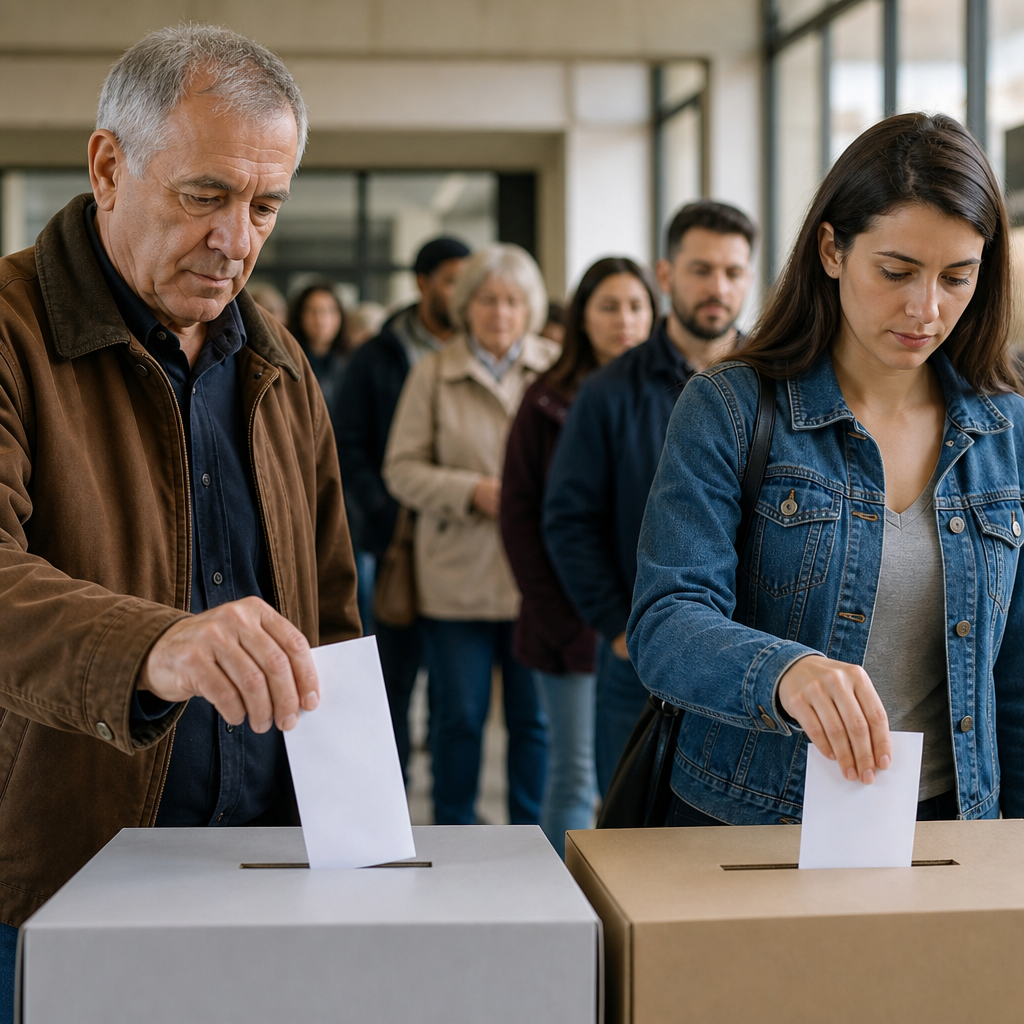
Retrospective voting and prospective voting are two core ways citizens decide how to cast a ballot, and understanding the difference is essential for anyone studying AP Government and Politics. In simple terms, retrospective voting means judging leaders by past performance, while prospective voting means choosing based on promises, plans, and expected future results. These ideas appear across presidential, congressional, gubernatorial, and even local elections, and they help explain why incumbents win, why challengers gain momentum, and why campaign messages are built the way they are. I have taught these concepts by tying them to actual election cycles because students remember them better when they can connect theory to events they recognize.
In practice, retrospective voting asks a straightforward question: has the government performed well enough to deserve another term? Voters look backward at inflation, unemployment, war, public safety, scandals, disaster response, and whether everyday life improved or deteriorated. Prospective voting asks a different question: which candidate is more likely to handle the next set of problems effectively? Here voters focus on policy proposals, governing philosophy, ideology, issue priorities, and competence signals. Both models are shortcuts, but they are not simplistic. They capture how real people process political information under time pressure, limited attention, and competing claims from campaigns, parties, news outlets, and interest groups.
These concepts matter because they connect voter behavior to accountability. If elections are partly retrospective, then officeholders have incentives to govern well, avoid major failures, and claim credit for positive outcomes. If elections are partly prospective, then campaigns become contests over agendas, coalition building, and public expectations about the future. In AP Government, these terms also connect to incumbency advantage, party identification, political efficacy, media effects, economic voting, and rational-choice behavior. They are especially useful in free-response questions because they let you explain not just what happened in an election, but why voters responded the way they did. Once you understand them, many patterns in American politics become easier to interpret.
What Retrospective Voting Means
Retrospective voting is voting based on an evaluation of the past. The voter asks whether an incumbent or incumbent party produced satisfactory results. If the answer is yes, the voter rewards them with support. If the answer is no, the voter punishes them. Political scientists often describe this as a mechanism of democratic accountability because it gives elected officials a reason to care about measurable outcomes. In the classroom, I frame it as a report card model. The election is the final grade. A president, governor, or member of Congress does not receive credit merely for trying; voters often care about what actually happened during the term.
Economic conditions are the classic example. When inflation rises sharply, wages stagnate, or unemployment remains high, many voters blame the party in power, even when causes are global or inherited. Conversely, when growth is strong and household finances feel stable, incumbents often benefit. The idea of pocketbook voting fits here, especially when people focus on their own circumstances, but sociotropic voting is just as important: many citizens judge the national economy broadly, not just their personal bank account. Public reactions to the Great Recession, the post-pandemic inflation surge, and gas price spikes all show how strongly backward-looking assessments can shape vote choice.
Retrospective voting also extends beyond economics. Wars, major scandals, natural disaster response, crime trends, public health management, and legislative accomplishments all affect voter judgments. After Hurricane Katrina, many voters judged federal leadership harshly because they saw administrative failure. During the COVID-19 pandemic, voters evaluated governors and presidents based on lockdowns, school closures, vaccine rollout, death rates, and economic reopening. Some rewarded caution; others rewarded speed and normalcy. The underlying logic was still retrospective. Citizens looked at what had already happened and decided whether current leaders had earned continued trust.
What Prospective Voting Means
Prospective voting is voting based on expectations about the future. Instead of primarily grading what leaders already did, the voter compares what candidates say they will do next. This is common when there is no incumbent on the ballot, when voters believe future challenges matter more than past performance, or when both candidates can plausibly claim mixed records. In those cases, campaigns become arguments about plans, priorities, values, and governing capacity. I tell students to think of it as hiring for the next project rather than judging the last one. The emphasis shifts from records to forecasts.
Prospective voting depends heavily on credibility. A candidate can promise lower taxes, stronger border enforcement, expanded health coverage, student debt relief, school choice, or criminal justice reform, but voters still ask whether the promise is realistic. They infer future performance from party reputation, endorsements, past offices, debate performance, fundraising strength, and the perceived seriousness of a policy agenda. A challenger often leans on prospective appeals because they lack a current executive record to defend. Presidential candidates in open-seat elections especially rely on this model, presenting themselves as the better choice for the next four years rather than the best explanation of the previous four.
Issue ownership matters here. Voters often trust one party more on certain issues, such as national security, health care, climate policy, or business regulation. That trust shapes prospective judgments. If a voter expects immigration to dominate the next term, they may support the candidate they believe is better equipped to manage that issue, regardless of satisfaction with current conditions. Likewise, if abortion rights, judicial appointments, or energy policy seems most important going forward, future-oriented concerns can outweigh retrospective ones. In modern campaigns, digital targeting reinforces this pattern by sending voters tailored messages about the issues they are most likely to prioritize.
How the Two Models Work Together in Real Elections
Most elections are not purely retrospective or purely prospective. Voters combine both. They may dislike recent economic conditions yet still believe the incumbent has the stronger long-term plan. Or they may approve of past growth but distrust a candidate’s future agenda. The balance shifts with context. Incumbent presidents usually face stronger retrospective evaluation because they are visible and clearly associated with current conditions. Challengers emphasize prospective arguments because they promise change. In congressional races, the pattern is more complicated because voters may judge national conditions retrospectively while still supporting a local incumbent for constituency service, name recognition, or district fit.
Campaign strategy reflects this blend. An incumbent runs on accomplishments, saying in effect, you know what I have done and you can trust me to continue it. A challenger argues that current results are inadequate and offers a better path forward. Ronald Reagan’s 1980 question, “Are you better off than you were four years ago?” is a textbook retrospective appeal. Barack Obama’s 2008 message of change was strongly prospective, though it also criticized the preceding administration. Donald Trump in 2016 mixed retrospective attacks on establishment performance with prospective promises on trade, immigration, and judges. Joe Biden in 2020 combined retrospective criticism of pandemic management with prospective restoration and recovery themes.
Students often ask which model is more important. The best answer is that neither always dominates. Economic distress tends to strengthen retrospective voting. Open-seat elections, emerging issues, and polarized party agendas can strengthen prospective voting. Candidate quality matters too. A well-known incumbent with a mixed record may still win if voters see the challenger as unprepared. Likewise, a challenger can lose even in a difficult environment if their proposals seem extreme, vague, or implausible. The key is to identify what evidence voters are most likely to use and whether that evidence points backward, forward, or both.
Examples, AP Government Connections, and Common Confusions
These concepts connect to several high-yield AP Government topics. They relate to political socialization because party identification shapes how voters interpret the same record or proposal. They connect to media because framing can make an election feel like a referendum on current conditions or a choice about future direction. They connect to institutions because presidents are judged nationally, while legislators are often judged through district-level service and casework. They also connect to polling, since surveys regularly ask whether the country is on the right track, whether approval ratings are rising, and which candidate is trusted more on specific future issues.
| Concept | Core Question | Main Evidence Used by Voters | Common Example |
|---|---|---|---|
| Retrospective voting | How well did leaders perform? | Economy, scandals, crisis response, war, public services | Judging an incumbent president after inflation rises |
| Prospective voting | Who is likely to do better next? | Policy plans, ideology, issue ownership, credibility | Choosing between open-seat candidates based on future agendas |
| Mixed evaluation | What matters more, past results or future plans? | Combination of record and promises | Supporting an incumbent with a shaky economy but a trusted recovery plan |
A common confusion is treating retrospective voting as identical to incumbency advantage. They are related but not the same. Incumbency advantage includes name recognition, fundraising networks, media access, franking, and constituency service. Retrospective voting is just one mechanism that may help or hurt an incumbent. Another confusion is assuming prospective voting is irrational because promises can be broken. In reality, voters often use party platforms, legislative histories, and ideological consistency to estimate which promises are credible. That is a rational response to uncertainty. A third confusion is thinking independent voters are the only people who vote this way. In fact, strong partisans also make retrospective and prospective judgments, but they usually filter them through partisan loyalty.
For exam writing, use precise language. Say that retrospective voting is backward-looking evaluation of incumbents or incumbent parties based on perceived performance. Say that prospective voting is forward-looking evaluation based on anticipated policy outcomes or candidate promises. Then add a concrete example. If asked why a president’s approval rating matters, explain that low approval can signal poor retrospective evaluations, which weaken the president’s party in the next election. If asked why campaigns emphasize policy agendas, explain that voters also make prospective judgments about who can best address future problems. That combination shows analytical depth and usually earns stronger points than a one-sentence definition alone.
Why This Hub Matters for the Miscellaneous AP Government Category
Within a broad AP Government and Politics study plan, retrospective voting and prospective voting belong in the miscellaneous category because they cut across many units rather than fitting neatly into one chapter. They help explain elections and voting behavior, but they also illuminate public opinion, political parties, campaign strategy, presidential leadership, and congressional elections. That makes this topic a useful hub. Once you understand it, you can connect outward to linked ideas such as rational-choice voting, mandate elections, referendum elections, issue voting, incumbent advantage, political parties, and trust in government. Those are not isolated vocabulary terms; they are part of one larger framework for interpreting voter decision-making.
The practical benefit is that this topic improves both multiple-choice performance and free-response writing. On multiple-choice questions, it helps you identify whether a prompt is asking about accountability for past results or expectations about future policy. On essays, it gives you a flexible concept you can apply to many scenarios. If you are building your AP Government foundation, start here and then move to related articles on party identification, electoral realignment, primary versus general elections, and how media framing shapes public opinion. The more examples you attach to these two voting models, the faster you will recognize them on test day. Review a few recent elections, classify the appeals as backward-looking or forward-looking, and you will turn abstract terminology into durable political understanding.
Frequently Asked Questions
What is the difference between retrospective voting and prospective voting?
Retrospective voting and prospective voting describe two different ways voters evaluate candidates before casting a ballot. Retrospective voting looks backward. In this approach, voters judge elected officials by their past performance in office. They ask questions such as: Did the economy improve? Was inflation controlled? Did the government respond effectively to crises? Did the official keep important promises? If voters believe the incumbent performed well, they are more likely to reward that candidate with another term. If they believe the official performed poorly, they may choose someone else.
Prospective voting, by contrast, looks forward. Instead of focusing mainly on what officeholders have already done, voters concentrate on what candidates say they will do in the future. They compare policy proposals, campaign promises, ideology, leadership style, and expected results. A voter using a prospective approach might support a challenger because that candidate offers a more appealing plan on taxes, education, healthcare, national security, or another key issue.
In practice, most voters use some combination of both. They may judge an incumbent’s record while also considering each candidate’s future agenda. Still, the distinction is important in AP Government and Politics because it helps explain how elections work, why incumbents often have an advantage, and how public opinion can shift depending on current conditions and future expectations.
Why is retrospective voting so important in elections?
Retrospective voting is important because it connects elections to accountability. In a representative democracy, voters need a way to reward leaders who performed well and remove leaders who did not. Retrospective voting gives citizens a practical method for doing that. Instead of needing to understand every policy detail, voters can assess outcomes. If jobs increased, public services improved, and major problems were handled effectively, incumbents may benefit. If conditions worsened, incumbents may suffer politically.
This helps explain why election results often reflect broad public feelings about the direction of the country, state, or community. Presidential elections may turn heavily on perceptions of the economy, war, inflation, or crisis management. Congressional and gubernatorial races can also be shaped by whether voters believe current officeholders delivered on their responsibilities. Even local races may hinge on issues such as road quality, school performance, crime rates, or budget management.
Retrospective voting also matters because it often simplifies decision-making. Many voters do not spend extensive time studying every campaign platform in depth. Looking at past performance can feel more concrete than evaluating future promises. At the same time, retrospective voting is not always perfectly fair. Leaders may be blamed for events outside their control, or praised for trends they did not create. Even so, it remains one of the clearest ways voters hold public officials accountable at the ballot box.
What is an example of prospective voting in a real election?
A clear example of prospective voting occurs when voters choose a candidate primarily because of proposed future policies rather than past achievements. Imagine an open-seat election where no incumbent is running. Because neither major candidate currently holds the office, voters cannot easily rely on an officeholder’s record in that position. Instead, they compare what each candidate says they plan to do if elected. One candidate might promise lower taxes and reduced regulation, while another promises expanded healthcare access and increased education funding. Voters then decide which future vision they prefer.
Prospective voting also appears when challengers run against incumbents by arguing that the future should look different from the present. For example, a challenger may say the country needs a new economic plan, stronger immigration policy, a different approach to foreign affairs, or major reforms in public safety. Voters who believe that candidate’s agenda will produce better future outcomes are engaging in prospective voting, even if they also consider the incumbent’s record.
In AP Government terms, prospective voting is especially useful for understanding campaigns centered on ideas, platforms, and issue ownership. Candidates try to persuade voters not just that the other side failed, but that their own plans will deliver better results. This future-oriented mindset is a major part of campaign messaging, debates, party platforms, and political advertising.
Do voters usually choose one method, or do they use both retrospective and prospective voting?
Most voters use both, even if they do not realize it. Real-world voting decisions are rarely based on only one factor. A voter may look at an incumbent president and think retrospectively about inflation, employment, and crisis response, while also thinking prospectively about which candidate has the better plan for the next four years. Likewise, in a congressional or gubernatorial election, a voter might judge whether the current officeholder was effective and then compare future proposals from all candidates on issues such as healthcare, education, transportation, or public safety.
This mixed approach reflects the complexity of elections. Voters are influenced by party identification, ideology, candidate personality, media coverage, major events, and personal experiences. Retrospective and prospective voting are best understood as helpful models rather than rigid categories. They explain major patterns in voter behavior, but individual voters often blend past judgments with future expectations.
Understanding this overlap is especially important for students. If an exam question asks whether a voter is acting retrospectively or prospectively, the best answer depends on what the voter is emphasizing most. If the focus is on rewarding or punishing past performance, it is retrospective. If the focus is on promises, plans, and future goals, it is prospective. In actual elections, however, both ways of thinking often operate at the same time.
Why do incumbents often benefit from retrospective voting?
Incumbents often benefit from retrospective voting because they already have a record voters can evaluate, and if that record appears reasonably successful, they can claim credit for results. An incumbent can point to legislation passed, budgets managed, crises addressed, jobs created, or public projects completed. This allows the officeholder to argue, in effect, “Judge me by what I have done.” If voters are satisfied with current conditions, they may prefer stability and continuity over change.
Retrospective voting can create an advantage for incumbents because challengers usually have fewer accomplishments in the office being contested. The challenger may offer strong plans, but the incumbent can combine a future agenda with evidence from the past. This is one reason incumbency is often powerful in congressional, gubernatorial, and local elections. Name recognition, media visibility, and the ability to highlight previous achievements all reinforce the retrospective case for reelection.
That said, retrospective voting can also hurt incumbents badly when public conditions are poor. If voters believe an elected official mishandled the economy, failed to respond to a disaster, broke major promises, or led during a period of visible decline, the same backward-looking logic can work against that officeholder. In that sense, retrospective voting is a double-edged sword: it rewards success, but it also makes incumbents the first target when voters are dissatisfied.