
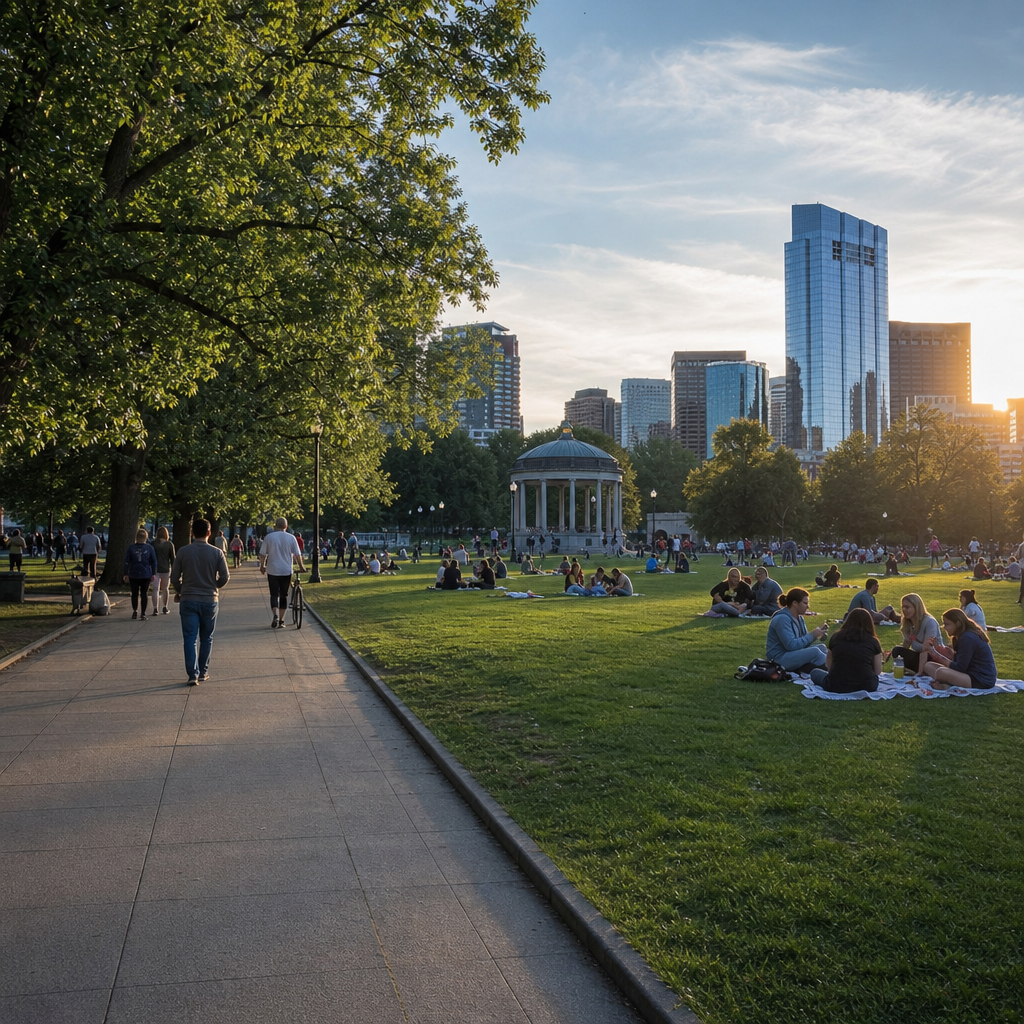
Public forum doctrine explains how the First Amendment applies when government controls property and people want to speak, protest, leaflet, petition, or demonstrate there. In AP Government and Politics, it matters because it connects constitutional text to real places: sidewalks, parks, schools, airports, courthouses, and even social media accounts run by public officials. I have taught this topic through court cases and current events, and students usually grasp it best when they see the basic question: when the government owns the space, can it limit speech, and if so, how much?
The doctrine is a set of rules courts use to classify government property for speech purposes. The category determines how strictly courts review restrictions. Traditional public forums, such as streets and parks, receive the strongest protection because they have long been used for assembly and debate. Designated public forums are spaces the government intentionally opens for expressive activity, at least for a time or for certain groups. Limited public forums are opened only for specific subjects or speakers. Nonpublic forums are government properties not meant for broad public expression, where rules only need to be reasonable and viewpoint neutral.
This framework matters far beyond law school. It shapes protest permits, campaign activity near polling places, student club access, speech in transit hubs, and online moderation by public institutions. It also shows a core principle of American government: free speech rights are powerful, but they are not identical everywhere. A person may preach in a park, face tighter controls in a school hallway, and be barred from disrupting an airport security line. Understanding public forum doctrine helps explain why those outcomes can all be constitutional. For students, it is a practical bridge between civil liberties, judicial review, and the daily operation of government.
The core rule: government property is not all treated the same
The First Amendment says government may not abridge freedom of speech, yet courts have never interpreted that to mean every government-owned place must be open for any message at any time. The Supreme Court instead asks what kind of forum the property is, whether the restriction targets content or viewpoint, and whether the government is regulating speech because of legitimate operational needs. In practice, this means location is often as important as message.
The strongest rule applies in traditional public forums. Public streets, sidewalks, and parks occupy a special constitutional status because, as the Court recognized in cases such as Hague v. CIO (1939), they have historically been held in trust for assembly, communication, and discussion of public questions. Government may still impose time, place, and manner restrictions there, but those rules must be content neutral, narrowly tailored to serve a significant governmental interest, and leave open ample alternative channels for communication. Permit systems for parades are usually judged under this standard.
Designated and limited forums require careful distinction. If a city opens a theater for community debates or a school opens meeting rooms for student clubs after hours, it may create a forum for speech. Once opened, it cannot discriminate based on viewpoint. But it can define the scope of the forum. A school that allows clubs about curriculum-related subjects does not have to allow every possible group. That distinction was central in cases involving student religious clubs and university funding systems.
Nonpublic forums include many government workplaces and operational spaces. Here the government has more flexibility. Restrictions do not need strict scrutiny; they must be reasonable in light of the purpose of the property and cannot suppress a particular viewpoint. A military base, jail interior, or internal mail system is not converted into a public soapbox simply because government owns it. That rule preserves the state’s ability to perform its functions safely and efficiently.
The four forum categories students should know
AP Government students do best when they memorize both the categories and the test attached to each one. The doctrine is easier to retain when reduced to a comparison chart.
| Forum type | Typical examples | Level of protection | What government must show |
|---|---|---|---|
| Traditional public forum | Public parks, streets, sidewalks | Highest | Content-neutral time, place, and manner rules must be narrowly tailored to a significant interest and leave open alternatives; content-based rules face strict scrutiny |
| Designated public forum | City auditorium opened for public debate, school rooms opened broadly for clubs | High while the forum remains open | Same basic protections as a traditional forum for the speech the government has invited |
| Limited public forum | School club program limited to certain subjects, transit ad space limited to commercial ads | Moderate | Restrictions must be reasonable and viewpoint neutral within the forum’s defined purpose |
| Nonpublic forum | Military bases, airport terminals for many purposes, jail interiors, internal government systems | Lowest | Restrictions must be reasonable and viewpoint neutral |
One recurring source of confusion is the phrase “content neutral.” A rule is content neutral if it applies without regard to what the speaker is saying. Requiring all parade organizers to obtain permits is generally content neutral. Allowing labor rallies but not antiwar rallies is content based. An even more serious problem is viewpoint discrimination, which occurs when the government allows discussion of a subject but favors one side. For example, permitting praise of police while banning criticism of police is classic viewpoint discrimination and is almost always unconstitutional.
Students should also note that the government can close a designated forum that it voluntarily opened, as long as it does so on neutral terms. The Constitution does not require government to keep every meeting room or subsidy program available forever. What it cannot do is keep the forum open and skew access toward favored perspectives. That is why many public forum disputes turn on administrative details such as written policies, actual practice, and whether officials applied standards consistently.
Landmark Supreme Court cases that define the doctrine
Several cases appear repeatedly in textbooks, classroom discussions, and exam prompts because they build the doctrine step by step. Hague v. CIO established the historic importance of streets and parks. The Court described those spaces as places long used for assembly and debate, giving later courts a foundation for special protection in traditional public forums.
Perry Education Association v. Perry Local Educators’ Association (1983) is the case I return to most often because it clearly lays out the forum categories. The dispute involved access to a school district’s internal mail system. The Court held that the mail system was a nonpublic forum and upheld exclusive access for the recognized teachers’ union. The case is important not because students need every detail, but because it formalized the category-based approach used ever since.
Cornelius v. NAACP Legal Defense and Educational Fund (1985) reinforced that the government does not create a public forum by inaction or by allowing limited access. The Court looked at a federal charity drive and concluded it was a nonpublic forum. This case teaches a subtle but essential point: government intent matters. Courts ask whether officials intentionally opened property for public discourse, not merely whether some expression happened there.
Widmar v. Vincent (1981), Lamb’s Chapel v. Center Moriches Union Free School District (1993), and Good News Club v. Milford Central School (2001) show how viewpoint neutrality operates when schools open facilities to outside groups. In each line of cases, once the school created access for certain community uses, excluding religious perspectives solely because they were religious raised major First Amendment problems. The holdings do not mean schools must open all spaces for all purposes. They mean government cannot define a forum and then penalize one viewpoint within it.
International Society for Krishna Consciousness v. Lee (1992) held that airport terminals are not traditional public forums. That result surprises many students because airports feel public. But under the doctrine, public ownership is not enough. The Court focused on history and function, concluding airports are dedicated primarily to air travel, not open-ended expressive activity. The case is a strong reminder that constitutional analysis depends on legal classification, not intuition alone.
Time, place, and manner restrictions in plain language
Even in the most protected forums, speech is not unlimited. Government can regulate when, where, and how expression occurs if the rule is content neutral and tied to a substantial objective such as traffic control, crowd safety, noise reduction, or access to public buildings. The doctrine tries to protect expression without forcing cities to tolerate chaos.
A parade permit is the standard example. A city may require march organizers to file in advance so police can reroute traffic and emergency vehicles can pass. That system is usually constitutional if officials use clear standards, charge fees based on administrative costs rather than message hostility, and provide a prompt way to challenge denials. I often explain this as the difference between managing congestion and censoring ideas. The former can be lawful; the latter is not.
Noise rules offer another useful example. A city may limit amplified sound near hospitals late at night. It may not say that anti-tax rallies must use low volume while pro-tax rallies may use speakers. The constitutional defect is not the existence of a noise regulation but selective enforcement. In real disputes, courts closely examine whether the rule was evenly applied and whether the government could have achieved its goal through less speech-restrictive means.
The phrase “ample alternative channels” also matters. If a city bars leafleting on one narrow staircase for safety reasons but permits leafleting on the adjacent plaza, alternatives likely exist. If it bans all political advocacy from every meaningful location around a civic event, alternatives may be inadequate. This part of the test prevents government from using neutral-sounding logistics as a disguised way to eliminate speech entirely.
How the doctrine applies in schools, campuses, and digital spaces
Schools are especially important in AP Government because they combine constitutional rights with institutional order. K–12 schools may impose more restrictions than city parks because education requires supervision, age-sensitive rules, and protection against disruption. Yet once a school creates a limited forum, such as a club system or bulletin board open to student groups, it cannot exclude a viewpoint it dislikes. Equal access laws and related cases made that principle concrete for student religious clubs, political organizations, and issue-based groups.
Public universities usually receive closer scrutiny because college students are adults and campuses traditionally host debate. University funding systems, student activity fees, and room reservation policies must be administered without viewpoint discrimination. In Rosenberger v. Rector and Visitors of the University of Virginia (1995), the Court held that a university engaged in viewpoint discrimination when it denied funding to a student publication because it expressed a religious perspective. The lesson is broader than religion: once a university subsidizes private student speech on a neutral basis, it cannot disfavor one perspective.
Digital spaces raise newer questions. When a public official uses an account for official announcements and blocks critics, courts have asked whether the interactive features function like a forum for public discussion. The Supreme Court has also recognized, in cases such as Packingham v. North Carolina (2017), the major role of social media in modern expression, though that case was not a pure public forum ruling. The safest takeaway for students is that old principles still matter: government cannot create a channel for public engagement and then suppress opposing viewpoints simply because criticism is inconvenient.
Why public forum doctrine belongs in a broader civil liberties review
This hub topic connects naturally to symbolic speech, freedom of assembly, freedom of religion, campaign activity, and due process. Public forum analysis often overlaps with prior restraint, permit discretion, and equal protection concerns. For example, a protest permit rule may violate the First Amendment if it gives a mayor unchecked discretion, and it may also create fairness problems if applied unevenly to different groups.
The doctrine also helps students compare standards of review. Strict scrutiny appears when government uses content-based restrictions in highly protected forums. Reasonableness review appears in nonpublic forums. That contrast explains why the same government may lose a case involving a park rally but win one involving access to an internal employee email system. Context changes the constitutional test.
For exam preparation, focus on a simple sequence. First, identify whether the speaker is on government property or using a government-controlled channel. Second, classify the forum. Third, ask whether the restriction is content based, viewpoint based, or content neutral. Fourth, apply the proper test. If you can work through those steps with cases like Perry, Hague, and Rosenberger, you will handle most public forum questions confidently.
Public forum doctrine is ultimately about constitutional balance. The First Amendment strongly protects speech, protest, and dissent, especially in places historically linked to public debate. But government may preserve order, safety, and institutional purpose, particularly in spaces not dedicated to open expression. That balance is why the doctrine remains central to AP Government and Politics. Use this article as your hub, then build outward into related topics such as student speech, free exercise, campaign speech, and the Supreme Court’s methods of constitutional interpretation. Review the categories, memorize the leading cases, and practice applying them to real locations. That is the fastest way to turn an abstract doctrine into a skill you can use on tests and in civic life.
Frequently Asked Questions
What is the public forum doctrine, and why does it matter under the First Amendment?
The public forum doctrine is the set of First Amendment rules courts use to decide how much control the government has over speech on property it owns or manages. The basic question is simple: when the government controls a place, can it limit speech there, and if so, how much? The answer depends heavily on what kind of forum the place is. That is why the doctrine is so important in constitutional law and in AP Government and Politics. It translates broad First Amendment principles into real-world settings such as sidewalks, parks, schools, courthouses, airports, public meeting rooms, and even some online spaces connected to public officials.
At its core, the doctrine recognizes that not all government property is the same. A city park has traditionally been a place for public gathering, protest, and debate, while a courthouse hallway or airport security line serves a very different purpose. Courts therefore sort government property into categories such as traditional public forums, designated public forums, limited public forums, and nonpublic forums. Once a court identifies the category, it applies a matching level of constitutional scrutiny to the restriction. This structure helps explain why a protest march on a sidewalk gets strong protection, while speech restrictions inside a jail, military base, or school classroom may be more easily upheld.
The doctrine also matters because it shows that free speech law is not just about whether speech is popular or unpopular. It is also about where the speech happens, what government interests are at stake, and whether the rules are neutral or discriminatory. Students often understand this best when they compare places they know well. A public sidewalk usually receives robust protection because it has long been open to expressive activity. A school-sponsored event, by contrast, can involve more regulation because the government is not simply managing land; it is also carrying out an educational mission. The public forum doctrine gives courts a framework for balancing liberty and order without treating every location exactly the same.
What are the main types of public forums, and how do courts treat each one?
Courts generally divide government-controlled property into four main categories, and each category comes with different First Amendment rules. The first is the traditional public forum. These are places that have historically been used for assembly and debate, especially public streets, sidewalks, and parks. In these spaces, the government has the least power to restrict speech. If officials try to regulate speech based on its content, courts usually apply the highest level of review, known as strict scrutiny. Even content-neutral rules must be carefully designed as reasonable time, place, and manner regulations, and they must leave open ample alternative channels for communication.
The second category is the designated public forum. This exists when the government intentionally opens property for public expression, even though the property is not traditionally a place for public debate. For example, a public university might open meeting rooms to student organizations, or a city might allow community speakers to use a municipal auditorium. Once the government creates this kind of open forum, it generally must follow rules similar to those in a traditional public forum. In other words, it cannot selectively suppress viewpoints simply because officials dislike the message being expressed.
The third category is the limited public forum. In this setting, the government opens property for certain groups or topics but not for everyone or everything. A school board meeting may allow comments on agenda items but not on unrelated subjects. A public school may let civic groups use facilities after hours under defined rules. In a limited public forum, the government may impose restrictions tied to the purpose of the forum, as long as those limits are reasonable and viewpoint neutral. That phrase matters: officials often may limit the subject matter, but they usually may not favor one perspective over another on an allowed topic.
The fourth category is the nonpublic forum. These are government properties not intended for open public expression, such as military bases, jail facilities, many airport terminals, internal government offices, or certain courthouse spaces. In a nonpublic forum, the government has broader authority to regulate speech. Restrictions generally need only be reasonable in light of the property’s purpose and may not discriminate based on viewpoint. This category gives officials room to preserve safety, efficiency, security, and the intended use of the property.
For students, the key takeaway is that forum analysis is not random. Courts first ask what kind of place this is, then ask whether the restriction is content based, viewpoint based, or content neutral, and finally examine whether the rule fits the government’s legitimate interests. That step-by-step method is what makes the public forum doctrine so central to modern First Amendment law.
Can the government ever limit protests, leafleting, petitions, or demonstrations in public spaces?
Yes. The First Amendment strongly protects expressive activity in many public places, but it does not make all regulation unconstitutional. Governments may impose what are called time, place, and manner restrictions, especially in traditional and designated public forums, if those restrictions are content neutral, narrowly tailored to serve a significant governmental interest, and leave open ample alternative channels for communication. That means officials can regulate the logistics of speech without suppressing the message itself.
For example, a city may require permits for large marches that block traffic, set noise limits late at night near homes or hospitals, or create buffer zones to protect safety and access in especially sensitive areas. These rules can be constitutional if they are aimed at crowd control, traffic flow, public safety, or access rather than at silencing a particular cause or ideology. A city generally cannot say, “You may protest for this issue but not that one,” or “This group may leaflet but that group may not,” because those are content-based or viewpoint-based choices that trigger serious constitutional problems.
Leafleting and petitioning receive especially strong protection because they are classic forms of political participation. Courts have long recognized that distributing literature and gathering signatures are low-cost, accessible methods of public advocacy. Even so, these activities can still be subject to reasonable rules. The government may prohibit blocking building entrances, interfering with pedestrian traffic, or creating genuine safety hazards. It may also regulate the use of amplified sound or the exact location of large demonstrations. The line courts try to draw is between regulation that manages public space and regulation that targets disfavored expression.
This is one of the most useful teaching points in AP Government: the First Amendment usually does not demand absolute freedom to speak however, whenever, and wherever a person wants. Instead, it often requires fair, neutral, and proportionate rules. A permit system designed to coordinate multiple events can be lawful. A permit system that gives officials unlimited discretion to approve friendly speakers and reject critics is almost certainly not. So when analyzing a protest rule, the key questions are whether the government is managing practical concerns in a neutral way or manipulating access to suppress certain ideas.
How does the public forum doctrine apply in places like schools, airports, courthouses, and other government property that are not ordinary parks or sidewalks?
This is where the doctrine becomes especially interesting, because many disputes arise in places that do not fit the classic image of a public square. Schools, airports, courthouses, government offices, and transit facilities all involve government property, but each has a distinct purpose, and that purpose shapes the level of First Amendment protection available there.
In public schools, student speech rights exist, but they are not identical to the rights adults have in streets or parks. Courts often allow schools to regulate speech more than they could in a traditional public forum because schools are educational environments responsible for order, safety, and instruction. Whether speech is student-initiated, school-sponsored, disruptive, vulgar, or tied to school functions can make a major difference. A school hallway is not automatically treated like a city sidewalk. Likewise, a classroom during instruction is generally not an open public forum for unrestricted debate on any topic a student chooses.
Airports are another important example. Even though they are open to the public in a broad sense, courts have often treated many airport areas as nonpublic forums because their primary function is transportation, not public debate. That allows greater regulation of solicitation, demonstrations, and expressive activity so long as restrictions are reasonable and not based on viewpoint. The same general logic applies to many courthouse interiors, where the government may impose substantial limits to protect decorum, security, and the administration of justice. A courthouse lawn or exterior sidewalk may raise different issues from a courtroom hallway or the courtroom itself.
Government offices and agency buildings also tend to receive less First Amendment openness than streets and parks because their main purpose is carrying out official work. Officials can usually regulate speech there to prevent disruption and preserve efficient operations. But they still cannot engage in viewpoint discrimination simply because they dislike a speaker’s position. That principle remains a constant across forum categories: the government may have more or less authority depending on the property, but favoritism toward one side of a debate is constitutionally suspect.
For students, the biggest lesson is that access to government-owned space does not automatically make that space a public forum. Ownership alone is not the rule. Purpose, history, and government policy matter. Courts ask what the property is for, whether it has traditionally been used for public expression, and whether the government has intentionally opened it for expressive activity. Those questions explain why a protest on a sidewalk, a speech in a school assembly, a demonstration in an airport terminal,