
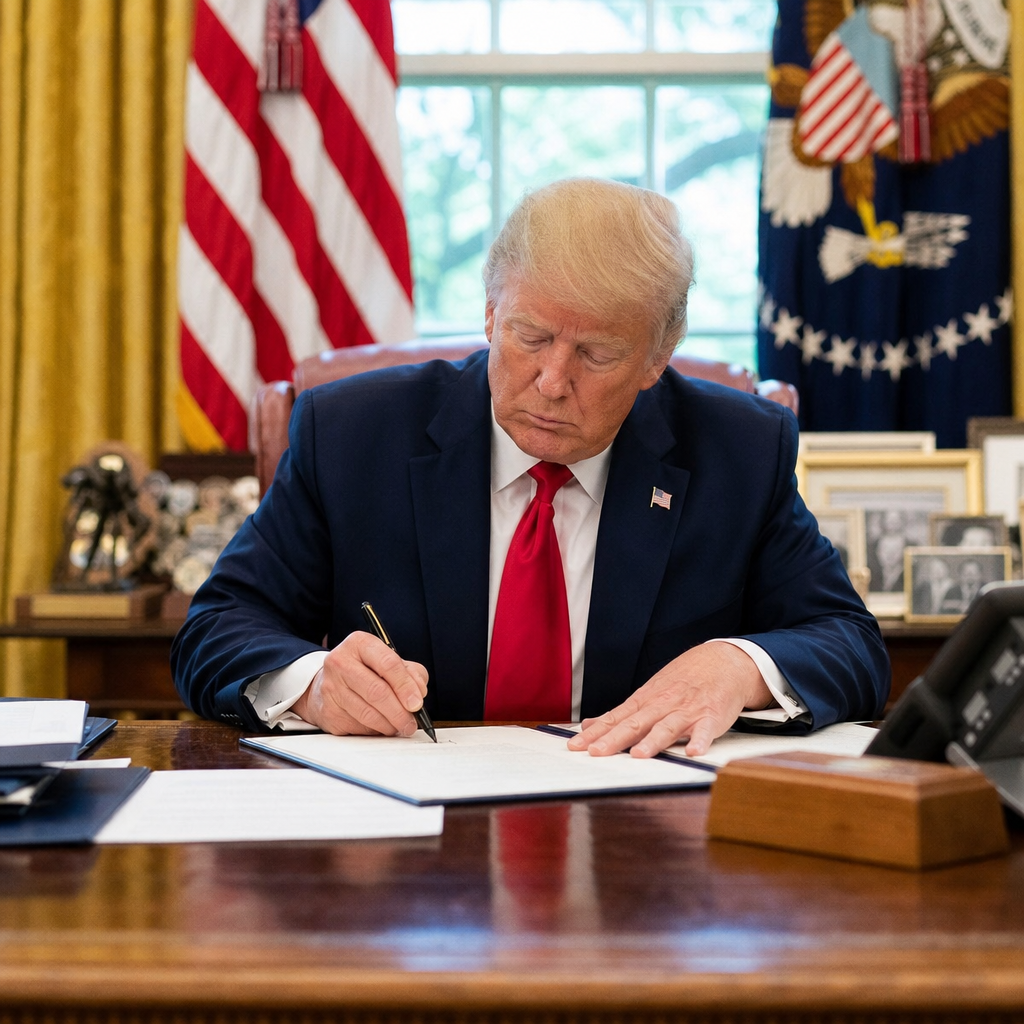
Presidential memoranda and executive orders are both tools presidents use to direct the federal government, but they differ mainly in form, publication practices, political signaling, and how they are perceived by agencies, courts, Congress, and the public. In AP Government and Politics, understanding that difference matters because both instruments sit at the intersection of Article II powers, administrative law, separation of powers, and public accountability. Students often assume an executive order is automatically stronger than a memorandum. In practice, that is not always true. I have seen policy teams treat a memorandum as fully binding when it rests on valid constitutional or statutory authority, while a poorly grounded executive order can face immediate legal challenge. The key question is not simply what the document is called. The real question is what legal authority supports it, what instructions it gives, who must carry them out, and whether it changes rights, procedures, or enforcement priorities. A presidential memorandum is typically a written directive from the president to executive branch officials. An executive order is also a written presidential directive, usually numbered and formally published. Both can manage agency operations, interpret existing authority, establish administrative priorities, and tell departments how to implement federal law. Neither can override the Constitution, and neither can create powers the president does not already possess. For students building a hub-level understanding of AP Government and Politics, this topic connects directly to bureaucracy, judicial review, congressional oversight, war powers, emergency action, immigration policy, labor regulation, and civil rights enforcement.
What presidential memoranda and executive orders have in common
At the most basic level, presidential memoranda and executive orders are unilateral presidential directives addressed to executive branch actors. They are instruments of presidential management, not statutes passed by Congress. Both rely on the same underlying sources of authority: powers granted by Article II of the Constitution, delegated authority from Congress, or a combination of both. If the president directs the secretary of homeland security to prioritize certain enforcement resources, the legal force comes from the office and from existing law, not from the title printed at the top of the page. That is why courts generally examine substance over label. A memorandum that commands an agency to act under a valid statute can carry real legal effect. An executive order that exceeds statutory limits can be enjoined. In classroom terms, both are examples of how presidents act without waiting for new legislation, especially in periods of divided government or urgent administrative need.
Both tools also shape the bureaucracy. Presidents use them to assign responsibilities, require reports, coordinate agencies, create interagency working groups, set timelines, and interpret how federal programs should be administered. For example, a president might use either form to require agencies to review regulations, improve cybersecurity practices, or update guidance on labor standards. These directives often matter less because of dramatic headlines and more because agencies then translate them into rules, enforcement manuals, budget requests, grant conditions, and internal operating procedures. That is where public policy actually changes. In my experience reviewing presidential actions, the headline document is only the beginning; the follow-on implementation memos, Office of Management and Budget instructions, and agency guidance determine whether a policy has teeth or remains symbolic.
How they differ in form, process, and public visibility
The clearest difference is procedural presentation. Executive orders are formally titled, numbered consecutively, and routinely published in the Federal Register under rules set out in the Federal Register Act and related practice. That numbering system makes them easy to cite, compare, and track across administrations. Presidential memoranda may also be published in the Federal Register when they have general applicability and legal effect, but not all memoranda are treated with the same visibility or standardization. Some are highly public and policy significant; others are narrower management instructions. Because of this, executive orders usually attract more media attention and more immediate scrutiny from interest groups, Congress, and litigants.
That visibility has political consequences. Presidents often choose executive orders when they want to send a strong public signal that they are taking decisive action. They may choose a memorandum when they want flexibility, a lower-profile directive, or a targeted instruction to agencies. The distinction is therefore partly legal housekeeping and partly strategic communication. Importantly, however, a memorandum is not inherently weaker. The Justice Department’s Office of Legal Counsel has long recognized that the substance of a presidential action, not its caption, determines its legal effect. Courts have taken a similar approach. If a memorandum directs an agency to take steps within existing authority, agencies generally treat it as binding. If an executive order announces policy goals without operative authority, agencies may need further legal support before acting.
Which one has more legal force
Neither instrument automatically outranks the other. Legal force depends on the president’s underlying authority, the specificity of the directive, and whether implementation complies with governing law. This is the most important exam-ready takeaway. An executive order is not magic. A memorandum is not merely a suggestion. If Congress has delegated broad discretion, either tool can produce significant policy outcomes. If Congress has spoken clearly in the opposite direction, neither tool can lawfully override that statute. Youngstown Sheet & Tube Co. v. Sawyer, the 1952 steel seizure case, remains the classic framework for evaluating presidential action. Justice Jackson’s concurrence explained that presidential power is strongest when acting with congressional authorization, uncertain in the zone of twilight, and weakest when contrary to Congress’s expressed or implied will. That framework applies regardless of whether the White House uses an executive order or a memorandum.
Consider immigration and national security. Presidents have used both executive orders and memoranda to shape removal priorities, refugee processing, sanctions implementation, and military or intelligence coordination. Some actions survived because statutes granted broad discretion. Others stalled because agencies skipped required procedures or because courts found conflicts with federal law or constitutional guarantees. The lesson is practical: label matters less than legal foundation and administrative execution. When students compare presidential tools, they should ask four questions. What authority is cited? Is the action self-executing or does it require agency rulemaking? Who is affected inside and outside government? What review mechanisms exist through courts, inspectors general, Congress, and public reporting?
Real-world examples from modern presidencies
Modern presidents of both parties have used memoranda and executive orders interchangeably for major policy goals. President Bill Clinton used presidential memoranda for labor and civil service matters. President George W. Bush issued both executive orders and memoranda on national security and administrative coordination after September 11. President Barack Obama used a memorandum in 2012 to implement the Deferred Action for Childhood Arrivals program through the Department of Homeland Security, demonstrating that a memorandum can drive nationally significant policy when grounded in enforcement discretion and agency implementation. President Donald Trump relied heavily on executive orders in early 2017 to signal shifts on immigration, regulation, and administrative priorities. President Joe Biden likewise used executive orders and memoranda in the opening days of his administration to reverse prior policies, organize pandemic response, and direct equity reviews across agencies.
These examples show why teachers often stress continuity as much as contrast. Every modern president inherits a vast executive branch and uses written directives to steer it. The choice between memorandum and executive order often reflects urgency, optics, and administrative convenience. For instance, a president may use an executive order to revoke or amend a prior executive order because the chain of authority is easy to document. A memorandum may be used to delegate a function, set a policy review process, or direct a specific official without the same ceremonial weight. In practice, lawyers at the White House Counsel’s Office, the Office of Management and Budget, and the Department of Justice help determine which vehicle best fits the intended action. The decision is shaped by legal risk, publication needs, and how clearly agencies must understand the command.
How agencies implement these directives
Presidential directives rarely change policy by themselves. Agencies must implement them, and that implementation determines whether a directive has immediate effect or only sets a policy agenda. If a directive tells an agency to revise a regulation, the agency may need to go through notice-and-comment rulemaking under the Administrative Procedure Act. If it tells an agency how to prioritize discretionary enforcement, implementation may happen faster through internal guidance, training, and case-screening criteria. If it requires spending, appropriations law limits what agencies can do without congressional funding. This is where AP Government students can connect presidential power to the bureaucracy and to Congress’s power of the purse.
| Feature | Presidential Memorandum | Executive Order |
|---|---|---|
| Typical format | Written directive, often less formalized | Formally styled and numbered |
| Publication | May be published if generally applicable | Routinely published in Federal Register |
| Political signaling | Often narrower or lower profile | Usually more visible and symbolic |
| Legal effect | Can be binding if validly grounded | Can be binding if validly grounded |
| Ease of tracking | Sometimes harder to catalog quickly | Easy to track by number and date |
Agencies also examine whether a directive creates judicially reviewable consequences. A broad statement of policy may not be immediately reviewable, while a directive causing final agency action may trigger litigation. The Office of Information and Regulatory Affairs may review major regulatory follow-up. The Office of Legal Counsel may weigh in on constitutional or statutory concerns. Career officials then translate presidential priorities into forms that can survive internal review and external challenge. I have found that the most durable presidential directives are the ones that align politics, statutory authority, implementation capacity, and administrative process from the start.
Limits, oversight, and common misconceptions
The biggest misconception is that executive orders let presidents make law alone. Presidents can direct the executive branch, but they cannot legislate in the constitutional sense. Congress writes statutes, appropriates money, and can constrain delegated authority. Courts can invalidate presidential actions that exceed constitutional or statutory limits. States can sue when federal action affects them directly. Interest groups and private parties can challenge implementation. Agencies themselves may resist or slow-walk directives if legal authority is uncertain or if operational realities make immediate compliance impossible. Presidential power is therefore substantial but bounded.
Another misconception is that memoranda are merely informal notes. Some are routine, but others are central policy documents. A memorandum can delegate authority under 3 U.S.C. Section 301, direct national security operations, or set major enforcement priorities. Conversely, some executive orders are largely administrative housekeeping. The smart way to evaluate either document is to read its operative language. Does it use mandatory terms such as shall? Does it cite constitutional provisions or statutes? Does it revoke earlier directives? Does it instruct agencies to publish rules, submit plans, or report by a deadline? Those details reveal practical significance more reliably than the label.
For AP Government and Politics students, this topic serves as a hub because it links to broader miscellaneous concepts that often appear across units: signing statements, executive agreements, proclamations, vetoes, emergency declarations, delegation doctrine, independent agencies, and the role of the Federal Register. If you want to understand modern presidential power, compare the document, the authority, the bureaucracy, and the review pathway every time. Presidential memoranda and executive orders are different in form and visibility, but both are powerful only when backed by lawful authority and effective implementation. Use that framework when reading current events, Supreme Court cases, or agency actions, and the distinction becomes clear. Keep this page as your starting point, then explore related AP Government topics to see how presidential directives operate across the entire political system today.
Frequently Asked Questions
What is the main difference between a presidential memorandum and an executive order?
The biggest difference is usually not the president’s legal power, but the format and signaling. Both presidential memoranda and executive orders are written directives used by the president to manage executive branch operations, instruct agencies, and shape how federal law is carried out. In many situations, either tool can be used to tell agencies what to do, as long as the president is acting within constitutional authority or authority delegated by Congress.
What makes executive orders stand out is that they are more formal and more visible. They are numbered, have an established publication process, and are often treated by the media and the public as major presidential actions. Presidential memoranda, by contrast, are often less ceremonial in appearance and may not receive the same immediate public attention, even when they have significant practical effects.
In AP Government terms, that means the difference is often about procedure, transparency, and political meaning rather than a clear-cut difference in legal force. Students sometimes assume an executive order is automatically stronger than a memorandum, but that is too simplistic. If both rest on valid authority, both can direct agency behavior. The more accurate comparison is that executive orders are typically the more formal, publicly prominent instrument, while memoranda can accomplish similar policy goals with a different style and level of visibility.
Do executive orders have more legal force than presidential memoranda?
Not necessarily. A common misconception is that executive orders are inherently more powerful because they sound more official. In reality, the key legal question is not what the document is called, but whether the president has the authority to issue it. If a presidential memorandum is based on the Constitution or on statutory authority delegated by Congress, it can be just as binding on executive branch officials as an executive order.
Courts generally look past labels and focus on substance. They ask what the directive does, what legal authority supports it, and whether it conflicts with a statute or the Constitution. An executive order cannot create power the president does not already have, and a memorandum cannot avoid legal limits simply because it uses a less formal title. Both are constrained by the same broader constitutional structure: separation of powers, judicial review, congressional legislation, appropriations limits, and the administrative procedures agencies must follow in many contexts.
That is why in government and politics courses, it is important to frame these tools as instruments of presidential administration rather than as independent sources of law. Their strength comes from the authority behind them. A highly publicized executive order without legal support can be blocked, while a less noticed memorandum grounded in solid authority can be highly effective and durable. The label matters politically, but the legal foundation matters more.
Why would a president choose a memorandum instead of an executive order?
Presidents choose among directive tools for strategic reasons. A memorandum may be used when the White House wants to direct agencies without generating the intense public reaction that often comes with an executive order. Because executive orders are closely watched by Congress, journalists, advocacy groups, and courts, using a memorandum can sometimes lower the political temperature or make an action appear more administrative than dramatic.
There can also be practical and stylistic reasons. Some presidents and White House counsels prefer memoranda for narrower instructions, internal management decisions, implementation guidance, or policy moves that do not require the symbolism of an executive order. In that sense, the choice can communicate how strongly the president wants to frame the action as a major statement of leadership. Executive orders often function not only as directives but also as public signals of decisiveness. Memoranda can be quieter, even when they are consequential.
For students, this is a useful example of how the presidency involves both formal powers and political strategy. The same constitutional system that gives the president tools to lead the executive branch also creates incentives to think carefully about optics, accountability, and institutional relationships. Choosing a memorandum may reflect legal advice, administrative convenience, media strategy, or a desire to avoid the rhetorical weight attached to executive orders.
How are presidential memoranda and executive orders published and made public?
Executive orders follow a more standardized publication process. They are numbered and are typically published in the Federal Register, which makes them easier to track, cite, and compare over time. That numbering system gives executive orders a formal identity and contributes to their visibility in textbooks, court opinions, news coverage, and political debate. When people discuss unilateral presidential action, executive orders are often the first example mentioned partly because they are easier to catalog and publicize.
Presidential memoranda can also be published, including in the Federal Register in many cases, but publication practices have historically been less uniform. Some memoranda receive substantial attention and are widely distributed, while others are less prominent. That difference in publication routine affects public accountability and perception. A tool that is consistently numbered and publicly posted is easier for outside actors to monitor than one that may appear in a less standardized way.
This publication difference matters in AP Government because transparency shapes how institutions respond. Congress can oversee what it can identify. Courts can more easily evaluate actions that are clearly documented. Agencies tend to treat formal presidential instructions seriously, but public awareness can influence how quickly or cautiously those instructions are implemented. So while both memoranda and executive orders can guide the executive branch, executive orders usually carry greater visibility, which in turn affects politics, media coverage, and democratic accountability.
How do agencies, courts, Congress, and the public tend to view these two presidential tools?
Executive orders are often perceived as more significant because they look more formal and attract more attention, but that does not mean agencies or courts automatically treat memoranda as unimportant. Agencies generally focus on whether a directive comes from the president and whether it is clear, lawful, and operationally workable. If a memorandum gives a direct instruction backed by authority, agencies may respond to it much as they would to an executive order.
Courts, meanwhile, usually care more about legal substance than political branding. A judge reviewing a presidential action is likely to ask whether the president had the constitutional or statutory authority to act, whether the action conflicts with federal law, and whether agencies followed required administrative procedures. The title of the directive may provide context, but it is rarely the central legal issue. In that sense, the judiciary often cuts through the symbolic difference and focuses on separation of powers and administrative law principles.
Congress and the public, however, are often more influenced by form and framing. Executive orders can trigger headlines, oversight hearings, campaign messaging, and accusations of presidential overreach precisely because they are associated with visible unilateral action. Memoranda may prompt a quieter response, even when their real-world effects are comparable. That gap between perception and legal reality is one of the most important lessons for students: in American government, institutional power is shaped not only by formal authority, but also by how actions are presented, monitored, and understood by other political actors and by the public.