
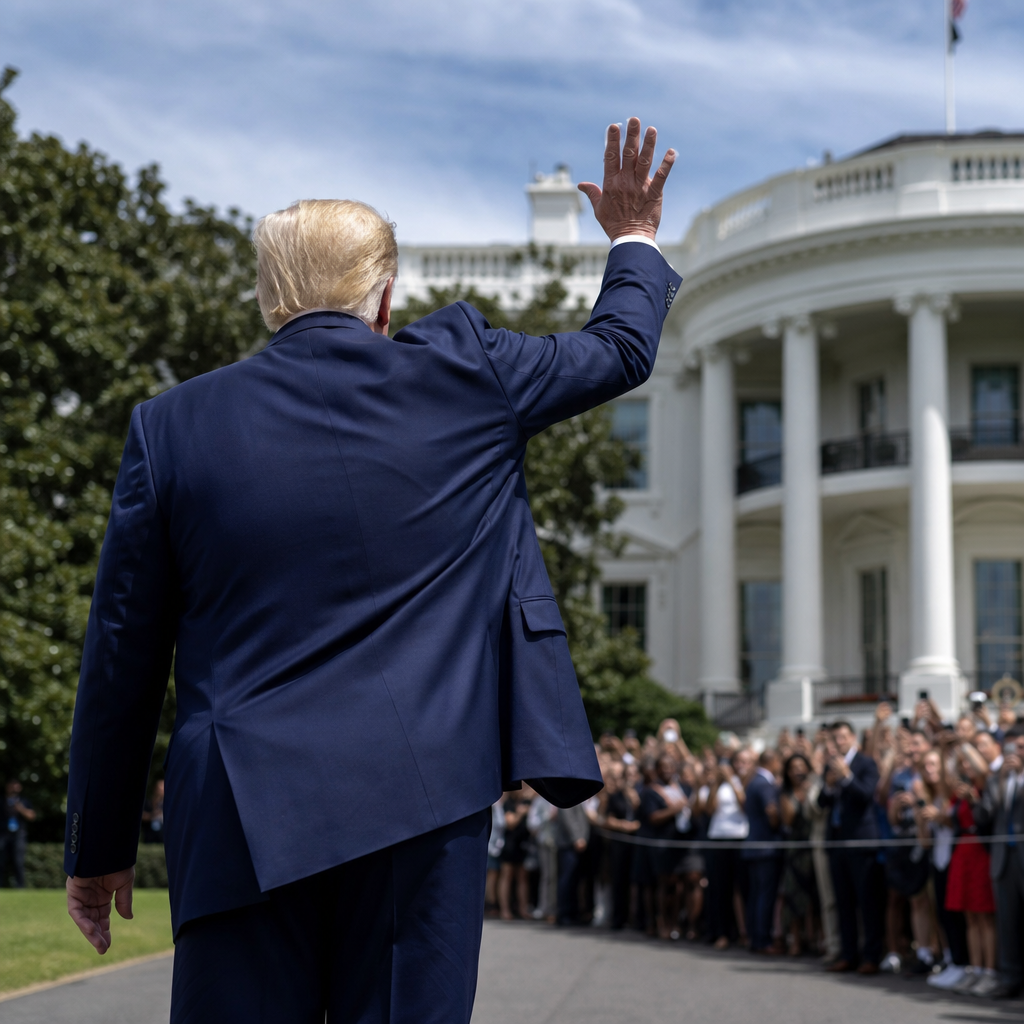
Presidential coattails describe the tendency of a popular presidential candidate to help candidates from the same party win lower offices on the same ballot. In AP Government and Politics, the concept matters because it connects voter behavior, party organization, election rules, and institutional power in one idea that appears simple but is often misunderstood. When students ask whether the White House really affects House, Senate, gubernatorial, and state legislative races, the honest answer is yes, but not always in the same way or to the same degree.
I have taught this topic by starting with the ballot itself. Voters in the United States usually choose many offices at once: president, senator, representative, governor, attorney general, and local officials. A strong presidential nominee can increase turnout among loyal supporters, shape media coverage, attract donors, and give lesser-known candidates a ready-made party brand. That package of advantages is what people mean by coattails. The reverse also exists. An unpopular presidential candidate can drag down allies, especially in competitive districts where partisanship is balanced and late-deciding voters are persuadable.
Understanding presidential coattails matters for more than test preparation. It helps explain why parties invest so heavily in national campaigns, why candidates sometimes embrace or distance themselves from the top of the ticket, and why election outcomes can produce broad governing mandates or divided government. It also clarifies why some years create dramatic partisan waves while others produce split-ticket voting. To study coattails well, students need definitions, historical context, and a practical grasp of the conditions that make the effect stronger or weaker.
This hub article covers the major ideas that sit under the coattails topic in AP Government and Politics. It explains what coattails are, how they operate, when they fail, how redistricting and polarization changed them, and why Senate, House, gubernatorial, and state legislative races respond differently. It also connects the topic to turnout, incumbency, midterms, party polarization, campaign strategy, and federalism so readers can use this page as a starting point for related articles across the broader unit.
What presidential coattails are and how they work
At the most basic level, coattails are a spillover effect from the presidential race to down-ballot contests. Political scientists usually point to four mechanisms. First, turnout: a high-interest presidential race brings occasional voters to the polls, and many of those voters support the same party all the way down the ballot. Second, persuasion: undecided voters often use the presidential nominee as a shortcut for judging the party’s brand. Third, resources: presidential campaigns build field operations, digital targeting systems, volunteer networks, and donor lists that allied candidates can use. Fourth, agenda setting: the issues dominating the presidential race can reframe local contests around national themes.
In practice, these mechanisms reinforce one another. A charismatic nominee can dominate earned media, raise money at extraordinary scale, and create excitement that helps congressional candidates in nearby districts. I have seen campaigns rely on coordinated field programs in which volunteers recruited for the presidential race also knock doors for House and state legislative candidates. Data teams share turnout models, county parties share staff, and campaign events create local news coverage for candidates who otherwise would not command attention. Coattails are therefore not just psychological; they are organizational and financial.
Still, coattails are not automatic. A popular governor or representative with a strong personal brand can outperform the presidential nominee from the same party. Likewise, candidates in districts with a different partisan lean may survive by emphasizing local issues, constituent service, or ideological moderation. That is why coattails should be treated as a probabilistic force, not a fixed law.
Why coattails vary across offices and election years
The White House affects different offices in different ways because the political environments are not the same. U.S. House races are often the most sensitive to coattails because every seat is contested every two years, campaigns are relatively short, and many challengers have limited name recognition. Senate races are high profile and statewide, so candidate quality and fundraising can partially offset national tides. Gubernatorial races can resist coattails when voters see governors as managers of state government rather than national partisan messengers. State legislative races often receive little media attention, which means party cues from the presidential race can matter greatly.
Political context also shapes the size of the effect. Coattails tend to be stronger when the presidential race is decisive, when one candidate inspires unusually high turnout, or when national issues dominate public attention. Economic crisis, war, inflation, immigration, abortion, and threats to democratic norms can nationalize lower-level races. By contrast, coattails weaken when voters split tickets, when incumbents are locally popular, or when district lines heavily favor one party.
| Condition | Typical effect on down-ballot races | Example in plain terms |
|---|---|---|
| Large presidential margin | Stronger coattails | A landslide top-ticket win boosts same-party House candidates in swing suburbs |
| Close presidential race | Mixed coattails | Local candidates matter more because neither party dominates turnout |
| High polarization | More straight-ticket voting | Voters align House and Senate choices with presidential preference |
| Strong incumbent down ballot | Weaker coattails | A well-known senator wins despite running behind the party’s nominee |
| Nationalized issues | Broader spillover effects | Debates over inflation or abortion shape races far below the presidency |
One reason students sometimes overstate coattails is that they confuse correlation with causation. If a party wins the presidency and Congress together, the result may reflect the same underlying partisan environment rather than direct presidential influence alone. Analysts therefore compare district-level results, turnout patterns, and candidate performance relative to the top of the ticket before concluding that coattails were decisive.
Historical patterns: from strong coattails to split tickets to polarization
Historically, presidential coattails were often stronger when party loyalty was stable and local media environments were less fragmented. Franklin Roosevelt’s victories helped Democrats build durable congressional majorities during the New Deal era. Ronald Reagan’s 1980 win aided Republicans in the Senate, though Democrats kept the House. Barack Obama’s 2008 campaign boosted Democrats in many congressional and state races through turnout and organization, especially among younger voters and racial minorities. Donald Trump’s 2016 and 2020 campaigns showed a different pattern: intense nationalization and polarization pushed many voters into straight-ticket behavior, but candidate quality still mattered in key Senate and gubernatorial races.
From roughly the 1970s through the early 2000s, split-ticket voting was more common. Many voters supported one party for president and another for Congress, especially in the South and parts of the Midwest and Northeast. Conservative Democrats and liberal Republicans still held office, which created room for personal brands independent of the national ticket. In that environment, coattails existed but were less predictable.
Today, polarization has reduced that flexibility. Straight-ticket voting has increased, and fewer districts elect representatives from a different party than the presidential winner in that district. Scholars track this with measures like ticket-splitting rates and presidential-congressional vote alignment. The result is not that coattails always surge, but that partisan consistency now does more of the work. In other words, the presidential race often signals the same party identity that guides lower-ballot choices.
House, Senate, governor, and state legislature: key differences students should know
For AP Government and Politics, it helps to treat down-ballot offices separately rather than as one category. House elections are local in geography but national in message. Because districts are smaller, campaigns can be targeted precisely, and a presidential ground game can dramatically increase turnout in neighborhoods that otherwise vote less frequently. This is especially true in suburban swing districts where small shifts in college-educated voters or turnout among younger voters can change the result.
Senate races are usually less dependent on coattails because candidates are more visible and often raise substantial sums on their own. A strong Senate candidate can survive an unfavorable presidential environment by building a distinct reputation on constituent service, state interests, or ideological balance. Yet Senate races are still highly vulnerable to national waves because they attract heavy media attention and are often interpreted as judgments on the president or the parties.
Governors occupy a mixed position. In some states, voters distinguish sharply between national and state politics. Popular governors can win while their party loses the presidential vote in the same state, especially when they are viewed as pragmatic administrators. However, when gubernatorial races become nationalized around issues like pandemic policy, abortion rights, taxes, or election administration, coattails become more visible.
State legislative races often reveal the most overlooked White House effect. These candidates frequently lack money, name recognition, and independent media coverage. If turnout spikes because of the presidential race, those voters can reshape chambers that later control redistricting, voting laws, abortion policy, education standards, and budget priorities. That is why presidential years can have long-term consequences far beyond Congress itself.
Factors that strengthen or weaken the White House effect
Several variables consistently shape whether coattails appear. Candidate quality matters. A weak recruit with little fundraising skill may not capitalize on favorable national conditions, while a disciplined candidate can outperform expectations. Incumbency matters because officeholders usually enjoy name recognition, existing donor networks, and casework-based goodwill. District partisanship matters because heavily gerrymandered seats are insulated from national swings. Ballot rules matter too. Some states once allowed a single action for straight-ticket voting, which could reinforce coattails, though many states changed those rules.
Campaign strategy is another major factor. Parties now use voter files, microtargeting, and turnout modeling through tools such as the voter databases maintained by national committees and firms like Catalist. Coordinated campaigns can identify low-propensity partisan voters, contact them repeatedly, and connect the presidential message to local stakes. When those systems are well run, coattails become measurable in precinct-level turnout.
Media environment also matters. In a fragmented digital space, local candidates can be overshadowed by the presidential race. That can help lesser-known same-party candidates if the national message is favorable, but it can also erase local differentiation. I have watched down-ballot campaigns struggle to discuss transportation funding or water infrastructure because every voter conversation quickly turns to the president, inflation, immigration, or Supreme Court nominations. When local campaigns cannot define themselves, they are more dependent on national party cues.
Limits, backlash, and why coattails do not guarantee governing success
Presidential coattails can win elections, but they do not ensure stable governing majorities. Voters who are mobilized by a presidential contest may disappear in the midterm elections, which usually have lower turnout and often punish the president’s party. This pattern helps explain why parties can gain unified control in a presidential year and lose Congress two years later. The so-called surge-and-decline model captures part of this dynamic: presidential elections bring in peripheral supporters, while midterms draw a smaller, older, and often more opposition-minded electorate.
Backlash is another limit. A president elected with strong coattails may provoke intense resistance that helps the opposing party recruit stronger candidates, raise more money, and nationalize the next election around presidential performance. Policy outcomes matter here. If the economy weakens, inflation rises, or a major policy initiative becomes unpopular, the earlier coattail effect can reverse.
There is also the issue of overreading mandates. A party may interpret a broad presidential-year victory as support for its entire agenda when some voters were motivated mainly by opposition to the other side, candidate personality, or short-term conditions. Effective analysis separates electoral assistance from ideological endorsement.
Presidential coattails remain one of the clearest ways to see how national leadership shapes the rest of the American ballot. The White House affects down-ballot races through turnout, persuasion, money, organization, and media attention, but the strength of that effect depends on office type, incumbency, polarization, district partisanship, and campaign quality. House races often feel the effect first, Senate and gubernatorial races filter it through candidate reputation, and state legislative contests can be transformed because so few voters know the candidates independently.
For AP Government and Politics, the biggest takeaway is that coattails are neither myth nor magic. They are a recurring electoral force that works best when conditions align: a compelling presidential nominee, nationalized issues, coordinated party infrastructure, and competitive lower-ballot races. They weaken when incumbents are entrenched, districts are safely partisan, or voters deliberately split their tickets. That nuance is what strong exam answers usually miss.
Use this hub as your foundation for related topics such as turnout, party polarization, incumbency advantage, midterm loss, redistricting, federalism, and campaign strategy. If you want to understand why one presidential election can reshape Congress, statehouses, and future policy for years, start by following the coattails from the top of the ticket to every office below it.
Frequently Asked Questions
What are presidential coattails, and why do they matter in AP Government and Politics?
Presidential coattails refer to the idea that a strong presidential candidate can help candidates from the same party win lower offices on the ballot, including seats in the House, Senate, governorships, and state legislatures. The image is that successful presidential nominees “carry” fellow party candidates into office. In AP Government and Politics, this concept matters because it links several core topics that students study separately but must understand together: voter behavior, party identification, candidate-centered campaigns, election rules, and institutional power. Coattails are not just about popularity. They reflect how presidential elections shape turnout, media attention, partisan enthusiasm, donor behavior, and how voters make choices across the ballot.
The concept is important partly because it is often oversimplified. Students sometimes assume that if a presidential candidate wins big, every same-party candidate automatically benefits. That is not how modern elections work. Coattail effects can be strong in some elections and weak in others, depending on polarization, incumbency, district partisanship, campaign quality, and whether voters split their tickets. Still, the idea remains useful because it helps explain why presidential election years can create broader shifts in government than midterm elections do. It also helps explain why parties care so much about national messaging and turnout operations: winning the White House can influence control of Congress and even state governments. In short, presidential coattails matter because they show how one race at the top of the ballot can shape political outcomes far beyond the presidency itself.
How does a presidential candidate actually affect down-ballot races like House, Senate, and gubernatorial contests?
A presidential candidate can affect down-ballot races through several overlapping mechanisms. First, there is turnout. A popular, energizing, or highly visible presidential nominee can bring more voters to the polls, especially casual voters who might skip a midterm or pay little attention to lower offices. If those voters generally favor the nominee’s party, they may also support the party’s House, Senate, or state-level candidates. Second, there is straight-ticket or party-line voting, even in places without a formal straight-ticket option. Many voters use party as a shortcut. If they trust one party’s presidential nominee, they may support other candidates from that party without closely researching every race.
Third, presidential campaigns can shape the political environment. They dominate media coverage, set the national agenda, and influence which issues matter most to voters. If the election becomes a referendum on the economy, health care, immigration, or abortion, candidates farther down the ballot may benefit or suffer depending on whether their party is aligned with majority opinion. Fourth, presidential nominees can strengthen party organization. A competitive presidential race often improves fundraising, volunteer recruitment, data operations, and voter-contact efforts, and those resources can spill over to lower-level campaigns. Fifth, candidate image matters. A nominee who is widely admired may improve the public image of the party as a whole, while a deeply unpopular nominee can hurt fellow partisans.
That said, the effect is not uniform across offices. House races are often more sensitive to district lines and incumbency. Senate races can be influenced by statewide political conditions and candidate quality. Gubernatorial races may be less tied to the presidential contest because voters sometimes see governors as managers rather than national ideological figures. State legislative races vary even more, especially when local issues dominate. So the presidential effect is real, but it works through turnout, party cues, campaign infrastructure, and issue framing rather than some automatic top-down force.
Do presidential coattails still exist in today’s highly polarized elections?
Yes, but they usually operate differently than in earlier periods of American politics. In the past, coattail effects could be dramatic because party loyalty was less consistent, ticket-splitting was more common, and a landslide presidential victory could pull many marginal candidates into office. In today’s polarized environment, many districts and states are already closely aligned with one party at all levels, so there is less room for large swings. Voters are more likely to vote consistently for one party across the ballot, which can make coattails seem weaker in some ways because outcomes are more predictable. At the same time, polarization can also strengthen the connection between the presidential race and lower offices because many voters now see all elections through a national partisan lens.
In other words, coattails still exist, but they often show up as marginal advantages rather than huge wave-like effects in every race. A presidential nominee may help same-party candidates in competitive districts by increasing turnout among loyal voters, improving enthusiasm, or shaping perceptions of the party. Even a small shift can matter a lot in close contests. However, modern factors can limit the effect. Incumbents often have strong local support. Gerrymandering can make many House districts safely partisan. Senate and gubernatorial candidates can build distinct personal brands. And split-ticket voting, while less common than it used to be, has not disappeared completely. So the best way to understand coattails today is not as a guarantee of sweeping partisan success, but as one important force among several that can tip close races and contribute to larger electoral patterns.
Why don’t presidential coattails always help every candidate from the president’s party?
Presidential coattails are limited because elections are shaped by many factors at once. One major factor is incumbency. An incumbent member of Congress, governor, or state legislator may have name recognition, donor networks, constituent service records, and local goodwill that make the race less dependent on the presidential contest. Another factor is district or state partisanship. A strong presidential candidate may not be able to save a same-party candidate running in territory that leans heavily toward the other party. Candidate quality also matters. Weak messaging, scandal, poor fundraising, or ineffective campaigning can cancel out any benefit from the top of the ticket.
Local issues can weaken coattails too. Voters may support one party for president but prefer a different candidate for governor because of state-specific concerns such as education funding, taxes, infrastructure, or crisis management. Senate races can also become highly personalized and media-intensive, allowing candidates to separate themselves somewhat from the national party. In addition, some voters intentionally divide power. They may prefer one party in the White House and the other in Congress because they believe divided government creates checks and balances. Others may dislike a presidential nominee but still support lower-level candidates from that nominee’s party because of local ties or policy differences.
Election structure matters as well. Midterms do not include a presidential race at all, which means no coattails from a current nominee. Off-year elections often produce different electorates with lower turnout and different partisan balances. Even in presidential years, ballot design, state voting rules, campaign spending, and the competitiveness of individual races can all influence whether coattails appear strong or weak. So when students ask why a president’s party did not win every race in a “good year,” the answer is simple: presidential coattails can help, but they compete with powerful local, institutional, and strategic forces that shape each contest on its own terms.
How should students explain presidential coattails clearly on an exam or in a class discussion?
The strongest explanation starts with a precise definition and then adds nuance. A good first sentence would be: presidential coattails are the tendency of a successful presidential candidate to increase support for candidates from the same party in lower offices. After that, students should explain the main reasons this happens: increased turnout, party-line voting, nationalized media coverage, stronger party organization, and favorable issue framing. That basic structure shows both what coattails are and how they work. In AP Government and Politics, it helps to connect the concept to broader course themes, especially political behavior, party systems, elections, and congressional politics.
To earn stronger credit, students should also show that coattails are conditional, not automatic. They can mention that coattail effects are usually stronger when the presidential candidate is especially popular, when races are competitive, and when voters are highly motivated to participate. They should also note limits such as incumbency, gerrymandered districts, local issues, split-ticket voting, and candidate quality. If an exam question asks whether the White House affects down-ballot races, the best answer is balanced: yes, presidential elections can influence House, Senate, gubernatorial, and state legislative races, but the size of the effect varies by office, state, district, and election year. That kind of answer is more accurate than saying coattails always decide outcomes or claiming they no longer matter at all.
If possible, students should use the concept analytically rather than memorizing it as a vocabulary term. For example, they can explain that winning the presidency may help a party gain congressional seats in the same election, while losing the presidency can make it harder for that party’s candidates in close races. They can also connect coattails to the nationalization of politics, where even local elections are increasingly shaped by national party identity. A concise but thoughtful explanation demonstrates real understanding: presidential coattails are a meaningful force in American elections, but they operate alongside turnout patterns, institutional rules, candidate strength, and local political conditions.