
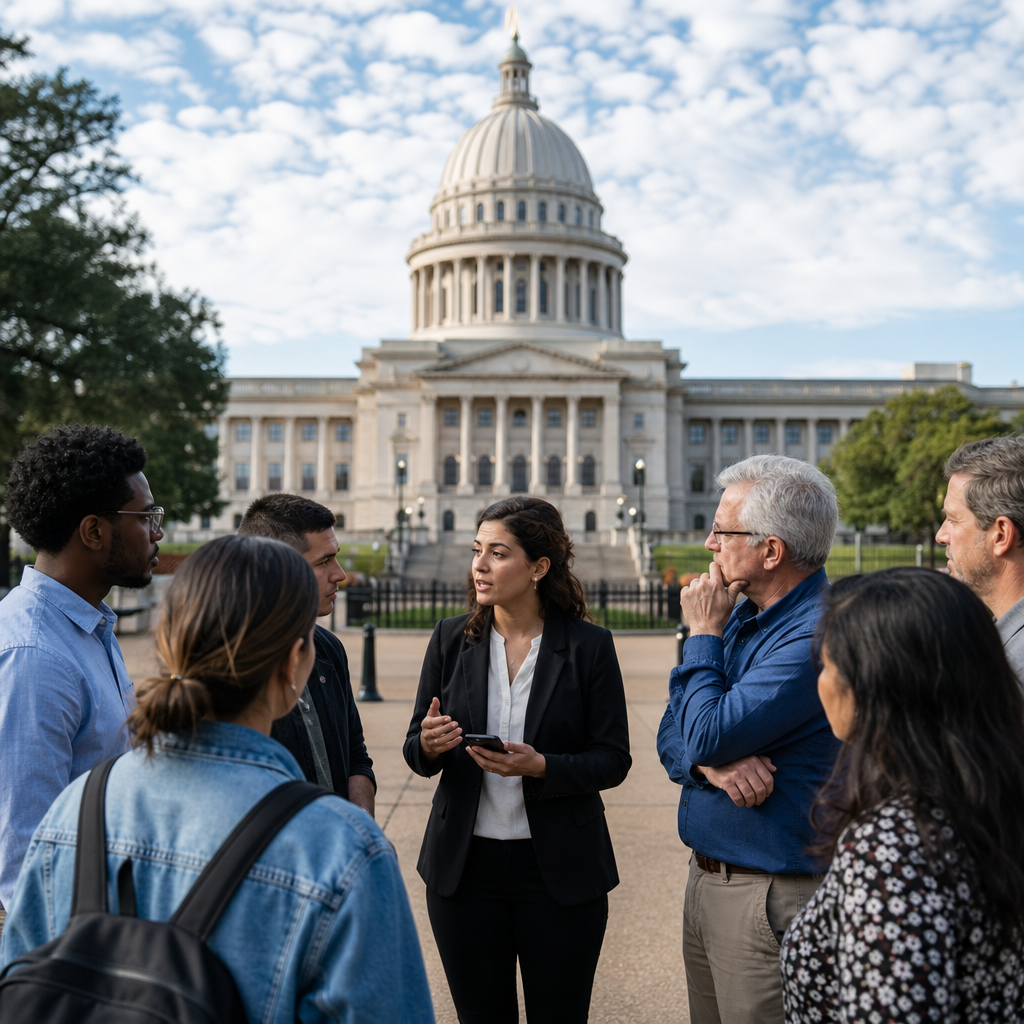
Political knowledge gaps shape how citizens interpret campaigns, judge public officials, and decide whether government deserves trust. In AP Government and Politics, the term refers to measurable differences in what people know about institutions, public policy, elections, and current events. Some people can explain the difference between enumerated and reserved powers, identify the Speaker of the House, and summarize how a bill becomes law. Others follow politics only during presidential years or rely on fragments from social media, friends, or late-night commentary. These differences are not random. They reflect education, income, age, media habits, civic norms, group identity, and whether people believe politics affects their lives.
This hub article explains who follows politics, why some groups know more than others, and why these gaps matter for democratic participation. I have seen the pattern repeatedly in classrooms and civic workshops: students who discuss local school board issues often learn national politics faster because they already have a framework for institutions, conflict, and public decision-making. Political knowledge is not just memorizing facts. It includes understanding processes, recognizing credible sources, and connecting policy choices to constitutional principles. That matters because modern citizens face a flood of information, misinformation, and strategic messaging. A democracy works better when people can distinguish opinion from evidence, campaign promises from governing constraints, and symbolic conflict from actual policy change.
Political knowledge gaps also matter because they influence turnout, policy preferences, and confidence in government. Research in political behavior consistently finds that people with higher levels of political information are more likely to vote, contact officials, and consume issue-based news. Yet high information does not guarantee ideological moderation or perfect judgment. People can be informed and still biased. The key question is not whether everyone becomes a policy expert. It is whether citizens have enough political knowledge to evaluate leaders, understand stakes, and participate meaningfully. For AP Government and Politics students, this topic connects directly to political socialization, linkage institutions, media, participation, public opinion, and the health of representative democracy.
What political knowledge means in practice
Political knowledge means more than recalling trivia. In practice, it includes three layers. First is factual knowledge, such as identifying the branches of government, major officeholders, party positions, and constitutional rights. Second is procedural knowledge, including how elections work, how courts shape policy, and how federalism divides authority. Third is interpretive knowledge: the ability to evaluate claims, compare sources, and place events in context. A voter who knows that Congress controls appropriations, for example, is less likely to accept a misleading claim that a president can fund any program unilaterally. That kind of understanding is what separates durable knowledge from temporary headline awareness.
In surveys, political scientists often measure knowledge with short batteries of questions about institutions, leaders, and policy. The National Election Studies and Pew Research Center have shown that higher education and regular news consumption are associated with stronger scores. But scores vary depending on what counts as knowledge. A respondent may know little about committee chairs yet understand how inflation, immigration policy, or abortion rights affect real communities. That is why strong analysis distinguishes civic competence from elite shorthand. Students should treat political knowledge as a mix of concrete facts, constitutional structure, and issue understanding, not as a game of insider vocabulary.
Who follows politics most closely
People who follow politics closely usually share several characteristics. They tend to have more education, higher income, stronger civic habits, and a media routine that includes newspapers, public radio, issue newsletters, or reputable digital outlets. Older adults often report following politics more regularly than younger adults, partly because voting is habitual and public policy affects taxes, health care, and retirement directly. Partisans with strong ideological identities also monitor politics closely because elections feel personally consequential. In my experience, the most attentive citizens are not always activists. Many are routine voters who read local coverage, compare candidates, and track issues that touch their communities, such as zoning, public schools, transportation, or policing.
Interest also rises when politics feels immediate. Veterans may pay closer attention to foreign policy. Parents often become more informed when curriculum debates or school funding decisions affect their district. Homeowners may suddenly learn how local government works when property assessments change. After the Dobbs decision, many citizens who had paid little attention to federalism or judicial appointments began following state legislatures, ballot initiatives, and court rulings closely. Political attention is often situational. People learn fastest when institutions stop being abstract and begin shaping daily costs, rights, or opportunities.
| Group | Typical pattern of attention | Common reason | Illustrative example |
|---|---|---|---|
| Higher education voters | More frequent news use and institutional knowledge | Stronger reading habits and civic exposure | Comparing budget proposals across candidates |
| Older adults | Higher turnout and regular election monitoring | Habit formation and policy stakes like Medicare | Following Social Security reform debates |
| Strong partisans | High campaign attention, sometimes selective | Identity reinforcement and competition | Tracking polls, debates, and party messaging |
| Local issue stakeholders | Intense but narrow engagement | Direct effect on family or finances | Learning school board powers during curriculum disputes |
Why political knowledge gaps develop
Political knowledge gaps develop because information is unevenly distributed and unevenly rewarded. Education is the strongest predictor because schools build background knowledge, reading comprehension, and confidence in handling public affairs. Family socialization matters too. Young people raised in homes where elections are discussed, newspapers are visible, and public service is respected usually develop political interest earlier. Time and money also matter. Citizens working multiple jobs may care deeply about policy yet lack the time to follow hearings, compare sources, or watch local meetings. Knowledge gaps therefore reflect unequal opportunity as much as unequal motivation.
Media structure widens these differences. People who use high-quality local and national reporting generally learn more than people who rely on algorithmic feeds filled with commentary, memes, and decontextualized clips. The collapse of local newspapers has been especially damaging. When city hall, county commissions, and school boards receive less coverage, citizens lose practical information about the government closest to them. Scholars have linked weaker local news ecosystems to lower turnout, less competitive elections, and reduced accountability. Political campaigns exploit these conditions by simplifying complex issues into emotional narratives. Without background knowledge, voters struggle to evaluate those narratives.
Psychology plays a role as well. Confirmation bias leads people to seek information that supports existing beliefs. Motivated reasoning makes citizens defend their side even when confronted with contradictory evidence. Politics can also feel alienating. If people believe institutions ignore them, they may disengage rather than invest in learning more. That creates a cycle: low efficacy reduces attention, low attention reduces knowledge, and low knowledge makes politics feel even more distant. Breaking that cycle usually requires a trigger such as a local controversy, a first election, a community organization, or a trusted teacher who makes institutions understandable.
Media, technology, and the modern attention divide
Media habits now shape political knowledge as much as formal education. Legacy outlets still matter because they provide edited reporting, transparent corrections, and beats that track institutions over time. A city hall reporter can explain why a zoning vote matters long before it becomes a social media controversy. By contrast, platform-driven information is fast, personalized, and emotionally optimized. It can broaden exposure, but it often fragments attention. Users see dramatic moments without procedural context, which encourages strong opinions built on partial information. A viral clip from a congressional hearing may be real, but without committee background, legislative history, and policy stakes, viewers may misunderstand what they saw.
Podcasts, newsletters, and explainers have improved access for many citizens. Good political communicators translate technical subjects into plain language without flattening complexity. Tools such as Ballotpedia, C-SPAN, Congress.gov, state legislature websites, and the Federal Register give motivated users direct access to primary materials. Still, access is not the same as comprehension. Students often need guidance on how to read a court opinion, distinguish a poll from a forecast, or tell the difference between a think tank analysis and campaign spin. The modern attention divide is therefore not simply online versus offline. It is the gap between passive exposure and active, structured learning.
How knowledge gaps affect democracy
Political knowledge gaps affect democracy in several concrete ways. First, they influence turnout and participation. People with more knowledge are generally more likely to vote consistently, donate, attend meetings, or contact representatives. Second, knowledge shapes accountability. Voters cannot reward or punish leaders effectively if they do not know who controls which policy lever. Presidents often receive blame for gas prices or praise for local infrastructure delays that are largely outside direct presidential control. Third, knowledge affects susceptibility to misinformation. Citizens who understand institutions and evidence standards are better equipped to reject false claims about election administration, constitutional powers, or basic policy facts.
At the same time, democracies do not require every citizen to be equally informed about every issue. Division of attention is normal in a large republic. What matters is whether enough citizens, journalists, civic groups, and institutions can generate informed scrutiny. The risk appears when gaps become so large that politics turns into pure symbolism for many people. Then slogans replace governance, and performative conflict crowds out policy literacy. In AP Government terms, healthy democratic citizenship depends on both participation and informed participation. High turnout without baseline understanding can still produce weak accountability, especially in low-information environments saturated with targeted persuasion.
How students can close political knowledge gaps
Students can close political knowledge gaps by building a repeatable civic information routine. Start with institutional basics: learn the powers of each branch, major constitutional clauses, and the structure of federalism. Then connect those basics to current issues. When reading about student debt, border enforcement, environmental regulation, or voting rules, ask which level of government is acting, what legal authority is involved, and what checks limit that action. This method turns news into applied government. I have found that students retain information better when they map each story to a concept from class rather than trying to memorize disconnected headlines.
Use reliable sources intentionally. Read one national outlet, one local outlet, and one primary source database. Compare a campaign claim with a budget document, court opinion, or bill summary. Follow a local issue from proposal to implementation. Attend a school board or city council meeting at least once, even virtually. The most effective learners do not consume more information blindly; they organize it. Keep a short glossary of terms such as incumbent, amicus brief, cloture, redistricting, and administrative rule. Over time, politics becomes easier to follow because the vocabulary and institutions stop feeling foreign. That is the practical benefit of civic literacy: it reduces confusion and increases agency.
Political knowledge gaps are a central issue in AP Government and Politics because they connect media, participation, public opinion, and representation into one big question: who understands government well enough to act effectively within it. Some citizens follow politics constantly, others only when events feel personal, and many move between those positions over time. The gap is shaped by education, family socialization, economic pressures, media quality, and psychological habits. It widens when local news declines and when political content rewards outrage over explanation. It narrows when schools, communities, and trusted institutions make government concrete, relevant, and understandable.
The main lesson is straightforward. People do not need encyclopedic knowledge to be good citizens, but they do need enough understanding to identify credible information, connect issues to institutions, and judge leaders fairly. That standard is achievable. Build background knowledge, follow a few reliable sources, and practice linking current events to constitutional structure and policymaking. If you are using this page as a hub for the Misc section of AP Government and Politics, use it as a starting point for deeper reading on political socialization, media effects, voter behavior, and civic engagement. The more clearly you understand why political knowledge gaps exist, the better prepared you will be to analyze American politics and participate in it responsibly.
Frequently Asked Questions
What does “political knowledge gap” mean in AP Government and Politics?
A political knowledge gap is the measurable difference in how much people know about government, public policy, elections, political institutions, and current events. In AP Government and Politics, this concept helps explain why citizens do not all engage with the political system in the same way. Some individuals can identify key leaders, describe the role of Congress, explain federalism, and connect policy debates to constitutional principles. Others may know only the broadest headlines or pay attention to politics only during major election years.
These gaps matter because democratic participation depends in part on what people know. A citizen who understands how a bill becomes law, what the Supreme Court does, or how powers are divided between the national and state governments is better equipped to evaluate campaign promises, judge elected officials, and recognize the limits of government action. By contrast, limited political knowledge can make it harder to sort fact from opinion, understand policy tradeoffs, or identify which level of government is responsible for a problem. In short, a political knowledge gap is not just about trivia. It reflects unequal access to the information people need to participate effectively in public life.
Why do some people follow politics closely while others pay attention only occasionally?
People follow politics at different levels for a mix of practical, social, and psychological reasons. One major factor is interest. Some people enjoy public affairs, debate, and policy questions, so they naturally seek out information. Others view politics as confusing, frustrating, or remote from everyday life, which makes them less likely to pay attention unless a major election or crisis puts politics directly in front of them. Personal relevance also matters. Individuals are more likely to follow government when they believe decisions about taxes, healthcare, education, jobs, or civil rights affect them directly.
Time and access are also important. People with demanding work schedules, caregiving responsibilities, or limited access to quality news sources may have less opportunity to keep up with current events. Education can make a difference as well, because people who have learned how institutions work often find political information easier to understand and more rewarding to follow. Social environment matters too. If family, friends, teachers, or coworkers discuss politics regularly, a person is more likely to stay informed. If politics rarely comes up in daily life, occasional attention becomes more common. In many cases, people are not avoiding politics out of apathy alone; they may simply face barriers that make sustained attention harder.
What kinds of political knowledge are most important for citizens to have?
The most important political knowledge goes beyond memorizing names or isolated facts. Citizens benefit most from understanding how the political system works, who holds power, and how policy decisions are made. Foundational knowledge includes knowing the basic structure of government, such as the roles of Congress, the presidency, and the judiciary. It also includes understanding core constitutional ideas like separation of powers, checks and balances, federalism, civil liberties, and civil rights. For example, knowing the difference between enumerated powers and reserved powers helps citizens understand why some issues are handled primarily at the national level while others are left to the states.
Citizens also need practical knowledge that connects government to real events. That includes knowing who represents them, how elections work, how parties and interest groups influence politics, and how public policy affects communities. Awareness of current events is important, but it is strongest when combined with institutional understanding. In other words, it is useful to know that Congress is debating a bill, but it is even more useful to understand what steps the bill must go through, what compromises are likely, and which branches of government can shape the outcome. This kind of knowledge allows citizens to make informed choices, evaluate competing claims, and participate more effectively in democracy.
How do political knowledge gaps affect elections, public opinion, and trust in government?
Political knowledge gaps can strongly shape how people interpret campaigns, evaluate leaders, and decide whether government deserves trust. During elections, more informed voters are generally better able to connect candidates’ positions to actual policy consequences. They may be more likely to compare records, identify misleading claims, and understand which offices have authority over which issues. Less informed voters may rely more heavily on party labels, slogans, name recognition, or emotional impressions. Those shortcuts are not always irrational, but they can make citizens more vulnerable to oversimplified arguments or inaccurate information.
Knowledge gaps also influence public opinion and trust. People who understand how institutions function may be more realistic about what government can accomplish quickly and what requires compromise. That can lead to more grounded judgments about success, failure, and responsibility. By contrast, when citizens do not know which branch or level of government controls an issue, they may blame the wrong officials or lose trust based on misunderstandings. At the same time, more knowledge does not automatically produce more trust. In some cases, informed citizens become more critical because they better recognize polarization, gridlock, or unequal influence in the system. The key point is that knowledge shapes the lens through which people view politics, and different levels of knowledge can produce very different political reactions.
Can political knowledge gaps be reduced, and if so, how?
Yes, political knowledge gaps can be reduced, although they usually cannot be eliminated completely. One of the most effective ways to narrow these gaps is through strong civic education. When students learn not only basic facts but also how institutions function, how to evaluate sources, and how public policy connects to everyday life, they are more likely to remain engaged as adults. Instruction is especially powerful when it includes discussion of current events, constitutional principles, elections, and real examples of government decision-making rather than treating politics as a list of terms to memorize.
Access to clear, reliable information also matters. News organizations, schools, libraries, and community groups can help by presenting political information in ways that are accurate, understandable, and relevant. Reducing jargon, explaining context, and showing why an issue matters can make politics feel less distant. Social habits matter too. Conversations in families, classrooms, workplaces, and communities can encourage people to ask questions and stay informed. Finally, political institutions and media platforms can help reduce confusion by improving transparency and making public information easier to find. When citizens can see who is responsible for decisions, how policies are debated, and where to verify claims, it becomes easier to build lasting political knowledge rather than only paying attention during presidential election years.