
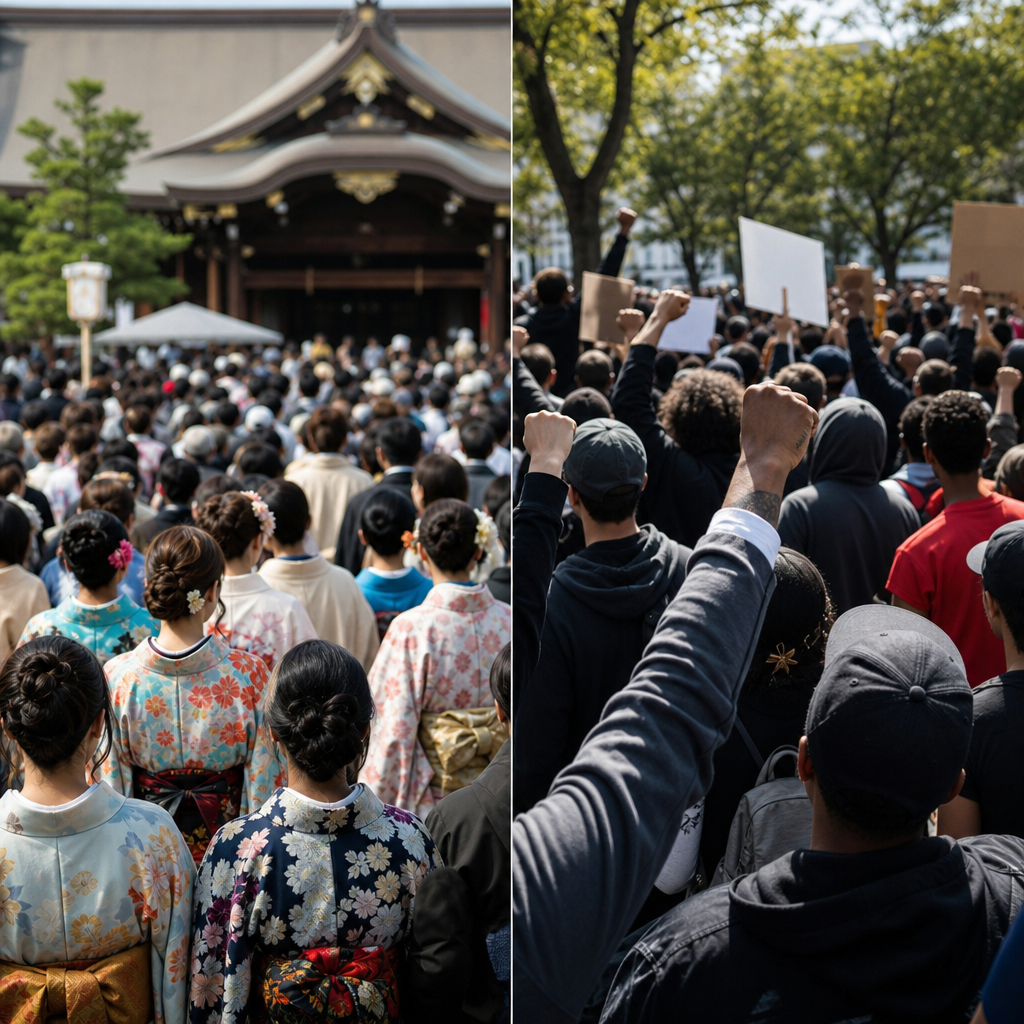
Political culture and political ideology are closely related ideas in AP Government and Politics, but they are not the same thing. Students often use the terms interchangeably because both describe how people think about government, public policy, power, and citizenship. In practice, political culture refers to the broad, shared values, beliefs, and expectations a society holds about politics, while political ideology is a more defined set of ideas about how government should act. Knowing the difference matters because many exam questions, class debates, and real elections depend on separating a nation’s underlying political habits from the specific belief systems that voters, parties, and leaders adopt.
In teaching this topic, I have seen the confusion appear in predictable ways. A student might say individualism is a conservative ideology, when it is more accurately a feature of American political culture that influences people across the spectrum. Another might describe liberalism as the culture of the United States, when liberalism is better understood as one ideology competing within a culture that also prizes liberty, equality, democracy, capitalism, and civic participation. The distinction becomes clearer when you ask two direct questions. First, what do most people in a country broadly assume about politics? Second, what should government do according to a particular set of principles? The first question points to political culture. The second points to political ideology.
This distinction has real value beyond test preparation. It helps explain why Americans who disagree sharply on taxes, abortion, gun rights, environmental regulation, immigration, or health care can still share common beliefs about constitutional government, elections, civil liberties, and the legitimacy of the republic. It also helps explain why ideologies change faster than culture. Party coalitions can realign within a decade. A society’s deeper political culture usually shifts more slowly through schooling, media, religion, economic change, major wars, migration, and generational replacement. If you want a strong foundation for AP Government and Politics, especially for the miscellaneous concepts that connect institutions, public opinion, parties, and participation, this is one of the clearest places to start.
What political culture means in AP Government and Politics
Political culture is the shared framework of beliefs and values that shapes how citizens view government, authority, rights, and public life. It is not a formal doctrine with a checklist. Instead, it is the background environment in which politics happens. In the United States, political culture commonly includes support for liberty, equality of opportunity, constitutionalism, individualism, democracy, rule of law, and suspicion of concentrated power. These commitments are visible in foundational documents, school curricula, campaign language, court decisions, and public rituals such as voting, protests, patriotic holidays, and civic ceremonies.
American political culture is often described as containing several enduring values at once, even when they conflict. Individual liberty can clash with order and security. Equality of opportunity can clash with unequal outcomes in a market economy. Majority rule can clash with minority rights. The reason these tensions matter is that political culture does not eliminate disagreement; it sets the boundaries within which disagreement occurs. For example, Republicans and Democrats may disagree over the Affordable Care Act, but both typically frame arguments in terms of freedom, fairness, constitutional limits, and the public interest. That shared language reflects culture more than ideology.
Political socialization is one of the main ways political culture is passed on. Families, schools, peer groups, religious institutions, community organizations, news media, and digital platforms all teach people what politics is and what role citizens should play. In my experience, students understand this best through concrete examples. The Pledge of Allegiance, classroom lessons on the Constitution, campaign ads invoking freedom, and widespread respect for elections all reinforce broad political norms. At the same time, major events can reshape political culture. The Great Depression increased acceptance of a more active federal government. The civil rights movement strengthened commitments to equal protection and voting rights. The September 11 attacks intensified debates about security, executive power, and civil liberties.
What political ideology means and how it works
Political ideology is a coherent set of beliefs about the proper goals of government and the best policies to achieve them. Unlike political culture, ideology is more explicit, organized, and policy oriented. It answers practical questions: How large should government be? What responsibilities should it have in the economy? How should rights be balanced against public order? What level of taxation is justified? What social values should law reinforce or protect? In the United States, the most discussed ideologies are liberalism, conservatism, and libertarianism, though socialism, democratic socialism, populism, and communitarian perspectives also appear in political debate.
Liberalism in contemporary American politics generally supports a stronger governmental role in regulating the economy, addressing inequality, protecting civil rights, and expanding access to services such as health care and education. Conservatism generally favors limited government intervention in markets, lower taxes, traditional constitutional constraints, and strong emphasis on personal responsibility, though many conservatives also support assertive state action in areas such as border enforcement or public safety. Libertarianism emphasizes maximum individual freedom, especially in economic and personal choices, and tends to oppose broad government regulation. These ideologies are not identical to party labels, and many voters hold mixed views. A person can be economically conservative and socially liberal, or culturally traditional and economically populist.
Ideology matters because it guides voting behavior, policy preferences, party coalitions, interest group activity, and legislative strategy. It gives political actors a framework for making choices across issues. For example, a legislator with a conservative ideology may support deregulation, school choice, and lower corporate taxes because those positions align with a common theory of limited government and market efficiency. A legislator with a liberal ideology may support environmental rules, labor protections, and public investment because those positions align with a belief that government should correct market failures and reduce unequal life chances. Ideology is the map. Culture is the landscape in which the map is used.
Political culture vs political ideology: the core differences
The simplest difference is scope. Political culture is broad and shared. Political ideology is narrow by comparison and often contested. Culture belongs to a society as a whole, even though subcultures exist within it. Ideology belongs to movements, parties, leaders, and individuals. Another difference is purpose. Political culture shapes assumptions about legitimacy and civic identity. Political ideology shapes policy demands and partisan arguments. When Americans say elections should be free and fair, they are expressing political culture. When they argue about voter identification laws, campaign finance, or mail ballots from liberal or conservative perspectives, they are expressing political ideology.
A third difference is stability. Political culture tends to endure because it is embedded in institutions and daily habits. Ideology is more flexible and can shift quickly with events, leadership, and issue salience. The Republican Party of the 1980s and the Republican Party of the 2020s share conservative elements, but their emphasis on trade, foreign policy, and populism differs significantly. Likewise, Democratic ideology has changed over time on crime policy, same-sex marriage, welfare reform, and industrial policy. Yet across these changes, American political culture still centers on constitutional government, elections, rights claims, and suspicion of unchecked authority.
| Feature | Political Culture | Political Ideology |
|---|---|---|
| Definition | Shared values and assumptions about politics in a society | Structured beliefs about what government should do |
| Scope | Broad, collective, often national | Specific, group based, often partisan |
| Main question | What do people generally believe about politics? | What policies and governing principles are best? |
| Stability | Usually slow to change | Can shift faster with events and leaders |
| Examples | Liberty, equality, democracy, rule of law | Liberalism, conservatism, libertarianism |
| Where seen | Civic rituals, institutions, national narratives | Party platforms, campaign agendas, policy debates |
One more useful distinction is that political culture can contain contradictory values without collapsing. American culture celebrates both self-reliance and equal opportunity, local control and national unity, capitalism and fairness, liberty and security. Ideologies try to rank these values and turn them into governing choices. That is why policy conflicts are inevitable. Culture gives people a common vocabulary. Ideology determines which words receive priority when tradeoffs become unavoidable.
How the two interact in real-world politics
Political culture and political ideology constantly influence one another. Culture sets limits on what ideologies can succeed. In the United States, an ideology that openly rejects elections, individual rights, or constitutional limits faces steep resistance because it clashes with core civic expectations. At the same time, ideology can reinterpret culture. Conservatives may define liberty primarily as freedom from government intrusion. Liberals may define liberty partly as freedom made possible by public education, anti-discrimination law, and access to health care. Both appeal to a cultural value, but they apply it differently.
Public opinion research often shows this interaction. Gallup and Pew Research Center surveys have long found that Americans generally support both limited government in the abstract and specific government programs in practice. That pattern makes sense when you distinguish culture from ideology. The cultural commitment to individualism and skepticism of centralized authority pushes people toward limited-government language. But other cultural values, including fairness, equal opportunity, and community responsibility, allow support for Social Security, Medicare, disaster relief, veterans’ benefits, and public schools. Ideological labels alone do not capture this blend.
Campaign messaging provides another clear example. Candidates rarely speak only in ideological jargon. They tie policy proposals to broad cultural narratives. A conservative tax plan is framed as protecting freedom, rewarding work, and respecting constitutional limits. A liberal infrastructure plan is framed as expanding opportunity, strengthening democracy, and investing in the common good. Effective politicians understand that voters respond most strongly when ideology is translated into culturally familiar values. That is one reason speeches reference the Constitution, the Founders, the American Dream, equal justice, small business, family, faith, and service. These signals connect policy to identity.
Why this distinction matters for AP students and civic literacy
For AP Government and Politics, distinguishing political culture from political ideology improves accuracy across multiple units. It helps with public opinion because broad attitudes about government trust, tolerance, equality, and participation are cultural patterns, while issue positions on regulation, taxation, and social policy are ideological. It helps with political parties because parties aggregate ideologies, but they operate inside a national culture that values elections, rights, and legitimacy. It helps with foundational documents because the Constitution reflects elements of American political culture, especially limited government, republicanism, and checks and balances, even though modern ideologies interpret those principles differently.
This distinction also sharpens essay writing. In a free-response answer, saying that American political culture values liberty and equality shows conceptual precision. Saying that conservatives favor lower taxes and fewer regulations identifies ideology. Mixing those levels weakens analysis. The same is true in comparative politics and everyday citizenship. Countries can share democratic institutions yet differ in political culture. The United Kingdom, France, and the United States all hold elections, but attitudes toward central government, secularism, welfare policy, and national identity vary. Those differences shape what kinds of ideologies become mainstream.
Most importantly, understanding the difference makes current events easier to interpret without reducing everything to party conflict. When trust in institutions declines, that is a cultural issue. When a coalition shifts from free trade to tariffs, that is primarily an ideological and strategic shift. When social movements expand public agreement about who deserves equal treatment under the law, they may be altering both culture and ideology at the same time. If you are building your AP Government and Politics knowledge base, treat this topic as a hub concept that links public opinion, socialization, participation, parties, media, institutions, and policy debates. Review related topics, compare definitions carefully, and practice applying the distinction to real news stories.
Political culture vs political ideology is not a semantic debate. It is a foundational distinction that explains how democratic politics actually works. Political culture is the shared set of values and assumptions that gives a society its political character. Political ideology is a more organized set of beliefs about what government should do and which policies deserve support. Culture is broader, more durable, and more widely shared. Ideology is more specific, more contested, and more directly tied to policy choices.
Once you separate the two, many confusing topics become easier. You can see why Americans with opposing ideologies still appeal to liberty, equality, democracy, and the Constitution. You can explain why party platforms change faster than a nation’s deeper civic habits. You can also analyze debates with more precision by asking whether a claim describes shared national values or a particular governing philosophy. That level of clarity is exactly what strong AP Government and Politics students need.
Use this article as your starting hub for the miscellaneous concepts that connect the course. Revisit it when studying public opinion, political socialization, parties, elections, and policy. Then apply the framework to examples from class, headlines, and past exam prompts. The more often you distinguish political culture from political ideology, the more confident and accurate your political analysis will become.
Frequently Asked Questions
What is the main difference between political culture and political ideology?
The main difference is scope and specificity. Political culture refers to the broad, shared beliefs, values, attitudes, and assumptions that people in a society hold about politics and government. It includes general ideas about freedom, equality, authority, democracy, participation, and what citizens expect from public institutions. Political ideology, by contrast, is a more structured and clearly defined set of beliefs about what government should do, how much power it should have, and what policies it should support. In simple terms, political culture is the wider environment of political beliefs in a society, while ideology is a more precise political viewpoint within that environment.
This distinction matters because a country can have one broad political culture but still contain multiple ideologies. For example, many Americans share elements of a common political culture, such as support for constitutional government, individual rights, elections, and popular sovereignty. At the same time, they may disagree sharply in ideological terms about taxation, regulation, healthcare, social welfare, or the role of the federal government. That is why political culture helps explain what a society generally values, while political ideology helps explain why different groups or individuals support different policies and political parties.
Why do students often confuse political culture with political ideology?
Students often confuse the two because both concepts deal with political beliefs and both shape how people view government, law, citizenship, and public policy. In AP Government and Politics especially, the terms can seem similar at first glance because each one helps explain political behavior. If someone hears that a person believes in liberty, equality, and democratic participation, it may not be immediately obvious whether that is describing political culture or political ideology. The confusion happens because the concepts overlap, but they are not identical.
A useful way to separate them is to think of political culture as the background beliefs of a society and political ideology as a more specific political program or perspective. Political culture is often broad, widely shared, and sometimes not fully conscious. People absorb it from family, schools, media, history, and national traditions. Political ideology is more explicit. It usually involves a recognizable position on policy questions and government action. For example, saying that Americans generally value democracy and individual freedom points to political culture. Saying that someone is liberal, conservative, libertarian, or socialist points to political ideology. The overlap is real, but the level of precision is what sets them apart.
Can a society have one political culture but many political ideologies?
Yes, and that is one of the clearest ways to understand the distinction. A society may share a broad political culture that establishes common assumptions about legitimacy, authority, rights, and citizenship, while still containing many competing ideologies. In the United States, for instance, people with very different ideological beliefs often still agree on core features of the political system, such as the importance of elections, the Constitution, civil liberties, and representative government. Those shared commitments reflect political culture. The disagreements over how those principles should be applied reflect ideology.
This is why political debate can be intense even in a country with a strong common culture. Two citizens may both believe in freedom and democracy, yet one may argue for a larger government role in reducing inequality while the other may argue for limited government and free-market solutions. They operate inside the same general political culture but interpret its values differently through different ideological lenses. In this sense, political culture creates the broad framework, and ideology shapes the arguments that take place within it. Understanding that relationship helps students see how unity and disagreement can exist at the same time in the same political system.
How do political culture and political ideology influence government and public policy?
Political culture influences government and policy by shaping what people see as legitimate, acceptable, and expected from political institutions. If a society strongly values individual rights, limited government, and participation, elected officials usually have to work within those expectations. Political culture sets the tone for public life. It affects trust in government, respect for laws, willingness to vote, views on civic duty, and beliefs about what government should protect or promote. These deep-rooted attitudes can endure over long periods and often influence institutions as much as formal laws do.
Political ideology influences government and policy in a more direct and programmatic way. Ideology guides party platforms, campaign messages, legislative priorities, and policy proposals. It helps explain why politicians and voters differ on issues such as taxes, gun policy, environmental regulation, immigration, education, and healthcare. For example, a conservative ideology may favor lower taxes and fewer regulations, while a liberal ideology may favor a more active government role in solving social and economic problems. Political culture shapes the broader boundaries of debate, while political ideology drives the competing solutions offered within those boundaries. Together, they help explain both the stability of a political system and the conflicts that define day-to-day politics.
Why is understanding the difference between political culture and political ideology important in AP Government?
Understanding the difference is important because it helps students analyze politics more accurately and answer exam questions with greater precision. In AP Government, many concepts are interconnected, and success often depends on being able to distinguish between broad societal patterns and specific political beliefs. If a question asks about the values widely shared by a population, the correct concept is usually political culture. If it asks about a person’s or group’s defined beliefs about the proper role of government, the better answer is political ideology. Knowing that difference can improve both multiple-choice performance and written responses.
It is also important because the distinction deepens a student’s understanding of how American politics actually works. Political culture helps explain continuity, such as why certain constitutional principles and democratic values remain central over time. Political ideology helps explain conflict, such as why parties, candidates, and voters disagree over policy. When students recognize that culture refers to broad shared norms and ideology refers to more specific political doctrines, they gain a stronger framework for analyzing elections, institutions, public opinion, and policymaking. In short, mastering this distinction does more than define two terms. It helps students understand the relationship between shared national values and ongoing political disagreement.