
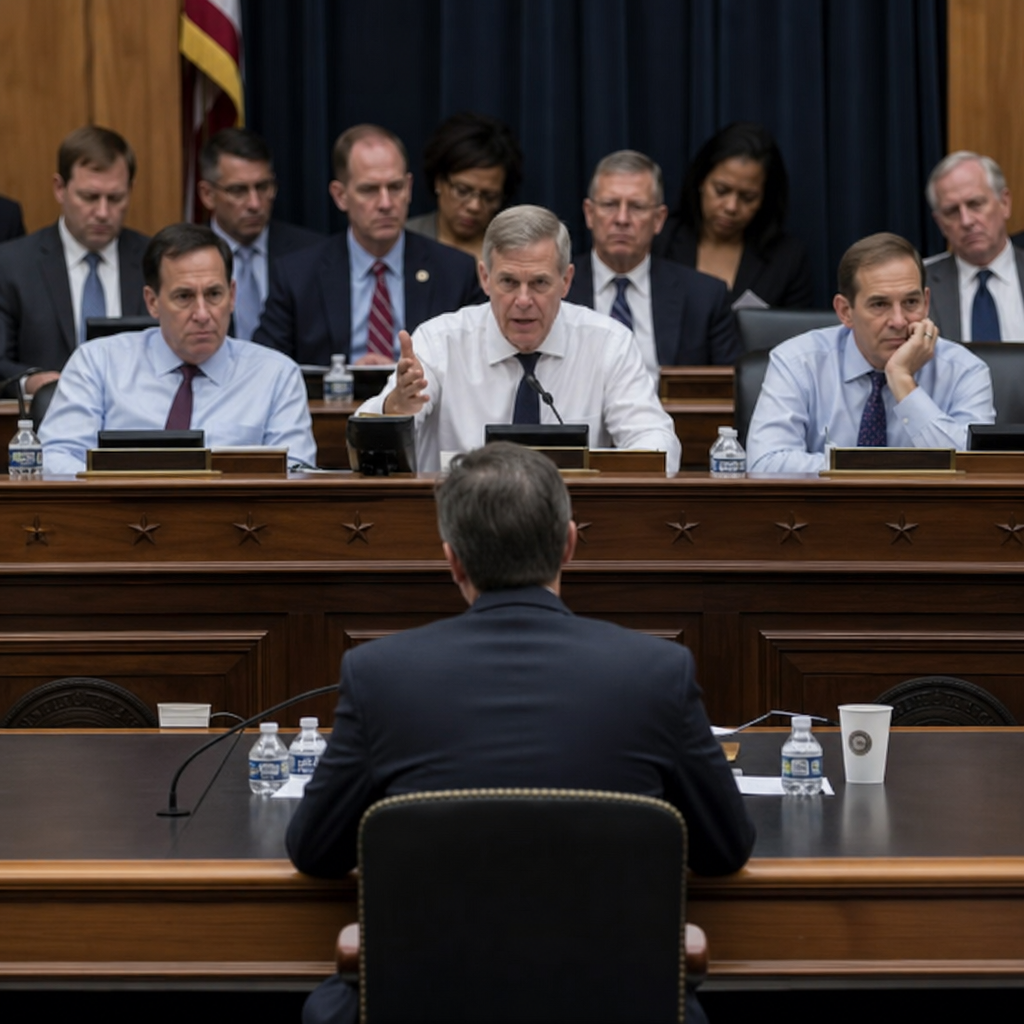
Oversight hearings are one of Congress’s most visible tools for investigating the executive branch, enforcing accountability, and shaping public understanding of how government power is used. In AP Government and Politics, the term oversight refers to Congress’s authority to review, monitor, and supervise federal agencies, departments, and officials after laws have been passed. A hearing is a formal meeting in which members of Congress gather testimony, question witnesses, and collect evidence. Together, oversight hearings connect legislation, administration, budgeting, investigations, and constitutional checks and balances into one practical process.
This topic matters because the executive branch carries out most federal law through agencies such as the Department of Justice, Department of Homeland Security, Department of Defense, Environmental Protection Agency, and hundreds of smaller offices. Congress writes statutes, but agencies interpret them, issue rules, spend appropriated funds, and make day-to-day decisions that affect immigration, national security, environmental policy, health care, education, and elections. Without oversight, executive officials could mismanage programs, exceed statutory authority, hide information, or ignore congressional intent. Effective hearings help Congress detect waste, fraud, abuse, corruption, policy failure, and constitutional violations before those problems become permanent.
In my experience working through congressional procedure and AP Government course materials, students understand checks and balances more clearly when they see oversight not as an abstract principle but as a sequence of concrete steps: a controversy emerges, a committee opens an inquiry, subpoenas or document requests follow, witnesses testify under oath, members question them in public, staff compile findings, and Congress may respond with legislation, appropriations limits, contempt proceedings, or referrals to inspectors general and prosecutors. Oversight hearings therefore sit at the center of the broader “Misc” category within AP Government and Politics because they pull together institutions, civil liberties, federal bureaucracy, political behavior, media influence, and constitutional design.
What oversight hearings are and where Congress gets the power to hold them
Congress’s oversight power is not stated in a single sentence of the Constitution, but the Supreme Court has long recognized it as an implied power tied to legislation. If Congress can make laws, appropriate money, and create agencies, it must also be able to investigate whether those laws are being executed properly. Article I gives Congress powers over taxation, spending, commerce, war, impeachment, and lawmaking. Necessary and Proper reasoning supports information gathering, and both chambers develop standing rules for committees. Landmark cases such as McGrain v. Daugherty in 1927 confirmed that the power to compel testimony is essential to legislative functions. Watkins v. United States and Barenblatt v. United States later clarified that investigations must serve a legitimate legislative purpose, even when politically explosive.
In practice, oversight hearings are usually conducted by standing committees, select committees, or subcommittees in the House and Senate. The House Committee on Oversight and Government Reform, now called Oversight and Accountability, is the best-known general watchdog committee, but almost every committee conducts oversight within its jurisdiction. The Senate Judiciary Committee examines the Justice Department and federal courts. Armed Services reviews military operations and procurement. Energy and Commerce can scrutinize public health agencies, telecommunications regulation, and environmental administration. Appropriations subcommittees also question agencies closely because funding decisions create leverage that ordinary criticism does not.
Oversight takes several forms. Routine oversight checks whether agencies are implementing laws effectively. Investigative oversight responds to allegations of wrongdoing or scandal. Programmatic oversight evaluates whether a policy is working as intended. Fiscal oversight examines spending, contracts, grants, and improper payments. Confirmation hearings overlap with oversight because senators often question nominees about agency conduct and prior failures. Impeachment inquiries are the most severe form of investigation, aimed at possible removal of civil officers, including a president, vice president, or federal judges. For AP Government students, these categories show that congressional investigation is not only about scandal; it is also about administration, policy design, and institutional control.
How an oversight investigation actually works
An oversight hearing usually begins long before cameras turn on. Committee chairs, ranking minority members, counsels, and professional staff gather allegations from whistleblowers, inspectors general, Government Accountability Office reports, journalists, agency audits, advocacy groups, and constituents. Staff then identify a legislative purpose, map relevant statutes, and request documents from the executive branch. If agencies cooperate, committees may receive emails, memoranda, budget justifications, inspector general findings, and policy guidance. If they resist, the committee may issue a subpoena. Depositions, transcribed interviews, and closed briefings often happen before any public hearing because members need a factual record strong enough to support questioning.
Witness selection matters. Congress may call cabinet secretaries, agency heads, career civil servants, outside experts, affected citizens, former officials, or inspectors general. Most witnesses submit written testimony in advance. During the hearing, the chair opens with a statement explaining the issue and the committee’s authority. The ranking minority member responds, often framing the dispute differently. Witnesses are sworn in, summarize their testimony, and then answer questions in timed rounds, commonly five minutes per member. Committee counsel may also question witnesses, especially in complex investigations involving procurement rules, intelligence classifications, campaign finance, or administrative law.
The table below shows the basic sequence used in many executive branch oversight investigations.
| Stage | What Congress Does | Typical Executive Branch Response |
|---|---|---|
| Issue identification | Reviews complaints, audits, media reports, or whistleblower claims | Denies, confirms, or internally reviews the allegation |
| Document request | Seeks emails, memos, data, contracts, and legal analyses | Produces records, delays, redacts, or claims privilege |
| Interviews and depositions | Questions officials and staff under oath or transcript | Provides counsel, negotiates scope, may resist access |
| Public hearing | Questions witnesses in open session to build public record | Defends actions, clarifies facts, or refuses certain answers |
| Follow-up action | Issues report, proposes legislation, cuts funding, cites contempt | Changes policy, complies partially, litigates, or waits out Congress |
Outcomes vary. Sometimes a hearing ends with little more than partisan messaging. Other times it produces major statutory change. The Church Committee’s investigation of intelligence abuses in the 1970s helped lead to the Foreign Intelligence Surveillance Act. Hearings after Hurricane Katrina exposed failures in emergency management and homeland security coordination. In the 1980s, Iran-Contra hearings revealed how executive officials circumvented congressional restrictions. After the 2008 financial crisis, hearings by the Financial Crisis Inquiry Commission and congressional committees influenced public understanding of regulatory failure. The basic pattern is consistent: information first, public examination second, institutional response third.
Tools Congress uses to compel cooperation and the limits it faces
Congress has more than microphones and televised questioning. It can issue subpoenas for documents and testimony, hold witnesses in contempt, refer criminal contempt citations to the Department of Justice, use inherent contempt in theory, and condition agency funding through appropriations. It can write more detailed statutes, impose reporting requirements, mandate inspector general reviews, require Government Accountability Office studies, and block nominations. Senate advice and consent is especially powerful because agency leaders often need confirmation. When executive officials know future budgets, reauthorizations, and nominations depend on congressional relationships, they have an incentive to respond even before a legal confrontation begins.
Still, oversight has real limits. Executive privilege can shield presidential communications and sensitive national security material, though it is not absolute. Agencies may cite ongoing investigations, classified information, deliberative process concerns, or privacy restrictions. Litigation over subpoenas can take months or years, often longer than the political moment that created the investigation. Partisanship also shapes what gets investigated. The majority party controls chairs, schedules, and subpoena authority in most committees, so issues embarrassing to a president of the same party may receive less attention. Minority members can dissent, publicize objections, and sometimes force votes, but they usually lack agenda control.
Time is another constraint. Members of Congress juggle hearings, constituent service, campaigns, floor votes, and policy work. Staff expertise varies sharply across committees. Complex executive branch matters such as cybersecurity incidents, intelligence collection, pharmaceutical regulation, military procurement, and financial supervision require specialized knowledge. Career agency officials often know far more technical detail than elected members. That imbalance is why strong committee staff, Congressional Research Service analysis, GAO reports, and inspector general evidence are so important. Good oversight is preparation-intensive. Bad oversight relies on viral clips and produces heat without institutional results.
Why oversight hearings matter in AP Government and Politics
For AP Government and Politics, oversight hearings are a hub concept because they connect nearly every unit of the course. They illustrate separation of powers by showing Congress checking the executive branch. They demonstrate federal bureaucracy in action because agencies implement laws through rulemaking, adjudication, enforcement, and grant administration. They involve political participation because interest groups, journalists, whistleblowers, and voters often drive investigative agendas. They connect to civil liberties and civil rights when hearings examine surveillance, protest policing, detention, discrimination, voting administration, or religious freedom. They also illuminate congressional behavior itself, including committee structure, incumbency, agenda setting, and partisan polarization.
Students should also understand that oversight is both constitutional and political. Members ask questions to gather facts, but they also speak to multiple audiences at once: agency officials, party activists, local media, donors, courts, and future voters. A senator may use a hearing to build a national profile. A representative may focus on district-specific effects, such as a veterans’ hospital delay or contamination at a military base. These political incentives do not automatically make oversight illegitimate. Public accountability in a representative democracy depends on visible conflict. The key analytical question is whether a hearing produces usable information and whether Congress converts that information into action.
Several recurring examples help students remember the concept. Watergate remains the classic case of congressional investigation exposing presidential abuse of power. The 9/11 Commission, while not a normal committee hearing process, showed how systematic investigation can reshape national security institutions. Hearings on the Flint water crisis highlighted failures across state and federal lines. Investigations into the Veterans Health Administration wait-time scandal revealed how performance metrics can distort agency behavior. More recent hearings on pandemic response, classified documents, technology companies, border administration, and military withdrawals from Afghanistan demonstrate that oversight remains central regardless of party control. Different facts, same constitutional logic: Congress investigates to inform lawmaking and restrain executive discretion.
How to study oversight hearings as a hub topic
If you are using this article as a hub for the “Misc” section of AP Government and Politics, organize the topic around a short set of recurring questions. What constitutional principle is involved? Which committee has jurisdiction? What information is Congress trying to obtain? What tool is it using: hearing, subpoena, appropriation, report, or confirmation leverage? What executive branch defense is being asserted? What happened afterward: legislation, resignation, court fight, policy revision, or no change? This framework turns almost any oversight controversy into a manageable case study and helps with both multiple-choice questions and free-response analysis.
The main takeaway is simple. Oversight hearings are how Congress converts its lawmaking and spending powers into real supervision of the executive branch. They expose problems, create a public record, pressure agencies to explain themselves, and sometimes produce major reforms. They are imperfect because privilege claims, delay, expertise gaps, and partisanship can weaken them. Even so, they remain one of the strongest instruments available in the constitutional system for checking executive power after a law is passed. To master this area of AP Government and Politics, study not only famous scandals but also ordinary committee work, because routine oversight is where democratic accountability usually lives.
Next, use this hub as a launching point. Review committee jurisdiction, subpoena power, executive privilege, appropriations, inspectors general, and landmark cases tied to congressional investigations. Then connect each example back to checks and balances. When you can explain who investigated, what evidence was sought, why the executive resisted, and what Congress did in response, you understand oversight hearings at the level the course expects and at the level real government actually operates every day.
Frequently Asked Questions
What is an oversight hearing, and why does Congress use it to investigate the executive branch?
An oversight hearing is a formal congressional meeting used to review, monitor, and evaluate how the executive branch is carrying out the laws Congress has passed. In practical terms, it is one of the main ways Congress checks the power of the president, federal departments, independent agencies, and public officials after legislation is enacted. During these hearings, members of Congress call witnesses, ask questions, request documents, and build a public record about how government decisions were made and whether agencies are acting lawfully, efficiently, and in line with congressional intent.
Congress uses oversight hearings for several reasons. First, they promote accountability by requiring executive officials to explain their actions in public. Second, they help lawmakers determine whether an agency is implementing a law properly or whether reforms are needed. Third, they give Congress information it can use when drafting new laws, adjusting budgets, or reorganizing agencies. Finally, oversight hearings shape public understanding. Because many hearings are televised or widely reported, they can draw national attention to policy failures, misconduct, waste, abuse of power, or administrative mistakes. In AP Government and Politics, this is a key example of checks and balances in action: Congress does not simply make laws and walk away; it also supervises how those laws are executed.
How does Congress conduct an oversight hearing from start to finish?
The process usually begins in a congressional committee or subcommittee, since most oversight work is handled by members with expertise in a particular policy area such as defense, public health, immigration, or financial regulation. A committee may decide to hold a hearing after receiving complaints, reviewing inspector general reports, seeing troubling media coverage, identifying implementation problems, or responding to a major crisis. Once a topic is chosen, staff members investigate the issue, gather background information, contact agencies, and prepare questions for witnesses.
Next, the committee invites or compels witnesses to appear. Witnesses may include cabinet secretaries, agency heads, lower-level officials, outside experts, whistleblowers, inspectors general, or affected citizens. In some situations, Congress issues subpoenas to require testimony or the production of documents. At the hearing itself, the chair typically opens the session, explains the issue, and recognizes a ranking minority member for opening remarks. Witnesses then deliver prepared statements and answer questions from committee members, often under oath. Lawmakers use the question-and-answer period to clarify facts, challenge evasive answers, compare conflicting accounts, and build evidence for possible follow-up action.
After the hearing, the committee may publish transcripts, request additional records, issue a report, recommend changes to law or funding, refer possible wrongdoing for further investigation, or schedule more hearings. So although the hearing is the most visible part, it is really one stage in a broader oversight process. The goal is not simply to create a dramatic exchange, but to gather facts, expose problems, and give Congress the information it needs to supervise the executive branch effectively.
What powers does Congress have during oversight hearings, and what limits does it face?
Congress has significant investigative tools during oversight hearings. Committees can request briefings, demand reports, call witnesses, issue subpoenas for testimony and documents, place officials under oath, and question executive branch personnel directly. Congress can also use information uncovered in hearings to shape appropriations, rewrite laws, delay confirmations, or increase scrutiny of an agency’s actions. These powers make oversight hearings more than symbolic events; they can have real institutional consequences for executive officials and agencies.
At the same time, congressional oversight is not unlimited. Executive branch officials may resist disclosure by citing executive privilege, classified information rules, ongoing criminal investigations, national security concerns, or internal deliberation protections. Courts sometimes become involved when disputes over subpoenas or records escalate. Oversight is also shaped by politics. If one party controls both Congress and the presidency, lawmakers may be less aggressive in investigating executive conduct. Committees have limited time, finite staff resources, and competing priorities, which can also reduce the depth of an inquiry.
Another important limit is that Congress is not itself a prosecutor or a court in the ordinary sense. It can investigate, expose, and recommend action, but it usually relies on other institutions to impose criminal penalties or administrative discipline. Even so, hearings can be powerful because they influence public opinion, pressure agencies to cooperate, and create momentum for reform. In short, Congress’s oversight powers are substantial, but they operate within constitutional boundaries, institutional rivalries, and political realities.
How are oversight hearings different from other types of congressional hearings?
Congress holds several kinds of hearings, and oversight hearings are distinct because their main purpose is to examine how existing laws and government programs are being administered. A legislative hearing, by contrast, focuses primarily on proposed bills and whether Congress should adopt new policy. A confirmation hearing evaluates a nominee for public office. An investigative hearing may resemble oversight, but it often concentrates more narrowly on alleged wrongdoing, scandal, or a specific incident. In practice, these categories can overlap, but the key feature of oversight is post-enactment review of executive implementation.
That distinction matters because oversight hearings ask a different set of questions. Instead of asking, “Should this law be passed?” lawmakers ask, “Is this law being enforced as intended?” or “Has this agency exceeded its authority?” They may also ask whether taxpayer money is being used efficiently, whether federal programs are meeting their goals, and whether the executive branch has followed statutory and constitutional limits. This makes oversight especially important in a large administrative state, where federal agencies exercise significant discretion in writing regulations, enforcing rules, and delivering services.
For students of AP Government, the easiest way to remember the difference is that legislative hearings look forward to possible laws, while oversight hearings look back and around at how government is actually functioning. That monitoring role is central to congressional accountability and helps ensure that executive power remains subject to democratic control.
Why are oversight hearings so important in the system of checks and balances?
Oversight hearings are important because they give Congress a practical way to check executive power after laws are passed. The Constitution divides authority among branches, but separation of powers only works when each branch actively guards its own role. Oversight allows Congress to do exactly that. By requiring executive officials to testify, explain policy choices, and defend agency actions, hearings help prevent secrecy, arbitrariness, and abuse. They reinforce the principle that executive agencies are not independent from democratic control simply because they administer complex policies.
These hearings also matter because the modern executive branch is enormous. Federal agencies make rules, spend funds, enforce laws, and manage programs that affect daily life across the country. Without oversight, Congress would have little ability to know whether agencies are faithfully carrying out legislative intent or drifting beyond it. Hearings provide information, transparency, and leverage. They can reveal policy failures, expose corruption, identify mismanagement, and push agencies to correct mistakes before problems become even larger.
Just as importantly, oversight hearings connect constitutional structure to public accountability. They often inform voters about how government actually operates, what officials knew, and how decisions were made. Even when a hearing does not immediately change policy, it can frame public debate, increase pressure for reform, and clarify responsibility for executive actions. That is why oversight hearings are considered one of Congress’s most visible and influential investigative tools: they make the executive branch answer not only to lawmakers, but also to the public those lawmakers represent.