
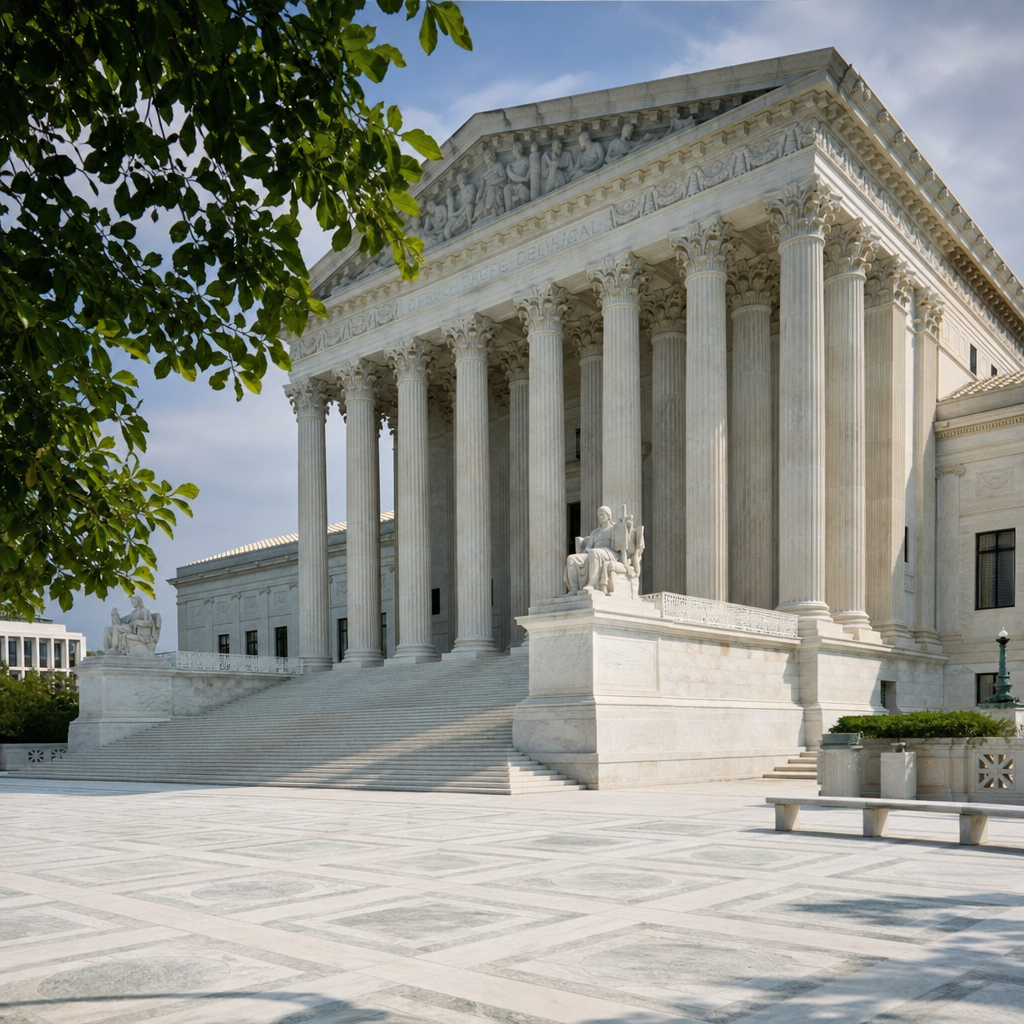
New York Times v. United States was the 1971 Supreme Court case that tested whether the federal government could stop newspapers from publishing the Pentagon Papers, a classified history of U.S. involvement in Vietnam. In practical terms, the case asked a foundational constitutional question: when, if ever, can the government impose prior restraint, meaning censorship before publication? For AP Government and Politics students, it matters because it sits at the intersection of the First Amendment, separation of powers, executive authority, national security, the press, and public accountability. I have taught this case alongside Schenck, Tinker, and United States v. Nixon, and students consistently grasp modern debates about leaks, war powers, and investigative journalism more clearly once they understand what the Court actually decided—and what it did not. The ruling did not declare that the press can publish anything at any time. It held that the government had not met the extraordinarily heavy burden required to justify stopping publication in this specific situation. That distinction is essential. The Pentagon Papers case became a constitutional benchmark because it reaffirmed that a free press is not merely a private industry; it is a structural check on government power, especially during wartime and in moments of secrecy.
The dispute began when Daniel Ellsberg, a military analyst who had worked on a secret Department of Defense study, leaked portions of that study to the New York Times and later the Washington Post. Officially titled Report of the Office of the Secretary of Defense Vietnam Task Force, the study traced U.S. political and military decision-making in Vietnam from 1945 to 1967. It revealed that multiple presidential administrations had misled the public about the scope and aims of the war. The Nixon administration, even though much of the study covered actions before Nixon took office, sought injunctions to stop further publication. The government argued that release threatened national security. The newspapers argued that the First Amendment sharply limited the government’s ability to suppress reporting. Within days, the issue raced through federal courts and reached the Supreme Court. For students using this page as a hub within AP Government and Politics, the case also connects outward to broader “miscellaneous” constitutional themes: selective incorporation, judicial review, checks and balances, civil liberties in wartime, bureaucratic secrecy, and the role of public opinion in democratic accountability.
What happened in New York Times v. United States?
In direct terms, the Supreme Court ruled 6–3 that the government could not block the New York Times and Washington Post from publishing the Pentagon Papers. The decision came in a per curiam opinion, meaning an unsigned opinion issued by the Court as a whole, but the real constitutional substance appears in several concurring and dissenting opinions. The key holding was narrow but powerful: any system of prior restraint carries a heavy presumption against constitutional validity, and the government had failed to justify the injunctions it requested. This matters because the Court did not issue a broad, unlimited shield for leaked classified information. Instead, it said the executive branch had not shown proof of direct, immediate, and irreparable harm sufficient to overcome First Amendment protections.
That point often appears on AP exams in multiple-choice form. If a question asks what constitutional principle the case most clearly reinforces, the best answer is protection against prior restraint under the First Amendment. If a prompt asks what the case demonstrates about institutions, the answer is that the judiciary can check executive claims of national security, even during wartime. The decision also illustrates that constitutional law is shaped not only by majority outcomes but by the reasoning spread across separate opinions. Justice Black took an absolutist view of press freedom, arguing the press must remain free to expose government deception. Justice Brennan emphasized the stringent standard required before publication can be stopped. Justice Stewart and Justice White focused on the absence of congressional authorization and on the weakness of the government’s evidentiary showing.
Background: the Pentagon Papers and the Vietnam era
The Pentagon Papers were not a set of battle plans for imminent military operations. That factual detail is crucial. They were a classified historical study commissioned by Secretary of Defense Robert McNamara in 1967. The study covered decades of U.S. policy in Vietnam and documented a pattern of official misstatements, strategic contradictions, and hidden escalation. By the late 1960s, public trust in government had already eroded because of the Tet Offensive, rising casualties, and the credibility gap between official statements and conditions on the ground. When Ellsberg leaked the study in 1971, the documents landed in a political environment shaped by antiwar protest, congressional skepticism, and deep public fatigue.
From experience teaching the era, the most useful way to frame the leak is this: the case was as much about democratic accountability as about classified paper. Citizens cannot evaluate policy if the government systematically hides the truth about why a war expanded and how leaders described it. At the same time, classification is real and sometimes necessary. Governments do hold legitimate secrets, including intelligence sources, troop movements, and diplomatic negotiations. The constitutional challenge was determining whether courts should accept the executive branch’s national security assertions at face value. In this case, the Court said no. It required proof, not broad warnings. That judicial skepticism has shaped later press freedom debates, though later cases involving espionage, surveillance, and digital leaks show the tension never disappeared.
The constitutional issue: prior restraint and the First Amendment
Prior restraint means government action that stops speech or publication before it happens. Under Anglo-American legal history, prior restraint has long been considered more dangerous than punishment after publication because it gives the state direct censorial control over public discussion. The First Amendment says Congress shall make no law abridging the freedom of speech, or of the press. Over time, the Supreme Court interpreted that guarantee to impose severe limits on advance censorship. The leading precedent before the Pentagon Papers case was Near v. Minnesota in 1931, where the Court struck down a state law used to suppress a scandal sheet. Near established the baseline rule that prior restraints are generally unconstitutional, though it suggested narrow exceptions such as troop movements during wartime.
New York Times v. United States asked whether the executive branch’s national security concerns fit within those narrow exceptions. The government argued that publication would damage foreign relations, prolong the war, and harm U.S. interests. The newspapers responded that vague predictions were not enough. The Court agreed with the newspapers. For AP students, the doctrinal takeaway is straightforward: when the government seeks to suppress publication in advance, it bears a very high burden, and unsupported claims of danger do not satisfy that burden. This is one of the clearest examples of the Court favoring civil liberties over broad executive discretion.
| Concept | Meaning in the case | Why it matters for AP Government |
|---|---|---|
| Prior restraint | Government stopping publication before it occurs | Shows the strongest form of censorship and why courts distrust it |
| First Amendment | Protects freedom of the press from government suppression | Connects civil liberties to democratic accountability |
| National security claim | Executive argument that publication would cause harm | Illustrates limits on presidential power |
| Per curiam ruling | Unsigned Court opinion with separate concurrences | Teaches students to read holdings and judicial reasoning carefully |
| Heavy burden of proof | Government must show immediate, serious harm | Explains why the injunctions failed |
How the Court reasoned and why the opinions matter
The six justices in the majority did not speak with one voice, which is why this case rewards careful reading. Justice Hugo Black, joined by Justice Douglas, argued that the press was meant to serve the governed, not the governors. In his view, the First Amendment’s text leaves no room for injunctions against publication of the sort sought here. Justice Brennan took a less absolute but still highly protective position, concluding that only publication that would inevitably, directly, and immediately cause a grave event—something like an actual obstruction of military operations—might justify prior restraint. Justice Stewart and Justice White emphasized institutional design. They noted that the executive has significant power over secrecy, but absent clear legislative authorization and compelling proof of harm, courts should not assist censorship. Justice Marshall added that the separation of powers problem was serious because the executive was effectively asking courts to create a censorship power not clearly granted by Congress.
The dissents matter too. Chief Justice Burger criticized the rushed process and suggested the Court had not given enough weight to the complexity of national security. Justice Harlan, joined by Burger and Blackmun in part, stressed judicial restraint and deference to the executive in foreign affairs. Justice Blackmun warned that publication could cost lives and damage the national interest. For students, the dissents are not simply losing arguments; they present the enduring counterpoint. Courts are poorly equipped to evaluate classified risks in real time, and judges may lack the expertise available to defense officials. That tension explains why the case remains influential rather than settled trivia. It is cited whenever the government claims urgent secrecy and the press claims a right to inform the public.
Limits of the decision and common misconceptions
A frequent misconception is that New York Times v. United States created an unlimited right for journalists to publish classified material. It did not. The ruling addressed injunctions, not criminal prosecution after publication, and not every possible national security scenario. The Court did not say the government can never act; it said this government, on this record, had not justified prior restraint. That distinction matters in later controversies involving the Espionage Act of 1917, whistleblowers, and digital document dumps. Another misconception is that the Court endorsed leaking. It did not decide Ellsberg’s legality through this case. His later criminal prosecution collapsed because of government misconduct, not because the Pentagon Papers ruling legalized unauthorized disclosure.
There is also a tendency to romanticize the press as always acting cleanly or the government as always acting deceitfully. Real constitutional analysis is more disciplined. News organizations make editorial judgments, sometimes wisely and sometimes poorly. Governments do protect information whose disclosure could genuinely harm operations or personnel. In my own work explaining this case, I stress a practical rule: the closer information is to immediate tactical military use, the stronger the government’s argument; the more the material reveals past deception or policy failure without specific operational danger, the stronger the press claim. The Pentagon Papers leaned heavily toward the second category. That factual posture helps explain the outcome.
Why the case still matters today
The Pentagon Papers case remains central because modern democracies still struggle with secrecy, surveillance, cyber conflict, and public trust. The technology has changed dramatically since 1971, but the constitutional question persists: how much secrecy can a self-governing people tolerate before accountability fails? Later controversies involving WikiLeaks, Edward Snowden, warrantless surveillance, drone policy, and war reporting all echo this case, even when the facts differ. Courts, journalists, and policymakers still rely on the principle that the government cannot suppress publication merely by invoking national security in broad terms. It must show concrete harm.
For AP Government and Politics, this makes the case an ideal hub topic within a miscellaneous constitutional unit. It links to freedom of speech and press, to the presidency, to bureaucratic agencies that classify information, to Congress’s oversight role, and to landmark trust-in-government moments such as Watergate. It also pairs well with United States v. Nixon, decided in 1974, where the Court rejected an expansive claim of executive privilege. Together, the cases show that constitutional checks become most visible when presidents argue that confidentiality is essential and courts ask for legal justification. If you are building a study map, connect this case to Near v. Minnesota, Schenck v. United States, Tinker v. Des Moines, and Nixon. That cluster captures major tensions between liberty, order, dissent, secrecy, and executive power.
New York Times v. United States endures because it teaches a precise lesson about constitutional democracy: the government does not get automatic power to silence the press before publication, even when it invokes national security. The Pentagon Papers revealed that secrecy can shield not only legitimate defense interests but also policy failure and public deception. By refusing to uphold the injunctions, the Supreme Court reaffirmed that a free press helps citizens judge their leaders, especially in wartime. For AP Government and Politics students, the case is more than a famous headline. It is a compact study in the First Amendment, prior restraint, separation of powers, judicial review, and the limits of executive authority. The most important takeaway is not that the press always wins, but that the government must meet an exceptionally high standard before courts will permit censorship in advance. That standard protects democratic accountability.
Use this article as a hub for the broader miscellaneous portion of your AP Government review. Revisit the definition of prior restraint, compare this ruling with Near and Nixon, and practice explaining the difference between publishing leaked information and leaking it in the first place. If you can state the facts, constitutional issue, holding, and significance of New York Times v. United States in a few clear sentences, you will be well prepared for multiple-choice questions, FRQs, and class discussion. Start by memorizing the core rule: prior restraint faces a heavy presumption against constitutionality, and the government failed to overcome it in the Pentagon Papers case.
Frequently Asked Questions
What was New York Times v. United States, and why is it called the Pentagon Papers case?
New York Times v. United States was a landmark 1971 Supreme Court case about freedom of the press and the government’s attempt to stop newspapers from publishing classified information. The dispute began after the New York Times and later the Washington Post obtained portions of the Pentagon Papers, a secret government study commissioned by the Department of Defense. That study documented the history of U.S. political and military involvement in Vietnam and revealed that several presidential administrations had misled the public about the scope and direction of the war.
The case is commonly called the Pentagon Papers case because those leaked documents were at the center of the legal fight. The federal government argued that publication would threaten national security and sought court orders to block further reporting. The newspapers argued that the First Amendment strongly protects the press from government censorship before publication. The Supreme Court ultimately sided with the newspapers, holding that the government had not met the extraordinarily heavy burden required to justify prior restraint. For students, the case is important because it turns a broad constitutional principle into a concrete question: can the government stop the press from publishing information simply by labeling it secret? The Court’s answer was, in this instance, no.
What does “prior restraint” mean, and why was it the central issue in the case?
Prior restraint refers to government action that prevents speech or publication before it happens. In the context of New York Times v. United States, the government did not merely want to punish the newspapers after the fact; it wanted courts to stop the newspapers from printing the Pentagon Papers at all. That distinction matters because American constitutional law has traditionally treated prior restraint as one of the most serious threats to First Amendment freedom. Once the government has the power to block publication in advance, the press becomes dependent on official permission to report.
The Supreme Court has long viewed prior restraint with deep suspicion, and that principle drove the outcome of this case. The government claimed that publication would cause grave harm, but the justices concluded that the government had not produced sufficient proof to overcome the First Amendment’s strong presumption against censorship. In other words, the case was not just about leaked documents or the Vietnam War. It was about whether the executive branch could use claims of secrecy and national security to silence newspapers before the public could read what they had uncovered. That is why AP Government students often study the case as a foundational example of how the First Amendment limits government power, especially during times of conflict and political tension.
How did the Supreme Court rule in New York Times v. United States?
The Supreme Court ruled in favor of the New York Times and the Washington Post in a 6–3 decision. In a brief per curiam opinion, the Court held that the government had failed to meet the “heavy burden” necessary to justify prior restraint. That phrase is crucial. The Court did not say the government can never restrict publication under any imaginable circumstances, but it made clear that the standard is extremely difficult to satisfy. In this case, the Nixon administration’s claims were not enough to justify blocking the newspapers from continuing to publish the Pentagon Papers.
One reason the decision is especially important is that the justices did not all agree for the same reasons. Several wrote concurring opinions emphasizing different theories of press freedom and executive power. Some justices stressed the absolute or near-absolute language of the First Amendment, while others focused more narrowly on the government’s failure to present evidence of immediate, direct, and irreparable harm. The dissenting justices were more sympathetic to the government’s argument that the courts had acted too quickly and that national security concerns deserved greater caution. Even with those differences, the practical result was unmistakable: the government could not stop the newspapers from publishing the Pentagon Papers. The ruling became one of the most famous statements in American law that the press occupies a protected role in checking government secrecy and informing the public.
Why is New York Times v. United States so important for the First Amendment and freedom of the press?
This case is important because it powerfully reinforces the idea that a free press is not simply a private industry but a constitutional safeguard against government abuse. The Pentagon Papers revealed information that was politically embarrassing and deeply consequential for public debate about the Vietnam War. By rejecting the government’s effort to halt publication, the Supreme Court affirmed that the First Amendment protects the press when it publishes matters of major public concern, even when the information is controversial, sensitive, or classified.
For freedom of the press, the case stands as a warning against censorship disguised as necessity. Governments often argue that secrecy is needed to preserve order or protect national interests, but this decision reminds courts and citizens that those claims must be scrutinized carefully. The ruling does not mean the press is above the law, and it does not create a blanket right to publish anything without consequences. Instead, it establishes that stopping publication in advance is constitutionally suspect and requires an exceptional justification. In practical terms, that gives journalists stronger protection when reporting on government misconduct, war policy, intelligence matters, and other issues of public importance. For AP Government students, it is a classic example of how constitutional rights operate as structural limits on power, especially when the government seeks to control what the public can know.
What should AP Government students remember most about the Pentagon Papers case?
AP Government students should remember three big ideas. First, New York Times v. United States is a First Amendment case about prior restraint, not just a Vietnam-era history lesson. The key constitutional question was whether the government could censor newspapers before publication. Second, the Supreme Court said the government bears a very heavy burden when it tries to justify that kind of censorship, and in this case it failed to meet that burden. Third, the case illustrates how constitutional rights and separation of powers interact: the executive branch claimed national security authority, but the judiciary enforced constitutional limits, and the press served as a check by informing the public.
It is also helpful to remember what the case did not decide. The Court did not say classified information can always be published, and it did not issue a simple rule that national security never matters. Instead, it showed that vague or generalized claims of harm are not enough to suppress the press in advance. That nuance is often what makes the case show up in exam questions, class discussions, and comparisons with other First Amendment decisions. If you can explain the facts of the Pentagon Papers, define prior restraint, describe the Court’s ruling, and connect the case to freedom of the press and limits on executive power, you will understand why this decision remains a cornerstone of constitutional law and civics education.