
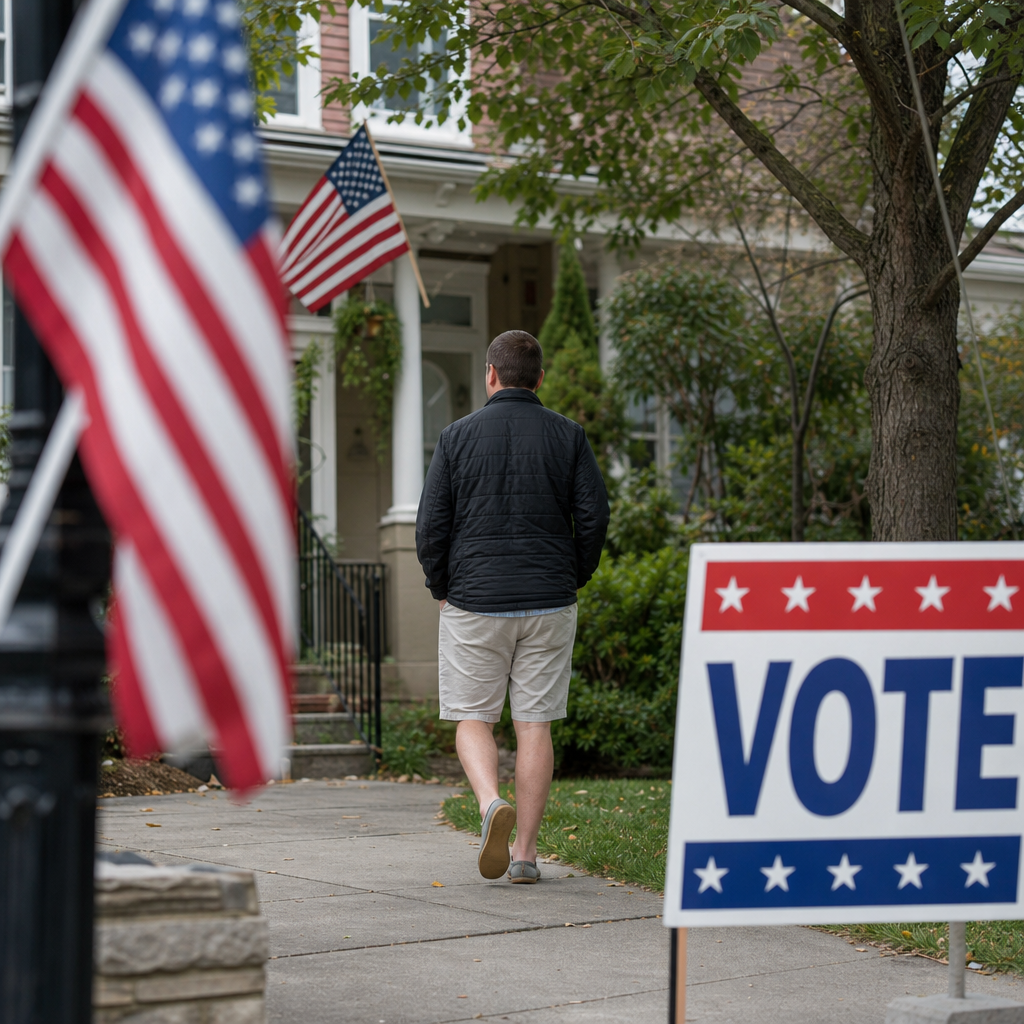
Nationalization of politics describes a shift in which voters, parties, media, donors, and activists increasingly interpret state, county, city, and school board elections through the lens of national conflict. Local elections feel more federal because issues once handled as community questions now carry partisan branding, national fundraising, and messaging imported from presidential and congressional campaigns. In AP Government and Politics, this trend matters because it reshapes federalism, party competition, political participation, and representation across every level of government.
In practical terms, nationalization means a mayoral race can hinge on attitudes toward the president, a school board contest can attract out of state money, and a gubernatorial election can become a referendum on Congress. I have seen this directly in campaign messaging and voter interviews: people often know which national party they trust before they know the candidates running for county executive or state legislature. That shortcut saves time, but it also compresses complex local choices into a familiar red blue frame.
The topic sits at the center of several AP Government concepts. It affects linkage institutions because parties, interest groups, media organizations, and elections now carry stronger national cues into local arenas. It changes political socialization by exposing citizens to constant nationwide narratives through cable news, podcasts, YouTube clips, and social feeds. It also alters public policy because officeholders in statehouses and city halls may prioritize symbolic fights that resonate nationally rather than narrow administrative problems like zoning, transit scheduling, or water infrastructure maintenance.
Understanding why local elections feel more federal helps explain current debates over polarization, split ticket voting, turnout spikes in off year races, and declining attention to local governance details. It also helps students connect constitutional design to modern behavior. The Constitution created multiple centers of power, but political actors increasingly synchronize them. That tension between decentralized institutions and nationalized political behavior defines much of modern American politics and provides a useful hub for studying campaigns, media, parties, federalism, and participation together.
What Nationalization of Politics Means in Practice
Nationalization does not mean local government has lost its legal powers. Cities still manage policing, sanitation, land use, and schools, while states still control elections, criminal law, and many public health rules. The change is political, not constitutional. Voters now use national party identity as the main cue for judging candidates at all levels. Political scientists often track this through rising straight ticket voting, stronger correlation between presidential and down ballot results, and declining success for candidates who separate themselves from their party brand.
A clear example is the shrinking number of places where one party consistently wins presidential races while the other wins governor, senator, or attorney general. Ticket splitting still happens, but much less than it did in the late twentieth century. In earlier decades, moderate Republicans could win in northeastern states and conservative Democrats could win in southern districts. Today, partisan sorting has made ideology and party label align more tightly. Once voters sort themselves into more coherent national camps, local races become easier to read as extensions of national competition.
This matters for accountability. Party labels can help low information voters make choices, especially in elections with limited coverage. Yet the same labels can obscure practical governing differences. A city council member is not a senator, and a county clerk does not shape foreign policy. When voters rely on national impressions, they may reward or punish officials for issues outside local control. That weakens the connection between performance and vote choice, which is one reason many local administrators describe modern campaigns as operating on two tracks: governing locally while surviving nationally framed attacks.
Why Media and Campaign Incentives Push Local Politics National
The media environment is a major driver. Local newspapers have declined sharply in staff and circulation, while national outlets dominate attention. Research from Northwestern University’s Medill program has documented persistent news desert growth, leaving many communities with limited original reporting on school boards, county commissions, and municipal budgets. When local information shrinks, voters fill the gap with national content. They may know every twist in a presidential primary but little about a bond issue that will affect local taxes for years.
Campaign professionals adapt to that reality. Digital advertising platforms reward emotionally charged, identity based messages because they travel quickly and raise money efficiently. A county prosecutor candidate can now send a message tied to immigration, crime narratives, or Supreme Court decisions and attract small dollar donors nationwide. That was far harder in the era of mailers, local radio, and courthouse retail politics. National consultants, polling firms, and fundraising tools such as ActBlue and WinRed make it simple to plug a local campaign into a national donor network.
Candidate strategy follows the incentives. If a school board hopeful learns that a post about curriculum fights raises twenty times more money than a detailed budget plan, the campaign will emphasize the symbolic conflict. If local television segments focus on a governor’s relationship with the president rather than state procurement reform, the governor will answer accordingly. The result is not accidental. It is an ecosystem in which attention, money, and party activism consistently reward national framing over granular local problem solving.
How Parties, Donors, and Interest Groups Reinforce the Trend
Parties are now more integrated across levels of government. National committees share data, messaging, legal resources, and turnout tools with state and local candidates. That coordination can improve organizational capacity, especially for smaller campaigns that lack technical staff. It also ties local office seekers more closely to national partisan narratives. A city candidate may receive talking points tested in congressional battlegrounds, while a legislative candidate may be judged by activists using litmus tests developed for presidential primaries.
Interest groups amplify the same process. Organizations focused on abortion, guns, environmental regulation, voting rules, labor rights, LGBTQ rights, and parental rights target state and local offices because those venues now shape policy in highly visible ways. After major Supreme Court decisions, state legislatures and attorneys general often become front line actors. That invites rapid national mobilization. A state supreme court race in Wisconsin or a governor’s race in Virginia can draw enormous sums because outside groups understand that local outcomes can influence national agendas and legal precedents.
| Driver | How it nationalizes local elections | Example |
|---|---|---|
| National media | Frames local races around nationwide partisan conflict | Mayor debates focus on immigration or presidential approval |
| Digital fundraising | Lets campaigns raise money from ideological donors everywhere | School board candidates receive out of state contributions |
| Party data systems | Standardizes targeting, messaging, and voter contact | State legislative races use congressional style analytics |
| Interest groups | Turns local offices into battlegrounds for national policy goals | Attorney general races center on abortion litigation |
| Partisan sorting | Reduces split ticket voting and local candidate independence | Voters choose party first, candidate second |
Donor behavior reveals the scale of change. In many competitive states, gubernatorial and attorney general candidates now build national small donor lists by appearing on national television or by taking positions designed to circulate on social platforms. I have reviewed finance reports where a supposedly local candidate received contributions from nearly every region of the country after one viral moment. That money can professionalize the campaign, but it also pressures the candidate to keep serving a remote ideological audience rather than a geographically bounded constituency.
Effects on Voters, Turnout, and Representation
For voters, the main benefit of nationalization is clarity. Stronger party cues reduce information costs, making it easier to participate in low visibility contests. This can raise turnout in elections that historically drew little interest. A school board race or judicial election may attract more voters when people believe national stakes are involved. From a democratic participation standpoint, that is not trivial. Elections cannot produce representative government if only a tiny fraction of the public shows up.
But higher engagement does not always mean better informed engagement. In local races, essential policy differences are often administrative, legal, and fiscal rather than ideological. A voter choosing between county commission candidates may need to understand bonding authority, emergency management capacity, land use law, or pension obligations. National messaging rarely explains those things. Instead, it offers broad signals about party identity, cultural conflict, or loyalty to national leaders. That can leave serious governance questions underexamined even in high turnout elections.
Representation also changes when officials fear national backlash more than local disagreement. A legislator in a competitive district may avoid bipartisan compromise on water rights or housing because a primary challenge could be triggered by a nationally visible vote clip. A school board member may spend meetings on culture war resolutions while bus routes, staffing, and literacy intervention receive less attention. These are not abstract concerns. Across many states, local governing bodies now devote substantial time to symbolic declarations that have little direct administrative effect but strong national signaling value.
Another effect is the decline of locally distinctive political coalitions. Historically, urban machines, reform slates, courthouse factions, and state specific party traditions created unusual alliances. Nationalization weakens those arrangements by making party identity more stable and portable. Voters moving from one state to another bring national partisan habits with them, and parties market a more uniform brand. That makes American politics easier to interpret at a glance, yet less flexible in matching local preferences and community specific problem solving.
Federalism, Institutions, and AP Government Connections
This trend is especially important in AP Government because it shows that formal institutions and political behavior are not the same thing. Federalism divides authority between national and state governments, and local governments operate under state law. Separation of powers, checks and balances, and enumerated powers still structure what officials can legally do. Yet nationalization changes how citizens perceive those offices and how officials campaign for them. The system remains decentralized on paper while becoming more centralized in political meaning.
The pattern also connects to political parties as informal institutions. The Constitution says little about parties, but parties organize nominations, messaging, coalition building, and voter turnout. As parties become more ideologically consistent, they provide stronger shortcuts to voters and stronger discipline to officeholders. That helps explain why national events influence state legislative elections, why congressional approval affects governor races, and why ballot measures can become proxies for wider partisan identity struggles.
Courts and bureaucracy fit into the story as well. State attorneys general, secretaries of state, election boards, and state supreme courts now sit closer to the center of partisan conflict because their decisions can affect national controversies. Election administration in particular has become a nationalized policy arena. Rules about absentee ballots, voter identification, drop boxes, and certification were once technical topics followed mainly by specialists. They are now widely discussed by national media audiences, turning relatively obscure state offices into highly contested political prizes.
Students should also connect this issue to pluralism and participatory democracy. More groups are mobilized, but the loudest voices often come from national advocacy networks with sophisticated donor pipelines and media strategies. Local civic associations still matter, yet they compete against organizations that can flood a race with money, volunteers, and litigation support in days. That imbalance changes whose concerns are heard first and whose policy priorities dominate debate.
Why the Trend Matters and What to Watch Next
Nationalization of politics is not a temporary headline cycle. It is a durable shift produced by partisan sorting, weakened local news, digital fundraising, integrated party networks, and media habits that reward conflict over administration. Local elections feel more federal because voters increasingly treat every ballot as part of one continuous national contest. That affects who runs, how campaigns communicate, what issues dominate, and how officials govern after election day.
The key takeaway is balance. National cues can increase participation and help voters navigate crowded ballots, but they can also drown out the practical knowledge needed for effective local accountability. For AP Government and Politics, this makes the topic a useful hub for understanding federalism, parties, media, interest groups, elections, turnout, public opinion, and policy implementation in one frame. If you want to understand modern American politics, start by examining how national conflict now shapes decisions made closest to home.
Watch future local races with two questions in mind. First, which issues are truly within the office’s authority? Second, who benefits when the campaign shifts from local governance to national symbolism? Those questions cut through noise and reveal whether an election is about solving community problems or performing partisan identity. Use this hub as your starting point, then explore related articles on campaigns, federalism, media, political parties, and voting behavior to build a fuller AP Government understanding.
Frequently Asked Questions
What does the nationalization of politics mean in local elections?
The nationalization of politics means that elections for offices such as mayor, county commissioner, sheriff, school board member, and state legislator are increasingly shaped by national party conflict rather than by strictly local concerns. Instead of voters focusing mainly on neighborhood development, school budgets, road repairs, zoning, or county services, many now interpret those issues through broader ideological debates associated with Democrats and Republicans. In practice, this means candidates are often judged less by their personal ties to the community or their experience solving local problems and more by how closely they appear to align with national political identities.
This shift changes the tone and structure of local campaigns. Messaging, campaign ads, endorsements, and even talking points may be borrowed directly from presidential or congressional politics. A school board race, for example, may become framed as part of a larger national struggle over education, parental rights, censorship, or cultural values. A city council election may be discussed in terms of immigration, policing, environmental policy, or economic ideology, even when the actual powers of the office are much narrower. As a result, local elections can feel “more federal” because voters, candidates, media outlets, and party organizations all treat them as symbolic battles in a national political war.
Why do local elections increasingly feel like federal elections?
Local elections feel more like federal elections because the same forces that dominate national politics now reach deeply into state and community-level contests. National media coverage, social media algorithms, party polarization, activist networks, and online fundraising platforms all make it easier for national narratives to overwhelm local context. Voters are exposed every day to highly partisan interpretations of public issues, so when they evaluate a local race, they often rely on the same party cues and ideological shortcuts they use in presidential elections. That makes even low-profile offices part of a larger partisan map.
Another major reason is that candidates and interest groups have incentives to nationalize local races. National framing helps campaigns attract attention, volunteers, endorsements, and money from outside the community. A local candidate who presents a race as part of a national cause can tap into donor networks and activist enthusiasm that would not exist if the campaign were framed only around local administration. At the same time, political parties increasingly view local offices as important building blocks of long-term power, so they work harder to brand those races in clearly partisan terms. The result is that local elections no longer feel isolated; they feel connected to congressional battles, presidential approval, and the broader direction of the country.
How does the nationalization of politics affect federalism and the balance between national and local government?
In AP Government and Politics, this trend matters because it reshapes how federalism works in practice. Federalism is the constitutional division of power between the national government and the states, with many responsibilities also delegated to counties, cities, school districts, and special districts. In theory, local governments are supposed to respond to community-specific needs and preferences. But when local politics becomes nationalized, those local institutions can become less responsive to unique local conditions and more responsive to national party agendas, media narratives, and ideological expectations.
This does not mean the formal powers of local government disappear, but it does mean the political environment around those powers changes significantly. A city council may still be deciding local ordinances, or a school board may still oversee curriculum implementation and district administration, yet those decisions are increasingly contested as if they are national policy statements. That can blur the practical distinction between levels of government. It also increases the influence of national parties and interest groups over offices that historically had more independence. In effect, federalism still exists constitutionally, but politically the lines become less distinct because local actors are pulled into national party competition. For students of government, that is important because it shows how institutions can remain the same on paper while political behavior evolves dramatically in real life.
What are the consequences of nationalized local elections for voters and communities?
The consequences are mixed. On one hand, nationalization can increase attention, turnout, and engagement in elections that many voters previously ignored. More people may become interested in school board meetings, county races, and state legislative contests when they believe those offices are connected to major national issues. Nationalized campaigns can also clarify party differences, making it easier for some voters to understand where candidates stand ideologically. In a political environment where many citizens use party identification as a shortcut, that clarity can make down-ballot choices feel more understandable.
On the other hand, the costs can be substantial. When local elections are filtered through national partisan conflict, practical problem-solving often becomes harder. Community issues that might once have been negotiated through compromise can turn into symbolic ideological battles. Candidates may spend less time discussing specific local budgets, public services, or administrative competence and more time appealing to party loyalty and cultural identity. This can increase polarization in places where cooperation is essential, especially in school districts, municipal governments, and county boards that depend on routine governance rather than constant partisan confrontation.
Communities may also see more outside influence. Donors, consultants, advocacy groups, and media personalities from outside the district can shape the tone of a race without having to live with the consequences of local decisions. That can leave residents feeling that their elections are being nationalized from the outside. Over time, this dynamic may weaken trust in local institutions, because people begin to see them less as practical governing bodies and more as battlegrounds in a larger partisan struggle.
How should students explain the nationalization of politics on an AP Government and Politics exam?
Students should explain nationalization as a shift in political behavior, campaign strategy, and voter perception in which local and state elections become increasingly tied to national party identities and national political issues. A strong AP Gov answer should define the concept clearly, then connect it to larger course themes such as political parties, media, political participation, and federalism. Students should emphasize that offices at the local and state level still have distinct legal responsibilities, but the political forces surrounding those offices now often mirror presidential and congressional politics.
A high-quality response should also include cause-and-effect reasoning. Students can note that polarization, national media coverage, social media, party branding, and modern fundraising methods all contribute to the trend. Then they should explain the effects: voters rely more on partisan cues, campaigns adopt national rhetoric, and local policymaking becomes more ideologically charged. If the prompt involves federalism, students should point out that nationalization does not eliminate the constitutional division of powers, but it does make subnational politics more dependent on national party conflict. That distinction is especially important because it shows analytical precision.
In short, the best exam responses will do more than define the term. They will show how nationalization helps explain why local elections feel more federal, why local offices are increasingly contested along party lines, and why the relationship between citizens and different levels of government is changing in modern American politics.