
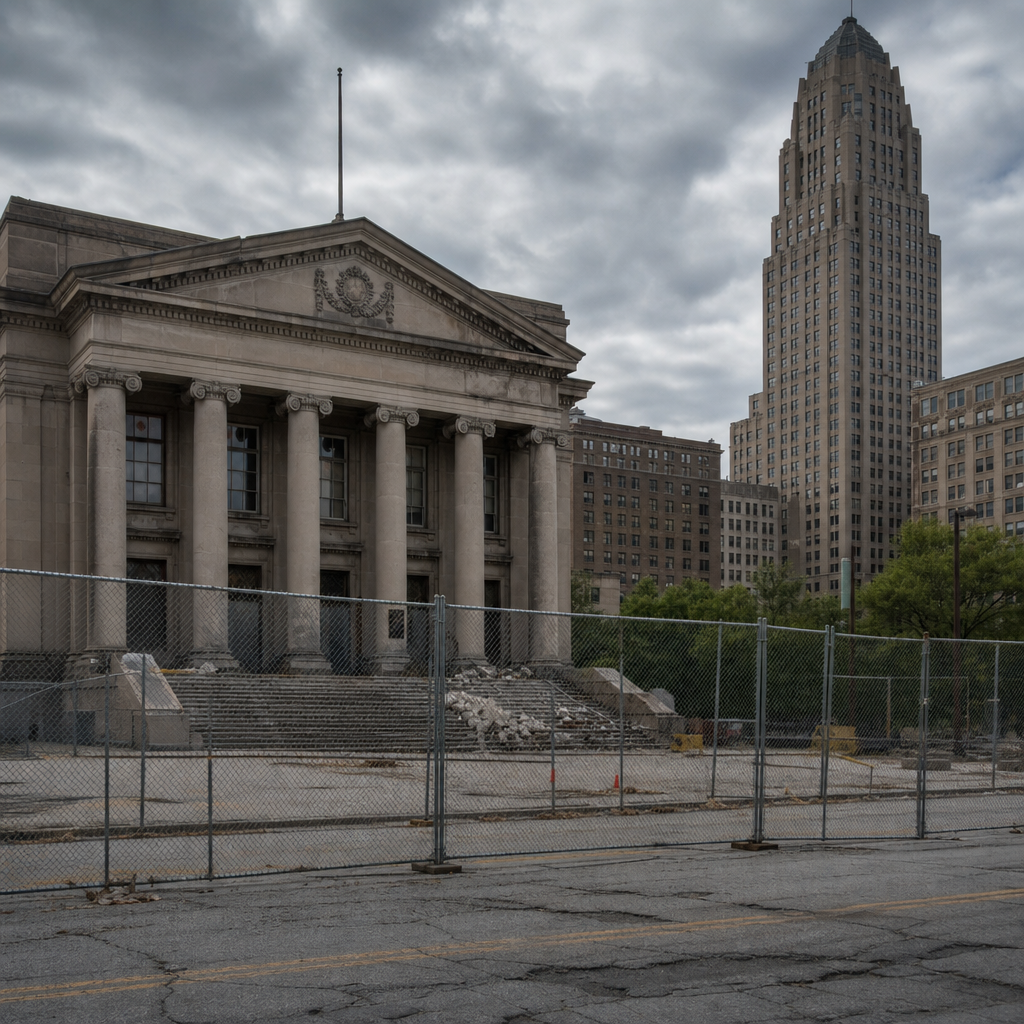
Municipal bankruptcy happens when a city, county, school district, or other public authority can no longer meet its financial obligations and asks a federal court for protection while it restructures debt. In the United States, that process usually occurs under Chapter 9 of the Bankruptcy Code, a specialized legal framework designed for governments rather than private companies. The topic matters because municipal finance touches daily life more directly than many voters realize: police payrolls, water systems, pensions, transit, public hospitals, and bond payments all depend on a local government’s ability to manage revenue and debt responsibly.
In teaching AP Government and Politics, I have found that students often understand federal debt and household debt better than municipal debt, even though local fiscal stress can change public services overnight. Municipal bankruptcy is not simply “a city going broke.” It is a legal and political response to structural imbalance, meaning recurring expenses exceed recurring revenues, or legacy obligations have grown faster than the tax base that supports them. Key terms include general obligation bonds, which are backed by the issuer’s taxing power; revenue bonds, which are repaid from a specific project such as a toll road or utility; unfunded pension liabilities, which measure promised retirement benefits without matching assets; and fiscal emergency, the stage at which ordinary budgeting tools no longer close the gap.
Why does this subject belong in a hub article for AP Government and Politics? Because it connects federalism, public administration, interest groups, courts, elections, and public policy implementation in one concrete issue area. States decide whether their municipalities may file under Chapter 9. Courts interpret contracts, pension protections, and the boundaries of state sovereignty. Elected officials negotiate with unions, retirees, bondholders, and residents who still expect trash collection and safe drinking water. A municipal bankruptcy therefore reveals how American government actually works under stress, when legal rules, political incentives, and economic constraints collide.
Although municipal bankruptcy is rare, its consequences are significant enough that every serious student of American politics should understand the process, the causes, and the tradeoffs. Cases such as New York City’s 1970s fiscal crisis, Orange County’s 1994 bankruptcy, Jefferson County’s 2011 filing, Detroit’s 2013 case, and Puerto Rico’s separate restructuring regime each show different failure patterns. Some crises come from recession and population loss. Others come from risky financial products, governance failures, corruption, or pension promises made over decades. Looking across those cases gives a clearer answer to the central question: what really happens when cities run out of money?
How municipal bankruptcy works in the United States
Chapter 9 is the main legal pathway for municipal debt adjustment. Unlike Chapter 11, which reorganizes private corporations, Chapter 9 respects state control over local governments. A municipality cannot simply decide on its own to file unless state law specifically authorizes it, authorizes it conditionally, or creates an intervention system that leads to filing. As a result, municipal bankruptcy reflects federalism in practice. States such as Michigan have authorized filings in some circumstances; others prohibit them entirely. This state gatekeeping explains why severe local distress does not always end in bankruptcy.
To qualify, a municipality must be insolvent, desire to effect a plan to adjust debt, and meet other statutory requirements. Insolvency in this setting means the government is generally unable to pay debts as they come due, not merely that future budgets look difficult. Once the case begins, the automatic stay can pause collection actions, giving the municipality breathing room. The government then proposes a plan of adjustment, which restructures obligations by extending maturities, reducing principal, modifying interest rates, or changing treatment across creditor classes. In practice, negotiations with bond insurers, pension systems, labor unions, vendors, and residents often determine whether the plan is workable.
One essential point for students is that a city does not “liquidate” the way a business can. Municipalities continue to exist because government functions are ongoing public necessities. A federal judge cannot simply order a city to sell itself off, rewrite state law, or directly run local operations. That limit matters. It means the court supervises debt adjustment, but long-term recovery still depends on political leadership, management reforms, and economic conditions after the case ends.
Why cities run out of money
Most municipal fiscal crises do not begin with a single dramatic event. They usually develop from a combination of shrinking revenue, rising fixed costs, and weak oversight. Population loss is one common driver. When residents and employers leave, the tax base contracts, but infrastructure, pension commitments, and public safety costs do not shrink at the same speed. Older industrial cities have faced this pattern for decades. Detroit is the clearest example: decades of deindustrialization, suburbanization, and declining population reduced revenue while service demands and legacy costs remained high.
Another frequent cause is overreliance on volatile revenue. Sales taxes, tourism taxes, and real-estate related revenue can surge in good years and collapse in recessions. If officials treat temporary growth as permanent, they may add recurring expenses that become unsustainable during downturns. I have seen this mistake in local budgeting discussions where officials balanced the current year with one-time asset sales or optimistic revenue assumptions. That may postpone crisis politically, but it deepens structural imbalance.
Debt structure also matters. Borrowing for long-lived infrastructure can be prudent because future users help pay for long-term assets. Borrowing to cover operating deficits is more dangerous because it turns a recurring budget problem into a compounding debt problem. Derivatives and complex interest-rate swaps have worsened some municipal crises, especially when issuers did not fully appreciate counterparty risk or termination penalties. Orange County’s collapse stemmed from leveraged investment strategies, while Jefferson County’s sewer debt crisis involved derivatives, refinancing, and corruption allegations tied to financing decisions.
Pensions and retiree health care are another major source of pressure. These obligations are not inherently irresponsible; they are part of employee compensation. The problem arises when governments underfund annual contributions, assume unrealistic investment returns, or expand benefits without stable financing. Over time, unfunded liabilities consume budget space that might otherwise support current services. When a city must choose between keeping parks open, paying retirees, and satisfying bond covenants, the conflict becomes openly political.
Major municipal bankruptcy cases and what they teach
Detroit’s 2013 bankruptcy remains the largest municipal bankruptcy in United States history by debt scale, with roughly $18 billion in obligations cited at filing. The city’s problems were not caused by one bad year. They reflected decades of population decline, a shrinking property tax base, weak service delivery, pension stress, and aging infrastructure. In some neighborhoods, emergency response times and basic public services had deteriorated dramatically. The restructuring reduced certain debts, cut some retiree benefits, and used the “Grand Bargain,” a complex arrangement involving philanthropic foundations, the state of Michigan, and the Detroit Institute of Arts, to protect art assets while supporting pensions. The lesson is that bankruptcy can reduce liabilities, but recovery still requires broader institutional and economic rebuilding.
Jefferson County, Alabama, filed in 2011 after a sewer system financing crisis ballooned into more than $4 billion in debt. The case showed how infrastructure financing can become dangerous when local officials rely on variable-rate debt and swaps without adequate controls. It also illustrated the governance dimension of municipal finance: corruption and poor decision-making can transform a manageable project into a fiscal disaster. Orange County’s 1994 filing told a different story. There, investment pool losses tied to risky leveraged bets revealed that even affluent jurisdictions can fail if treasury management is reckless.
Not every crisis ends in Chapter 9. New York City in the 1970s avoided bankruptcy through state intervention, creation of oversight bodies, and emergency financing. That example is important in AP Government because it shows how intergovernmental institutions can step in before a court filing occurs. Puerto Rico, though not a municipality and not eligible for Chapter 9 in the ordinary way, entered a special restructuring process under PROMESA in 2016. Its case highlights how territorial status, federal legislation, and public debt can intersect differently from city bankruptcies, yet raise many of the same questions about democracy, austerity, and creditor rights.
| Case | Year | Main cause | Key lesson |
|---|---|---|---|
| Orange County, California | 1994 | Leveraged investment losses | Cash management failures can trigger insolvency even in wealthy areas |
| Jefferson County, Alabama | 2011 | Sewer debt, swaps, corruption | Complex financing and weak oversight create long-term public risk |
| Detroit, Michigan | 2013 | Population loss, pensions, service decline | Structural economic decline can overwhelm ordinary budget tools |
| Puerto Rico | 2016 | Debt overload, recession, governance stress | Federal intervention may be required when standard pathways do not fit |
Who gets hurt, who gets protected, and what changes after filing
Municipal bankruptcy is often described as a fight between creditors and government, but the real distribution of pain is broader. Residents may experience service cuts, deferred maintenance, reduced staffing, higher fees, and damaged local confidence. Retirees may face lower pension benefits or reduced cost-of-living adjustments, depending on state law and the negotiated plan. Bondholders may receive less than full repayment, especially on unsecured or weaker claims. Public employees face wage pressure, benefit changes, and uncertainty about job security. In short, bankruptcy reallocates losses across stakeholders who all have legal and political claims.
The treatment of pensions is one of the most debated issues. Some states constitutionally protect public pensions, but federal bankruptcy law can still alter obligations under a confirmed plan, as Detroit demonstrated. That does not mean pensions are always cut deeply; outcomes depend on bargaining power, state support, legal rulings, and the municipality’s overall finances. Bondholders are also not a uniform group. General obligation debt, revenue bonds, insured debt, and lease-backed obligations may be treated differently depending on statutory liens, pledged revenue, and court interpretation.
After filing, successful recovery usually depends on four things: credible budgets, better financial reporting, realistic revenue forecasting, and governance reform. Tools such as multiyear financial planning, actuarially sound pension funding, debt affordability policies, and independent audits are not glamorous, but they prevent repeat crises. Credit ratings may improve only gradually after restructuring because markets want evidence that balance is durable. Governments also need public trust. If residents believe financial statements are manipulated or painful concessions are distributed unfairly, political legitimacy erodes and recovery becomes harder.
Why municipal bankruptcy matters in AP Government and Politics
For AP Government and Politics, municipal bankruptcy is a practical lens on core concepts students are expected to master. It demonstrates federalism because states control local governments and shape access to Chapter 9. It illustrates separation of powers because courts, executives, and legislatures all influence the outcome. It shows the role of bureaucracies through finance departments, emergency managers, pension boards, and oversight authorities. It also highlights linkage institutions: unions, taxpayer groups, media outlets, and community organizations all pressure decision-makers during a fiscal crisis.
The topic also helps students connect public policy to democratic accountability. Budget choices are not abstract. If a city underfunds pensions for years to avoid tax increases, that is a political decision. If leaders issue debt to postpone difficult reforms until after an election, that is a political incentive problem. When crisis arrives, the formal rules of bankruptcy matter, but so do turnout, race, class, and geography. In Detroit, for example, debates over emergency management and democratic representation raised major questions about who gets to make decisions when a city is declared financially distressed.
Students should also see municipal bankruptcy as part of a wider “Misc” hub within AP Government and Politics because it links to public finance, urban politics, civil service, state and local government, and constitutional disputes over contracts and sovereignty. It is not an isolated niche issue. It is a crossroads topic that helps explain how governing institutions behave when promises exceed resources.
When cities run out of money, the result is never just an accounting problem. Municipal bankruptcy is a legal remedy, a political reckoning, and a test of administrative competence all at once. The most important lesson is that local insolvency usually grows from long-term structural weakness rather than sudden collapse. Shrinking tax bases, risky borrowing, underfunded pensions, weak oversight, and delayed political decisions are the recurring warning signs. Chapter 9 can create space to reorganize debt, but it cannot by itself restore public trust, rebuild an economy, or erase decades of poor governance.
For students, the value of studying municipal bankruptcy is that it turns textbook ideas into visible reality. Federalism determines who may file. Courts shape what contracts can be adjusted. Interest groups fight over losses. Bureaucrats implement cuts and reforms. Voters judge whether leaders acted responsibly or merely postponed pain. That is why this issue belongs at the center of any broad AP Government and Politics understanding of state and local power.
If you are using this page as a hub, move next into related topics such as state and local government structure, public budgeting, taxation, bureaucracy, and public policy implementation. Municipal bankruptcy makes more sense when you see how those pieces fit together, and mastering those connections will strengthen both exam performance and real-world civic understanding.
Frequently Asked Questions
What is municipal bankruptcy, and how is it different from personal or corporate bankruptcy?
Municipal bankruptcy is a legal process that allows a city, county, school district, utility authority, or other qualifying public entity to seek court protection when it can no longer meet its financial obligations. In the United States, this usually happens under Chapter 9 of the federal Bankruptcy Code. Unlike personal bankruptcy or corporate bankruptcy, Chapter 9 is specifically designed for governments, which means the rules reflect the reality that a municipality still has to provide essential public services while it restructures debt. A city cannot simply shut down the way a private business might, because residents still need policing, sanitation, water service, public schools, and other core functions.
Another major difference is that Chapter 9 respects the sovereignty of states and the political independence of local governments. Courts generally have more limited power over a municipality than they do over a private company in Chapter 11. For example, a bankruptcy judge cannot usually force a city to sell public assets, raise taxes, or make specific policy choices in the same direct way that a court might supervise a corporate reorganization. Instead, municipal bankruptcy is largely about giving the local government breathing room from creditors while it negotiates a plan to adjust debts and restore financial stability.
What causes a city or other local government to run out of money?
Municipal financial distress rarely comes from one single problem. More often, it develops over years as revenues fail to keep pace with obligations. A city may face shrinking tax collections due to population loss, declining property values, business closures, or a weakening local economy. At the same time, expenses may continue to rise because of labor contracts, pension promises, retiree health care costs, infrastructure maintenance, debt service, and emergency spending needs. When those pressures build up faster than the government can respond, the gap can become unmanageable.
Some municipalities also encounter sudden shocks that push an already fragile budget into crisis. These can include natural disasters, litigation, a major employer leaving town, corruption scandals, failed development projects, or sharp drops in state aid. In many cases, officials try to avoid bankruptcy through budget cuts, tax increases, refinancing, or negotiated settlements with unions and bondholders. But if those efforts are not enough, the government may reach a point where it cannot pay bills as they come due. That is when Chapter 9 can become a last-resort tool for restructuring debt while trying to preserve basic public operations.
What happens during a Chapter 9 municipal bankruptcy case?
When a municipality files under Chapter 9, it seeks protection from creditors while it works on a plan to adjust its debts. The filing can trigger an automatic stay that temporarily stops many collection actions, lawsuits, and other creditor efforts to obtain payment. This pause is important because it gives the local government time to assess its finances and negotiate with stakeholders without the immediate threat of asset seizures or escalating legal pressure. However, eligibility for Chapter 9 is not automatic. The municipality must meet specific legal requirements, and in many states it must also be authorized by state law to file in the first place.
Once in bankruptcy, the municipality typically develops a restructuring plan that may include extending repayment schedules, reducing certain obligations, renegotiating contracts, or revising how different classes of debt will be treated. Creditors can object, and the court reviews whether the plan meets legal standards, including whether it is feasible and proposed in good faith. Because public entities are involved, the process often becomes highly visible and politically sensitive. Residents, employees, retirees, bondholders, and state officials may all have strong interests in the outcome. The goal is not liquidation, but a workable path forward that allows the municipality to continue functioning while addressing debts it cannot realistically pay under existing terms.
How does municipal bankruptcy affect residents, public workers, and local services?
For residents, the effects can be significant because municipal finance directly supports daily life. If a city is in severe distress, services such as police protection, fire response, road repairs, sanitation, parks, libraries, and public transit may already be under strain before the bankruptcy filing even happens. During the restructuring process, officials often try to protect essential services, but difficult trade-offs are common. Budgets may be tightened, staffing levels reviewed, capital projects delayed, and user fees or local taxes reconsidered. In some cases, the immediate purpose of filing is to prevent a total breakdown in service delivery by stabilizing the government’s finances.
Public employees and retirees may also be affected, especially if labor costs, pensions, or retiree health obligations are a major part of the fiscal crisis. Depending on state law, contract terms and benefits may become subjects of negotiation and legal dispute. Bondholders and other creditors can face losses as well, which can influence the municipality’s future borrowing costs. Even so, municipal bankruptcy does not automatically mean that a city stops operating or that all services collapse. More often, it is an effort to reset obligations in a way that keeps the government functioning. For taxpayers and residents, the real-world impact depends on how deep the financial problems are, how the restructuring plan is designed, and whether leaders can rebuild trust and sound budgeting after the case ends.
Can a municipality recover after bankruptcy, and what happens once the case is over?
Yes, a municipality can recover after bankruptcy, but success is not guaranteed and usually depends on more than just reducing debt. Exiting Chapter 9 can provide a cleaner balance sheet, more manageable payment terms, and a chance to address unsustainable obligations that had been crowding out basic services. That said, bankruptcy is only one part of recovery. Long-term improvement often requires better financial management, realistic budgeting, stronger oversight, economic development, infrastructure planning, and a willingness to confront structural problems that led to the crisis in the first place.
Once the court confirms a plan of adjustment and the municipality emerges from bankruptcy, it must carry out the terms of that plan. That may involve making restructured debt payments, following new budget controls, and continuing reforms negotiated during the case. The municipality may also face reputational challenges in the bond market, since investors will closely watch whether it can maintain stable finances going forward. For residents, the most important question is whether local government becomes more reliable after the restructuring. A successful post-bankruptcy recovery usually means essential services are more sustainable, financial reporting is more disciplined, and elected officials are better positioned to avoid repeating the same mistakes.