
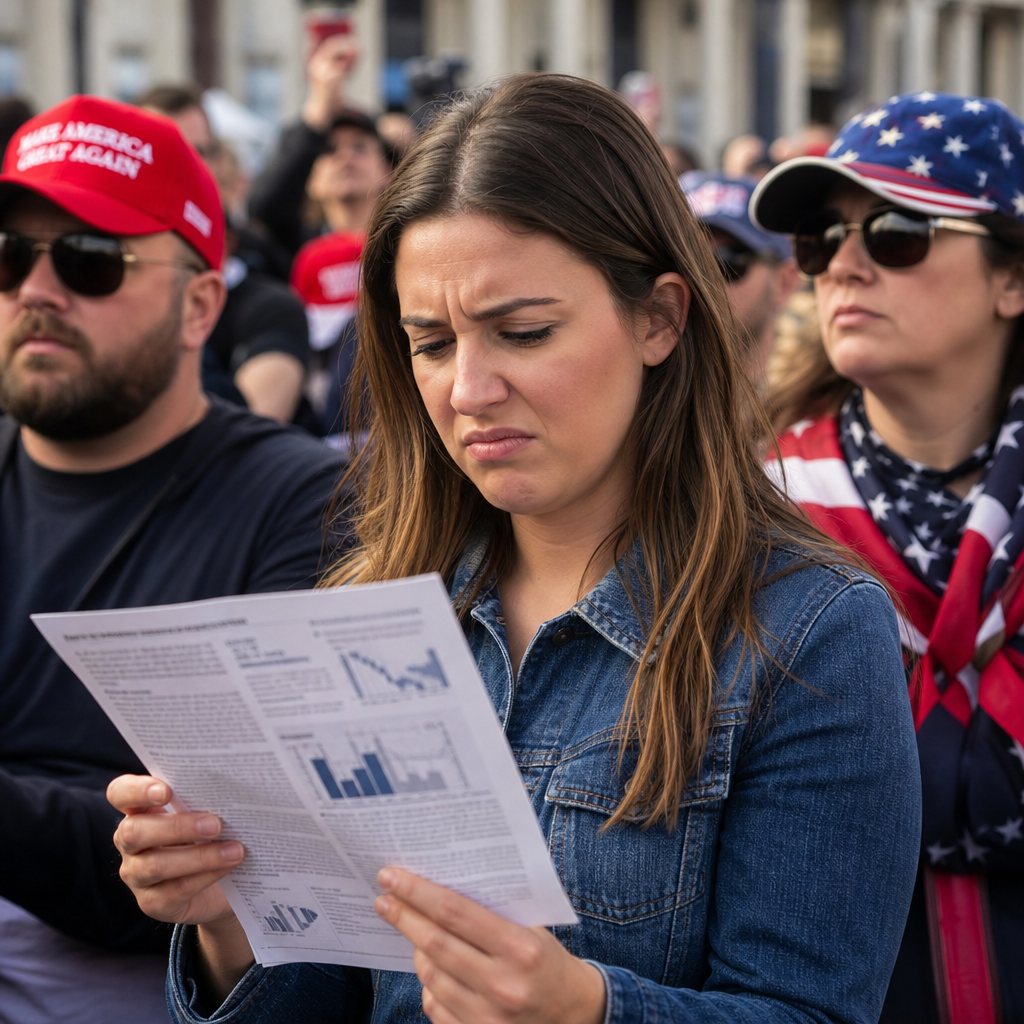
Motivated reasoning helps explain why voters can encounter clear evidence, hear a well-sourced correction, and still leave more convinced of what they already believed. In politics, people rarely process information like neutral judges weighing facts on equal scales. They process it like advocates protecting identities, values, and social ties. That is the core idea behind motivated reasoning: people use reasoning skills not only to discover what is true, but also to defend conclusions they want to keep. For students of AP Government and Politics, this concept matters because it shapes elections, public opinion, media behavior, campaign strategy, and the limits of democratic deliberation.
Political scientists and psychologists distinguish motivated reasoning from simple ignorance. Ignorance means lacking information. Motivated reasoning means handling information selectively. A voter may know many facts yet accept only the ones that support a preferred party, candidate, or policy. This tendency often overlaps with confirmation bias, selective exposure, identity-protective cognition, and partisan sorting. In practice, these ideas describe a common pattern: uncomfortable facts create psychological friction, so people reinterpret, minimize, or dismiss them rather than revise their beliefs. I have seen this repeatedly in classroom debates, campaign messaging tests, and ordinary conversations after debates, scandals, and Supreme Court decisions.
This topic is central to the broad “miscellaneous” side of AP Government and Politics because it connects many units that students usually learn separately. Federal institutions make policy, but public acceptance of that policy depends on how citizens interpret evidence. The media can report the same event accurately, yet voters on opposite sides can draw incompatible conclusions. Interest groups frame issues to activate values, not just provide information. Pollsters measure opinion, but opinion itself is shaped by partisan cues and social identity. If you understand motivated reasoning, you understand why factual disagreement persists even when data are widely available.
Motivated reasoning also matters because modern politics creates perfect conditions for it. Party polarization has strengthened social identities. Digital platforms reward emotion, conflict, and speed. Candidates and activists use framing, repetition, and moral language to turn policy disputes into personal loyalty tests. As a result, correcting misinformation is harder than many people assume. The challenge is not merely supplying better facts. The deeper challenge is that facts are filtered through belonging, status, fear, and trust. That reality does not make voters irrational in a simplistic sense. It means political judgment is embedded in human psychology, and any serious study of government must account for that.
What motivated reasoning is and how it works
Motivated reasoning is a cognitive process in which goals shape how people search for, evaluate, and remember information. The key goal is often directional rather than accuracy-based. A directional goal pushes a person toward a preferred conclusion, such as “my party is competent” or “this policy threat is exaggerated.” An accuracy goal pushes toward the best available answer even if it is unpleasant. Most voters hold both goals at once, but under political pressure directional goals frequently dominate. That is why people can be sophisticated consumers of information while remaining stubbornly partisan.
The process usually follows a recognizable sequence. First, a citizen encounters a claim, statistic, scandal, or policy outcome. Second, they assess the source before the content. If the source is trusted, the claim receives a presumption of legitimacy; if the source is distrusted, scrutiny rises immediately. Third, the citizen searches memory for supporting arguments. Fourth, they apply uneven standards: weak evidence may be enough for preferred claims, while disliked claims are subjected to intense skepticism. Finally, they store the result in memory in a way that supports future judgments. This is why corrections often fail to stick when they threaten identity.
Research from political psychology consistently shows that higher political knowledge does not automatically eliminate motivated reasoning. In some contexts, more knowledgeable partisans are better at counterarguing inconvenient evidence because they possess larger inventories of facts, frames, and elite cues. That finding matters for AP Government students because it complicates the comforting assumption that civic education alone guarantees open-mindedness. Knowledge is essential, but knowledge can serve accuracy or defense. The same analytical skill used to evaluate policy tradeoffs can also be used to rationalize contradictions.
Why voters reject uncomfortable facts
Voters reject uncomfortable facts for several concrete reasons. Identity is the strongest. Party affiliation is not just an opinion label; for many Americans it functions as a social identity tied to family, geography, religion, race, class, and culture. Accepting a damaging fact about one’s party can feel like disloyalty to a community. Emotional protection matters too. Facts about corruption, policy failure, or democratic backsliding can produce anxiety and loss of control. People naturally prefer narratives that preserve moral clarity and group dignity. In my experience, voters often reject facts less because they have read the evidence carefully than because accepting it would force an unsettling rewrite of who they trust.
Elite cues intensify the effect. Most citizens cannot independently verify every claim about inflation, immigration, foreign policy, or administrative law. They rely on trusted intermediaries such as party leaders, commentators, advocacy groups, and local networks. When those elites signal that a fact is misleading, biased, or part of an attack, followers often adopt the same stance. This does not require blind obedience. It reflects informational dependency in a complex political system. The more complicated the issue, the more voters infer what to believe from who is delivering the message.
Media structure also reinforces rejection. Cable news, partisan newsletters, podcasts, and algorithmic feeds make it easy to avoid cognitive discomfort. Selective exposure lets voters build information environments where supportive stories are abundant and contrary evidence appears only in distorted form. By the time a correction arrives, many citizens have already absorbed a coherent counternarrative. Repetition then gives that narrative familiarity, and familiarity can feel like truth. This is one reason false claims can remain influential even after fact-checking.
How motivated reasoning appears across AP Government topics
Motivated reasoning is visible across the full AP Government and Politics curriculum. In voting and elections, supporters reinterpret poor debate performances, legal controversies, and economic indicators to protect preferred candidates. In public policy, citizens evaluate outcomes differently depending on which party passed the law. The same jobs report can be hailed as proof of recovery or dismissed as manipulated, often with little change in the underlying data. In institutions, voters excuse actions by Congress, the presidency, or the Supreme Court when those actions advance favored goals, then condemn similar actions by opponents as unconstitutional or corrupt.
It also shapes civil liberties and civil rights debates. People often endorse free speech in principle while supporting restrictions when offensive speech targets their own group. They defend due process for allies and demand swift punishment for enemies. On federalism, citizens may prefer state control or national control depending on which level of government is more likely to produce their desired outcome. These reversals are not random inconsistencies. They are examples of outcome-driven reasoning dressed in constitutional language.
Public opinion polling offers another clear example. Students are often taught to read approval ratings, crosstabs, and sampling methods carefully. That skill matters, but interpretation still depends on motivation. A voter may praise a poll when it confirms momentum for their side and attack polling methodology when it does not. Analysts see this every cycle: confidence in surveys rises and falls with partisan comfort. Understanding that pattern helps students read polling claims more critically and connect political behavior to human psychology.
Real-world examples from campaigns, media, and institutions
Campaigns exploit motivated reasoning deliberately. Strategists know that persuading voters is often less about changing ideology than about activating identity and selective interpretation. A campaign facing an unfavorable economic indicator may shift attention to crime, judicial appointments, immigration, or elite cultural conflict, giving supporters reasons to maintain loyalty. Negative ads work similarly. They rarely provide balanced analysis. They provide emotionally charged frames that help voters fit ambiguous facts into a preferred moral story: our side protects the country; their side threatens it.
Media organizations, including responsible ones, must operate in an environment where audiences reward affirmation. During major scandals, I have watched people share the same article with opposite takeaways because the article served as raw material for prior commitments rather than a neutral update. One side focused on the allegation, the other on procedural objections, timing, or source credibility. Institutions face the same pattern. Supreme Court decisions are celebrated as principled or denounced as illegitimate depending less on legal doctrine than on whether the result aligns with a voter’s values. Motivated reasoning does not erase sincere constitutional argument, but it often guides which arguments feel compelling.
| Area | Uncomfortable fact | Typical motivated response | Plain-language meaning |
|---|---|---|---|
| Elections | Preferred candidate loses independents | Polls are rigged or voters were misled | Supporters protect loyalty by disputing the signal |
| Policy | Law produces mixed results | Credit successes, externalize failures | People keep the policy story they prefer |
| Media | Fact-check contradicts viral claim | Fact-checker is biased | Source distrust blocks revision |
| Courts | Ruling hurts favored side | Judges are activists | Process criticism masks outcome frustration |
Can voters overcome motivated reasoning?
Yes, but not easily and not completely. The most reliable counterweight is creating conditions that increase accuracy goals. When people expect to explain their view publicly, compare multiple sources, or evaluate evidence before learning which party supports it, they often reason more carefully. Structured classroom discussion helps because it slows reactions and forces definition of terms. High-quality local journalism can help because trust rises when reporting is concrete, transparent, and close to lived experience. Cross-cutting social networks help too. People who know thoughtful members of the other party are sometimes less likely to treat every contrary fact as hostile propaganda.
Still, there are limits. No citizen can become a detached expert on every issue. Heuristics are unavoidable in mass democracy. The aim is not to eliminate identity from politics; identity is part of representation and coalition building. The aim is to reduce situations where loyalty overwhelms reality testing. For AP Government students, the practical lesson is simple: ask what evidence would change a position, separate source evaluation from reflexive dismissal, and compare standards across cases. If executive power seems dangerous under one president, would the same action feel acceptable under another? That question often reveals motivated reasoning in real time.
Why this hub matters for AP Government and Politics
As a hub topic, motivated reasoning ties together many “miscellaneous” questions students encounter but do not always know how to organize. Why do fact checks fail? Why do scandals affect one candidate but not another? Why do citizens change principles when party control changes? Why does polarization persist despite abundant information? The same framework helps answer all of them. It shows that democratic politics is not only about institutions and formal rules. It is also about perception, trust, emotion, and identity.
The biggest takeaway is not cynicism. It is discipline. Voters reject uncomfortable facts because facts compete with belonging and meaning, not because truth is irrelevant. Informed citizenship therefore requires more than collecting evidence. It requires habits of self-scrutiny: noticing when a claim feels satisfying because it is true and when it feels satisfying because it flatters the side you already support. If you are studying AP Government and Politics, use this article as a base for related topics such as political socialization, media effects, polarization, public opinion, voting behavior, and interest-group messaging. The more clearly you understand motivated reasoning, the better you can analyze how American politics actually works. Start by applying the concept to one current event and identifying where identity, trust, and selective evidence shape the debate.
Frequently Asked Questions
What is motivated reasoning in politics?
Motivated reasoning is the tendency for people to evaluate political information in ways that protect what they already want to believe. Instead of acting like neutral fact-checkers, voters often act more like lawyers building a case for their side. They notice evidence that supports their preferred candidate or ideology, question evidence that threatens it, and interpret ambiguous facts in the most comfortable direction. This does not usually happen because people are foolish or uninformed. In many cases, it happens because political beliefs are tied to identity, community, and moral values. When a political claim feels connected to who someone is, rejecting that claim can feel emotionally costly. That is why even clear evidence may not produce belief change. The issue is not just whether facts are available, but whether those facts fit with the psychological need to preserve consistency, belonging, and self-respect.
Why do voters reject facts even when the evidence is strong?
Voters often reject uncomfortable facts because accepting them can create cognitive and social tension. A fact may challenge not only a specific opinion, but also a person’s larger worldview, trust network, and group identity. If someone has spent years believing a party is honest, a policy is effective, or a leader is unfairly attacked, contrary evidence can feel like a threat rather than a correction. In response, the mind searches for ways to dismiss the new information: maybe the source is biased, the timing is suspicious, the numbers are misleading, or the criticism is selective. These reactions can happen quickly and sincerely. People may believe they are being careful and skeptical, when in reality they are applying much harsher scrutiny to unwelcome evidence than to friendly claims. Strong evidence alone is often not enough because political judgment is filtered through emotions, loyalties, and prior commitments. The more personally meaningful the issue is, the more likely voters are to defend their existing position instead of revising it.
Is motivated reasoning the same as being ignorant or irrational?
No. Motivated reasoning should not be reduced to simple ignorance, stupidity, or a total lack of logic. In fact, it often involves the active use of intelligence and reasoning ability. People can be highly skilled at finding counterarguments, identifying exceptions, and questioning methods when they are defending a preferred conclusion. That is part of what makes motivated reasoning so powerful. The reasoning process is real, but it is directed by an emotional or identity-based goal rather than by a fully open search for truth. This means educated, politically engaged, and media-savvy voters are not immune. Sometimes they are even better at rationalizing what they want to believe because they have more rhetorical tools available. Calling this process irrational can be misleading if it suggests voters are simply failing to think. Often they are thinking hard, but in a one-sided way. A better description is that reasoning becomes goal-protective. The goal is not necessarily accuracy at all costs; it is preserving a valued belief, a social bond, or a sense of moral coherence.
Can fact-checking and corrections overcome motivated reasoning?
Fact-checking can help, but its effects are often limited when beliefs are tightly connected to identity. Corrections work best when people are not deeply invested in the false claim or when they already trust the source delivering the correction. In highly polarized environments, however, voters may treat fact-checks as partisan weapons instead of neutral clarifications. They may question the motives of journalists, experts, or institutions before they even consider the substance of the evidence. This does not mean corrections are useless. Accurate reporting, transparent sourcing, and repeated exposure to reliable information still matter. Over time, they can shape public understanding, especially among people who are undecided or only weakly attached to a claim. But fact-checking by itself rarely solves the problem because motivated reasoning is not just an information deficit. It is a defensive process. To be more effective, corrections often need to reduce threat, use trusted messengers, acknowledge underlying concerns, and avoid framing that triggers immediate resistance. In other words, how a fact is presented can matter almost as much as the fact itself.
How can voters reduce the effects of motivated reasoning in their own thinking?
The first step is recognizing that nobody is above this tendency. Motivated reasoning is a human habit, not a flaw unique to the other side. Voters can reduce its influence by slowing down when a political claim feels especially satisfying, enraging, or vindicating. Strong emotional reactions are often a sign that identity is involved, which is exactly when biased evaluation becomes more likely. It helps to ask a few disciplined questions: Would I accept this evidence if it hurt my side instead of helping it? Am I applying the same standards to allies and opponents? What would convince me that I am wrong? Seeking out credible sources across perspectives can also help, especially when the goal is comparison rather than point-scoring. Another useful strategy is separating policy judgments from team loyalty. When people evaluate a claim on its merits rather than on who said it, they are less likely to reason defensively. Finally, intellectual humility matters. Democracy works better when citizens can admit uncertainty, update beliefs gradually, and treat disagreement as a normal part of learning rather than as a threat to identity.