
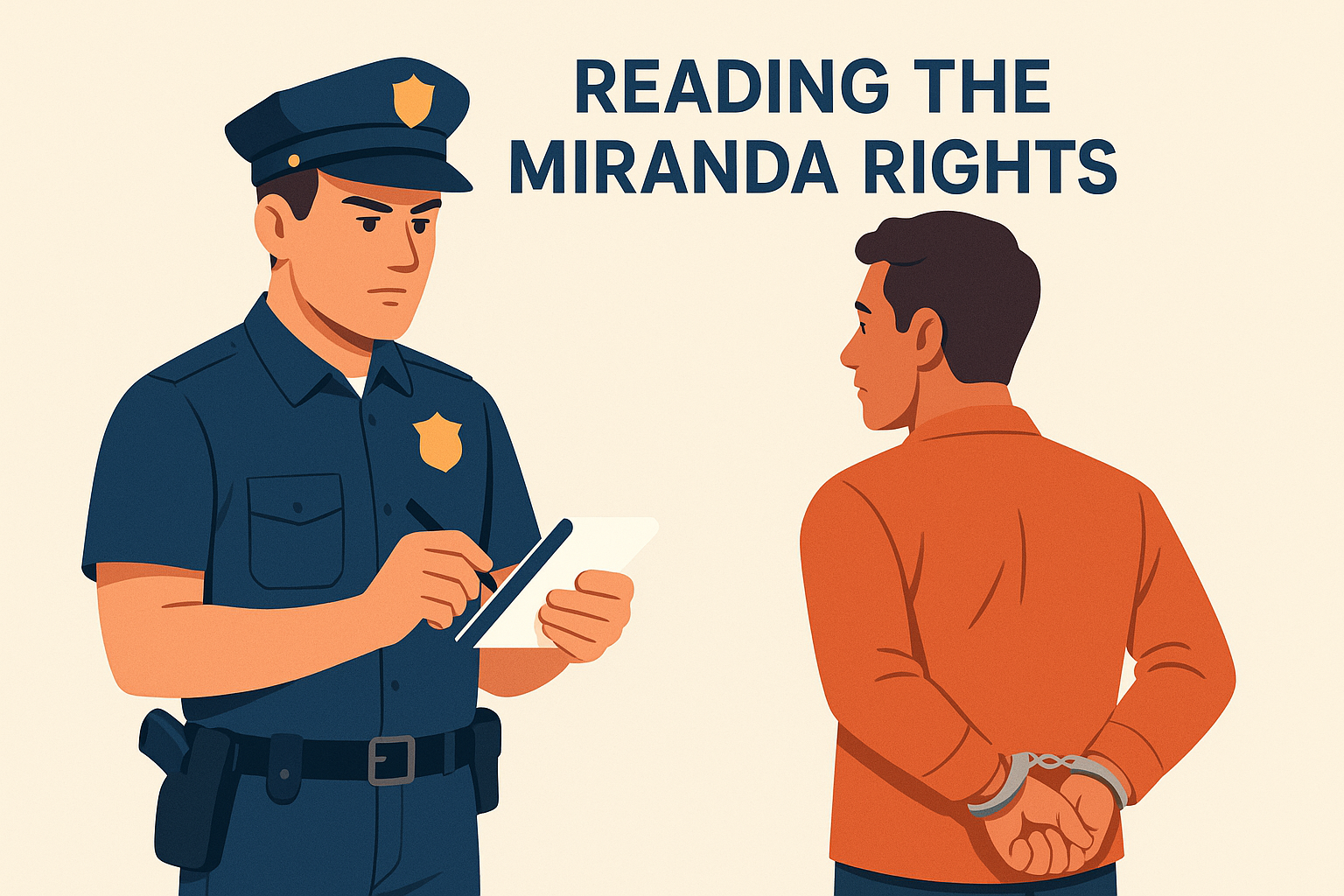
Introduction to Miranda Rights and Their Importance
The term “Miranda Rights” is a staple in legal dramas and crime shows, often depicted dramatically during arrests with the phrase, “You have the right to remain silent.” But where do these rights actually come from, and why are they part of the American justice system? The origin lies in a pivotal Supreme Court case: Miranda v. Arizona. This landmark decision, issued on June 13, 1966, fundamentally changed the way law enforcement handles criminal suspects in the United States by mandating that they be informed of their rights. Understanding Miranda Rights is vital not only for legal professionals but also for everyday citizens to safeguard their own rights.
Key terms such as “Miranda Rights,” “self-incrimination,” and “due process” are essential in grasping the significance of Miranda v. Arizona. Miranda Rights refer to the mandatory notification of these rights to suspects upon arrest, derived from the Fifth Amendment’s protection against self-incrimination and the Sixth Amendment’s guarantee of legal representation. “Self-incrimination” involves an individual being forced to provide evidence that could lead to their own prosecution, while “due process” ensures fair treatment through the normal judicial system.
This topic matters because the protections afforded by the Miranda ruling uphold the integrity of the legal system and defend individual freedoms. By requiring law enforcement to inform suspects of their rights, the ruling promotes transparency, accountability, and fairness, thereby reducing incidents of coercion and involuntary confessions. With this understanding, individuals can better navigate interactions with law enforcement and protect their rights effectively.
The Story Behind Miranda v. Arizona
At the heart of the Miranda v. Arizona case was Ernesto Miranda, a Mexican immigrant living in Phoenix, Arizona. In 1963, Miranda was arrested for robbery, kidnapping, and rape. During a two-hour police interrogation, he confessed to the crimes without being informed of his right to remain silent or his right to an attorney. At trial, his confession was used as evidence, leading to his conviction.
Miranda appealed his conviction, and the case eventually reached the Supreme Court. The Court concluded that the Fifth Amendment privilege against self-incrimination demands that individuals subjected to custodial interrogation be advised of their rights. This decision led to the establishment of the Miranda warning, requiring that individuals be informed of their right to remain silent, that anything they say can be used against them in court, their right to an attorney, and that an attorney will be provided if they cannot afford one.
The Impact of the Supreme Court Decision
The Supreme Court’s decision in Miranda v. Arizona had a profound impact on law enforcement procedures across the United States. Prior to this ruling, many police interrogations were conducted without informing suspects of their rights, leading to confessions that were often coerced rather than freely given. The Miranda decision established crucial safeguards that transformed policing practices, ensuring confessions were obtained legally and ethically.
The changes brought about by the Miranda ruling fundamentally revised police procedures for dealing with criminal suspects. Today, law enforcement officers are trained to deliver Miranda warnings at the time of arrest, a practice that is ingrained in police culture and operations. Failure to administer these rights can result in confessions being deemed inadmissible in court, emphasizing the importance of Miranda Rights in maintaining a fair justice system.
Real-World Example: Miranda Rights in Practice
A real-world example of Miranda Rights in practice is illustrated by the case of Dzhokhar Tsarnaev, one of the Boston Marathon bombers. In 2013, Tsarnaev was arrested and interrogated by law enforcement officials. Due to an exception known as the “public safety exception,” law enforcement interrogated Tsarnaev without first providing Miranda warnings, as authorities needed to gather information about any imminent threats quickly.
Subsequently, Tsarnaev was read his Miranda Rights once the immediate threat was neutralized, illustrating how these rights can be adjusted in cases of public safety. Despite the suspension of his rights under the public safety exception, subsequent interrogations adhered to Miranda protocols, ensuring that evidence collected was admissible in court.
Table: Key Components of the Miranda Warning
| Component | Description |
|---|---|
| Right to Remain Silent | Suspects are informed they do not have to speak or answer questions, protecting against self-incrimination. |
| Use of Statements | Suspects are told that anything they say may be used against them in court proceedings. |
| Right to an Attorney | Suspects are made aware of their right to consult with an attorney and have one present during questioning. |
| Provision of Attorney | Suspects are informed that if they cannot afford an attorney, one will be provided at no cost. |
The Role of Miranda Rights in Law Enforcement
Miranda Rights serve as a cornerstone of modern law enforcement by outlining clear protocols for dealing with suspects, thereby fostering trust in the criminal justice system. When police officers inform individuals of their rights, it sets the stage for lawful interrogations and fair treatment, reducing the likelihood of wrongful convictions.
Moreover, Miranda Rights underscore the broader principles of criminal procedure by emphasizing the balance of power between the state and individuals. This balance is crucial in preventing abuse of power by authorities and ensuring that individuals are empowering themselves within the justice system. By mandating that suspects know their rights, Miranda Rights contribute to a level playing field where justice can be sought equitably.
Challenges and Criticisms of the Miranda Ruling
Despite its importance, the Miranda ruling has faced criticism and challenges over the years. Some argue that the requirement to inform suspects of their rights hampers police efficiency and allows guilty individuals to evade conviction. Critics assert that the ruling places undue burden on law enforcement and complicates procedures.
However, proponents of Miranda Rights contend that these critiques neglect the ruling’s role in preventing coerced confessions and wrongful convictions. The Supreme Court has repeatedly upheld the Miranda decision, asserting its enduring importance in protecting constitutional rights. Additionally, procedural adjustments and exceptions, such as the public safety exception, have enabled law enforcement to balance the need for gathering crucial information with adhering to legal standards.
Potential Future Developments: Miranda Rights in the Digital Age
As society continues to evolve, so too must the application of Miranda Rights. In the digital age, the challenges facing law enforcement have expanded to include considerations of digital privacy and surveillance. The increasing reliance on digital communication and electronic data raises questions about how Miranda Rights apply in a landscape where evidence can be gathered through technological means.
Future developments in the application of Miranda Rights may involve addressing these digital challenges and ensuring that the foundational principles of self-incrimination and due process are preserved. As legal standards are refined to align with advancements in technology, Miranda Rights will remain a crucial safeguard in upholding individual freedoms and maintaining ethical law enforcement practices.
Conclusion: Safeguarding Justice Through Miranda Rights
In summary, Miranda v. Arizona was a landmark decision that reshaped the American criminal justice system by establishing critical protections for individuals facing legal proceedings. The requirement for law enforcement to inform suspects of their rights has helped promote transparent and fair practices, safeguarding against coerced confessions and protecting constitutional liberties.
By understanding how Miranda Rights function, individuals can better navigate their rights and interactions with the legal system. As the justice system continues to adapt to new challenges, the principles enshrined in the Miranda ruling remain a testament to the ongoing pursuit of justice and fairness for all. Whether encountering law enforcement or navigating legal proceedings, knowing one’s rights is the first step toward ensuring that justice is served.
Your knowledge of Miranda Rights is now enriched, equipping you with the tools to protect yourself and others within the legal system. As a call-to-action, share this understanding with those around you, fostering an informed and empowered community prepared to uphold justice at every turn.
Frequently Asked Questions
1. What are Miranda Rights and how did they originate?
Miranda Rights are a set of legal protections afforded to individuals in the United States upon arrest, ensuring they are aware of their Fifth Amendment right against self-incrimination and their Sixth Amendment right to an attorney. These rights originated from the Supreme Court case Miranda v. Arizona, decided on June 13, 1966. The case revolved around Ernesto Miranda, who was arrested for kidnapping and robbery. During police questioning, Miranda confessed without being informed of his rights to silence or legal counsel. His confession was used as evidence during his trial, leading to his conviction. Miranda’s appeal argued that his confession should have been inadmissible because he was unaware of his rights, leading the Supreme Court to rule in his favor. This landmark decision established that suspects must be explicitly informed of their rights during an arrest, resulting in what is now famously known as the “Miranda Rights.”
2. Why do police have to read Miranda Rights to suspects during an arrest?
Police officers are required to read Miranda Rights to suspects during an arrest to protect the constitutional rights of the individuals. This obligation ensures that individuals are fully aware of their rights to remain silent and to seek legal counsel before and during police interrogation. The requirement seeks to prevent coercive or otherwise unfair interrogation practices that could lead to involuntary confessions or violations of an individual’s Fifth and Sixth Amendment rights. By informing suspects of their rights, the justice system upholds a crucial aspect of due process, reinforcing the principle that one is presumed innocent until proven guilty and enjoys protections designed to ensure that any statement made to law enforcement is truly voluntary and made with full awareness of one’s legal rights.
3. What is the specific wording of the Miranda Rights, and does it have to be followed exactly?
The specific wording of the Miranda Rights is not mandated to follow a strict script, but the core elements must effectively communicate the following key points: the right to remain silent, the understanding that anything said can be used against the individual in court, the right to consult with an attorney, and the right to have an attorney present during questioning. While there is no universally required text, the standard Miranda warning, as popularized in media, typically includes: “You have the right to remain silent. Anything you say can and will be used against you in a court of law. You have the right to an attorney. If you cannot afford an attorney, one will be provided for you.” Variations might exist in phrasing or order, but as long as these essential rights are clearly communicated, the reading is generally considered valid.
4. What happens if the police fail to read the Miranda Rights to a suspect?
If the police fail to read the Miranda Rights to a suspect during an interrogation, any statement or confession made by the suspect may be deemed inadmissible in court. This exclusionary rule serves as a remedy and deterrent against violations of a suspect’s Fifth and Sixth Amendment rights. However, it is important to note that the failure to administer Miranda Rights does not automatically nullify an entire case or result in the immediate dismissal of charges. Instead, it specifically pertains to the admissibility of statements made during interrogation. Other evidence, gathered independently of any statements from the suspect, may still be used in prosecution. In some cases, law enforcement might read Miranda Rights belatedly, allowing any subsequent statements made post-warning to potentially be admissible.
5. Are there situations where Miranda Rights are not required to be read to a suspect?
Yes, there are certain situations where Miranda Rights are not required to be read. The requirement to provide a Miranda warning applies specifically to custodial interrogations—when an individual is both in custody and subjected to direct questioning or its functional equivalent. Situations that fall outside this scope may not necessitate the Miranda warning. For example, routine traffic stops, non-custodial interrogations, and voluntary interactions where the suspect is free to leave do not require the warning since the individual is not considered to be in custody. Additionally, spontaneous or voluntary statements made by suspects, without any prompting by law enforcement, do not invoke the need for Miranda warnings. Lastly, public safety exceptions exist where immediate questioning is necessary to avert danger, allowing officers to prioritize urgent safety concerns over procedural formalities.