
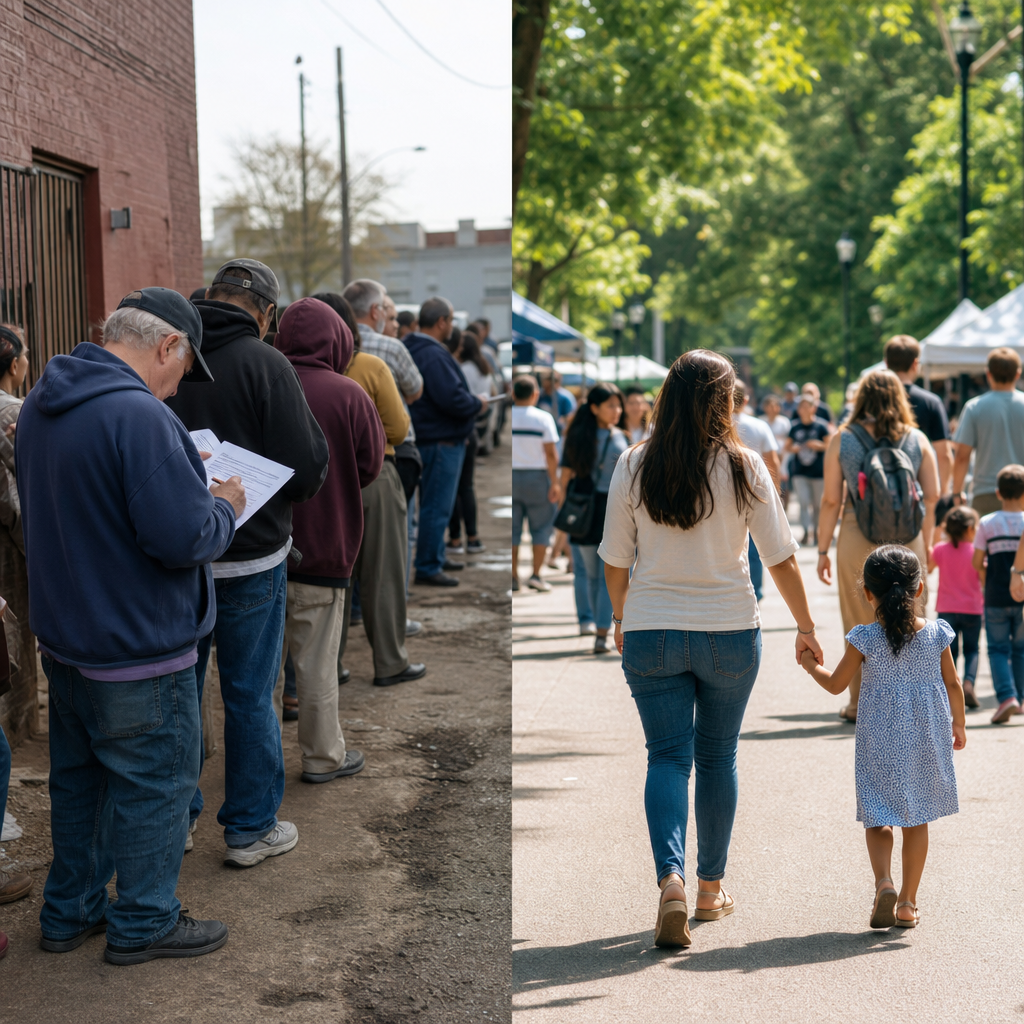
Means-tested programs and universal programs are two core policy designs that shape how governments distribute benefits, collect political support, and define citizenship in practice. In AP Government and Politics, these designs matter because they reveal how public policy choices reflect competing ideas about equality, efficiency, limited government, and the proper role of the state. A means-tested program limits eligibility based on income, assets, or demonstrated need. Medicaid, the Supplemental Nutrition Assistance Program, and Pell Grants are common examples. A universal program offers benefits broadly to all citizens or to an entire age or social category, usually without an income screen. Social Security retirement benefits, Medicare for seniors, and public elementary education are classic cases. In classrooms, I have found that students often confuse “universal” with “free for everyone” and “means-tested” with “welfare,” but the real distinction is administrative design: who qualifies, how qualification is verified, and what political coalition sustains the program over time.
The difference matters because policy design affects cost, stigma, bureaucracy, take-up rates, and long-term durability. Means-tested programs can target scarce resources toward people with the greatest need, which may appeal to lawmakers focused on budget control or anti-poverty efficiency. Universal programs can create broader public legitimacy because nearly everyone sees themselves as a stakeholder. That broad buy-in often translates into stronger political protection. At the same time, universal benefits usually cost more in gross terms and may deliver aid to people who do not need it, while targeted benefits can become administratively complex and politically vulnerable. Understanding these tradeoffs helps explain debates over health care, education funding, tax credits, child benefits, food assistance, and retirement security. It also helps students connect policy content to larger AP Government themes, including federalism, political ideology, interest groups, party coalitions, and the policymaking process.
What Means-Tested Programs Are Designed to Do
A means-tested program directs public benefits to people who meet financial or categorical thresholds, usually based on income relative to the federal poverty level, household composition, disability status, or asset limits. The central idea is selective distribution: government helps those deemed most in need rather than providing the same benefit to everyone. In practice, that requires eligibility rules, application procedures, recertification periods, and administrative verification. Medicaid illustrates the model well. Although it is jointly funded by federal and state governments, eligibility differs by state because states administer the program within federal guidelines. Under the Affordable Care Act, many states expanded Medicaid to adults up to 138 percent of the federal poverty level, but not all states did so. That variation demonstrates a key point for AP Government: targeted programs are often shaped by federalism and by state-level ideological conflict.
Targeting can be effective. SNAP reduces food insecurity by concentrating assistance among low-income households, and Pell Grants focus college aid on students with demonstrated financial need. When resources are limited, this design can produce more anti-poverty impact per dollar than spreading the same amount thinly across the entire population. Yet targeted design creates administrative friction. Applicants may need pay stubs, tax records, immigration documents, proof of residency, or periodic interviews. In my experience explaining these systems, the phrase students remember is administrative burden: the learning, compliance, and psychological costs people bear when seeking a benefit. Scholars such as Pamela Herd and Donald Moynihan have shown that burden can lower participation even when people qualify. That means a program can be generous on paper but weaker in reality because eligible people never complete the process.
What Universal Programs Are Designed to Do
A universal program provides a benefit broadly, often to all citizens, all residents within a category, or everyone who has contributed through a social insurance system. The goal is not to screen out recipients by income but to establish a common floor of protection or service. Public schooling is the most familiar example in the United States: children are entitled to attend regardless of family income. Medicare Part A for most seniors operates similarly at the point of eligibility because age, not poverty, is the central gatekeeper. Social Security retirement benefits are not identical for every person, since prior earnings affect benefit size, but the program is universal in reach because participation spans the workforce rather than only the poor. This broad structure changes the politics. People tend to defend programs they expect to use or already rely on, and elected officials know that cuts to mass-benefit programs can trigger electoral backlash.
Universal design also reduces stigma. Recipients are less likely to be framed as dependent or undeserving when everyone participates. Administrative systems can be simpler because agencies verify fewer financial details, and take-up rates are generally higher. During the COVID-19 pandemic, the federal government used broadly distributed stimulus payments partly because speed mattered; a highly restrictive eligibility system would have slowed relief. Still, universality has limits. Some programs that look universal are only near-universal because exclusions remain based on work history, immigration status, or age. Financing is another challenge. A universal child allowance, for example, may be easier for families to access than a targeted tax credit, but lawmakers must fund benefits for a much larger population. The policy question is therefore not whether universal design is morally superior in every case, but whether broad inclusion produces enough social and political value to justify the higher gross cost.
Key Tradeoffs: Efficiency, Equity, Politics, and Administration
The most useful way to compare means-tested programs and universal programs is across four dimensions: distributional equity, administrative efficiency, political durability, and fiscal design. Distributionally, means-testing often appears more progressive because lower-income households receive more concentrated support. If Congress has ten billion dollars and wants to reduce child poverty quickly, directing funds to low-income families will generally have a larger immediate effect than sending equal checks to every household. On the other hand, universal designs can still be progressive if they are funded through progressive taxation. A broad child benefit financed by higher taxes on top earners may provide universal access while still redistributing resources downward overall. This is why analysts distinguish between the benefit side of a policy and the financing side.
Administrative efficiency cuts in both directions. Universal programs often spend less on eligibility screening and lose fewer eligible recipients to paperwork. Means-tested programs may save money by excluding higher-income people, but those savings come with verification costs and a greater risk of churn, the loss of benefits when recipients miss a deadline or experience fluctuating income. Politically, universal programs usually build broader coalitions. Social Security has survived repeated reform efforts partly because middle-class and working-class voters both see it as earned and normal. By contrast, targeted programs can become vulnerable to racialized narratives, myths about fraud, or the idea that only “other people” benefit. That does not mean means-tested programs are doomed; Medicaid has grown deeply important in many states. But broad constituencies usually make retrenchment harder.
| Dimension | Means-Tested Programs | Universal Programs |
|---|---|---|
| Eligibility | Income or need based | Broad category based, such as age or citizenship |
| Main advantage | Targets aid where need is greatest | Builds wide support and high participation |
| Main drawback | Paperwork, stigma, lower take-up | Higher gross cost, includes people with less need |
| Common examples | SNAP, Medicaid, Pell Grants | Public schools, Social Security, Medicare |
| Political pattern | Narrower constituency, easier to attack | Broader constituency, often more durable |
How These Designs Appear Across AP Government Topics
This policy distinction is a hub concept for the wider AP Government and Politics curriculum because it connects to almost every “miscellaneous” policy debate students encounter. In federalism, means-tested programs often produce state variation because states administer or supplement benefits differently, while universal national programs can standardize treatment more effectively. In ideology, liberals may support universal or targeted programs depending on whether they prioritize decommodification, anti-poverty impact, or social solidarity, while conservatives often criticize program growth, work disincentives, or tax burdens, though many defend universal benefits like Social Security that are politically entrenched. In political behavior, policy design influences turnout and trust: visible, widely used benefits can increase the sense that government does something concrete, while difficult-to-access programs can deepen frustration.
These designs also link to institutions and policymaking. Congress often compromises by blending both models. The Affordable Care Act expanded Medicaid on a means-tested basis while also regulating private insurance markets more broadly. The Child Tax Credit has alternated between a more targeted tax-based design and temporary expansions that moved it closer to a broad family benefit. Veterans’ benefits, unemployment insurance, school lunch programs, housing vouchers, and disability support all involve questions about whether government should provide narrowly targeted aid, broad baseline coverage, or a hybrid system. For students building a hub understanding of public policy, the essential lesson is that design choices are not technical details. They shape who gets helped, how people experience the state, and whether a program survives shifts in party control. Once you can identify the eligibility rule, the funding mechanism, and the political coalition, you can analyze nearly any policy debate with greater precision.
Real-World Examples and Why Hybrids Often Win
Pure means-tested and pure universal systems are less common than textbooks suggest. Most durable policies are hybrids that borrow strengths from both approaches. Social Security is broad in coverage, but benefits are formula driven and more protective of lower earners through progressive replacement rates. Medicare is near-universal for seniors, yet low-income beneficiaries often receive extra help with premiums or prescription drug costs through separate targeted subsidies. Public schools are universal in access, but Title I directs additional federal funds toward schools serving larger concentrations of low-income students. This layered design reflects political reality. Policymakers often want the legitimacy of universality and the redistributive precision of targeting, so they stack programs rather than choosing only one model.
International comparisons reinforce the point. Nordic countries often rely on broad universal benefits combined with progressive taxation, which helps reduce stigma and maintain social trust. The United States historically uses more means-testing, especially for working-age benefits, producing a thinner safety net with more administrative complexity. Neither approach is costless. Universal systems demand higher tax capacity and public tolerance for broad social spending. Highly targeted systems can miss eligible people, create cliffs where small income gains trigger large benefit losses, and encourage political narratives that divide recipients from taxpayers even though many households are both across different life stages. For AP Government students, the best analytical habit is to ask three direct questions: Who qualifies, who pays, and what incentives follow? Those questions turn abstract labels into a concrete understanding of how policy design shapes American politics.
The clearest takeaway is that means-tested programs and universal programs are not simply liberal versus conservative labels; they are competing tools for solving public problems under real fiscal and political constraints. Means-tested programs concentrate resources on people with the greatest need, which can make them powerful anti-poverty instruments when funding is adequate and enrollment systems are workable. Universal programs create broad legitimacy, lower stigma, and often stronger long-term protection because nearly everyone has a stake. Neither design is automatically better. The right choice depends on the policy goal, the administrative capacity of government, the available budget, and the coalition required to enact and preserve the program.
For AP Government and Politics, this topic works as a hub because it helps organize many issues that otherwise seem unrelated. Health care, education, tax policy, retirement, housing, food assistance, and family benefits all become easier to analyze once you identify whether a policy is targeted, universal, or hybrid. Keep that framework in mind as you move through the rest of this subtopic, and use it to compare how different programs define fairness, efficiency, and citizenship. If you are studying for class or building review notes, start by listing major programs under each design and noting the tradeoffs each one creates.
Frequently Asked Questions
1. What is the difference between a means-tested program and a universal program?
A means-tested program provides benefits only to people who meet specific eligibility requirements based on income, assets, or demonstrated financial need. In other words, government assistance is targeted toward individuals or families who are considered unable to afford certain necessities on their own. Common examples include Medicaid, Supplemental Nutrition Assistance Program (SNAP), and other anti-poverty programs that require applicants to document their economic circumstances. This design reflects a policy goal of directing limited public resources to those who need them most.
A universal program, by contrast, offers benefits broadly to all citizens or to all members of a defined category, regardless of income. Eligibility is not based on poverty status but on broad social membership, age, or work history. Social Security and Medicare are often discussed as major examples because they are structured to cover very large portions of the population rather than only the poor. Universal programs are built on the idea that some benefits should be treated as a shared social right rather than a narrowly targeted form of assistance.
In AP Government and Politics, this distinction matters because it highlights competing views of fairness, efficiency, and the role of government. Means-tested programs are often defended as cost-conscious and focused, while universal programs are often praised for inclusiveness, political durability, and lower stigma. The difference is not just administrative; it reflects deeper ideological debates over whether public policy should target need or guarantee broad social protection for everyone.
2. Why do governments choose means-tested programs instead of universal programs?
Governments often choose means-tested programs because they appear more fiscally efficient. If policymakers want to help low-income populations but also want to limit public spending, means testing allows them to concentrate benefits on the people considered most in need rather than distributing support to the entire population. This approach is especially attractive to officials who favor limited government, lower taxes, or reduced long-term budget commitments. In that sense, means-tested programs are often presented as a way to balance social support with financial restraint.
Another reason is political ideology. Policymakers who emphasize individual responsibility may prefer a system in which government intervention is reserved for those who cannot meet basic needs through the private market. They may argue that universal programs provide benefits to many people who do not need assistance, while means-tested programs preserve a more selective and restrained role for the state. This view fits closely with broader debates in American politics about whether government should guarantee broad social welfare or intervene only as a safety net.
At the same time, means-tested programs can be politically easier to justify when public support for redistribution is limited. Leaders may be able to build support for helping the poor, elderly poor, or disabled poor more easily than for creating an expansive benefit available to everyone. However, this design also comes with tradeoffs. Means-tested systems often require more bureaucracy, more paperwork, and stricter verification, which can create barriers to access. They may save money on the front end, but they can also reduce participation among eligible people and generate stigma because recipients are singled out as needing government aid.
3. What are the main advantages and disadvantages of universal programs?
One major advantage of universal programs is their broad inclusiveness. Because benefits are available to nearly everyone or to an entire category of people, these programs tend to be easier to understand and access. They often involve fewer eligibility hurdles than means-tested programs, reducing administrative burdens and making it less likely that eligible individuals will be excluded because of confusing rules or paperwork. This can make universal programs more effective at reaching large populations consistently and reliably.
Universal programs also tend to generate stronger political support. When middle-class and higher-income citizens benefit alongside lower-income citizens, they are more likely to view the program as valuable and worth defending. That broad buy-in can make universal programs more durable over time. In politics, programs that serve only the poor sometimes become vulnerable to budget cuts or negative stereotypes, while programs that serve nearly everyone can become deeply embedded in public expectations and national identity. This is one reason universal designs are often linked to stronger notions of shared citizenship.
The disadvantages are mostly related to cost and scope. Universal programs are generally more expensive because they provide benefits to a much larger group, including people who may not have urgent financial need. Critics argue that this can be an inefficient use of taxpayer money and can expand government far beyond what is necessary to address hardship. Opponents may also argue that universal benefits create long-term fiscal obligations that are difficult to sustain. So while universal programs can be simpler and more politically resilient, they also raise important concerns about budgetary pressure, taxation, and the proper limits of government action.
4. How do means-tested and universal programs affect political support and public opinion?
The two designs shape political support in very different ways. Universal programs usually build broader and more stable coalitions because a wide range of citizens benefit from them directly. When voters see themselves as participants rather than outsiders to a policy, they are more likely to support its funding and continuation. This broad participation can transform a program from a temporary policy choice into a widely accepted social institution. In practical terms, universal programs often become politically difficult to cut because so many people depend on them or expect to benefit from them in the future.
Means-tested programs, on the other hand, can face a narrower base of support because only a limited portion of the population qualifies. That smaller beneficiary group may have less political influence than the broader coalition behind universal programs. In addition, means-tested benefits can become associated with stereotypes about poverty, dependency, or undeserving recipients, especially in polarized political environments. These perceptions can weaken public backing even when the programs address serious need effectively. This is why means-tested programs are often more vulnerable to criticism, restructuring, or funding cuts.
From an AP Government perspective, this dynamic helps explain why policy design is never just about economics. It also affects legitimacy, identity, and electoral politics. Universal programs can reinforce the idea that government serves all citizens, while means-tested programs can frame government as an institution that intervenes selectively for those at the bottom. Each model sends a different message about who belongs in the political community, what government owes its people, and how public resources should be distributed.
5. Why is the means-tested versus universal debate important in AP Government and Politics?
This debate is important because it connects directly to major themes in AP Government and Politics, including public policy, political ideology, federal spending, interest-group politics, and the role of government in American life. Means-tested and universal programs are not just technical policy categories; they represent competing theories about equality and citizenship. A means-tested approach emphasizes targeted assistance and often reflects concerns about efficiency, cost control, and limited government. A universal approach emphasizes broad social provision and often reflects ideas about collective responsibility and equal access to core benefits.
Studying this distinction also helps students understand how policy choices create political consequences. The way a program is designed influences who receives benefits, how easy those benefits are to claim, how much the program costs, and how much political support it attracts. It also helps explain why some social programs become deeply popular while others remain controversial. In American politics, design decisions can determine whether a policy is seen as earned, charitable, bureaucratic, or fundamental to citizenship itself.
More broadly, the debate reveals how public policy reflects larger constitutional and ideological tensions. Americans have long disagreed about how active government should be, whether equality means equal opportunity or equal support, and whether social benefits should be targeted or shared. By comparing means-tested and universal programs, students can see how these abstract principles become concrete in real policies. That makes the topic especially valuable for understanding both the structure of American government and the values that drive policy decisions.