
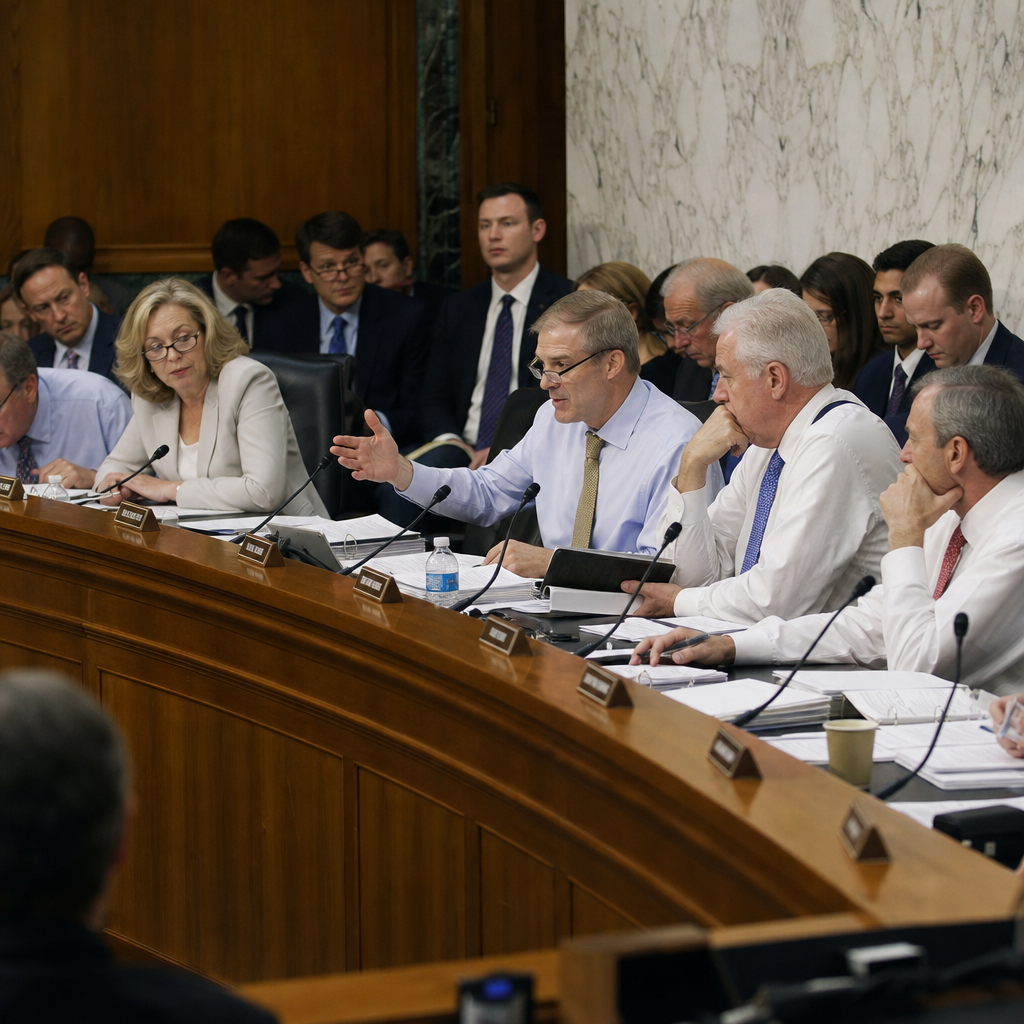
Markup sessions in Congress are where legislative ideas stop being abstract and start becoming actual law. In floor speeches, members promote broad goals and partisan messages. In committee hearings, witnesses explain problems and propose solutions. But in a markup session, lawmakers sit with legislative text, offer amendments line by line, negotiate tradeoffs, and decide what version of a bill will move forward. For students of AP Government and Politics, understanding markup sessions in Congress is essential because this stage reveals how institutions, rules, parties, committees, and individual members shape policy outcomes long before the full House or Senate votes.
A markup session is a formal committee or subcommittee meeting in which members debate, revise, and vote on the language of a bill, resolution, or other legislative measure. The name comes from the practical act of “marking up” text by adding, deleting, or rewriting provisions. In modern Congress, staff often prepare amendment packets and comparative prints, but the principle remains the same: members alter the proposal directly. This is not a ceremonial step. In my experience reviewing congressional committee documents and teaching students how bills evolve, the most consequential policy changes often happen here, out of the spotlight that follows floor action.
Markup matters because Congress is a committee-centered institution. Most bills never become law, and many never receive serious consideration. Those that do typically pass through committees with subject-matter jurisdiction, such as Ways and Means for tax policy, Energy and Commerce for health issues, or Judiciary for immigration and civil liberties. Committees filter ideas, gather expertise, and protect the chamber’s time. A successful markup can transform a vague proposal into a legally workable bill. A failed markup can stall legislation indefinitely. If you want to know where bills really change, committee markup is the place to look.
This article serves as a hub for the miscellaneous but vital concepts tied to markup sessions in Congress. It explains what happens during markup, who participates, how House and Senate procedures differ, why political bargaining matters, and how markups connect to hearings, committee reports, conference committees, and floor rules. It also shows why students should treat markups as a core legislative process rather than a minor technicality. Once you understand the markup stage, the larger lawmaking process becomes far easier to follow, analyze, and compare.
What happens in a markup session
A markup session begins after a bill has been introduced and referred to the appropriate committee or subcommittee. In many cases, the committee has already held hearings, received testimony from executive officials, advocates, academics, industry groups, and affected citizens, and reviewed background memos prepared by professional staff. The chair then schedules a markup. Members receive the bill text, section-by-section summaries, amendments, and often a “chairman’s mark,” which is a proposed revised version meant to guide discussion. During the session, members consider the text, debate its effects, offer changes, and vote on amendments before voting on whether to report the measure to the full chamber.
The process can be technical. A member may strike a subsection, insert a funding cap, rewrite an enforcement standard, narrow eligibility criteria, or add a reporting requirement. Parliamentary language matters. So does sequence. If one amendment passes, it can make another amendment unnecessary or impossible. Staff counsel help members navigate statutory references and legal consequences. The committee parliamentarian, chair, and ranking minority member all influence how the session unfolds. What looks like procedural detail is often substantive power because small wording changes can alter who qualifies for a benefit, which agency enforces a law, or how much money is authorized.
At the end of a markup, the committee may order the bill reported favorably, unfavorably, or without recommendation, though favorable reporting is the usual goal for supporters. The committee then issues a report explaining the bill’s purpose, major provisions, costs, and legislative intent. That report can shape later judicial interpretation and guide floor debate. For AP Government and Politics, a direct answer is simple: a markup session is the stage where committees revise legislation before sending it onward, and it is often the most important arena for detailed policy change.
Why committees have so much influence
Committees dominate markup because they are built around specialization. Members do not have equal knowledge on every policy area, and Congress cannot function if all 535 lawmakers try to master every detail of defense procurement, agricultural subsidies, Medicare reimbursement, telecommunications regulation, and water infrastructure at once. Committees develop expertise, and repeated work in one policy domain gives members, staff, and chairs leverage. When a bill reaches markup, many of the most informed participants in Congress are already in the room.
This influence is reinforced by jurisdiction. A committee with formal authority over an issue controls whether a bill gets attention, what version advances, and whether key stakeholders are included. The House Committee on Rules may later shape floor debate, but before that point, the authorizing committee’s markup often sets the baseline. In the Senate, where unanimous consent and amendment opportunities can be broader, committee language still matters because it gives senators a starting framework and signals to leadership what can command support. Markup is therefore both a policy workshop and a gatekeeping mechanism.
Leadership also watches committee markup closely. Party leaders may pressure chairs to protect vulnerable members, avoid politically damaging votes, or advance priorities tied to the president’s agenda. At the same time, rank-and-file lawmakers use markup to claim credit, signal ideology, and bargain for district interests. A farm-state member may fight for crop insurance language. An urban member may push transit funding. A deficit hawk may demand offsets. The committee room becomes a condensed version of Congress itself, where institutional rules and political incentives meet.
House and Senate markup differences
House and Senate markups share the same basic purpose, but the chambers operate under different cultures and rules. The House is more majoritarian and more structured. Large committees often use detailed amendment procedures, and after a bill leaves committee, the House Rules Committee can sharply limit what amendments reach the floor. That means House markups are especially important because members may have fewer later chances to revise the bill. If you lose in committee, you may not get another meaningful opportunity.
The Senate is less centralized and often more dependent on unanimous consent, informal negotiation, and cross-party accommodation. Senators can use holds, extended debate, and broader floor amendment possibilities to influence legislation after committee action. Still, Senate markup remains critical because it organizes complex proposals and signals bipartisan viability. A bipartisan committee vote in the Senate can reassure leadership, interest groups, and wavering members that a bill has a realistic path forward. When Senate committees deadlock or bypass regular markup entirely, that often indicates deeper conflict or a leadership-driven process.
| Feature | House Markup | Senate Markup |
|---|---|---|
| Debate structure | More formal and time-managed | Often less rigid and more negotiable |
| Impact of committee changes | Usually very high because later floor amendments may be limited | High, but members may have more later amendment opportunities |
| Role of party leadership | Stronger control over scheduling and floor access | Important, but more constrained by individual senators |
| Minority leverage | Often narrower in practice | Often greater due to chamber norms and rules |
For students comparing institutions, the key point is that markup sessions in Congress do not operate in a vacuum. Their importance depends partly on what happens next. Because the House floor is usually more tightly managed, House committee markups can be the decisive battleground. Because the Senate allows more individual leverage, Senate markups can be crucial for coalition-building even when the floor remains fluid.
Amendments, strategy, and political bargaining
Amendments are the heart of markup. Some are technical corrections drafted by committee counsel to fix cross-references, align definitions, or remove unintended conflicts with existing law. Others are deeply political. Members may offer “messaging amendments” designed less to pass than to force opponents into awkward votes. A minority member might propose stricter ethics language to test whether the majority is serious about accountability. A majority member might add district-specific benefits to secure wavering support. Skilled lawmakers know that amendment strategy is both legislative and electoral.
In practice, successful amendments usually reflect prior negotiation. Members and staff often circulate language before the session, sounding out chairs, ranking members, agency officials, and stakeholder groups. If an amendment has been vetted for budgetary effects, legal consistency, and political acceptability, it has a far better chance of adoption. Surprise amendments can gain attention, but they often fail unless they tap into an existing coalition. That is why the visible markup session is only part of the story. Much of the real work happens in advance through staff meetings, leadership consultations, and policy drafting sessions.
Budget rules can shape these bargains. If a bill affects spending or revenue, members must consider scorekeeping by the Congressional Budget Office or Joint Committee on Taxation. A policy that sounds attractive may become harder to sustain if its cost estimate is large. Likewise, members may add sunset clauses, pilot programs, waiver authority, or reporting requirements to reduce political risk. In environmental policy, for example, I have seen committees soften implementation deadlines to win industry support while preserving regulatory goals. That kind of compromise is typical markup politics: not pure principle, not pure transaction, but structured bargaining inside institutional rules.
How markup connects to the wider lawmaking process
Markup is one stage in a chain, but it interacts with every other stage. Before markup, bill drafting may involve legislative counsel, executive agencies, advocacy groups, and think tanks. Hearings create a factual record and let members test arguments publicly. During markup, those ideas become precise statutory language. After markup, the committee report explains what the bill does and why. Then the bill may move to the House Rules Committee or Senate floor scheduling process, where leaders decide timing and debate conditions. Later, if the two chambers pass different versions, negotiators resolve differences in conference or through amendment exchanges.
This means markup is not isolated procedure; it is the hinge connecting broad policy goals to final legal text. A hearing may reveal a problem in veterans’ health care access, but markup decides whether the remedy is a grant program, a direct appropriation, a pilot project, or a reporting mandate to the Department of Veterans Affairs. Floor speeches can frame the issue morally, but markup determines definitions, deadlines, enforcement, and jurisdiction. Courts, agencies, and affected citizens live with those details long after the speeches are forgotten.
Students often ask whether markup always follows hearings. The answer is no. Congress can bypass regular order, especially under time pressure, leadership control, or crisis conditions. Omnibus bills, emergency spending packages, and leadership-negotiated compromises sometimes reach the floor with limited committee revision. But when regular order is used, markup is the clearest demonstration of Congress functioning as a deliberative lawmaking body rather than a purely symbolic political arena.
Why markup matters for AP Government and Politics
For AP Government and Politics, markup sessions illustrate several core concepts at once: the committee system, decentralized policymaking, political parties, checks within Congress, and the difference between formal powers and practical influence. The Constitution says bills pass both chambers and go to the president, but it does not spell out the committee-centered process that modern lawmaking depends on. Markup shows how congressional organization fills that gap. It also demonstrates why institutions matter. The same policy idea can emerge very differently depending on committee jurisdiction, chamber rules, and partisan control.
Markup is also useful for comparing pluralism and party government. Interest groups try to influence bill language through testimony, lobbying, and technical input. Parties try to protect their brand, coordinate votes, and deliver policy wins. Individual members try to represent constituents and build careers. In markup, all three forces are visible. Students who can explain that interaction are better prepared for multiple-choice questions, free-response analysis, and real-world political interpretation.
The biggest takeaway is straightforward: if you want to understand where bills really change, study markup sessions in Congress, not just final passage votes. Read committee reports. Compare introduced bills to reported versions. Notice which amendments were adopted and which failed. Follow how chairs, ranking members, and staff shape outcomes. Doing that will make the entire legislative process more concrete, more logical, and easier to remember. As you continue through AP Government and Politics, use this hub as your starting point for the miscellaneous but essential mechanics that turn political ideas into governing text.
Frequently Asked Questions
What is a markup session in Congress, and why does it matter so much?
A markup session is the stage in the legislative process where a congressional committee or subcommittee meets to review, debate, revise, and vote on the actual text of a bill. This is where a proposal stops being a general political idea and starts taking the form of enforceable law. During markup, lawmakers work through sections of the bill line by line, offering amendments, negotiating wording, removing provisions, adding new ones, and deciding what language should remain in the version that moves forward. That is why markup is often described as the place where bills really change.
Its importance comes from the fact that committees do much of the real policy work in Congress. While floor speeches often focus on broad principles and public messaging, markup sessions focus on specifics: definitions, funding levels, deadlines, agency responsibilities, exceptions, and enforcement rules. Small wording changes in markup can produce major legal consequences later. For students of AP Government and Politics, markup matters because it shows how Congress turns political preferences into policy details. It also demonstrates the central role of committees in shaping legislation before the full House or Senate ever votes on it.
How is a markup session different from a committee hearing or a floor debate?
A committee hearing is primarily informational. Members hear testimony from experts, agency officials, advocacy groups, and affected citizens in order to understand a policy problem and possible solutions. Hearings help build the record and inform lawmakers, but they do not usually involve rewriting a bill in detail. A floor debate, by contrast, takes place before the full House or Senate and often centers on persuading colleagues, signaling party positions, and presenting arguments to the public. Floor debate can include amendments, especially in the Senate, but by that point much of the bill’s structure has already been shaped.
Markup is different because it is hands-on legislative drafting. Members are no longer just listening or speaking in general terms; they are editing the bill itself. They consider whether a provision should be broadened or narrowed, whether a reporting requirement is too burdensome, whether funding is sufficient, or whether language creates unintended loopholes. In practical terms, markup is where lawmakers bargain over tradeoffs and produce a committee-approved version of the bill. That makes markup more technical, more detailed, and often more consequential than the more visible stages that come before or after it.
What actually happens during a markup session?
In a markup session, the chair typically brings up a bill for consideration and members proceed through the text section by section. Amendments may be offered by committee members to strike language, insert new language, or replace entire sections. Staff often play an important behind-the-scenes role by preparing amendment language, legal analysis, and summaries of how proposed changes would affect the bill. Members debate each amendment, ask questions about its purpose, and may negotiate informal compromises before a vote is taken.
As the session continues, the committee may adopt some amendments, reject others, and approve a revised version of the bill. Eventually, the committee votes on whether to report the bill to the full chamber. If the bill is approved, it is often accompanied by a committee report explaining the measure’s purpose, major provisions, and legislative intent. This process may sound procedural, but it is politically significant. Members use markup to shape policy outcomes, protect constituency interests, satisfy party goals, and improve a bill’s chances of passing later. In many cases, the version that emerges from markup becomes the foundation for everything that follows in the legislative process.
Why do committees have so much influence over bills during markup?
Committees have influence because Congress divides work by subject matter, and committee members usually develop expertise in the policy areas under their jurisdiction. For example, tax, defense, agriculture, health, and foreign policy bills are typically handled by committees that specialize in those issues. That specialization gives committee members and staff greater familiarity with the technical details, stakeholders, and legal consequences involved in drafting legislation. As a result, the full House or Senate often relies heavily on committee recommendations.
Markup amplifies that influence because it allows a smaller group of lawmakers to make detailed decisions before the bill reaches the chamber floor. By the time the full chamber considers the bill, many major choices have already been made: what priorities are included, what costs are authorized, what compromises were necessary, and what language has been removed. In the House especially, floor rules may limit amendments, which means the committee’s version can become especially powerful. For AP Government students, this is a key example of how institutional structure affects outcomes. Committees do not just study bills; through markup, they actively shape what Congress is most likely to vote on.
Why should AP Government and Politics students pay close attention to markup sessions?
AP Government and Politics emphasizes how institutions actually function, not just how they are described in theory. Markup sessions are a perfect example of that distinction. In theory, a bill is introduced, debated, and voted on. In reality, much of the most meaningful lawmaking happens in committees, where members revise text, build coalitions, and decide which proposals are practical enough to survive. Understanding markup helps students see why committee leadership, party control, jurisdiction, and legislative procedure matter so much in the policymaking process.
Markup also helps students connect several major course concepts at once. It illustrates congressional organization, the importance of bargaining and compromise, the influence of political parties, and the relationship between public policy goals and actual statutory language. It shows that making law is rarely a simple yes-or-no choice. Instead, it is an extended process of negotiation over details. For exam purposes and for real civic understanding, knowing what happens in markup allows students to explain where bills are transformed, why committee action is often decisive, and how legislative outcomes are shaped long before the final vote receives public attention.