
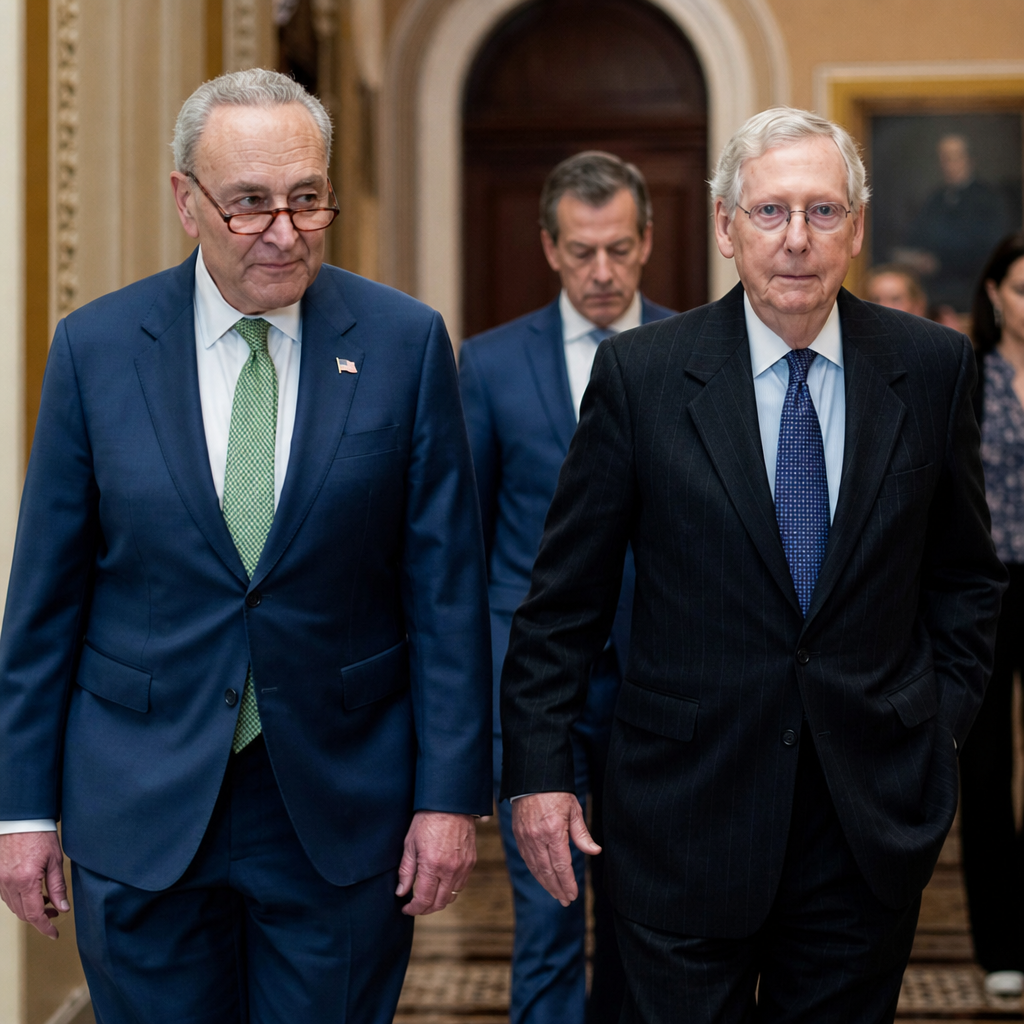
In AP Government and Politics, students often hear “majority leader” and “minority leader” as if the titles explain themselves, but the jobs are more strategic, more procedural, and more influential than the names suggest. A majority leader is the chief floor strategist for the party that holds more seats in a chamber, while a minority leader is the chief floor strategist for the party with fewer seats. Those definitions are accurate, yet incomplete, because each leader operates inside a web of rules, party expectations, committee relationships, media pressures, and constitutional limits. In practice, these leaders help decide what legislation advances, how members vote, when debate happens, and how each party presents itself to the public.
This topic matters because party leadership is where institutional rules meet real political power. Students can memorize that the Speaker leads the House or that the vice president can break ties in the Senate, but exams and civic understanding both require a deeper grasp of who actually manages the day-to-day party agenda. I have found that once students understand the leaders’ practical responsibilities, congressional politics becomes much easier to follow. Budget fights, government shutdown threats, messaging bills, procedural votes, and coalition-building all make more sense when you know what majority and minority leaders are trying to achieve.
At a basic level, the majority leader tries to turn the governing party’s goals into passed legislation. The minority leader tries to block, amend, delay, or reshape that agenda while building a case for future electoral gains. Neither role is purely ceremonial. Both leaders count votes, negotiate with committees, coordinate with whips, work with rank-and-file members, and translate party priorities into legislative action. In the House and Senate, however, the balance of power differs because the chambers run under different rules. The House is majoritarian and rule-driven, so majority control is usually stronger. The Senate protects debate and individual member power more heavily, so minority leaders often retain meaningful leverage.
For AP Government purposes, this article serves as a hub for the broader “Misc” side of congressional and institutional study: party leadership, floor procedure, strategy, agenda control, coalition management, and the difference between formal authority and practical influence. If you are comparing chamber leadership, reviewing how bills move, or trying to understand why a party with fewer members can still shape outcomes, the distinction between majority leader and minority leader is essential. The core question is simple: what does each party boss actually do? The answer starts with chamber structure, then moves to scheduling, vote counting, negotiation, communication, and opposition strategy.
How the roles are defined in Congress
The titles exist in both chambers, but the job description changes depending on whether the leader serves in the House of Representatives or the Senate. In the House, the majority leader is second to the Speaker within the majority party and helps manage the floor schedule, rally support for leadership priorities, and coordinate members around upcoming votes. The House minority leader is the top leader of the opposition party in that chamber. In the Senate, the majority leader is usually the most powerful day-to-day agenda setter because the vice president rarely presides and the formal presiding officer does not control floor business. The Senate minority leader, meanwhile, organizes the opposition and can wield substantial influence because Senate rules allow more delay and bargaining.
These roles are party positions, not constitutional offices. The Constitution says little about party leadership because parties themselves are not created by the Constitution. Instead, each chamber’s party caucus or conference elects its leaders. That means leadership power depends on votes from fellow party members, and it can weaken quickly if members lose confidence. This is a critical point for students: majority and minority leaders do not command members in a military sense. They persuade, pressure, bargain, trade favors, and frame choices. Their power comes from relationships, timing, and procedural control, not from unlimited legal authority.
Leaders also work inside a broader party structure. They coordinate with whips, committee chairs or ranking members, policy committees, campaign arms, and caucus chairs. For example, a majority leader may push a bill only after committee leaders confirm that the language can survive on the floor. A minority leader may instruct committee ranking members to present a united alternative across several hearings so the party message remains consistent. In my experience explaining Congress, students understand the roles best when they stop picturing one boss giving orders and start picturing a central coordinator managing many competing actors.
What the majority leader actually does
The majority leader’s main job is agenda execution. That means deciding, with other leaders, which bills come up, in what order, under what political conditions, and with what vote coalition. In the House, this often involves close coordination with the Speaker and the Rules Committee. In the Senate, it involves negotiating unanimous consent agreements, filing cloture when needed, and choosing when the floor is ready for a vote. The majority leader spends enormous energy on sequencing. A strong bill can fail if it reaches the floor too early, before holdouts are persuaded or before public messaging is aligned.
Vote counting is another core responsibility. The majority leader and whip operation identify committed supporters, undecided members, and likely defectors. This process is not guesswork. Leadership teams track issue positions, district pressures, donor interests, caucus affiliations, and procedural objections. If a farm-state member wants crop insurance protections before backing a budget package, leadership needs to know that. If a moderate member worries about attack ads tied to an immigration vote, leadership may adjust timing or messaging. Much of congressional leadership is therefore pre-floor management: preventing surprises before the cameras turn on.
The majority leader also acts as an internal negotiator. Governing coalitions are rarely uniform. A majority party may include ideological factions, regional blocs, committee barons, and vulnerable incumbents from swing districts. During debates over health care, taxation, appropriations, or foreign aid, the majority leader often brokers compromises among members who all share a party label but not the same priorities. This is especially visible when the majority is narrow. With only a few votes to spare, every member gains leverage, and the majority leader becomes part traffic cop, part mediator, part strategic planner.
Public communication matters too. The majority leader explains why the party agenda deserves support and why specific votes should be seen as progress rather than process. This involves press conferences, floor speeches, media appearances, and message discipline. Effective leaders translate technical procedure into political meaning. They tell members what to say back home, emphasize popular provisions in complex bills, and reassure outside groups that legislation is moving. The best majority leaders know that passing a bill is not enough; members must also survive the next election after voting for it.
What the minority leader actually does
The minority leader’s central mission is organized opposition, but that phrase undersells the sophistication of the role. The minority leader decides where to resist absolutely, where to negotiate for changes, and where to allow the majority to own the consequences of governing. In the House, the minority leader tries to keep the party unified, sharpen contrasts with the majority, and exploit moments when the majority is divided. In the Senate, the minority leader has more procedural tools, including extended debate leverage and greater capacity to force the majority into time-consuming cloture fights.
One major responsibility is message coordination. The minority leader turns scattered criticism into a coherent party narrative. If the majority advances an energy bill, the minority leader may frame it as inflationary, environmentally weak, anti-consumer, or hostile to domestic production, depending on the party’s strategic needs. This message then spreads through committee statements, floor speeches, cable interviews, social media, and district events. The goal is not just to oppose a bill; it is to define what the bill means before the majority can define it first.
The minority leader also manages procedural resistance. In the House, this may involve motions, amendment strategy, and efforts to peel off majority moderates. In the Senate, it often involves bargaining over floor time, objecting to unanimous consent, and using the chamber’s rules to slow momentum. Minority leaders do not oppose everything automatically, because credibility matters. When they pick the right battles, they can win concessions, expose majority divisions, or build public pressure that changes the legislative environment.
Just as importantly, minority leaders prepare their party to govern later. They recruit candidates, protect vulnerable incumbents, unify policy themes, and show voters that the minority party has an alternative agenda. A skilled minority leader uses legislative losses to set up electoral gains. If the majority passes an unpopular measure, the minority leader works to make that vote central in the next campaign cycle. In that sense, the minority leader is both a legislative tactician and a long-term party architect.
House and Senate differences that change the job
Students often miss the most important practical distinction: the same title carries different weight in different chambers because the rules are different. The House operates under strict rules, limited debate, and stronger leadership control. The Senate operates under looser traditions, extended debate rights, and higher individual member autonomy. As a result, House majority leaders usually have a clearer path to scheduling and passing party legislation, while Senate majority leaders must spend more time negotiating consent, overcoming holds, and assembling sixty votes for cloture on contested matters.
| Feature | House Majority/Minority Leaders | Senate Majority/Minority Leaders |
|---|---|---|
| Agenda control | More centralized, especially through leadership and Rules Committee | Shared with chamber rules, consent agreements, and filibuster realities |
| Debate limits | Usually tightly structured | Often open-ended unless cloture is invoked |
| Minority leverage | Lower on the floor, higher through messaging and majority splits | Higher because delay and procedural objections carry more weight |
| Leadership hierarchy | Speaker is dominant figure in majority party | Majority leader is primary floor manager and agenda strategist |
| Member independence | Generally lower due to stronger procedural control | Generally higher due to Senate norms and rules |
These structural differences explain why House coverage often focuses on the Speaker, while Senate coverage often centers on the majority leader. In the House, the majority leader is powerful but not usually the singular face of chamber control. In the Senate, the majority leader often becomes the chamber’s operational center. On the minority side, Senate minority leaders can sometimes block or reshape outcomes more effectively than House minority leaders, simply because the Senate gives minorities more tools. If you are answering an AP exam question, always connect leader behavior to chamber rules.
How leaders use procedure, committees, and party discipline
Procedure is where leadership becomes concrete. Majority leaders work with committee chairs to decide when legislation is mature enough for floor action. They assess whether hearings built an adequate record, whether amendments have been settled, and whether outside stakeholders are on board. A majority leader who forces an unfinished bill onto the floor risks embarrassment, defections, and public confusion. Minority leaders, by contrast, often use committees to surface dissenting views, challenge assumptions, and create a paper trail for later attacks on the bill.
Party discipline is more complex than telling members how to vote. Leaders use incentives and deterrents. Incentives can include favorable committee assignments, support for district priorities, campaign help, leadership access, or scheduling consideration for a member’s own legislation. Deterrents can include lost visibility, reduced influence, or weaker institutional support. Yet discipline has limits, especially on high-profile votes touching ideology or district identity. I have seen that the best explanation for students is this: leaders can increase the cost of defection, but they cannot erase political self-interest.
Committees matter because they are where policy expertise and member investment develop. If a bill emerges from committee with broad intra-party buy-in, leaders have an easier job. If committee factions are fighting, leaders inherit those divisions. This is why successful leaders maintain constant contact with chairs, ranking members, parliamentary advisers, and whips. Congressional leadership is not separate from the committee system; it sits on top of it and depends on it.
Why these roles matter for AP Government and real politics
For AP Government and Politics, understanding majority leader versus minority leader helps explain agenda setting, party polarization, legislative strategy, checks within Congress, and the difference between formal and informal institutions. It also connects to exam themes like linkage institutions, policymaking, and political behavior. When a textbook says parties structure choice in Congress, these leaders are the mechanism that makes that statement real. They organize voting blocs, simplify information for members, and convert broad party goals into specific parliamentary action.
In real politics, leadership decisions affect whether disaster aid arrives quickly, whether appropriations bills move before deadlines, whether bipartisan deals survive pressure from activists, and whether symbolic bills become campaign material. The leaders are not merely partisan spokespersons. They are operational managers of conflict inside representative government. To master this topic, follow major votes and ask four questions: who controlled the floor, who counted the votes, who unified the message, and who benefited politically from the outcome. Those questions usually point straight to the majority and minority leaders. If you want a stronger grasp of Congress, start there, then keep exploring related AP Government topics across this hub.
Frequently Asked Questions
What is the main difference between a majority leader and a minority leader?
The main difference is straightforward on paper but much more complex in practice. A majority leader is the chief floor strategist for the party that controls more seats in a legislative chamber, while a minority leader is the chief floor strategist for the party with fewer seats. In other words, the majority leader helps guide the chamber’s agenda from a position of governing power, and the minority leader helps organize resistance, negotiation, and party unity from a position with fewer formal advantages.
That said, the titles do not tell the full story. The majority leader usually has greater influence over what legislation comes to the floor, when debates happen, and how the party coordinates its votes. Because the majority party controls the chamber, its leader is often involved in scheduling, coalition-building, vote counting, and making sure the party can actually move its priorities through the legislative process. The job is not simply about “leading more members”; it is about managing the mechanics of power.
The minority leader operates differently but is no less important. This leader must keep the minority party organized, present alternatives to the majority’s agenda, and decide when to oppose, delay, negotiate, or cooperate. Since the minority party usually cannot set the agenda by itself, the minority leader’s power often comes from persuasion, public messaging, procedural tools, and the ability to keep members unified. So while one leader helps run the chamber’s direction from inside the majority, the other tries to shape outcomes from outside that dominant position. Both are party bosses in a real sense, but they work under very different strategic conditions.
What does a majority leader actually do during the legislative process?
A majority leader does far more than simply announce what the party wants. In practical terms, this person is one of the central managers of the chamber’s workflow. A major responsibility is serving as the party’s chief floor strategist, which means planning how and when bills will move, coordinating debate, and making sure members are prepared to vote. The majority leader often works closely with committee chairs, the presiding officer, and other top party leaders to turn broad party goals into actual legislative action.
Another key task is vote counting. Even when a party holds a numerical majority, passing legislation is not automatic. Members may disagree on policy details, political timing, or regional interests. The majority leader has to know where support is strong, where it is shaky, and what compromises are needed to keep the coalition together. That can mean negotiating with factions inside the party, adjusting a bill’s language, or deciding whether a proposal is ready for a floor vote at all.
The majority leader also acts as a bridge between party goals and procedural reality. In AP Government terms, students should understand that politics in Congress is not just about opinions; it is about timing, rules, and sequence. A majority leader helps decide which issues get priority, how party messaging aligns with legislative scheduling, and when to push hard versus when to delay. In many cases, this leader is also one of the party’s most visible spokespeople, explaining why certain bills matter and trying to maintain unity under pressure. So the majority leader’s real job is to convert majority status into results, which requires strategy, management, and constant negotiation.
What does a minority leader do if their party does not control the chamber?
The minority leader’s job begins with a hard political reality: the minority party usually cannot control the agenda on its own. But that does not make the position symbolic or weak. In many ways, the minority leader is the party’s central organizer, chief tactician, and public face inside the chamber. This leader must decide how the minority will respond to the majority’s plans—whether to oppose completely, negotiate changes, slow the process, or support parts of a proposal that align with the party’s interests.
One of the minority leader’s most important responsibilities is maintaining party cohesion. Members of the minority may come from different ideological wings or politically competitive districts, so keeping them aligned can be difficult. The minority leader works to build a common strategy, distribute talking points, coordinate floor action, and make sure the party presents a clear alternative to the majority. Even without formal control over scheduling, a unified minority can still exert influence by shaping public opinion, spotlighting weaknesses in legislation, and forcing the majority to defend its choices.
Procedural strategy is also central to the minority leader’s role. Depending on the chamber and its rules, the minority may use debate, amendments, objections, or delay tactics to influence the legislative process. The minority leader must understand not only what the party wants politically, but what tools are available institutionally. Beyond the chamber itself, the minority leader often plays a crucial communications role by framing issues for the media and for voters. In that sense, the position is both legislative and electoral: the minority leader is not just trying to affect today’s bill, but also trying to build momentum for the party’s future return to majority status.
Are majority leaders and minority leaders more powerful in the House or the Senate?
The answer depends on the chamber because the House and Senate operate under very different rules and traditions. In the House of Representatives, power is generally more centralized. Debate is more structured, the rules are tighter, and the majority party usually has stronger control over what comes to the floor. That means House leaders—especially those in the majority—often have significant influence over the chamber’s agenda and legislative pace. In a more rule-bound environment, leadership positions can be especially powerful because they help control the flow of business.
In the Senate, leaders are important, but they work in a chamber known for looser rules, stronger traditions of individual member influence, and greater opportunities for delay and negotiation. Senate leaders must often persuade rather than simply direct. Even the majority leader in the Senate may face obstacles from within the party, from the minority party, or from procedural rules that make quick action difficult. As a result, Senate leadership is often described as strategic and negotiated rather than purely command-based.
Minority leaders also experience these chamber differences. A minority leader in the House may have fewer opportunities to directly shape floor action because the majority can often move business more tightly. In the Senate, however, the minority can sometimes wield more procedural influence, especially when rules allow extended debate or require broader agreement to advance legislation. So it is not accurate to say one chamber always makes leaders “more powerful” in a simple way. Instead, House leadership tends to operate with more formal agenda control, while Senate leadership often relies more heavily on bargaining, timing, and procedural skill.
Why do majority leaders and minority leaders matter so much in AP Government and real politics?
These positions matter because they sit at the intersection of party politics and legislative procedure. In AP Government, students often learn the formal structure of Congress first: committees, chambers, parties, and leadership titles. But majority and minority leaders are where those structures become active. They help determine how party goals are translated into legislative action, how internal disagreements are managed, and how each party competes for influence in the lawmaking process. Understanding these leaders gives students a more realistic picture of how Congress actually works.
In real politics, these leaders matter because they organize collective action. Legislators are individual elected officials with their own priorities, constituencies, and political calculations. Without leadership, even a party with many members can struggle to act cohesively. The majority leader helps transform seat advantage into governing capacity, while the minority leader helps transform political disadvantage into strategic opposition and future opportunity. Both roles are essential to how parties function inside a legislative chamber.
They also matter because public policy is often shaped not just by what members believe, but by what leadership can schedule, negotiate, and pass. A bill does not become influential simply because it exists; it matters when party leaders decide to prioritize it, rally support for it, or challenge it effectively. That is why these titles carry so much weight. The majority leader and minority leader are not just ceremonial heads of their parties on the floor. They are central players in agenda-setting, coalition management, procedural maneuvering, and public messaging. For students and voters alike, understanding what each party boss actually does makes the legislative process much easier to follow.