
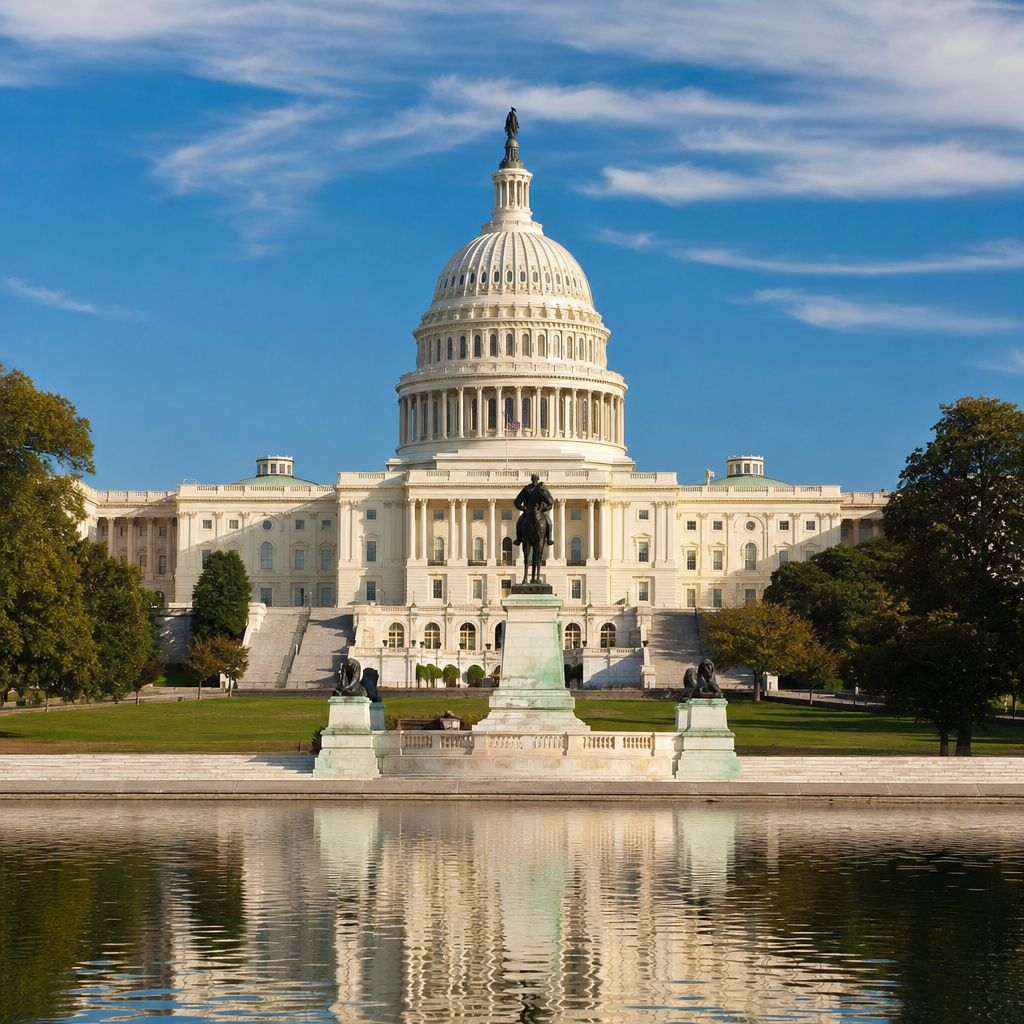
Lame duck sessions in Congress are the meetings that occur after a November election but before newly elected members and, in presidential years, a new president take office. In practical terms, they create a short but powerful window when lawmakers who lost reelection, chose retirement, or are about to switch chambers can still cast binding votes on legislation, nominations, taxes, budgets, war powers, and oversight. For students of AP Government and Politics, this period matters because it tests core constitutional ideas: representation, accountability, separation of powers, party leadership, and the timing of democratic consent.
The term “lame duck” originally described an officeholder whose political leverage had weakened because departure was already scheduled. In Congress, however, weak does not mean irrelevant. I have seen end-of-term sessions drive major decisions precisely because deadlines converge in December. Government funding often expires, the debt ceiling or tax provisions may require action, and leaders may prefer to settle hard votes after Election Day, when immediate electoral pressure is lower. That combination gives lame duck sessions an outsized role in national policy.
Understanding lame duck sessions also helps explain how constitutional design changed over time. Before ratification of the Twentieth Amendment, newly elected members of Congress did not usually take office until March 4. That meant defeated lawmakers could continue serving for about four months after voters had chosen replacements. The amendment, ratified in 1933, moved the start date of congressional terms to January 3 and presidential terms to January 20, significantly shortening the lame duck period. It did not eliminate lame duck sessions, but it reduced the democratic tension that had worried reformers for decades.
Why do end-of-term votes matter so much? Because they can lock in policy before the next Congress changes party control, membership, or ideological balance. They can confirm judges who hold lifetime appointments under Article III. They can enact omnibus spending packages that shape agency priorities for a full fiscal year. They can authorize emergency aid, extend surveillance powers, revise trade rules, or pass bipartisan compromises that were politically impossible in October. In some years, lame duck sessions are quiet. In others, they are among the most consequential weeks of the entire Congress.
How lame duck sessions work in constitutional and political terms
A lame duck session is not a special constitutional body. It is the same Congress, with the same legal authority, meeting during the final stretch of its term. The House continues until noon on January 3 of odd-numbered years, and one-third of the Senate faces election every two years while continuing to serve until that date. If Congress reconvenes after the election and before the new term begins, every vote it takes is fully valid. Bills can be passed, conference reports adopted, treaties considered by the Senate, and nominations confirmed.
That legal continuity is the first point students should understand. Voters may have spoken in November, but constitutional power remains with the current officeholders until the term ends. This is why critics call lame duck lawmaking democratically awkward while defenders call it constitutionally proper. Both claims have some truth. The outgoing members still possess lawful authority, yet the public may prefer the incoming majority to decide contentious issues. The tension is not a constitutional defect; it is a consequence of fixed terms and delayed transitions.
Party leadership is central during these sessions. In my experience following congressional calendars, leaders use the period to bundle difficult items together, negotiate behind closed doors, and move bills under compressed timelines. The House Rules Committee may structure debate tightly. In the Senate, unanimous consent agreements can determine what reaches the floor, while the filibuster still shapes outcomes for ordinary legislation unless sixty votes exist to invoke cloture. Because time is short, leaders prioritize measures with deadlines, broad bipartisan support, or strategic value before a power shift.
Presidents also gain leverage. An outgoing president may push unfinished priorities or try to secure nominations before leaving office. An incumbent reelected in November may claim renewed political capital. A president-elect, although not yet in office, can influence voting by signaling future priorities to allies in Congress. This overlap of outgoing and incoming power centers makes lame duck sessions unusually fluid. Formal authority belongs to the current government, but political pressure increasingly comes from the government voters just selected.
Why lawmakers schedule major decisions after elections
Congress often delays controversial decisions until after Election Day because electoral incentives are powerful. Casting a vote on tax increases, spending cuts, immigration changes, or defense policy in October can become immediate campaign advertising material. Waiting until November or December lowers that risk. Members who are retiring or defeated may feel freer to support compromises they avoided earlier. Members who won reelection may be more willing to back painful but necessary deals. Leaders know this and often design the calendar accordingly.
Budget politics is the clearest example. Congress regularly relies on continuing resolutions to prevent shutdowns when appropriations bills are unfinished. Those stopgap measures often push deadlines into December, almost guaranteeing lame duck negotiations. The result is familiar: leadership staff, appropriators, and executive branch officials assemble a large package covering multiple departments, often with policy riders attached. Even if critics complain that lawmakers have little time to read the final text, these bills are consequential because they set spending levels, direct program administration, and sometimes adjust substantive law.
Tax policy also gravitates toward the lame duck period. Temporary tax provisions, commonly called “tax extenders,” have often expired at year’s end, forcing Congress to decide whether to renew or revise them. Businesses, families, and state governments watch these votes closely because uncertainty affects planning. I have found that tax bills are especially likely to move late because they are politically sensitive and technically complex. Negotiators may wait until post-election conditions clarify whether a bipartisan bargain is possible.
Nominations create another incentive for end-of-term action. The Senate may accelerate confirmations when a change in party control is coming, particularly for district and circuit judges, ambassadors, and executive branch officials. Lifetime judicial appointments are especially important because they shape legal interpretation long after the session ends. If the Senate majority expects to lose seats or the White House, December may become the last realistic opportunity to install preferred nominees.
Historic examples that show the stakes
History shows that lame duck sessions can alter policy for years. In 1932 and early 1933, before the Twentieth Amendment took effect, the gap between election and inauguration was so long that public frustration intensified during the Great Depression. Reformers argued that government was being run by officials voters had effectively dismissed. That historical experience is one reason modern transitions are shorter. The basic lesson remains relevant: when crises hit, long lame duck periods can magnify legitimacy concerns.
More recent sessions demonstrate how much can happen in a few weeks. In December 2010, Congress passed the Tax Relief, Unemployment Insurance Reauthorization, and Job Creation Act, extending Bush-era tax rates temporarily while also extending unemployment benefits. That deal required an unusual coalition and reflected post-election bargaining pressure. In December 2010, the Senate also voted to repeal “Don’t Ask, Don’t Tell,” changing military policy in a major civil rights development. Those votes were not minor cleanup; they were central national decisions.
Another landmark came in 1974, when Congress used a lame duck session to pass significant legislation in the aftermath of Watergate and President Richard Nixon’s resignation. The atmosphere of institutional reform, distrust of executive power, and public demand for accountability shaped end-of-term action. While every lame duck session is unique, this period often becomes a release valve for unresolved tensions built up over the full two-year congressional cycle.
In December 2022, Congress approved the Respect for Marriage Act during the lame duck period, providing federal statutory protections for same-sex and interracial marriages. The same period also saw passage of the Consolidated Appropriations Act, 2023, a massive spending package with wide policy effects. These examples matter for AP Government because they show that congressional timing is not procedural trivia. Timing can determine whether a coalition exists, whether a bill receives floor time, and whether a president signs a law before the political landscape changes.
Major issues commonly decided in lame duck sessions
End-of-term sessions tend to concentrate the same categories of high-stakes business because deadlines are real and constitutional terms are fixed. Students can think of lame duck agendas as a mix of mandatory items, strategic items, and legacy items.
| Issue area | Why it appears in a lame duck session | Typical consequence |
|---|---|---|
| Appropriations and continuing resolutions | Funding deadlines often fall near December; shutdown pressure forces action | Government stays open, agencies receive spending instructions, policy riders may pass |
| Tax legislation | Year-end expirations and fiscal negotiations create urgency | Rates, credits, and business planning change immediately |
| Nominations | Senate majorities try to confirm judges and officials before control shifts | Courts and agencies are shaped for years or decades |
| National security and foreign aid | Wars, treaty obligations, and alliance commitments do not pause for elections | Military funding, sanctions, and aid packages can move quickly |
| Debt and fiscal deadlines | Financial markets require certainty on federal borrowing and obligations | Congress can calm or unsettle the economy through delay or action |
| Bipartisan compromise bills | Post-election incentives make members more flexible | Long-stalled reforms sometimes finally pass |
Appropriations dominate because a shutdown is visible and costly. Federal workers, contractors, national parks, benefit processing, and military planning can all be affected. Tax and debt issues matter because uncertainty reaches beyond Washington into payroll systems, investment decisions, and consumer confidence. Nominations matter because institutional appointments outlast the election cycle. Foreign aid and defense legislation matter because international events continue regardless of domestic calendars. In short, lame duck sessions gather issues that government cannot easily postpone.
Democratic arguments for and against lame duck lawmaking
Supporters of lame duck sessions make a straightforward constitutional argument: elected officials serve full terms, not partial terms that end when ballots are counted. That continuity protects stability. A government that loses authority the moment election results arrive would be vulnerable during crises, especially in close races or emergencies. Supporters also note that post-election sessions can reduce performative politics. Members sometimes negotiate more honestly when campaign pressure fades, which can produce pragmatic bipartisan outcomes.
Critics respond that legality is not the same as legitimacy. If voters have clearly rejected a party or a set of officeholders, controversial policy changes in December can feel like a circumvention of public judgment. This criticism is strongest when defeated members cast decisive votes on major legislation or when leaders rush complex bills through with limited debate. In AP Government terms, the concern centers on democratic accountability, transparency, and responsiveness rather than on constitutionality alone.
The best evaluation is balanced. Lame duck sessions are neither inherently improper nor automatically wise. Their value depends on context, urgency, transparency, and the substance of what Congress is doing. Passing a clean funding bill to keep government operating is easier to defend than using a compressed calendar to enact sweeping changes with minimal scrutiny. Yet even major changes can be justified when a broad coalition has debated them for months and only the final vote remains. Process matters, but so does the governing necessity of making decisions on time.
Why this topic matters for AP Government and Politics
For AP Government and Politics, lame duck sessions connect multiple course concepts at once. They illustrate how formal institutions and informal incentives interact. The Constitution sets term dates and lawmaking powers, but parties, committees, media pressure, and electoral strategy shape when votes occur. They also show the difference between descriptive democracy and constitutional continuity. Voters choose representatives on Election Day, yet policy authority continues under existing terms until the new Congress is sworn in.
This topic also serves as a hub for broader “miscellaneous” congressional analysis. From budget reconciliation and omnibus bills to confirmation politics, transition periods, presidential influence, and interbranch bargaining, lame duck sessions pull many separate lessons into one case study. If you want to understand why procedure changes outcomes, study December. Track the calendar, identify who still holds office, watch which deadlines are approaching, and ask who benefits from acting now rather than waiting until January. That habit will improve how you read every other topic in AP Government.
The key takeaway is simple: end-of-term votes matter because they are fully lawful, often deadline-driven, and frequently decisive. They can preserve continuity, enable compromise, and complete unfinished business, but they can also raise real concerns about accountability and rushed decision-making. Understanding both sides will make you a better student of Congress and a sharper observer of current events. When you see lawmakers return after an election, pay close attention. Some of the most important votes happen when many people assume the political story is already over.
Frequently Asked Questions
What is a lame duck session in Congress, and when does it happen?
A lame duck session is the period when Congress meets after the November election but before the newly elected members of Congress are sworn in at the start of the next term in January. In presidential transition years, it also overlaps with the time before a newly elected president takes office. This creates a brief but important stretch in which outgoing lawmakers still hold full constitutional authority, even if voters have already chosen their replacements or signaled a change in political direction. The term “lame duck” refers to officials whose remaining time in office is limited, not to any reduction in their legal powers.
In practical terms, this session matters because the current Congress does not stop functioning once the election is over. Members who lost reelection, decided to retire, or are preparing to leave for another office can still vote on major issues. That means Congress can still pass laws, approve spending bills, extend or change tax policy, confirm executive and judicial nominees, and respond to foreign or domestic crises. For AP Government students, this is a useful example of how formal constitutional power and political legitimacy do not always line up neatly. Even after voters have spoken, the sitting Congress remains fully empowered until the new term officially begins.
Why do lame duck sessions matter so much for end-of-term voting?
Lame duck sessions matter because they often become a high-stakes decision window for unfinished national business. Congress frequently leaves major issues unresolved before the election, either because lawmakers want to avoid politically risky votes or because they cannot reach agreement in time. After the election, some of those political pressures change. Members who are retiring or who have lost reelection may feel less constrained by campaign concerns, while party leaders may see the session as their last chance to act before the balance of power shifts in the next Congress.
This can make lame duck sessions unusually productive, controversial, or both. Lawmakers may use the period to pass omnibus spending packages, raise or suspend the debt ceiling, approve defense or foreign aid measures, settle tax issues, or move nominations that might face tougher odds later. The key point is that the votes taken during this window are just as binding as votes cast at any other time. The fact that some members are on their way out does not weaken the legal effect of their decisions. That is why end-of-term votes can shape policy for months or years after those lawmakers have left office.
What kinds of issues are typically decided during a lame duck session?
Lame duck sessions often deal with the issues Congress cannot easily postpone. Budgeting is one of the most common examples. If annual appropriations bills are unfinished, Congress may need to pass a continuing resolution or a larger spending package to prevent a government shutdown. Tax policy is another major area, especially when temporary tax provisions are set to expire at the end of the calendar year. Lawmakers may also use the period to address the debt ceiling, disaster relief, military authorizations, foreign aid, and emergency responses to economic or international developments.
Nominations are also especially important in lame duck sessions. The Senate may move to confirm judges, executive branch officials, ambassadors, or other nominees before a new Congress takes office. In some cases, oversight activity continues as well, including hearings, investigations, and final committee reports. Because this session happens during a transition period, it can become a legislative bottleneck where many unresolved matters are bundled together. For students, it is a strong reminder that institutional deadlines, constitutional authority, and political timing all interact in Congress. A lame duck session is not just a ceremonial wrap-up; it is often a decisive period for real policymaking.
Why is the lame duck session sometimes controversial?
The controversy comes from a tension between legal authority and democratic optics. On one hand, outgoing members of Congress remain fully legitimate officeholders until their terms end, so there is nothing unconstitutional about their voting. On the other hand, critics argue that lawmakers who were just defeated, are retiring, or no longer face voters may be making decisions without meaningful political accountability. That concern becomes even sharper when those votes involve major legislation, judicial confirmations, military action, or long-term fiscal commitments.
Supporters of lame duck action respond that government cannot simply pause after an election. Important deadlines still arrive, agencies still need funding, and national security issues do not wait for a new Congress to be sworn in. They also point out that voters elected members for fixed terms, and those terms include the period after the election. In that sense, lame duck sessions reveal a core feature of American government: institutions operate according to constitutional schedules, not just shifting public sentiment. For AP Government and Politics, this controversy is useful because it highlights broader themes like representation, accountability, separation of powers, and the difference between legal power and perceived legitimacy.
How should AP Government students think about lame duck sessions when studying Congress?
AP Government students should treat lame duck sessions as a practical case study in how Congress actually works under pressure. Textbook descriptions of lawmaking can seem orderly, but lame duck periods show that timing, incentives, party control, and election outcomes all shape legislative behavior. This is an excellent topic for understanding how constitutional structure interacts with political strategy. Members retain formal power until the end of their terms, but their incentives may change dramatically after the election, which can alter bargaining, coalition-building, and willingness to take politically difficult votes.
It also connects to several major AP Gov concepts. Students can link lame duck sessions to incumbency, representation, accountability, party leadership, divided government, and the Senate’s advice-and-consent role in nominations. It is also relevant to questions about how elections influence governing, not just campaigning. In essay or class discussion form, a strong analysis would explain both why lame duck sessions exist institutionally and why they can have outsized policy consequences. In short, this period matters because it tests whether elected officials will use their final weeks in office to finish urgent business, protect party goals, or shape the next phase of national policy before the incoming Congress takes over.