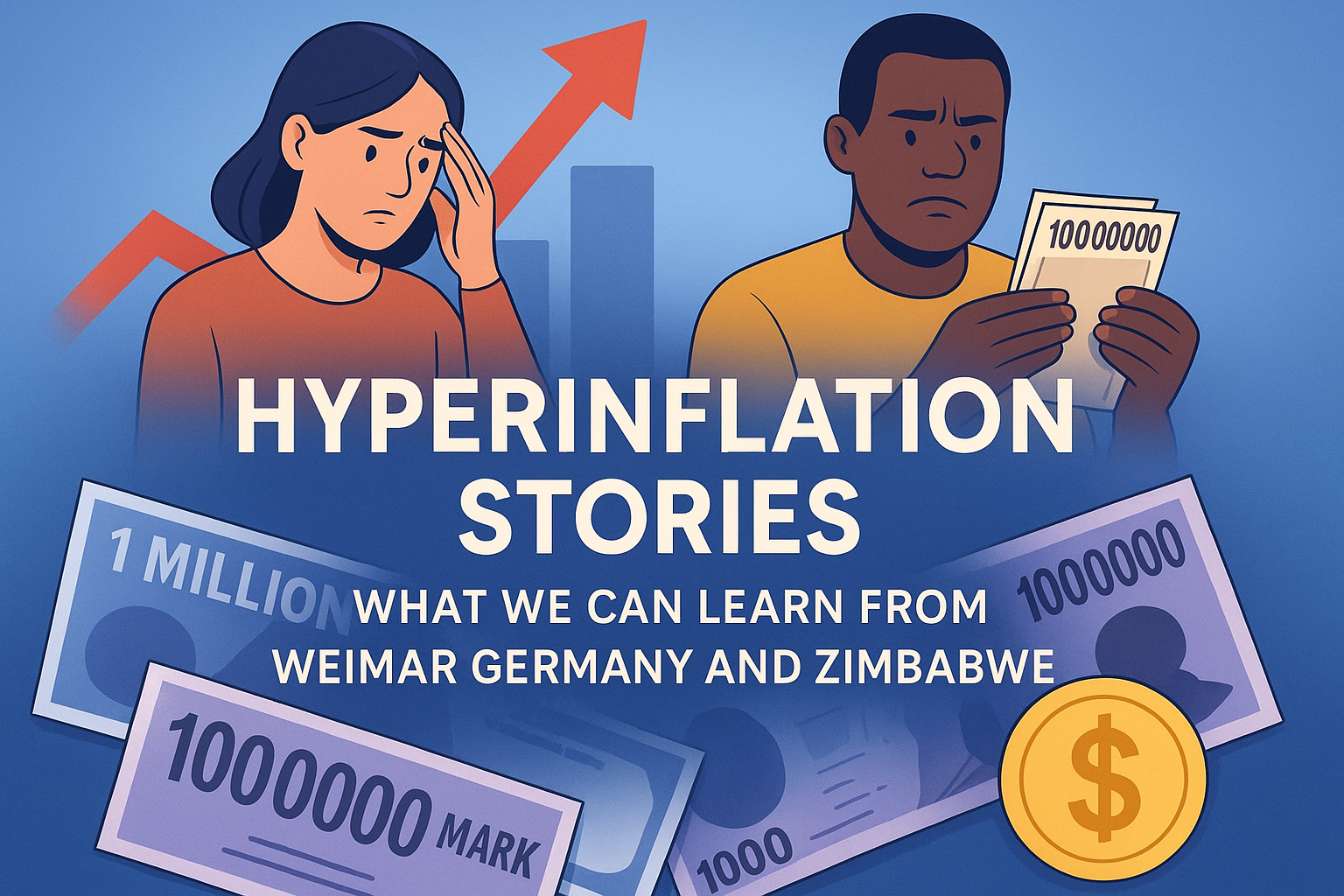
Hyperinflation is a severe, rapid, and often exponential increase in the price level of goods and services within an economy. This economic catastrophe results when there’s an excessive supply of money, combined with a lack of trust in a currency, causing it to lose its value almost entirely. Historically, hyperinflation has wreaked havoc in various nations, leading to devastating economic, social, and political turmoil. The stories of Weimar Germany in the early 1920s and Zimbabwe in the late 2000s serve as poignant examples of how hyperinflation can ravage a nation’s economy and the lives of its citizens. Understanding these stories is crucial because they provide lessons on economic management, stabilization policies, and the enduring human spirit in times of extreme financial adversity.
Examining these cases reveals not only the mechanics behind hyperinflation but also the human stories that accompany such crises. By learning from past mistakes, nations can better prepare themselves to avoid similar economic disasters in the future, safeguarding the wellbeing of their citizens and maintaining economic stability. Furthermore, these stories underline the importance of sound economic policies and the resilience required to overcome economic hardships. Exploring the tales of Weimar Germany and Zimbabwe teaches invaluable lessons about the causes and consequences of hyperinflation and highlights strategies that might prevent or mitigate such outcomes.
The Case of Weimar Germany: A Nation in Crisis
Weimar Germany’s hyperinflation period between 1921 and 1924 stands as one of the most dramatic examples of economic collapse due to hyperinflation. After World War I, Germany was left with massive reparations to pay, as mandated by the Treaty of Versailles. Struggling with heavy debt and reparations, the German government began printing money in tremendous amounts to cover payments and stimulate the economy. Unfortunately, this excessive money printing led to an oversupply of the Reichsmark, causing its value to plummet.
This period saw prices skyrocketing at an unimaginable rate. The German people witnessed prices doubling every few days, and wheelbarrows of banknotes were required to purchase basic necessities like bread and milk. A loaf of bread that cost 250 marks in January 1923 had surged to an astronomical 200 billion marks by November of the same year. People were forced to barter goods and services since currency lost its purchasing power. This economic chaos was accompanied by severe social unrest, with widespread poverty and unemployment affecting millions of Germans.
The effects of hyperinflation on Germany were not only economic but also psychological, leading to a loss of faith in the government and its capabilities. The crisis contributed to political instability and extremism, setting the stage for the rise of authoritarian regimes. Lessons learnt from the Weimar hyperinflation emphasize the dangers of unchecked monetary expansion and the importance of maintaining fiscal discipline even during times of economic hardship.
Zimbabwe’s Hyperinflation: A Modern Catastrophe
Zimbabwe’s experience with hyperinflation in the late 2000s serves as another stark example of how destructive runaway inflation can be to a nation’s economy and its people. The seeds of Zimbabwe’s hyperinflation were sown during land reform programs in the early 2000s. The government’s decision to forcibly redistribute commercial farmland disrupted agricultural production, which was the backbone of Zimbabwe’s economy. This, coupled with rampant corruption and poor economic policies, such as excessive government spending and the printing of money to support unsustainable fiscal deficits, fueled the hyperinflation crisis.
At its peak, Zimbabwe’s inflation rate reached a jaw-dropping 89.7 sextillion percent in November 2008, and the Zimbabwean dollar became virtually worthless. People faced unimaginable hardships, with empty supermarket shelves, long queues for basic goods, and a thriving black market. Similar to Germany, Zimbabweans resorted to bartering and using foreign currencies as the local currency had ceased to be functional.
Efforts to curb inflation were initially unsuccessful until Zimbabwe abandoned its currency in favor of foreign currencies like the US dollar and the South African Rand, a move that eventually stabilized the economy. However, the scars of hyperinflation could still be felt, with the economy bearing lasting damage and citizens having lost their savings and livelihoods.
Understanding the Mechanics of Hyperinflation
Hyperinflation, in both historical contexts and economic theory, typically results from a confluence of factors rather than a single cause. Key among these triggers are excessive money supply growth, loss of confidence in a currency, and external economic pressures. Both Weimar Germany and Zimbabwe indulged in indiscriminate printing of money, undermining the currency’s value and spiraling into hyperinflation.
| Factors | Weimar Germany | Zimbabwe |
|---|---|---|
| Trigger | War reparations and debt | Land reforms and fiscal deficits |
| Key Action | Money printing for reparations | Excessive money supply for debt |
| Outcome | Currency collapse | Currency abandonment |
These factors were exacerbated by poor economic governance and lack of international support. In such dire circumstances, traditional monetary policies fail to stabilize the economy. Solutions often require radical approaches, such as adopting foreign currency or implementing currency reforms. Both Germany and Zimbabwe illustrate the necessity of adopting comprehensive stabilization measures and restoring confidence to recover from hyperinflation.
Human Impact and Social Consequences
The human cost of hyperinflation extends beyond economic statistics, permeating every aspect of daily life and society. In Germany, hyperinflation eroded savings, obliterated pensions, and destabilized entire families. People experienced significant financial stress, with a sense of helplessness as their life savings evaporated in real terms. The struggle to afford basic necessities fueled social tensions and distrust toward financial institutions and the government.
In Zimbabwe, the social fabric was similarly affected as citizens experienced rapid decline in living standards. The inability to afford healthcare, education, and other essential services compounded the nation’s woes. Many Zimbabweans became economic refugees fleeing in search of stable economic opportunities, significantly impacting regional economies.
The broader socio-political atmosphere often becomes ripe for extremism and unrest when economic circumstances become untenable. The rise of totalitarian regimes often leverages societal distress, exploiting fears and frustrations of the populace. Both Germany and Zimbabwe saw political repercussions that extended far beyond their borders, influencing international relations and global economic practices.
Lessons in Avoiding Hyperinflation
The experiences of Weimar Germany and Zimbabwe offer critical insights on avoiding hyperinflation and ensuring economic resilience. The primary takeaway is the importance of maintaining economic discipline, particularly in how governments manage monetary supply and fiscal policies. Ensuring independent and robust monetary authorities helps prevent unchecked financial decisions that can lead to disastrous economic consequences. Additionally, maintaining credibility and trust in national currency is essential to stability, requiring transparent policies and international cooperation.
Early intervention and willingness to adopt radical monetary reforms can salvage economies heading towards hyperinflation. It is critical to establish measures that restore public confidence swiftly and effectively. Successful stabilization often involves severe fiscal adjustments, reducing deficits, and in some cases, adopting alternative currencies to stabilize the economy.
Embracing the Lessons of the Past
The stories of hyperinflation in Weimar Germany and Zimbabwe teach us about the dangers of economic mismanagement and the immense impact hyperinflation can have on nations and their citizens. By understanding the causes, consequences, and potential remedies for hyperinflation, governments and policymakers can make informed decisions that prioritize economic stability and the welfare of the populace.
It is crucial for current and future leaders to heed these historical lessons to avoid repeating the same mistakes. Economic policies should be formulated with vigilance and responsibility, balancing fiscal needs with the long-term health and stability of the national economy. By doing so, nations can safeguard their economies from the catastrophic effects of hyperinflation and ensure prosperity for future generations.
Conclusion: From Learning to Action
In summary, the hyperinflation experiences of Weimar Germany and Zimbabwe underscore the intricate dynamics of economic crises and the profound effects on both national stability and individual livelihoods. These stories highlight the necessity for prudent fiscal management and demonstrate the severe consequences when currencies lose credibility and stability is compromised.
For individuals, understanding these historical episodes helps in recognizing the signs and triggers of potential economic problems in the present day, promoting proactive financial planning and risk management. For nations, the call to action lies in enforcing sound economic policies, strengthening institutional checks, and preserving public trust in economic governance.
As we reflect on these lessons, let us advocate for policies and practices that guard against economic missteps and ensure a prosperous, inflation-free future. It is critical to plan for economic stability, to learn from history, and ultimately, to strive for an economy that serves its people rather than destabilizing their lives.
Frequently Asked Questions
1. What caused hyperinflation in Weimar Germany, and what were its effects?
The hyperinflation in Weimar Germany during the early 1920s was largely due to the massive reparations imposed on Germany after World War I, coupled with the government’s decision to print more money in an attempt to pay these debts. The Treaty of Versailles stipulated heavy financial burdens on an already struggling economy, leading to a vicious cycle of money printing that devalued the German mark exponentially. This, alongside a loss of confidence in the currency, resulted in catastrophic hyperinflation.
The effects were profound and altered the socio-economic landscape dramatically. Prices soared to unattainable heights for everyday goods, with people needing wheelbarrows full of banknotes just to buy a loaf of bread. Many middle-class families saw their savings wiped out overnight, while poverty and unemployment skyrocketed. The crisis also led to widespread social upheaval, with increased political radicalization as citizens sought solutions to their desperation, eventually paving the way for the rise of the Nazi Party.
2. How did Zimbabwe experience hyperinflation, and what lessons can we learn from it?
Zimbabwe’s hyperinflation, which peaked in the late 2000s, stemmed from a mix of factors, including unsustainable fiscal policies, rampant corruption, and the controversial land reform policies initiated by the government. These policies led to a drastic decrease in agricultural productivity, which was a backbone of the economy. As government revenue plummeted, the authorities resorted to printing more money to cover their expenses.
The currency’s value plummeted, and Zimbabwe experienced one of the highest inflation rates in history, with prices doubling almost every day at its peak. Basic commodities became scarce, and bartering became more common, as the national currency effectively became worthless. The situation highlighted the importance of sound fiscal management, transparency, and the protection of institutional rights, serving as stark reminders of the domino effect poor policies can have on an economy.
3. Why is trust in a currency important, and how does it relate to hyperinflation?
Trust in a currency is foundational to its value; it signifies that people believe the currency will hold its worth over time and can be reliably used in exchanges for goods and services. This trust is built on consistent and sound economic policies, stable government institutions, and effective financial management.
When trust in a currency diminishes, as seen in both Weimar Germany and Zimbabwe, it leads to reduced use of that currency, soaring prices, and ultimately, hyperinflation. In these scenarios, people often resort to using foreign currencies or barter systems, which can further destabilize an economy. The experience from both countries underscores the importance of maintaining public confidence through responsible governance and economic practices.
4. What measures can be taken to recover from hyperinflation?
Recovering from hyperinflation requires a multi-faceted approach focused on re-establishing fiscal discipline, restructuring the economy, and rebuilding trust in the currency. One immediate measure is to halt excessive money printing and introduce fiscal reforms to stabilize the economy. Implementing tight monetary policies, reducing government spending, and increasing transparency are crucial steps.
In some cases, countries have shifted to using foreign currencies temporarily to restore confidence and provide a stable medium of exchange. Significant reforms may be necessary in public institutions to ensure corruption and mismanagement are addressed. In the long run, encouraging domestic production, diversifying the economy, and fostering investor confidence are vital to ensuring sustained economic recovery and preventing future hyperinflation.
5. How does hyperinflation impact society beyond economics?
The ramifications of hyperinflation extend far beyond the economy, affecting the social fabric and political landscape of a country. Economically, it decimates savings, erodes wages, and exacerbates poverty. The inability to afford basic necessities often leads to public discontent and social unrest, as seen through increased strikes, protests, and crime rates.
Politically, hyperinflation can lead to a loss of government legitimacy, creating fertile ground for extreme political views as people seek radical solutions to their hardships. It can destabilize democratic institutions, as desperation may lead populations to support authoritarian regimes promising quick fixes. On a personal level, it impacts mental health, stress levels, and overall wellbeing as individuals and families struggle with uncertainty about their future. Examining these past cases reveals the intricate links between economic stability and societal wellbeing, illustrating the need for vigilant, holistic policy approaches.